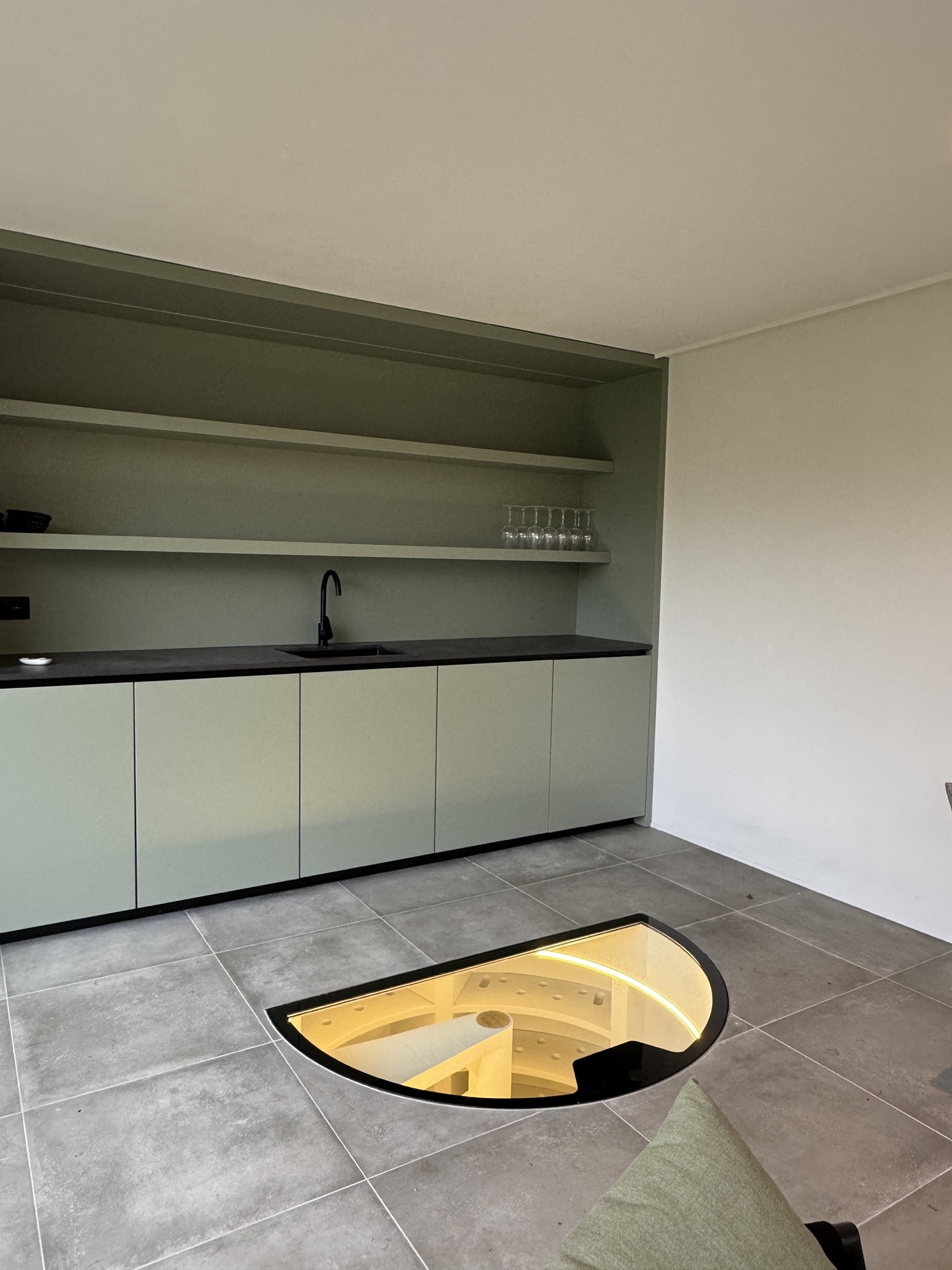







Built-in wine cellar in a pool house with a motorized glass hatch
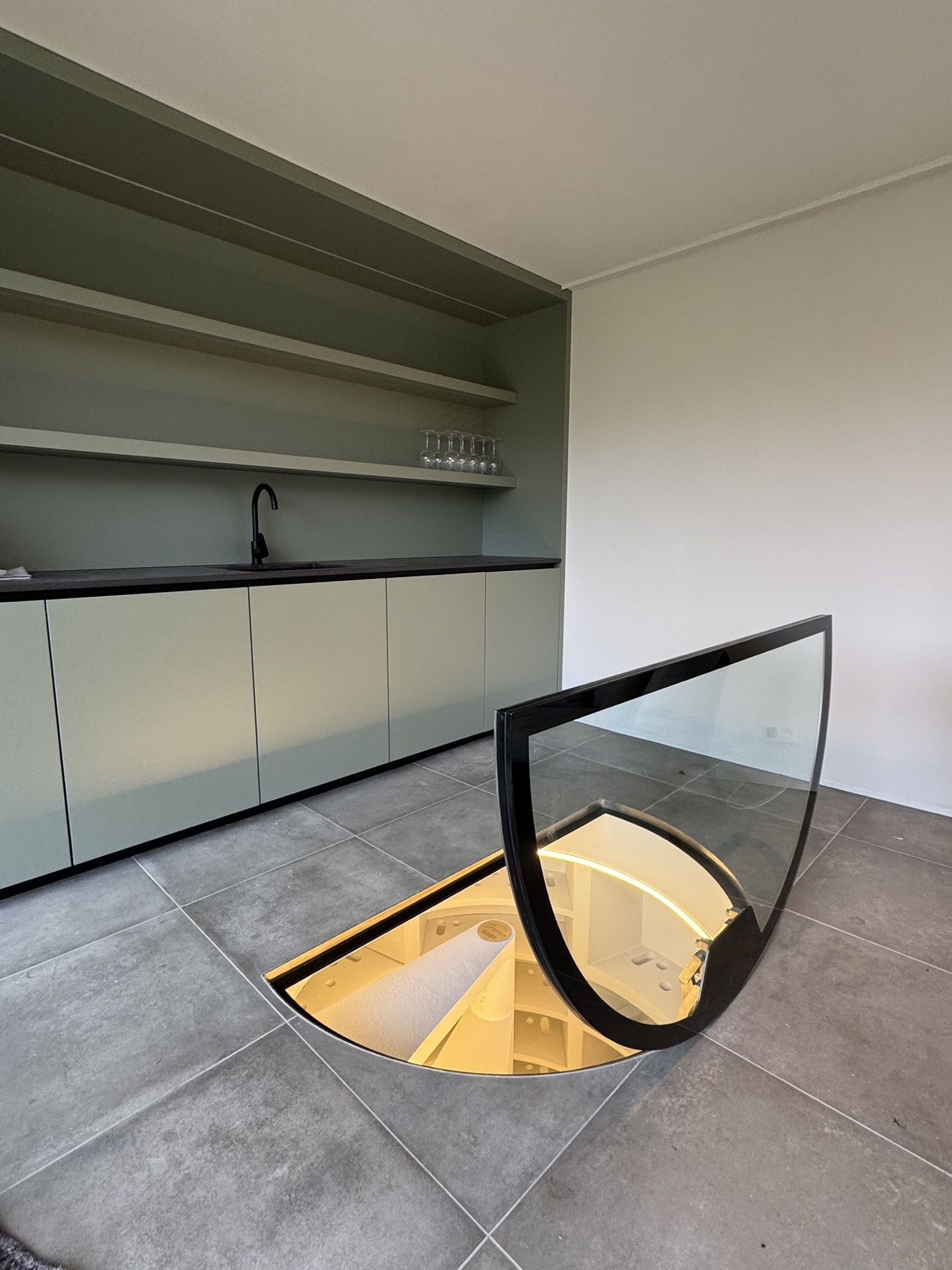
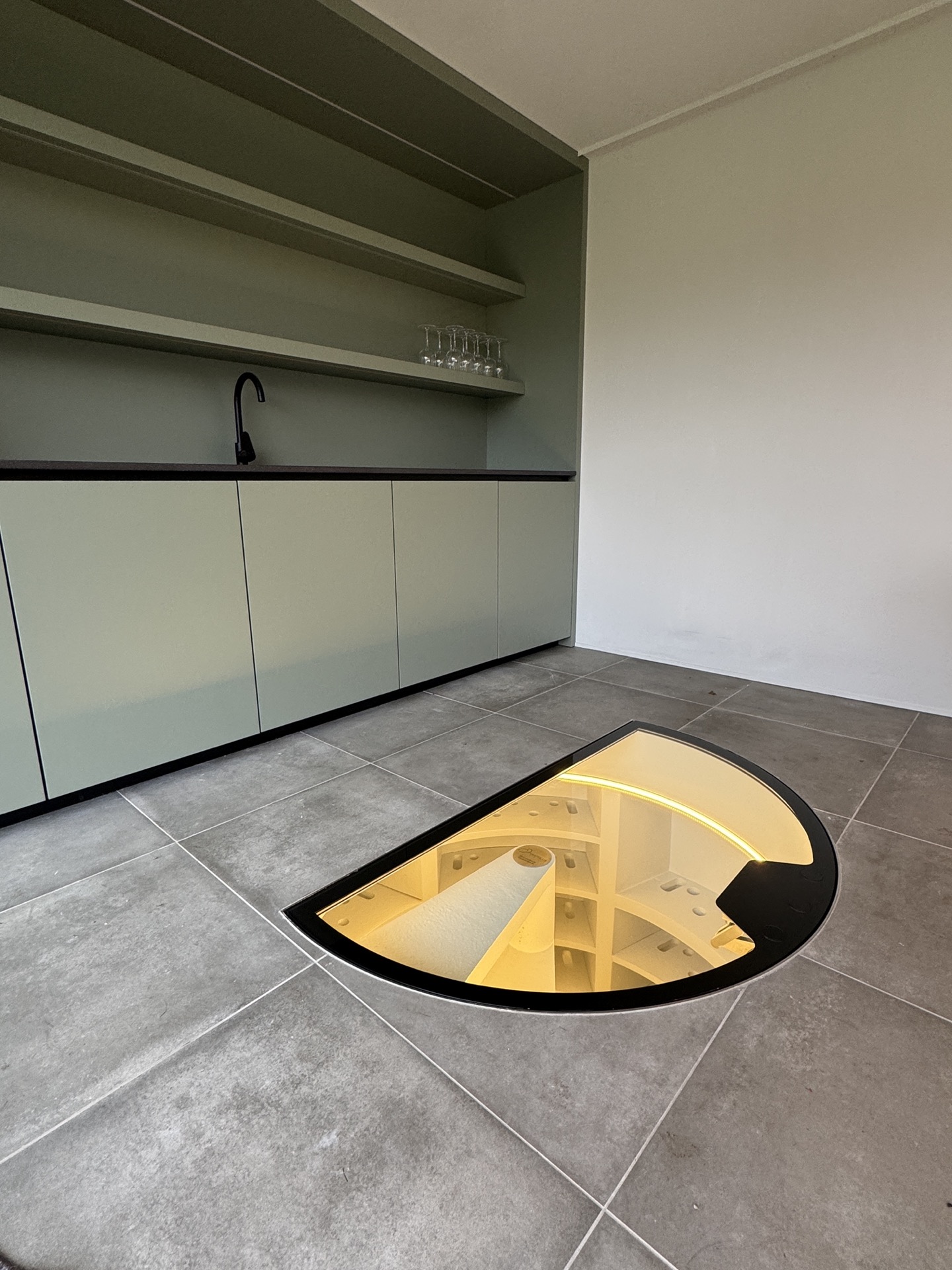
The built-in wine cellar in a pool house is immediately visible in the way the project is framed. A half-moon opening breaks the floor plane and gives the pool house a clear focal point. The glass hatch sits low and neat, with a dark metal rim that traces the curve before the cellar drops away beneath it. Around the opening, warm light picks out the edge of the cut-out and softens the contrast between ceramic tile, glass, and the darker frame.
The built-in wine cellar in a pool house was measured to fit the available space before installation. That preparation shows in the way the opening lands cleanly within the room, without interrupting the surrounding bar wall and storage run. The cellar reaches 2.25 metres deep, which allows the floor opening to remain restrained while the volume below does the work. The result is a piece of storage that reads as part of the architecture rather than something added after the fact.
built-in wine cellar in a pool house as the architectural starting point
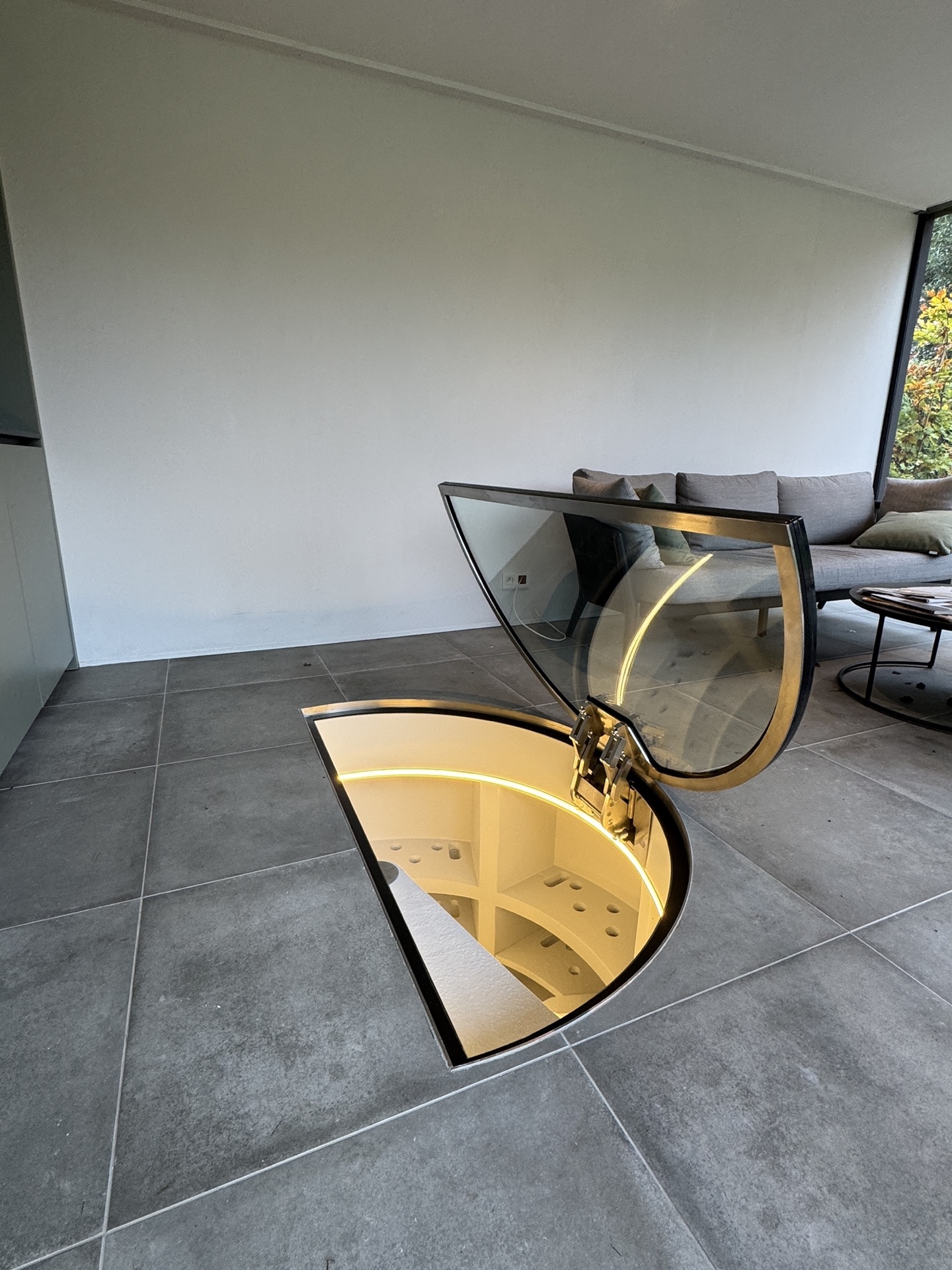
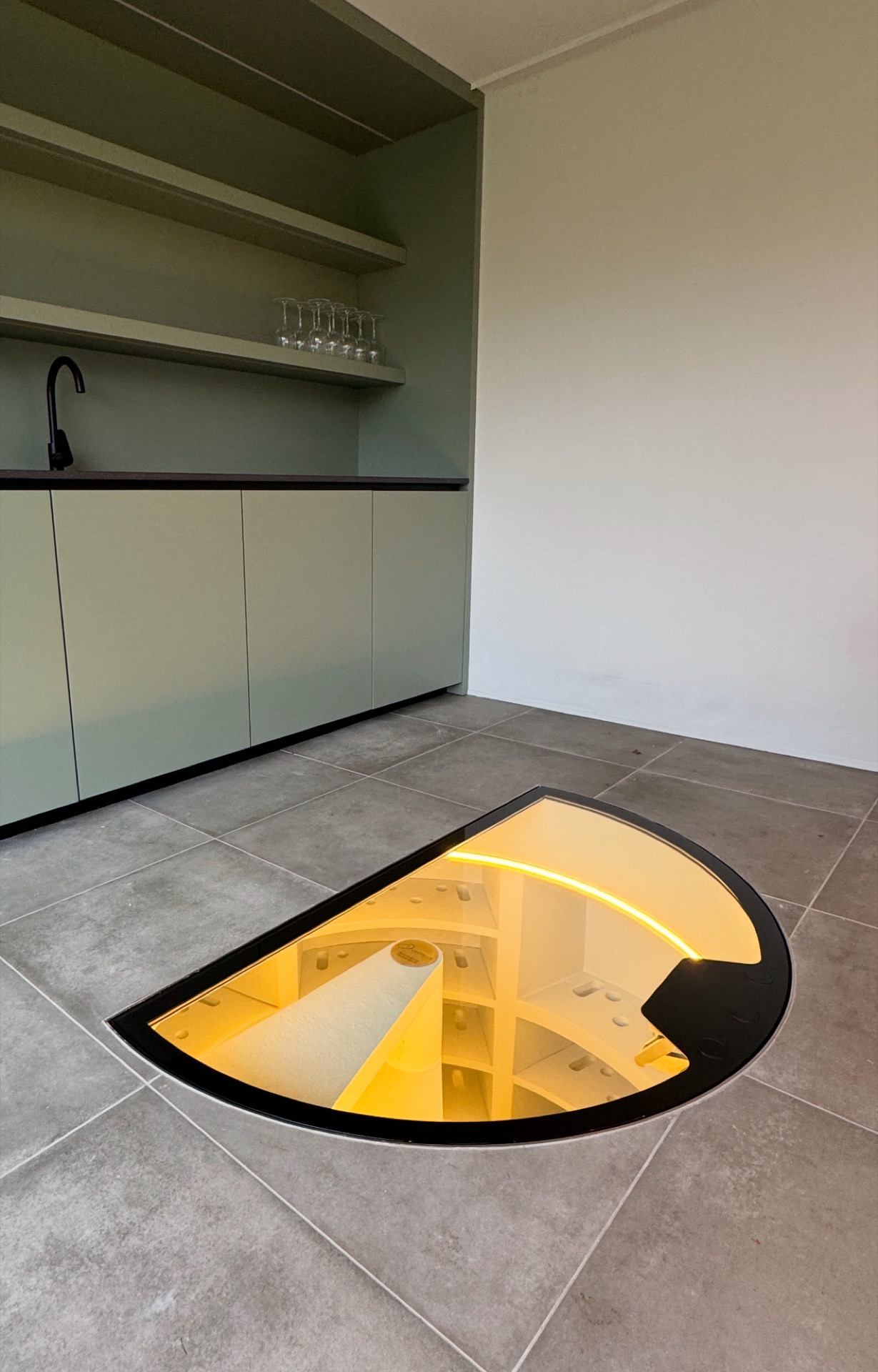
The half-moon wine cellar entrance is the detail that catches the eye first. Its curve is precise, but it avoids feeling decorative for its own sake. Instead, the shape gives the hatch a clear outline and makes the opening easy to read from across the pool house. The glass panel within the motorized glass wine hatch lets light sit on the surface, while the metallic edge gives the opening a firmer line against the tiled floor.
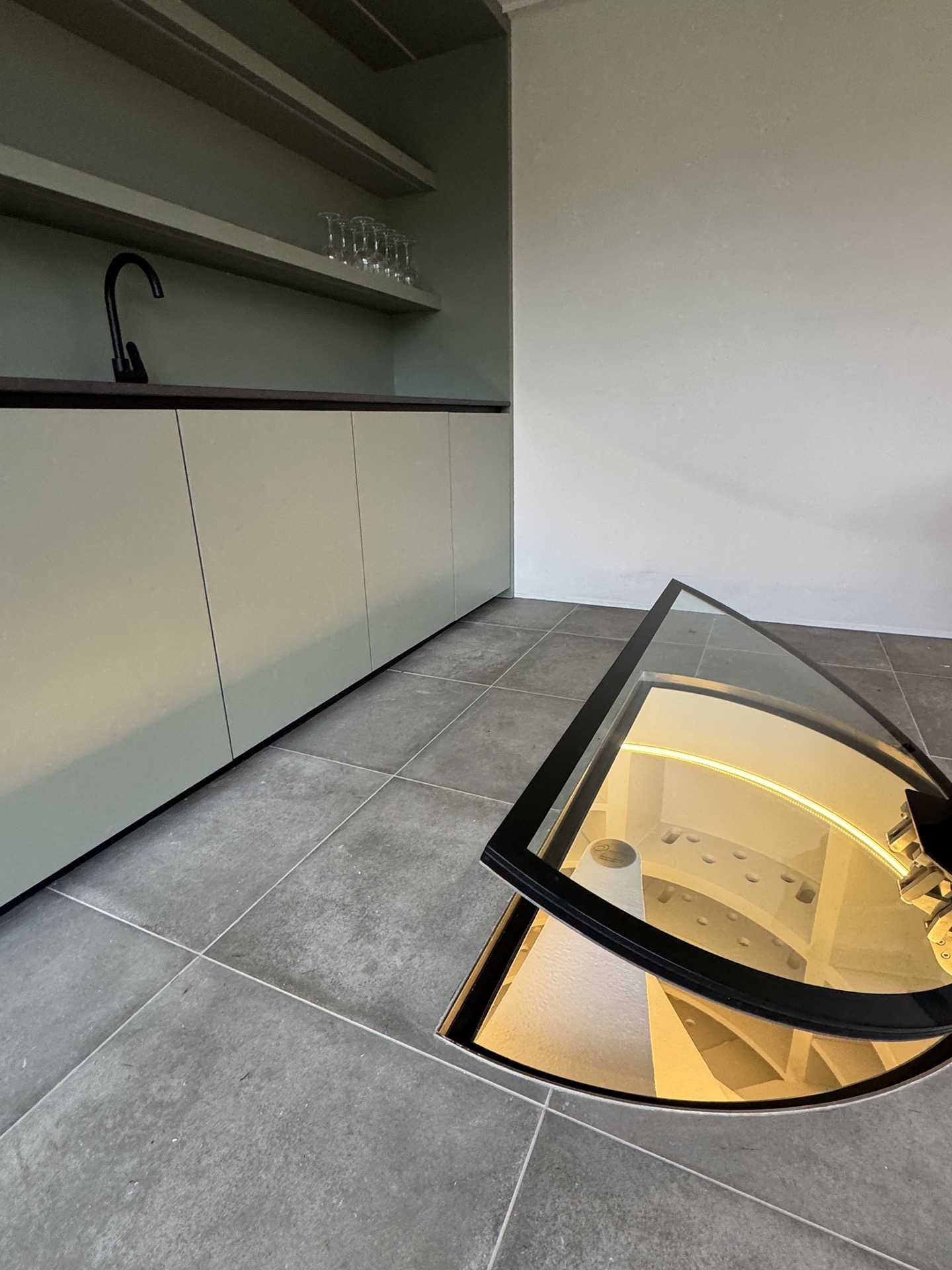
At night, warm accent lighting around the cellar opening does more than illuminate the hatch. It draws a ring of light across the floor and underlines the geometry of the cut-out. That glow makes the opening feel deliberate, especially beside the straight cabinet fronts and the darker counter line in the background. The lighting also helps the cellar read as a feature of the room, not a concealed void in the floor.
Inside the concrete wine cellar
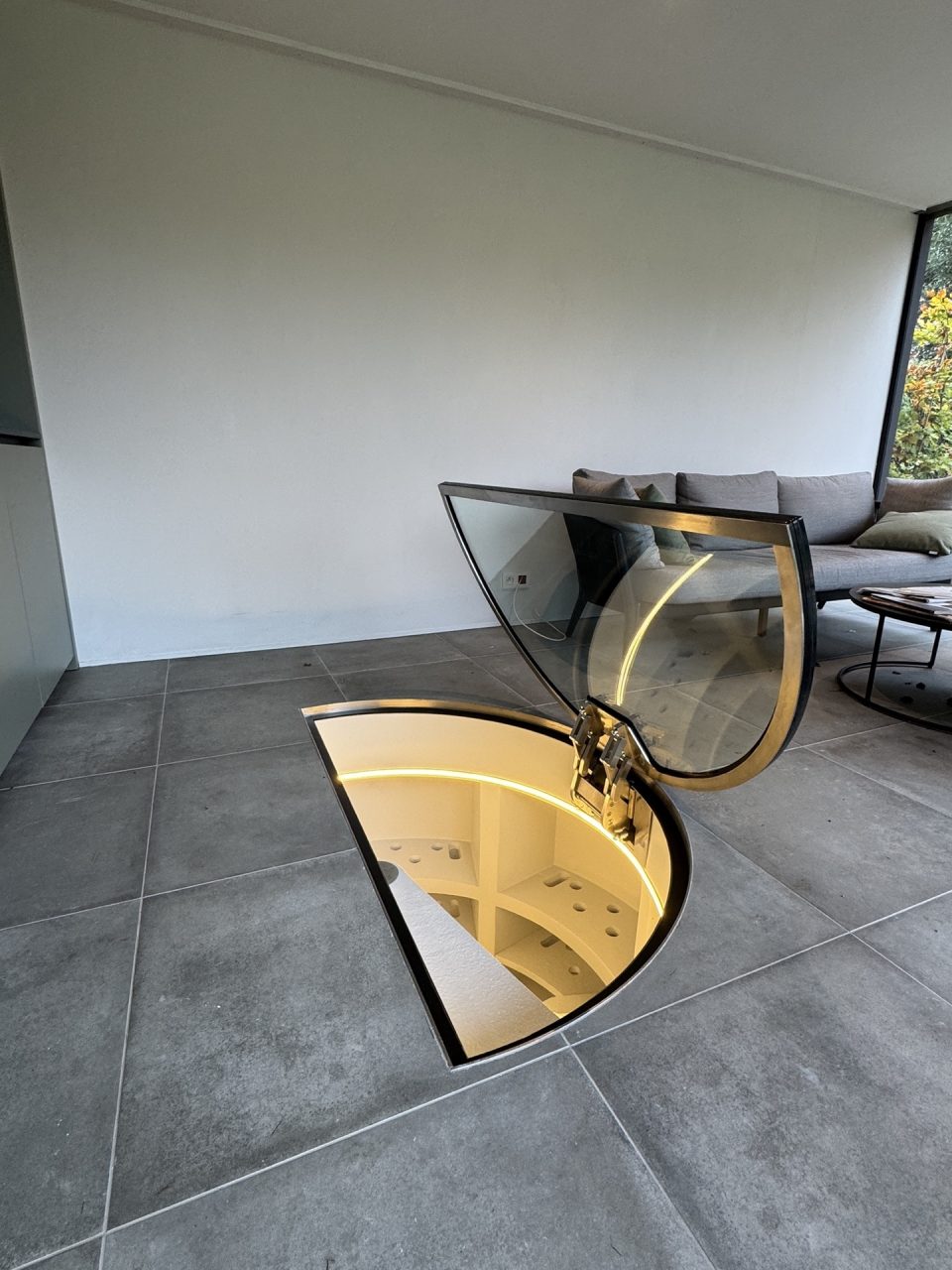
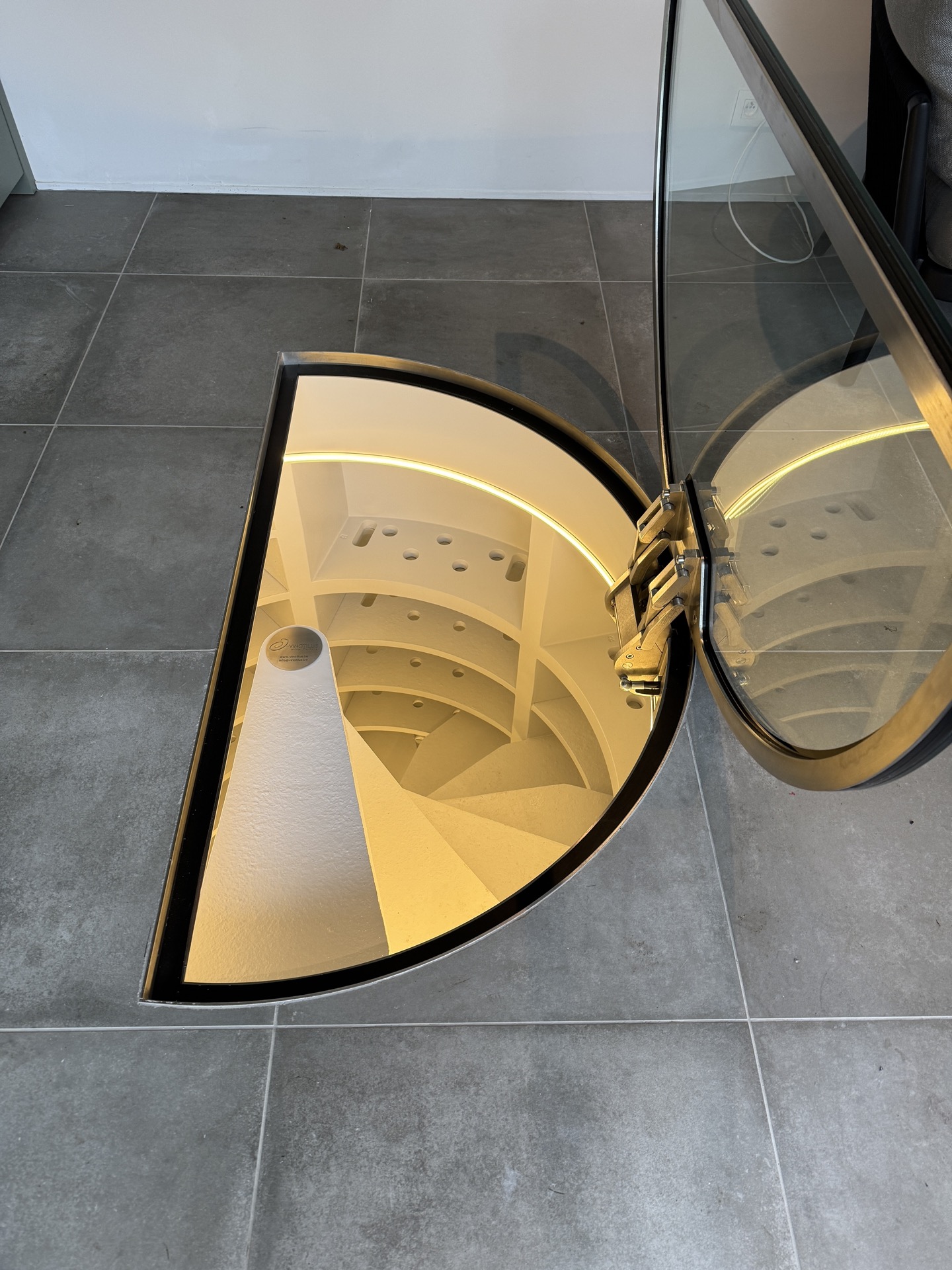
Below the hatch, the concrete wine cellar has a solid, grounded presence. The material suits the depth of the installation and gives the cellar a quieter visual weight than a more ornamental finish would have done. From the opening, the interior structure appears in layered circles and round wine shelving, which breaks up the vertical descent and gives the storage wall a measured rhythm. The shelves are visible close to the entrance, where the light catches their edges.
The round shelving inside the cellar is useful as a visual marker as much as a storage system. Its curved sections echo the shape of the hatch above, but the repetition stays controlled. That link between top and bottom keeps the whole installation legible, even when the hatch is partly open. The viewer can follow the line from the round opening to the shelving deeper inside, which makes the cellar easier to understand at a glance.
Light, edges and the opening below
The detail that gives the installation its clarity is the way the light meets the materials. Warm illumination touches the inner rim, the glass surface and the first rows of shelving, while the surrounding floor remains cooler in tone. That contrast keeps the hatch from disappearing into the tiled surface. It also makes the opening feel intentionally framed, as if the room has been drawn around it. That makes the built-in wine cellar in a pool house part of the architectural character rather than a loose finish.
Seen from the side, the motorized glass wine hatch sits flush enough to stay unobtrusive, yet the mechanism is still visible along the edge. That visible boundary matters. It tells you where the floor ends and the cellar begins. The rounded opening and the dark frame work with the straight runs of cabinetry nearby, so the room keeps its order even with the cut-out in the middle of it.
How the wine cellar fits the pool house
The pool house setting gives the installation a different role than a cellar tucked away in a basement. Here, the wine storage sits close to the bar wall, white lower cabinets and a darker shelf line, so it becomes part of the social zone of the room. Bottles are not hidden behind a separate door. The hatch is visible, the rim is visible, and the cellar opening helps organize the surrounding furniture and surfaces.
Because the wine cellar was built into the pool house, the surrounding materials had to work together from the start. Ceramic floor tiles hold the opening in place visually, while the glass and metal of the hatch introduce a sharper note. The combination is modest but exact. Nothing tries to dominate the room, yet the cellar still gives the pool house a clear identity.
Measured first, then built in
The fit depends on the earlier measurements. Without that step, the curve of the half-moon entrance would feel arbitrary, and the cellar depth could overwhelm the room. Here, the opening lands with enough space around it to keep circulation clear, while the cellar below has the depth it needs. That balance is visible in the way the hatch sits among the cabinetry and the bar counter without crowding either one.
This is also where the concrete structure matters most. A concrete wine cellar gives the installation a firm base and suits an in-built solution where the floor has been cut to accept a precise opening. The material is not there to show off. It is there to hold the shape, carry the depth, and make the pool house read as a place where storage has been planned into the architecture.
A cellar that reads as part of the room
What makes the built-in wine cellar in a pool house effective is the way it holds two positions at once. It stores wine below the floor, yet it remains present in the room above through the curve of the hatch, the halo of light, and the visible round shelving inside. Those elements give the installation a strong outline without pushing it into display for its own sake.
Seen as a whole, the project is a study in controlled contrasts: floor and void, glass and concrete, straight cabinetry and a curved opening. The motorized glass wine hatch gives the room its most distinctive line, while the cellar below adds depth both literally and visually. It is a compact intervention, but one that changes how the pool house is read. The floor now does more than support the room; it reveals what sits beneath it. That makes the built-in wine cellar in a pool house part of the architectural character rather than a loose finish.
Want to see more of Vinotilus? View the page of Vinotilus for even more great projects and company information.


.png)