





Detached home with a honed concrete floor and large glass frontage
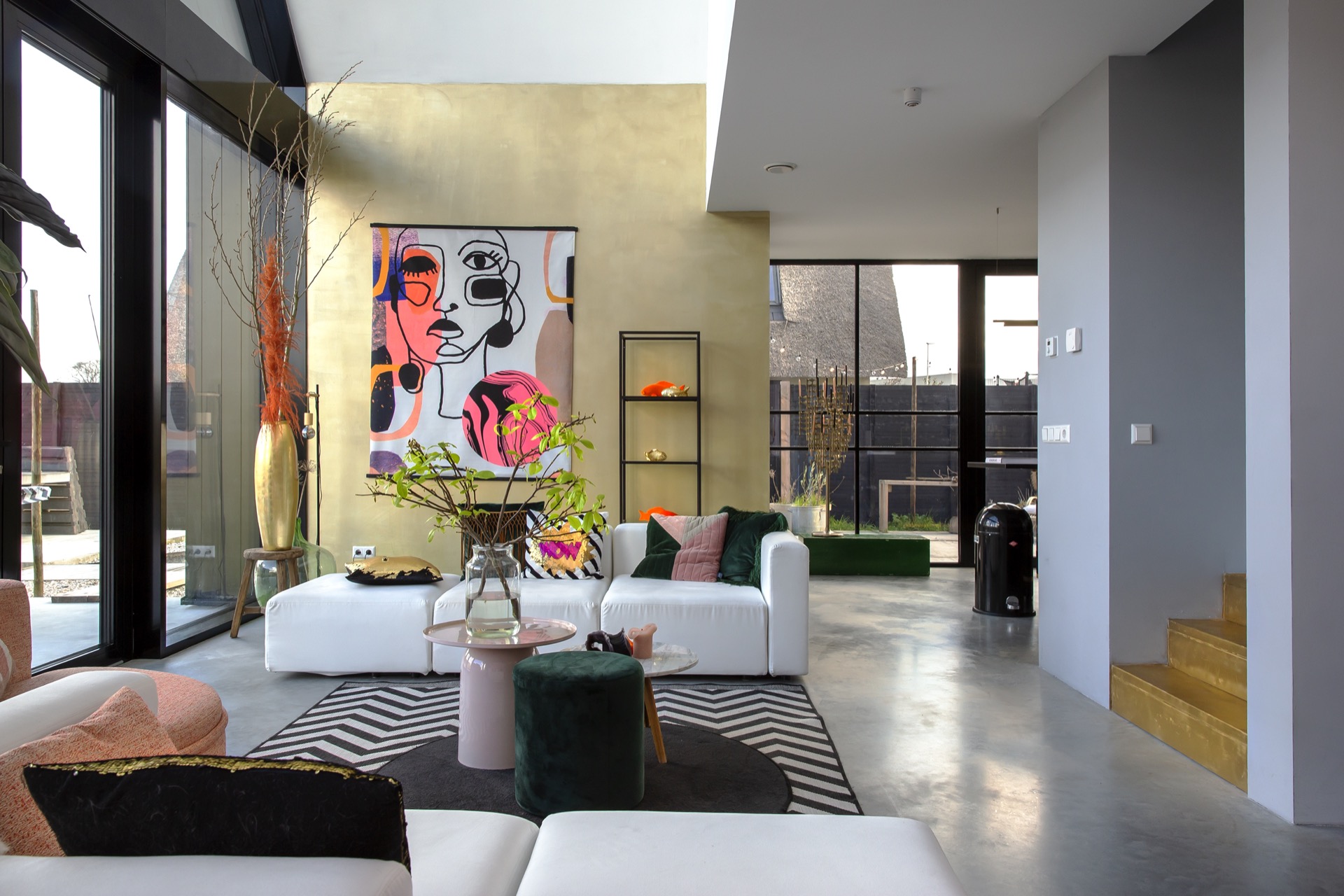
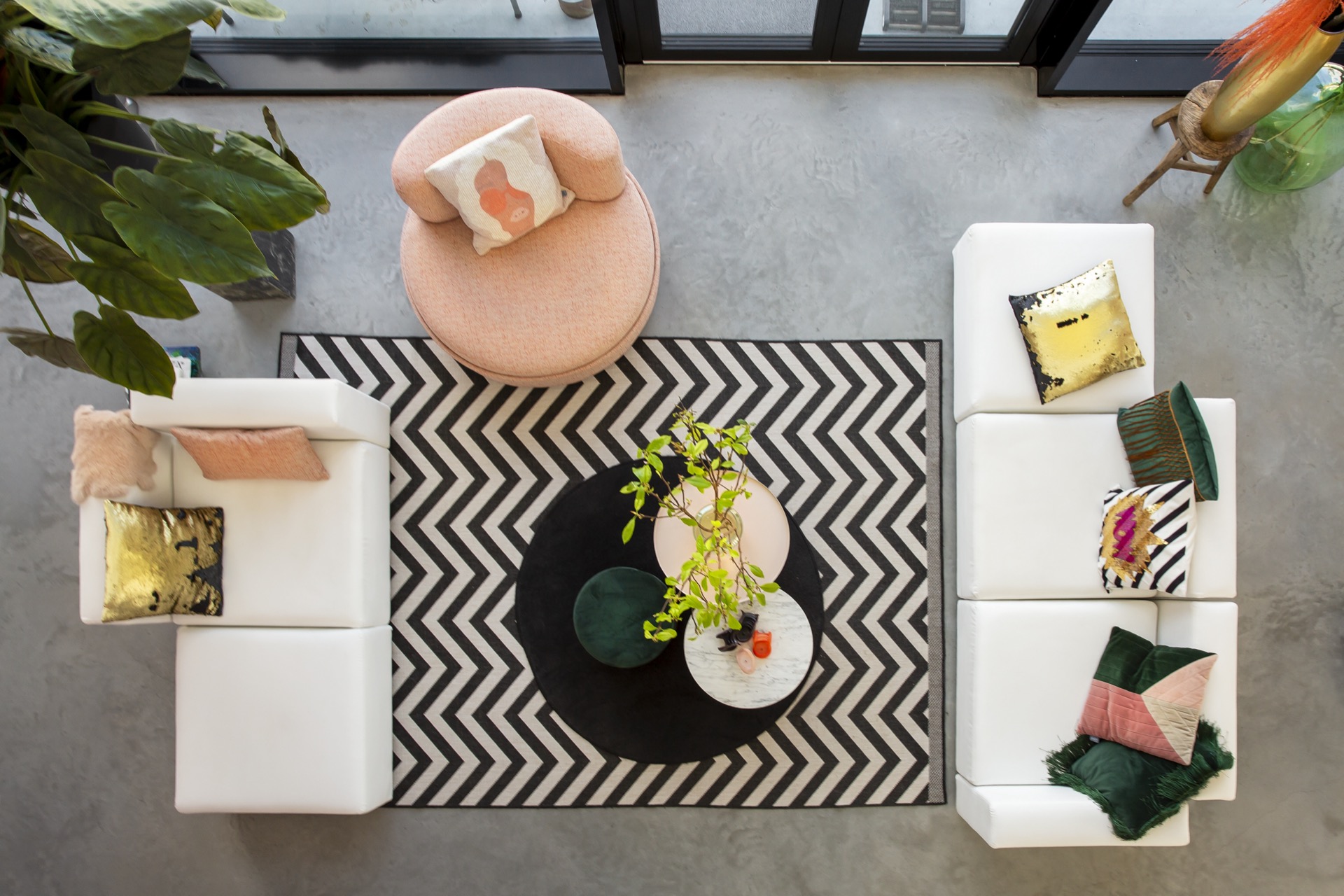
The honed concrete floor sets the pace from the first step inside. It runs past the living area, picks up a graphic black-and-white floor pattern in the seating corner, and continues toward the terrace, where the same calm surface meets the outdoor edge. Large glazing pulls daylight deep into the rooms, so the floor reads differently from one zone to the next: muted near the kitchen, brighter beside the glass, and almost reflective where the sun lands on the concrete terrace.
honed concrete floor as the architectural starting point
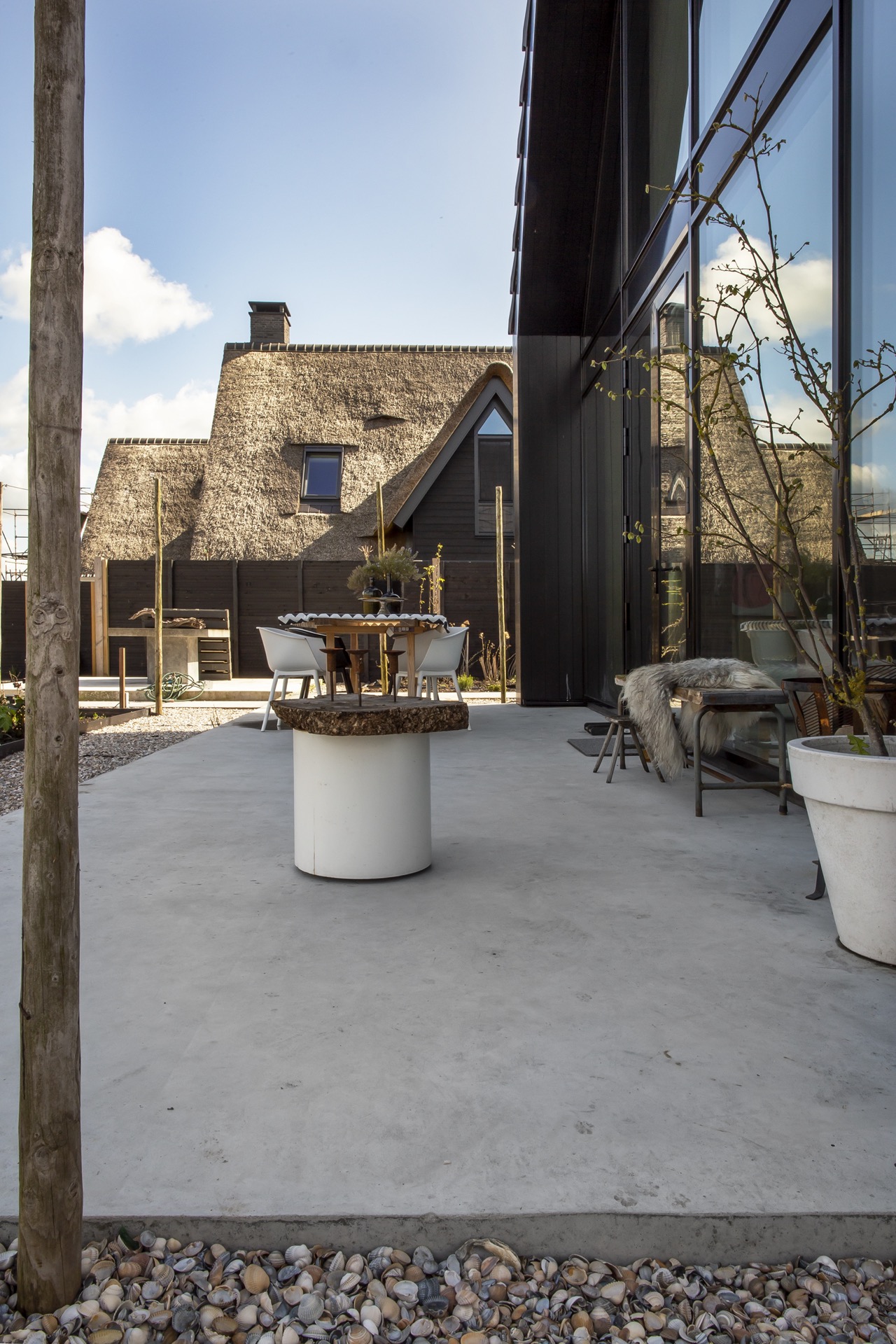
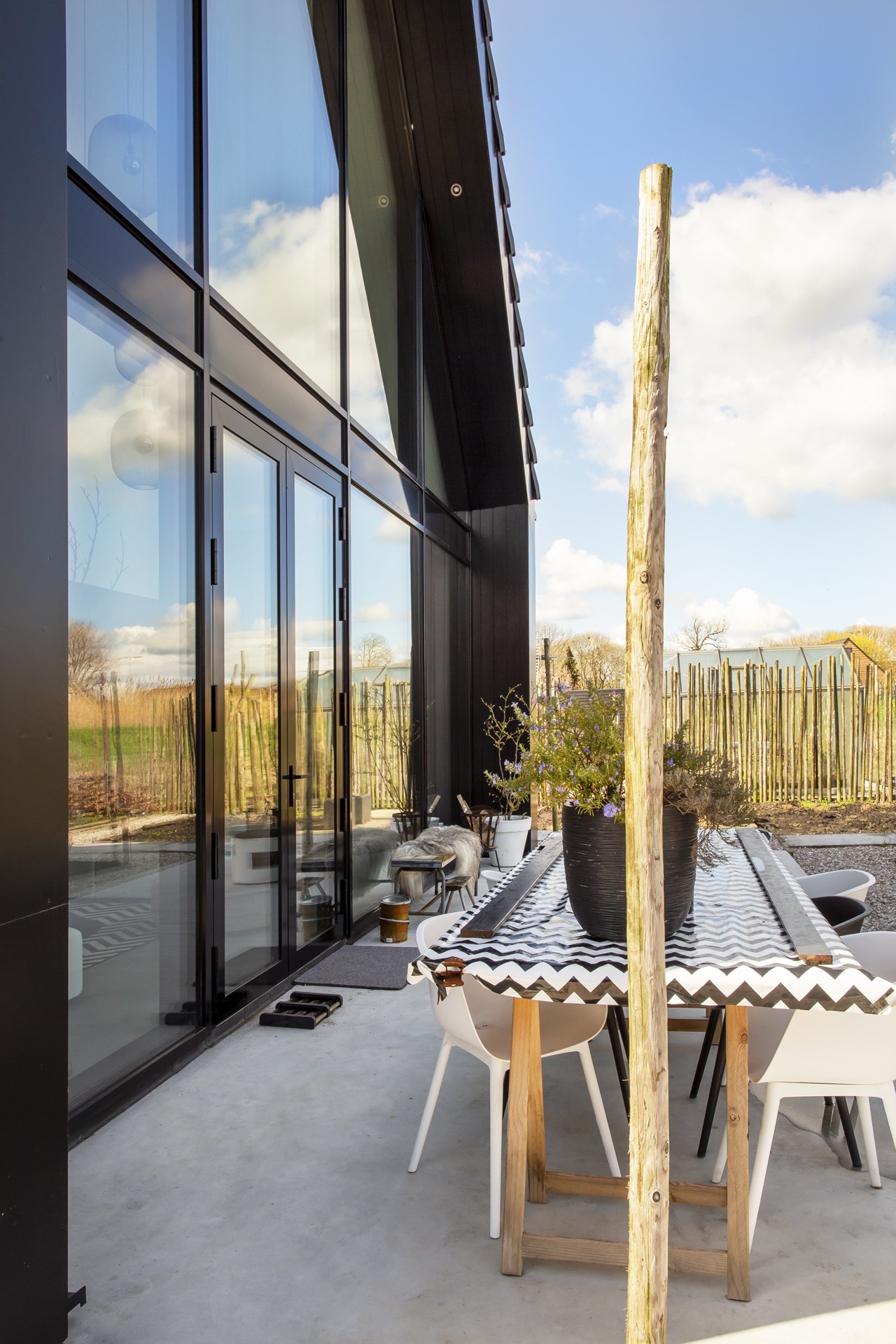
Seen from outside, the house is shaped by black timber cladding and broad sheets of glass. The dark timber gives the volume a closed, direct reading, while the glazing opens one side to long views and clear indoor outdoor sightlines. Black frames sharpen the edges of the openings, and the terrace detail brings the concrete floor outside, so the transition between interior and exterior is read as one continuous route rather than a hard break.
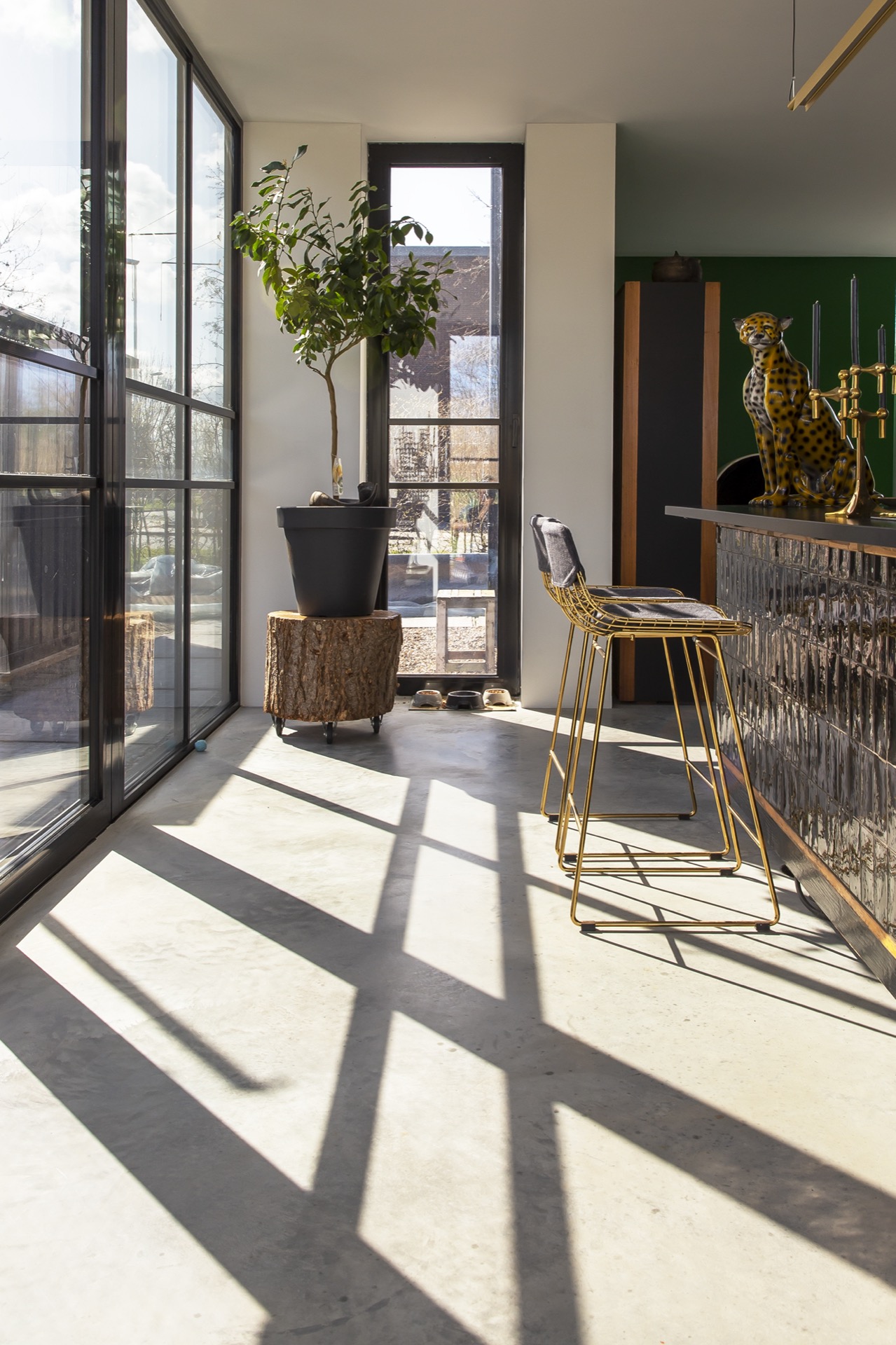
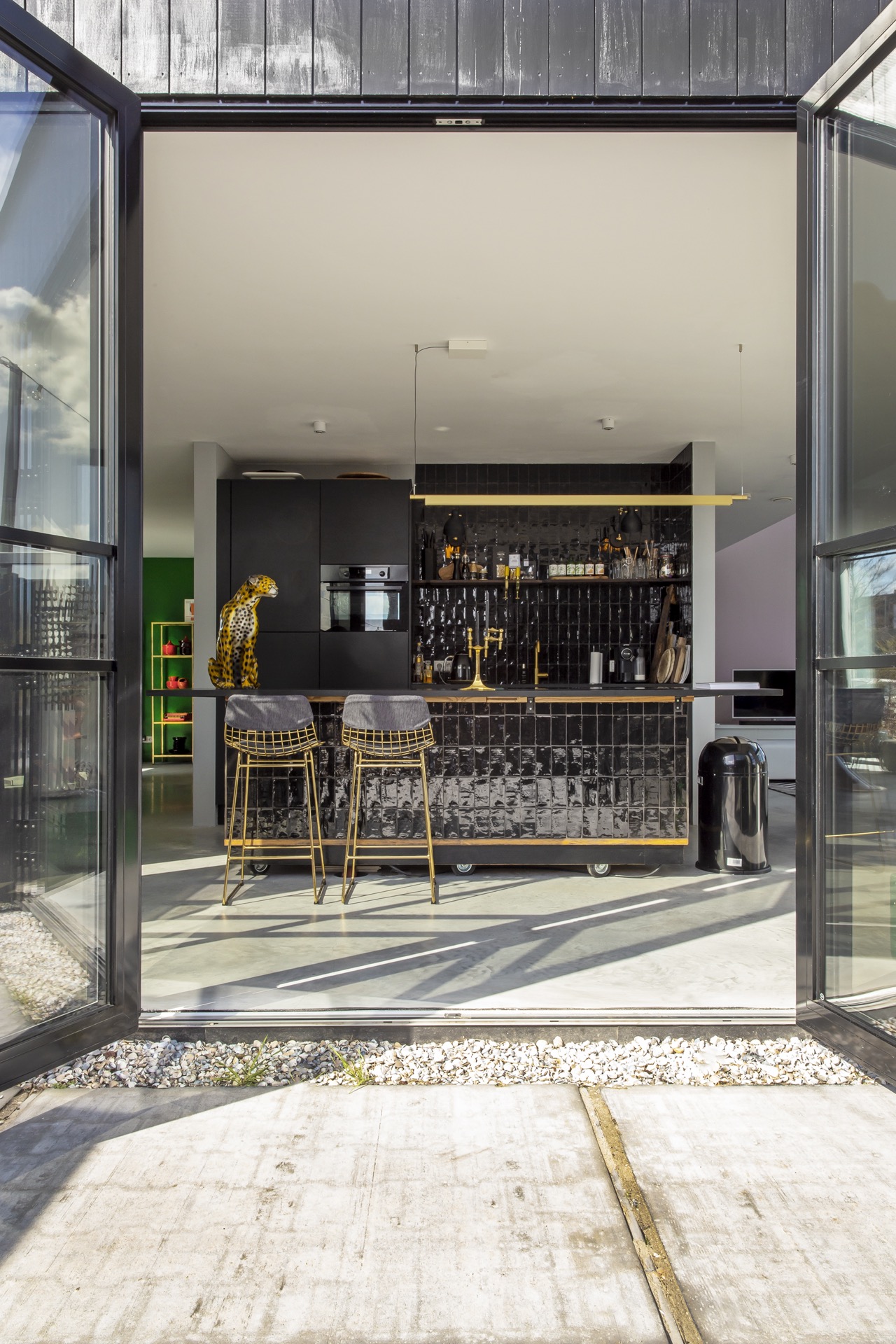
That connection becomes strongest at the large glass facade, where the interior floor meets the terrace floor in nearly the same tone. The result is not about display. It is about alignment: slab, threshold, and frame all working in a narrow band of grey, black, and glass. From inside, the view is wide and level; from outside, the house keeps its dark, compact profile against the lighter concrete surfaces around it.
A honed concrete floor that keeps moving
The honed concrete floor is visible in more than one room, and that continuity gives the interior its structure. In the sitting area, a round pouf sits on top of the floor pattern, breaking the hard geometry with a single soft shape. Nearby, the floor carries through to the dining zone without a change in material, so each room is defined more by furniture and light than by a shift in finish. The concrete surface remains the common thread.
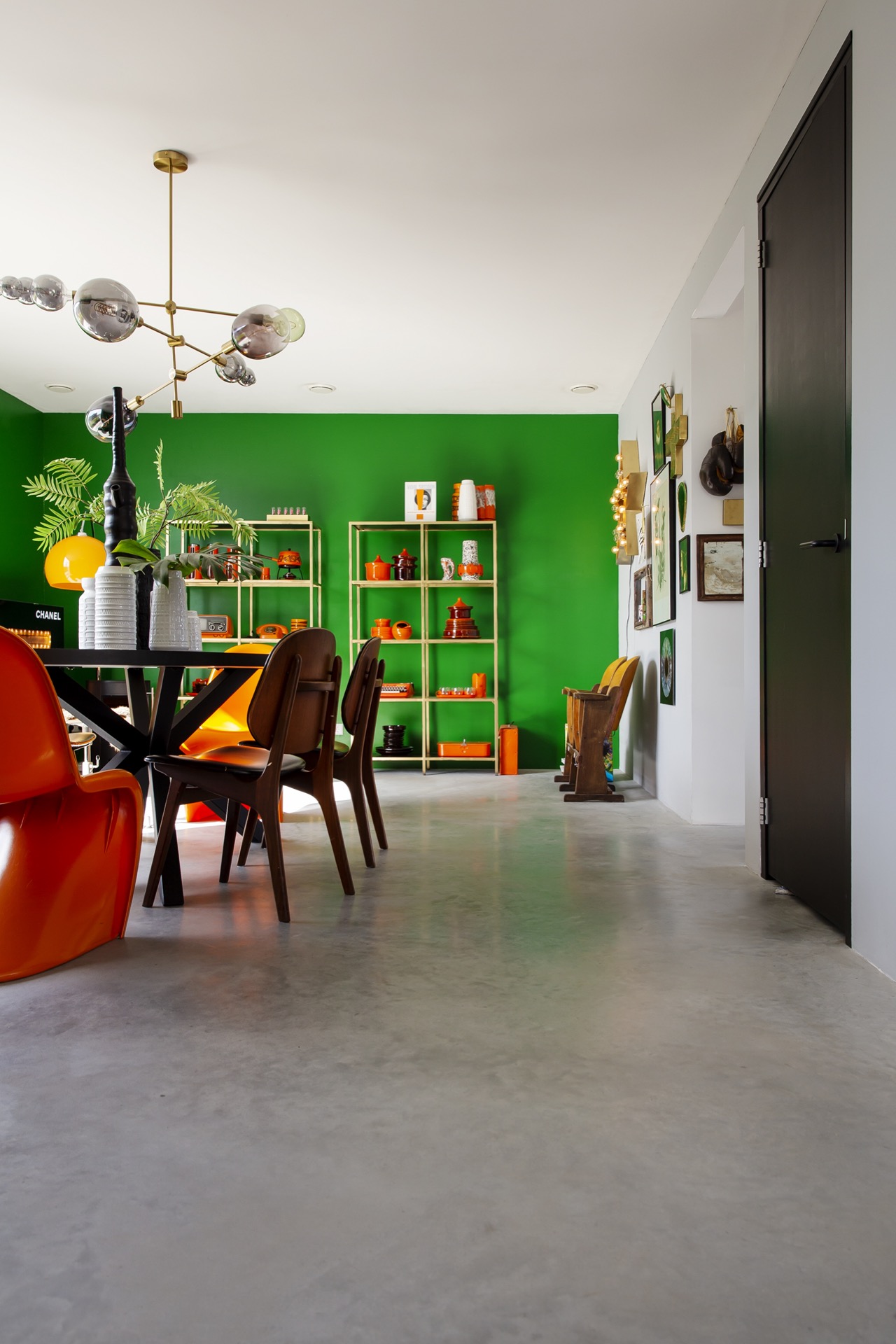
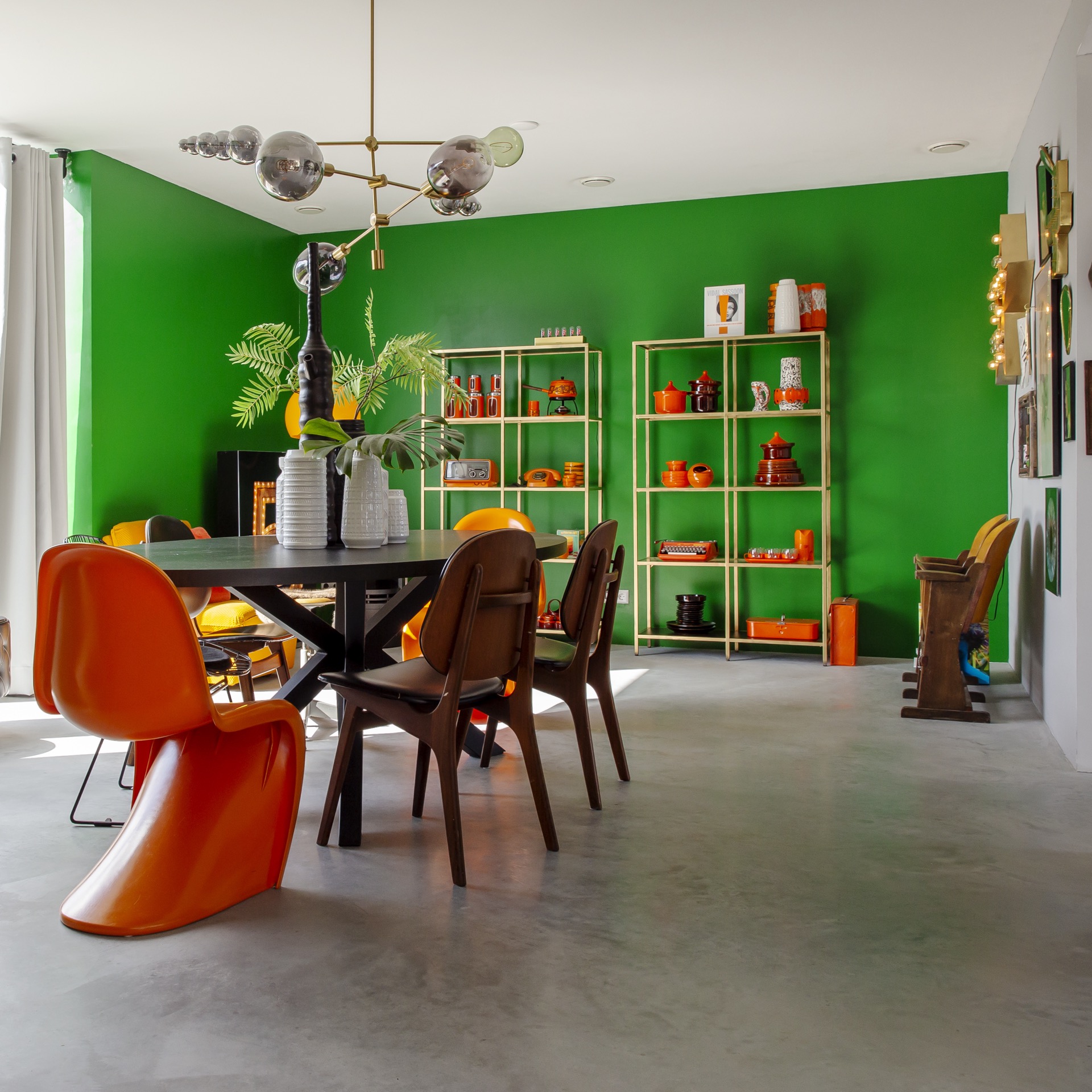
Because the concrete floor flows through rooms, the interior does not rely on thresholds to mark transitions. Instead, changes happen through colour and placement. A green wall in the dining area gathers the eye around the table, while the open floor leaves room for the ceiling lights to float above it. Elsewhere, the same surface runs under the kitchen and toward the glass opening, where daylight stretches across the floor and makes the room feel longer than it first appears.
Pattern, not decoration
One of the clearest details is the honed concrete floor pattern in the seating corner. The black-and-white graphic marking sits against the plain grey surface and gives the room a sharper register without changing the material logic. It is a small interruption, but an effective one. The pattern draws attention to the floor itself, rather than hiding it, and it works well beside the low furniture and the large window behind it.
Dark tiles, wood tones and the kitchen edge
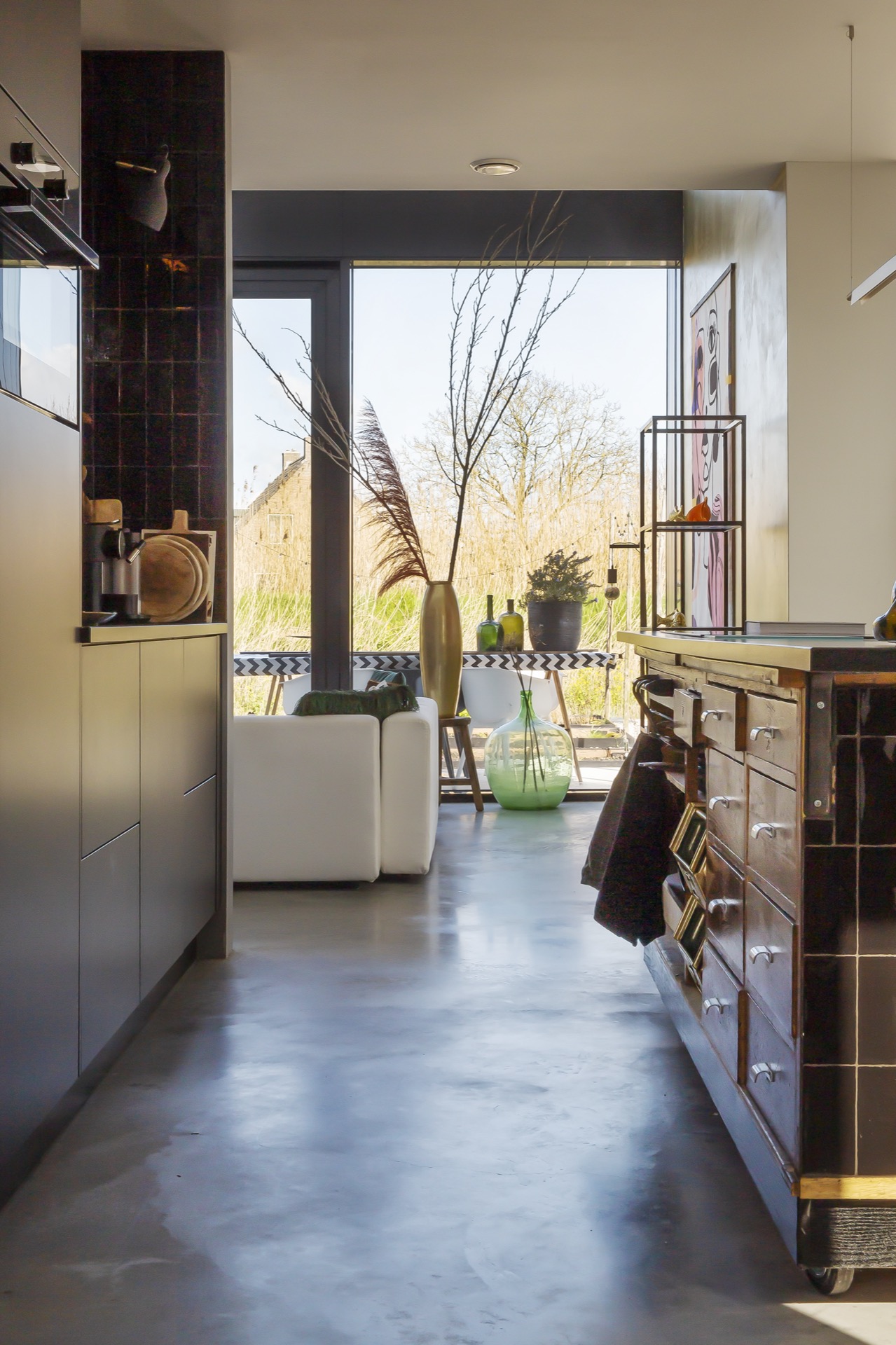
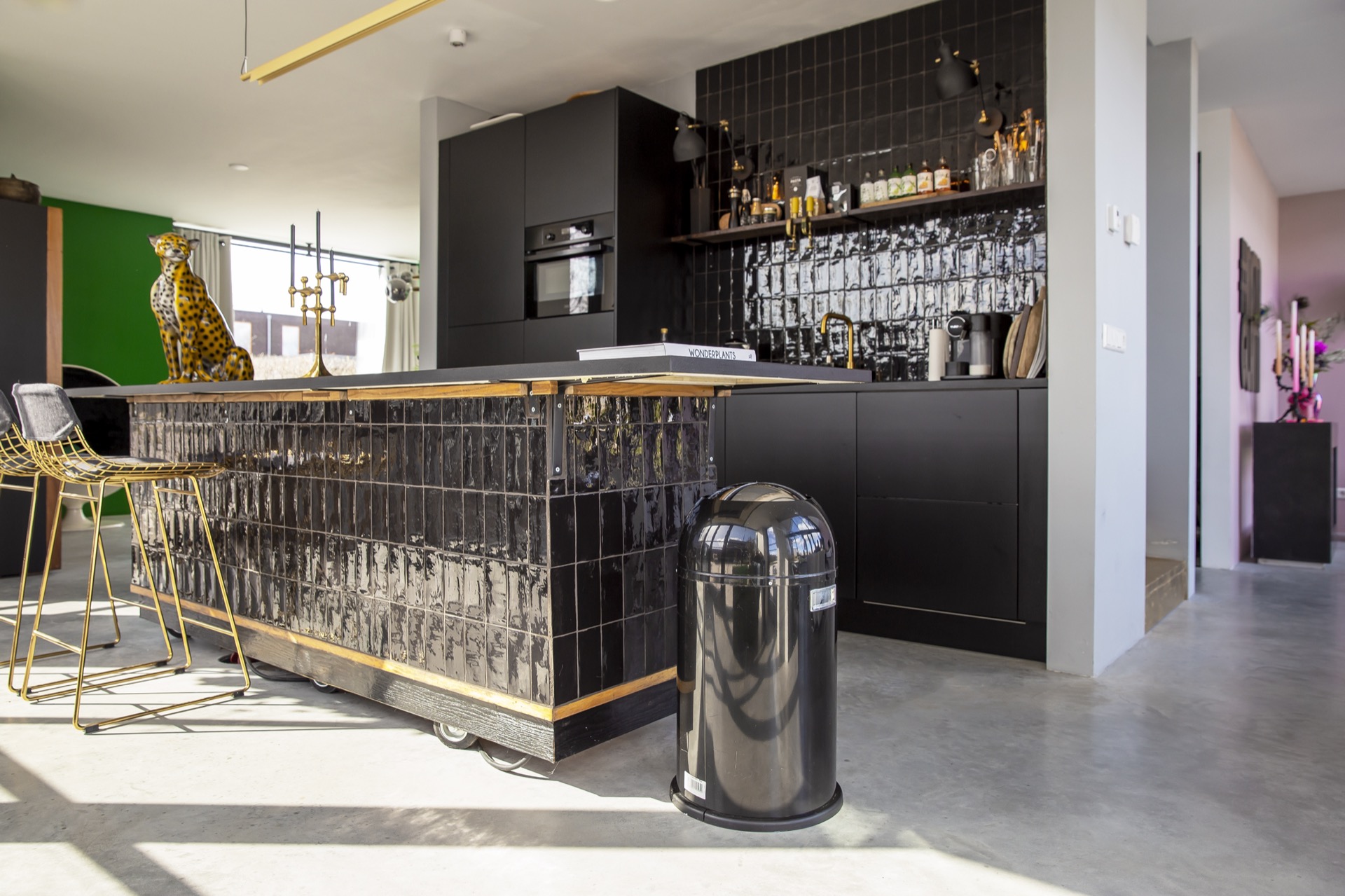
The kitchen shifts the material mix without losing the same grounded base. A dark tiled kitchen backsplash runs along the kitchen block, making the front plane read deeper and denser than the surrounding walls. An integrated oven is set into the cabinetry at the left, and the worktop carries a wood effect that softens the darker tile field. Under the cabinet line, strip lighting traces the edge and helps separate the horizontal surfaces from the wall.
Seen through the glass opening, the kitchen also connects to the terrace and the floor beyond it. The honed concrete floor remains visible underfoot, so the room never feels boxed off from the rest of the house. The dark tile surface, the wood-look countertop, and the concrete base each do a different job: one absorbs light, one catches it, and one carries it onward. That combination keeps the kitchen visually calm without flattening the space.
Rooms shaped by daylight and open views
Large windows do more than bring in light. They change how the furniture sits in the room and how the concrete floor is read at different times of day. In the living space, the glazing frames the exterior view and leaves a clear band of floor visible along the perimeter. The walls stay comparatively quiet, so the room depends on the relationship between the opening, the floor, and the low pieces placed in front of it.
In the dining area, the wall colour turns greener and the light fittings become part of the composition. Glass globes hang above the table, catching daylight during the day and reading as small points of reflection in the evening. The honed concrete floor below stays visually steady, which allows the furniture, wall niche, and lighting to carry more of the scene. Nothing is overworked, but nothing is left vague either.
A terrace finished in the same language
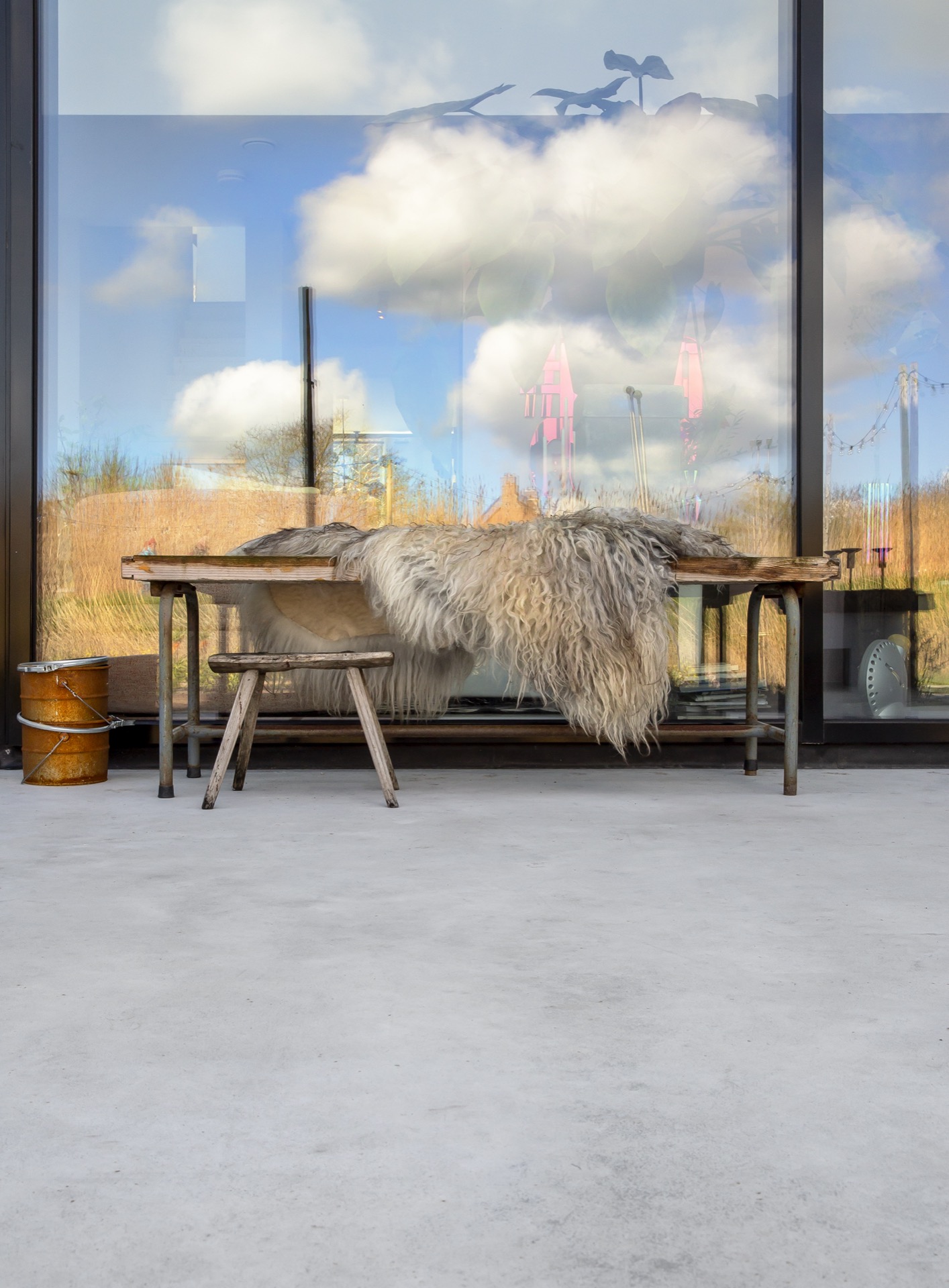
The concrete terrace extends the interior material palette outside. It is simple in form, with a bench set against the facade and black timber above it. The terrace floor mirrors the inside in tone and texture, so the exit from the house feels measured rather than abrupt. From the living room, the terrace reads as another band of the same composition: glass, frame, concrete, then open air.
Because the terrace sits at the edge of the plot, the view opens out rather than closing down on a fence or a planted buffer. That makes the concrete floor visible in a wider frame, especially where the sun hits the slab and the glass reflects the room behind it. The interior outdoor sightlines stay clear here. Even the furniture placement supports that reading, with the bench and the window line keeping the edge legible.
Eclectic rooms held together by one floor
The interior combines vintage forms, modern lines and coloured details, but the honed concrete floor keeps the rooms from drifting apart. In one zone, the furniture is round and soft. In another, the green wall and glass pendants take over. Elsewhere, the kitchen is all straight edges, dark tile and built-in storage. The floor stays constant through all of it, which makes the changes in mood feel deliberate rather than fragmented.
That is also why the house reads clearly from room to room. You move across the same surface, under the same daylight, past different walls and objects that each claim their own corner. The result is a home where the material base is visible everywhere: underfoot in the living room, in the kitchen, and out on the terrace. The black timber cladding outside, the large glass facade, and the dark tiled kitchen backsplash all reinforce that same measured contrast, but the concrete floor is what holds the plan together.
What remains after the first look is the sequence of surfaces. Concrete underfoot, glass at the edge, timber outside, tile in the kitchen. The house uses those materials plainly and keeps the transitions readable, which gives the interior its distinctive rhythm. The honed concrete floor is not a backdrop here; it is the line that lets the rooms, the terrace, and the glazing belong to the same visual route.
Want to see more of Willem Designvloeren? View the page of Willem Designvloeren for even more great projects and company information.


.png)