








Glass TV wall (cinewall) with black aluminium profiles and hinged door
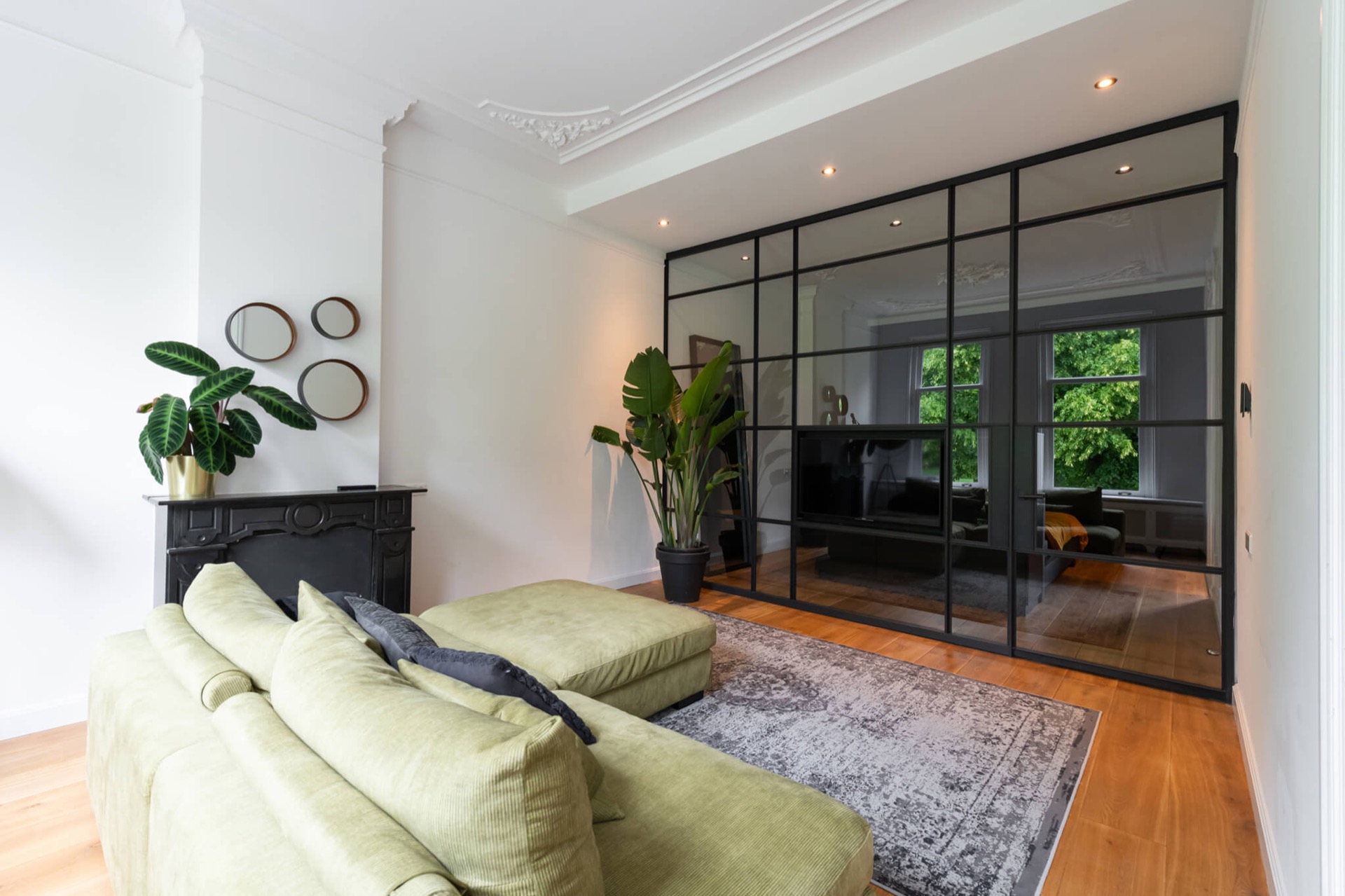
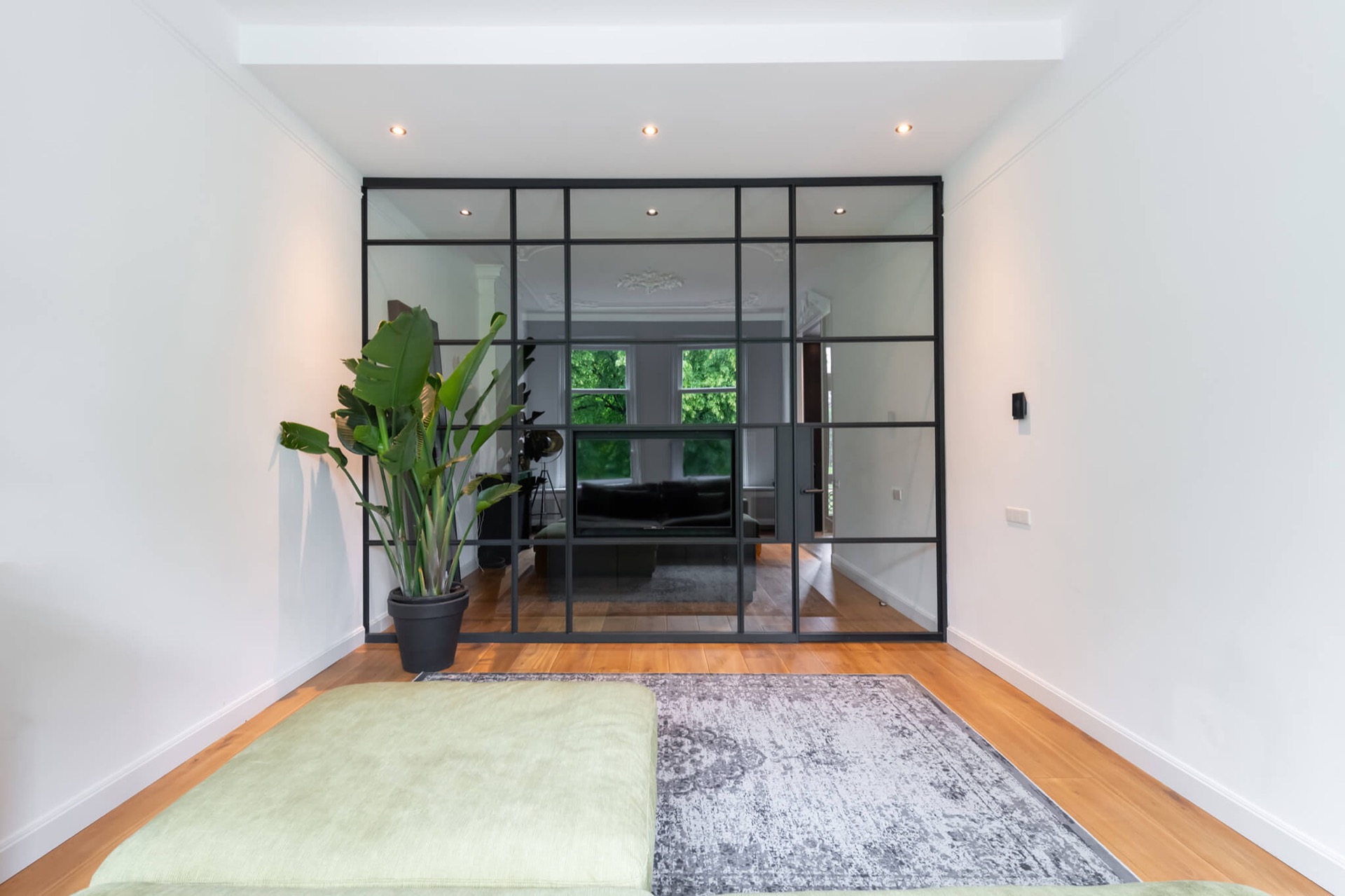
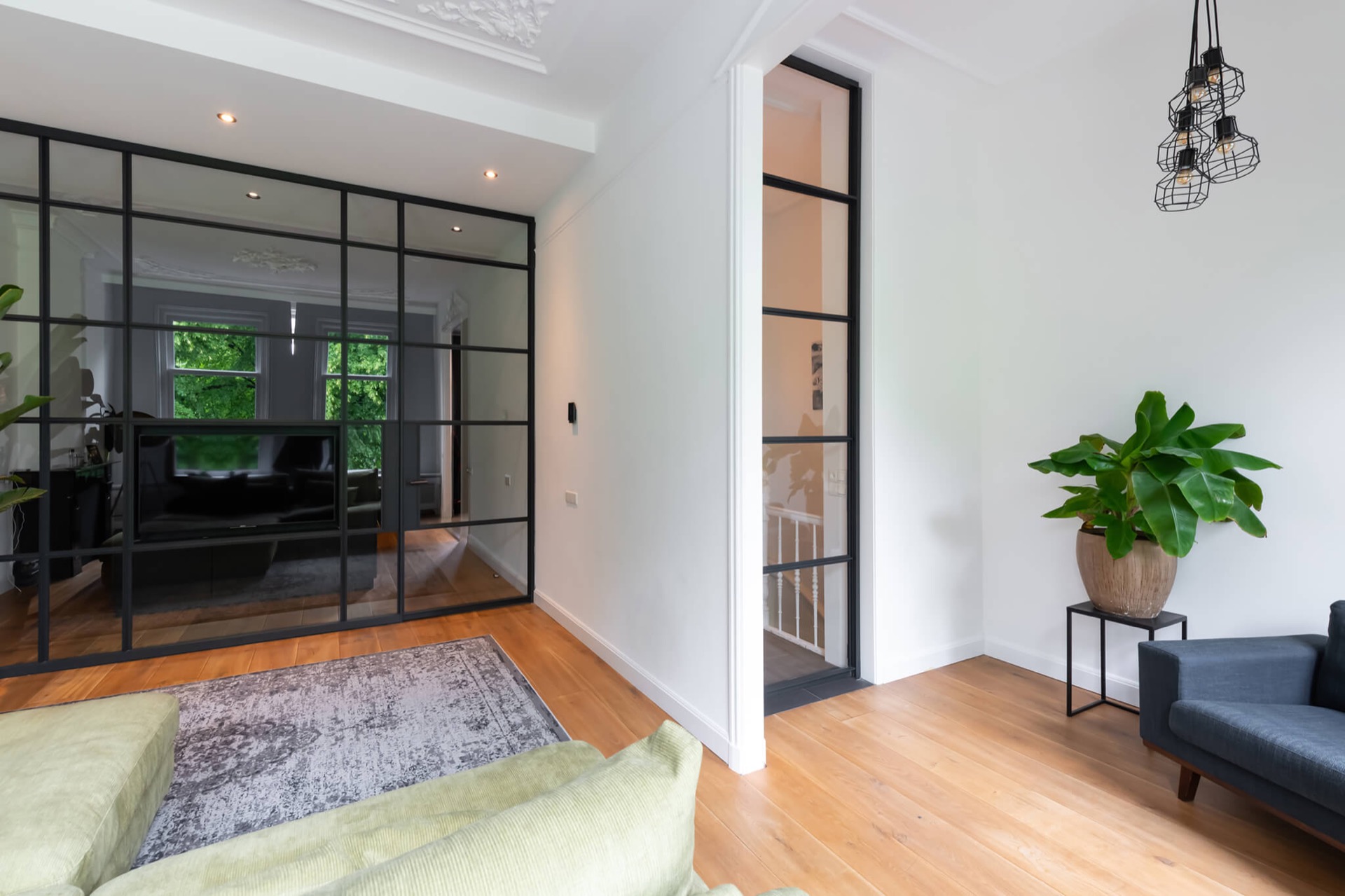
The television sits inside a glass TV wall with black aluminium profiles, not as a separate cabinet but as part of a framed grid. The rectangular divisions pull the eye across the wall and keep the screen anchored in a built-in TV opening in glass wall. In front view, the structure reads as one measured surface: glass panels, narrow metal lines, and a TV niche in a glass wall that interrupts the grid without breaking it.
A glass TV wall built as one framed surface
What stands out first is the way the profiles continue around the opening. The TV is placed in a glass TV wall with black aluminium profiles, and the surrounding lines keep the niche tied to the rest of the panel layout. There is no large unit below the screen. Instead, the opening sits inside the field of glass, which gives the wall the look of an integrated frame rather than a freestanding piece of furniture. The black aluminium grid profiles draw clear horizontal and vertical lines against the lighter room.
That grid is not only visual. It also organises the way the wall is read from a distance. Each glass section keeps its own proportion, while the television occupies one central break in the rhythm. Because the profiles run past the opening, the screen does not float on its own. It becomes part of the wall’s construction. This is where the glass TV wall with black aluminium profiles works best: the details stay visible, but they are all governed by the same layout.
The TV niche in the glass wall keeps the screen recessed
The TV niche in a glass wall gives the screen a fixed place without adding bulk underneath. From the front, the opening feels cut into the frame, not placed against it. Around the niche, the metal sections remain tight and rectangular, which keeps the wall legible as a single system. The surrounding glass and the dark lines set up a clear contrast, especially where the lighter wall and the wooden floor sit behind the frame.
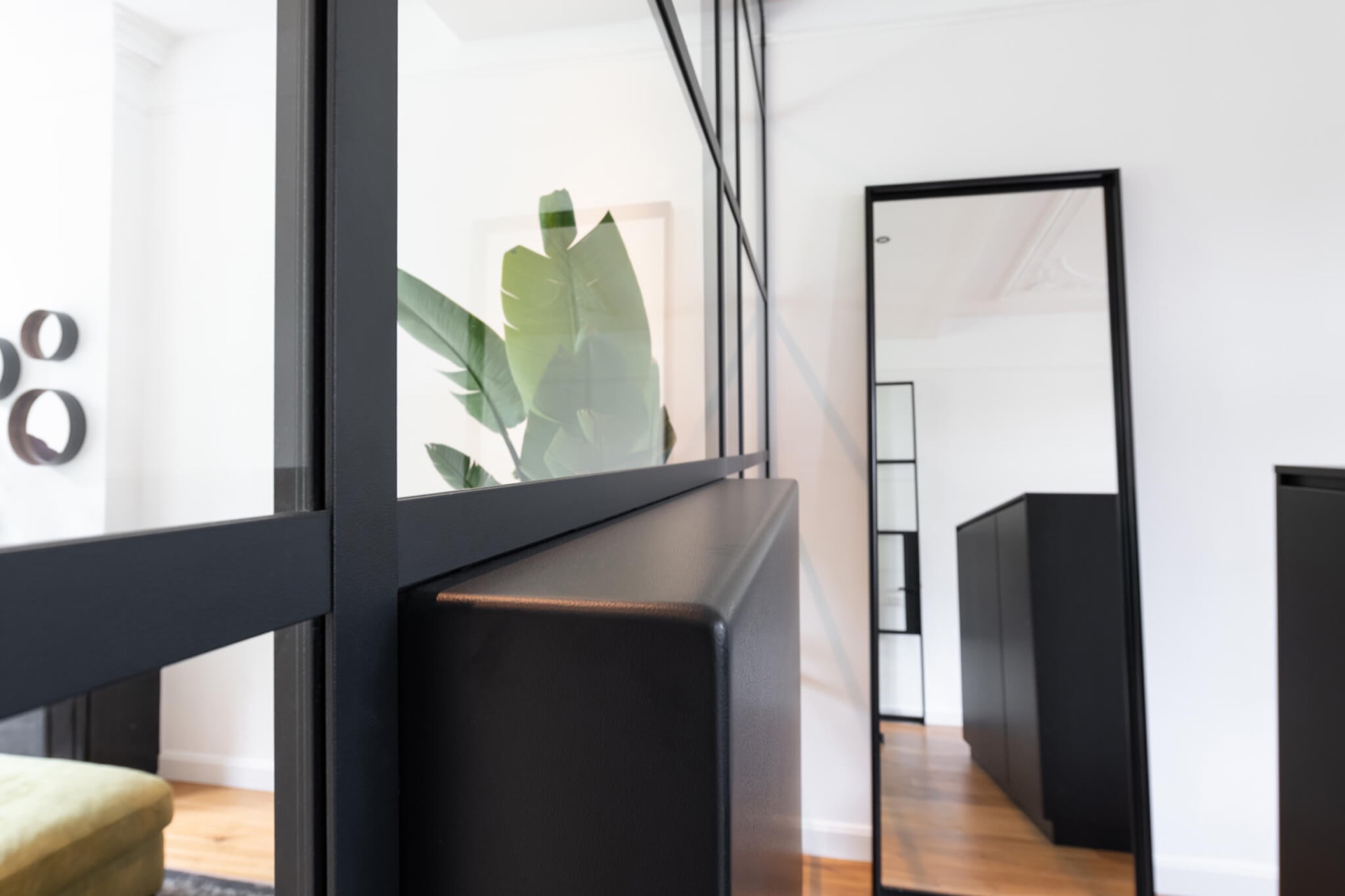
Seen up close, the profile work becomes the most visible part of the composition. The black aluminium frame marks out the edges of each pane, and the joints stay close to the glass. That precision gives the built-in TV opening in glass wall its calm, fixed appearance. It is not a hidden solution. It is a readable one, built from repeated measurements and consistent spacing.
Cables disappear into the profile structure
The cable routing through aluminium profiles keeps the technical side from taking over the wall. Instead of loose wires running along the floor or down the side of the unit, the cabling follows the profile system toward the wall. That choice leaves the grid clear to read. You notice the rectangular structure, the TV niche, and the glass surfaces before you notice anything technical. In a project like this, that matters. The wall only works because the visible lines stay clean and uninterrupted.
On the photographs, this approach shows in the way the frame remains the main event. The junctions between glass and metal stay tight, and the cable route does not create a cluttered zone near the screen. The result is a glass TV wall with black aluminium profiles that keeps its shape even when seen from different angles. Light, reflection, and shadow move across the panes, but the structural order stays the same.
Tinted glass sections in the TV wall add a darker layer
Some parts of the wall use tinted glass sections in TV wall. The darker panes soften what sits behind them and make the contrast with the clear passage next to them easier to read. They also change the surface of the wall. Reflections become a little deeper, and the grid appears denser where the tinted glass sits within it. The effect is visible rather than decorative: the wall shifts from transparent to muted without changing its underlying structure.
The difference between clear and tinted glass gives the composition a second register. The clear areas keep the room open, while the darker sections pull the eye inward. Because both are set inside the same black aluminium grid profiles, the shift feels controlled. The wall does not become heavy. It simply gains another layer of tone, and that layer is enough to make the grid read with more depth.
The hinged door follows the same grid
The cinewall with hinged door uses the same measure division as the rest of the wall. The door is not treated as a separate insert. Its frame sits inside the same aluminium logic, so the door reads as one more panel in the system. From the front, the verticals and horizontals continue across it, which keeps the rhythm intact. The opening line is there, but it does not interrupt the overall structure.
That is also why the door feels visually lighter than a solid partition. The glass keeps the section open to light, while the black profile line maintains the grid. In the side views, the hinge movement becomes visible and the door acts as a passage through the framed wall. Yet even when open, it still belongs to the same composition. The hinged door does not compete with the TV niche in a glass wall; it extends the same language.
A clear glass access door keeps the passage light
Next to the TV wall, a clear glass access door continues the same design concept. Its role is different from the tinted sections: it lets more light pass through and keeps the view toward the room behind it more open. The black framing ties both elements together, so the door does not read as a separate object. It belongs to the same set of profiles, the same spacing, and the same measured proportion.
That contrast between clear and tinted glass is easy to see in the pictures. Where the darker panes hold the screen area back visually, the clear door keeps the passage from closing off. Reflections from the adjacent space, including the visible ceiling spots, move across the glass and change with the angle. The wall then acts less like a divider and more like a structured transition between rooms.
Made to follow the customer’s idea
The project was developed from a customer idea, which explains why the details line up so closely. The frame, the glazed sections, the door and the TV niche all follow one measured order. Because the work was made as custom joinery in-house, the parts could be aligned to the same grid from the start. That shows in the clean junctions and in the way the opening, door and fixed panels share the same proportions.
From close up, the material mix is simple: glass, aluminium and traces of wood in the surrounding interior. The wall does not rely on decorative additions. Its effect comes from the way the screen, the profiles and the glass panels are set against each other. The black aluminium profile grid gives the composition its edge, while the glass keeps changing with reflection and light. Seen this way, the glass TV wall with black aluminium profiles is less a cabinet than a built-in architectural frame for the room.
That built-in reading is the strength of the project. The TV sits in a glass opening, the hinged door follows the same rhythm, the cables travel through the profiles, and the tinted and clear panes are used side by side. Each part is visible, but none of it feels added later. The wall stays readable because every element answers to the same grid. In a room with light walls, wooden flooring and ceiling spots, that discipline is what gives the glass TV wall with black aluminium profiles its presence.
Want to see more of Arte Verde? View the page of Arte Verde for even more great projects and company information.



NEW 2026 Jubileum Edition The Best Interior Designers Benelux
Order Now €125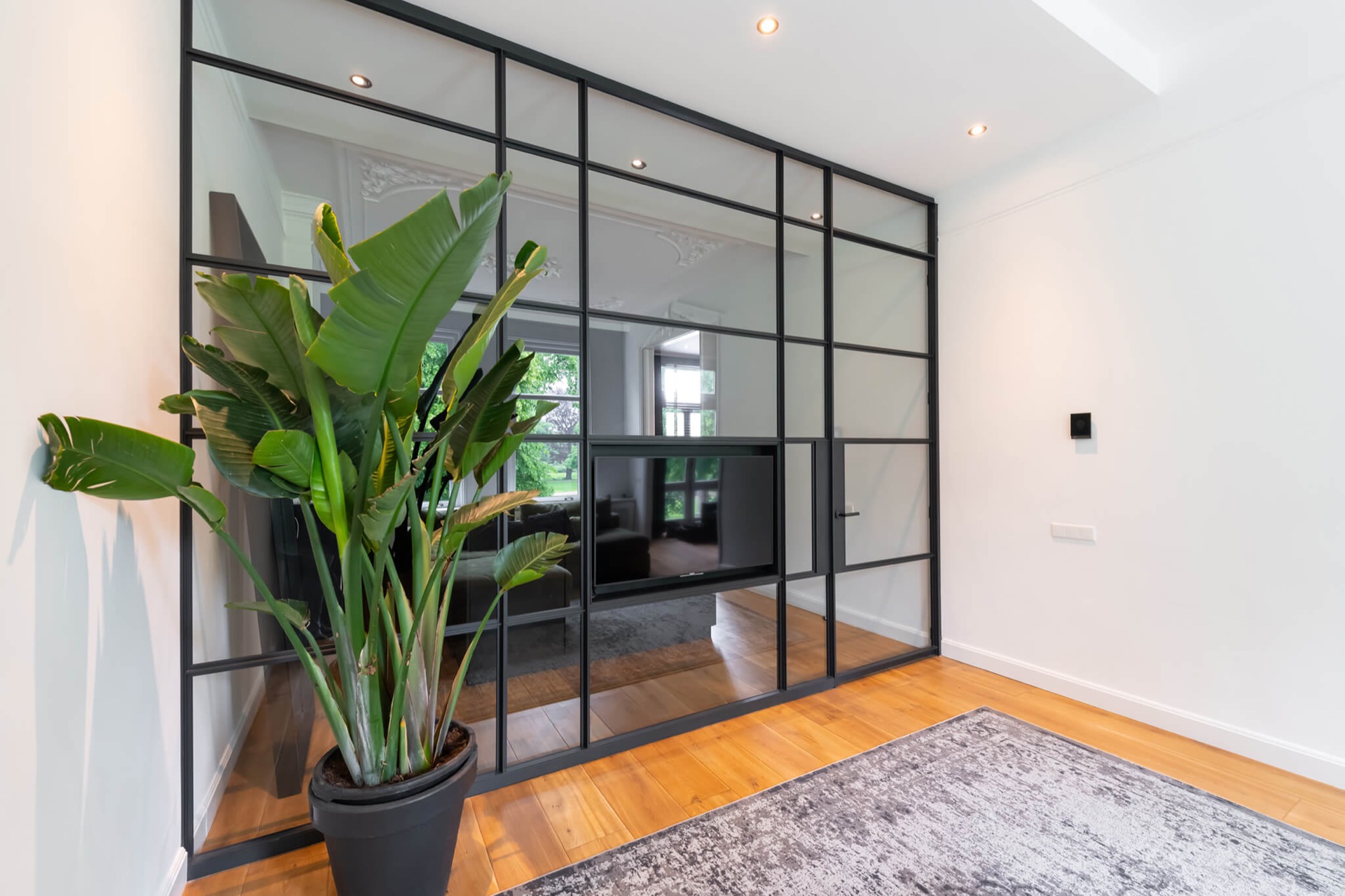
NEW 2026 Jubileum Edition The Best Interior Designers Benelux
Order Now €125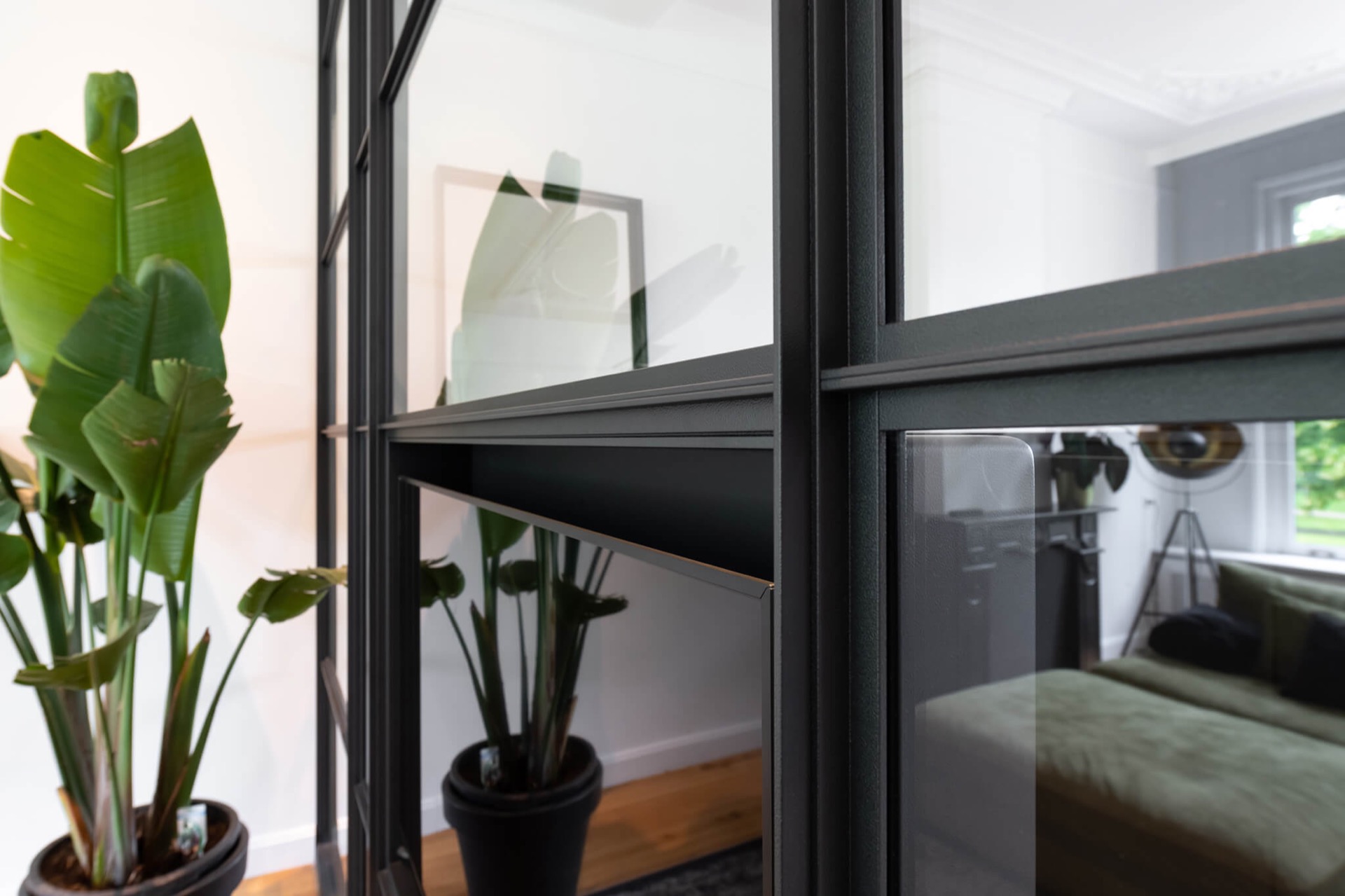
NEW 2026 Jubileum Edition The Best Interior Designers Benelux
Order Now €125


 with black aluminium profiles and hinged door%20-%20)
 with black aluminium profiles and hinged door%20-%20)
 with black aluminium profiles and hinged door%20-%20)
 with black aluminium profiles and hinged door%20-%20)
 with black aluminium profiles and hinged door%20-%20)
 with black aluminium profiles and hinged door%20-%20)