










Hungarian point parquet floor with border band
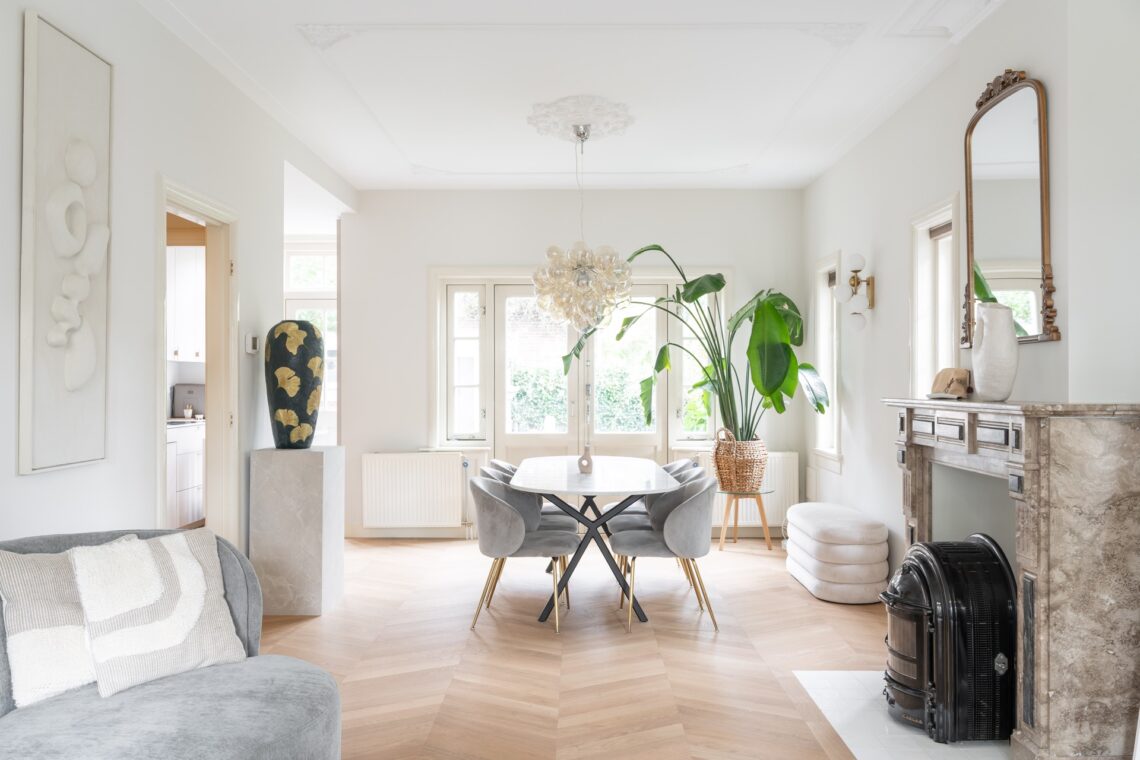
A light oak floor sets the tone as soon as you enter the room. The boards run in a Hungarian point parquet floor pattern, with each angle pulling the eye across the space and toward the clean perimeter finish. The surface reads calm rather than ornate, helped by the ultra matte finish that keeps reflections low and lets the grain sit quietly in the room.
A patterned floor laid with straight-grained oak
The parquet is made from French oak in a top-grade selection, with only straight-grained pieces used in the layout. That choice keeps the pattern clear and restrained. Instead of knots or interruptions, the floor shows long lines and a steady rhythm, which is easy to read in the wide living room views. It is a Hungarian point parquet floor, but the material treatment keeps it from feeling busy.
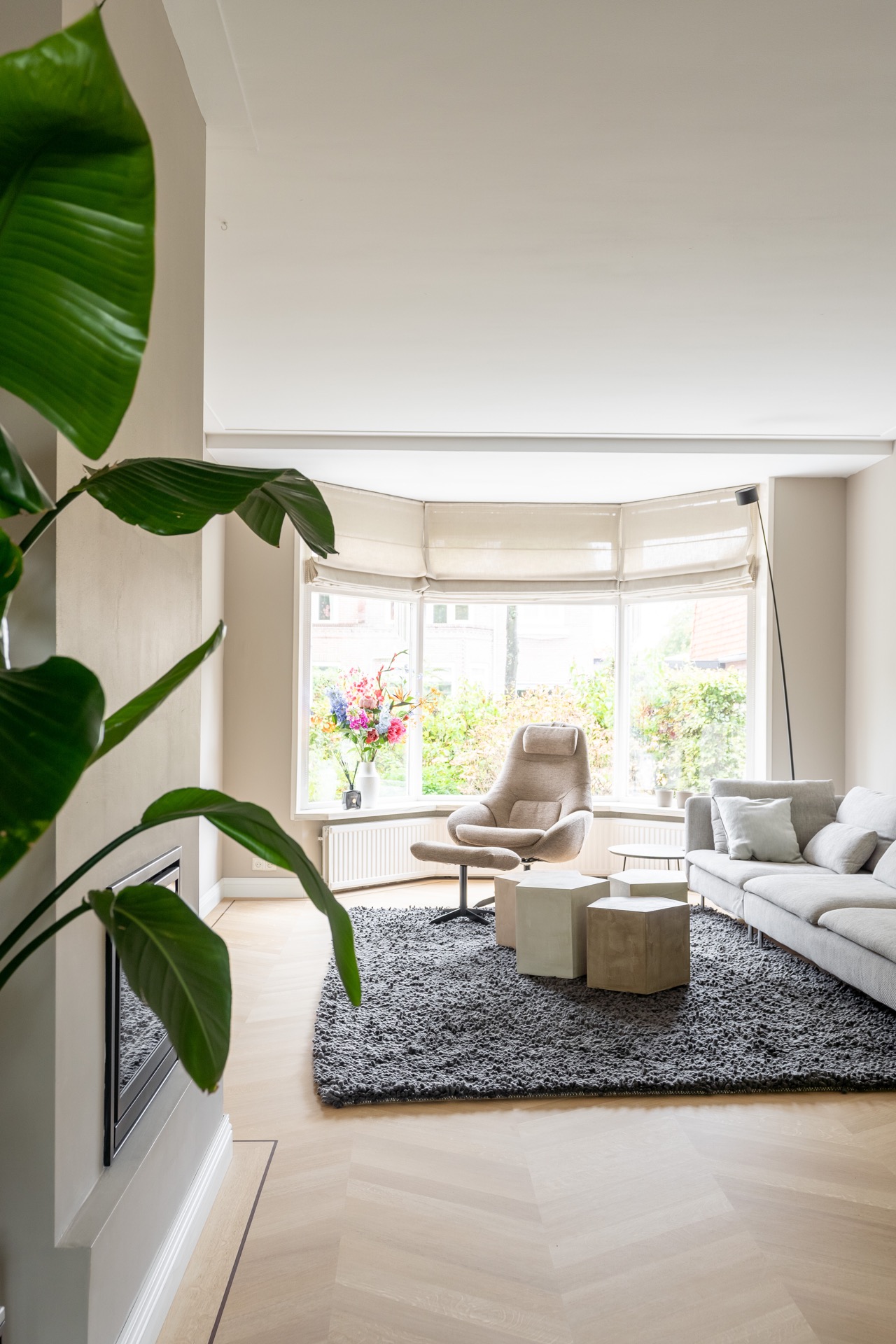
The visual effect is strongest where daylight falls across the boards. The angled strips catch the light at different points, while the pale wood tone stays even from one section to the next. In the room images, the floor works as the main surface rather than a backdrop. White walls, a white ceiling, and simple openings leave the pattern to carry the space.
Border band and dark trim at the room edge
Along the perimeter, the floor is finished with a border band and a dark trim. That edge makes the outline of the room sharper and gives the parquet a framed appearance. The contrast is visible in the wide shots and in the close-up details, where the dark line sits neatly against the lighter oak. It is a small intervention, but it changes the reading of the room edge completely.
The border band also helps the floor meet walls, openings, and transitions with more precision. In the doorway views, the pattern continues without confusion, and the surrounding finish keeps the edge controlled. This is where the parquet border does its quiet work: it contains the pattern, sets off the floor field, and makes the room feel carefully resolved without drawing attention away from the wood itself.
Why the dark trim matters in a light room
The room is bright and mostly neutral, so the darker strip has real impact. It gives the floor a clear outline against the white plastered walls and the pale ceiling. In the same interior, a very dark detail could have become heavy, but here it stays thin and measured. The result is a cleaner edge transition and a stronger sense of order around the living room floor detailing.
Seen from a distance, the band reads like a drawn line. Up close, it reveals how the floor was composed at the margins. The corners are especially telling: the trim turns neatly, and the change in tone holds the geometry together. That is the kind of finish that only becomes visible when the room is lit by broad daylight and nothing else competes with it.
Ultra matte finish across the oak surface
An ultra matte finish completes the surface. The coating keeps sheen to a minimum, so the oak remains visually open and light without becoming glossy. In the photos, this finish suits the room well because it lets the leg pattern, the border band, and the grain stay legible at the same time. The floor does not mirror the room; it absorbs it.
That choice is noticeable around the fire niche and the other junctions in the interior. The floor passes under the opening with a crisp line, and the finish avoids glare where the light shifts across the surface. The same applies to the wider passages and the corner where the pattern turns. Every line feels deliberate because the coating does not compete with the joinery, walls, or openings around it.
Details around the fireplace and doorway
Several images show the floor meeting a white fireplace recess. The oak runs right up to the opening, and the surrounding edges stay sharp. It is a good place to read the workmanship, because the floor has to meet a different material and a fixed architectural shape. Here the pattern remains consistent, while the perimeter finish keeps the transition tidy.
The doorway and entry views show a similar level of control. The pattern continues through the opening, and the band keeps the edge legible as the floor moves from one area to another. In these views, the Hungarian point parquet floor is not isolated as a decorative field. It is part of the room’s movement, leading the eye from one wall plane to the next with a measured sequence of lines.
Material, light, and line working together
Light oak, a dark outline, and a matte surface are the three elements that define this floor. None of them shouts for attention. Together they create a surface that reads clearly from across the room and still rewards close inspection. The straight-grained selection keeps the pattern disciplined, while the border band adds a second level of framing around the field of boards.
The room itself stays quiet around the floor. White plaster, simple openings, and daylight from large windows keep the background light and plain. That gives the parquet a lot of visual space, which is why the edge detailing matters so much. In a setting like this, the Hungarian point parquet floor becomes the main architectural layer, not just the finish underfoot.
A floor that holds the room together at the edges
What stands out most is the care given to the margins. The dark trim, the border band, and the precise corner turns give the floor a defined edge without making it feel rigid. The pattern remains readable across the full room, from the broad living area to the tighter details around the fireplace and threshold. The finish stays subdued, which lets the geometry of the parquet do the work.
It is a floor built on restraint: pale oak, a clear angular pattern, and an outer line that locks everything into place. The living room feels calmer because of that discipline. The eye can move from the center of the floor to the perimeter and back again, following the boards, the band, and the trim as a single composition.
Want to see more of Vloerenhuis Amsterdam? View the page of Vloerenhuis Amsterdam for even more great projects and company information.




NEW 2026 Jubileum Edition The Best Interior Designers Benelux
Order Now €125


NEW 2026 Jubileum Edition The Best Interior Designers Benelux
Order Now €125


NEW 2026 Jubileum Edition The Best Interior Designers Benelux
Order Now €125


