







Industrial Modern Home with Practice Space (Residence G)
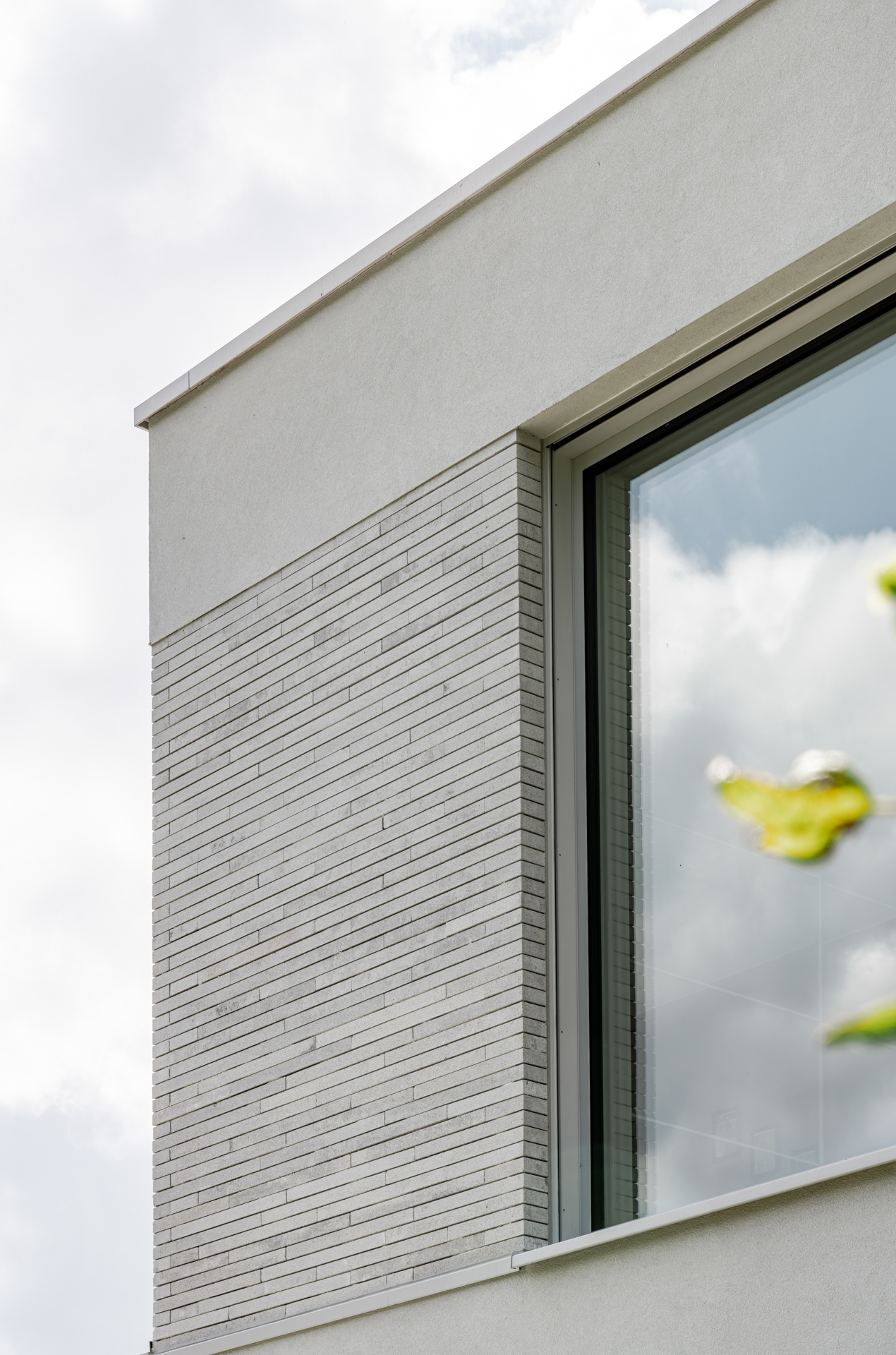
Long brick bands set the tone before the eye reaches the windows. The wall reads in horizontal layers, with concrete edges and aluminum frames breaking up the surface in a deliberate rhythm. Inside, the industrial modern home with practice space is kept clear and direct, so the materials can do the speaking: masonry, glass, concrete, wood, and a few stone accents that catch the light without asking for attention.
industrial modern home with practice space as the architectural starting point
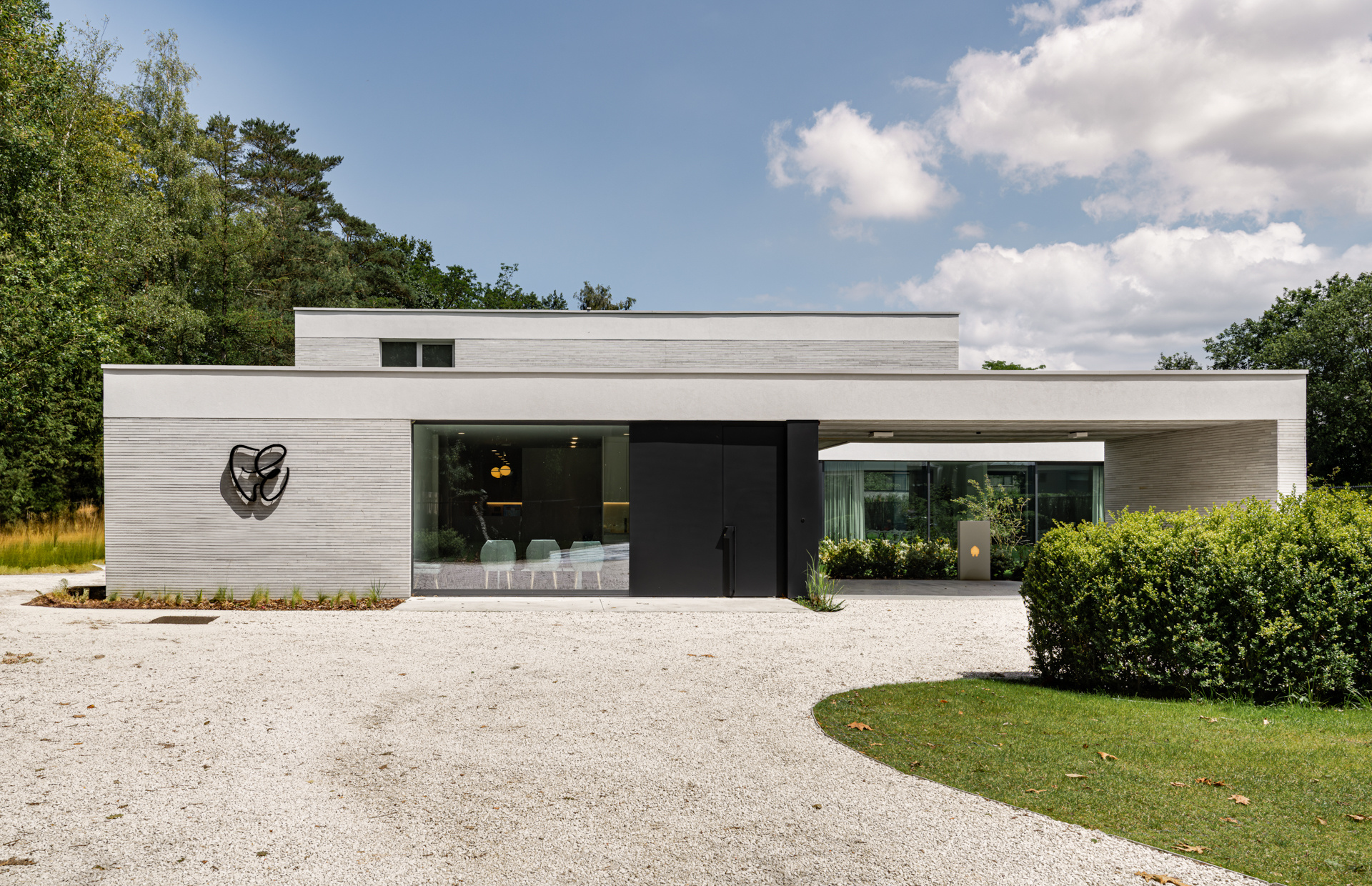
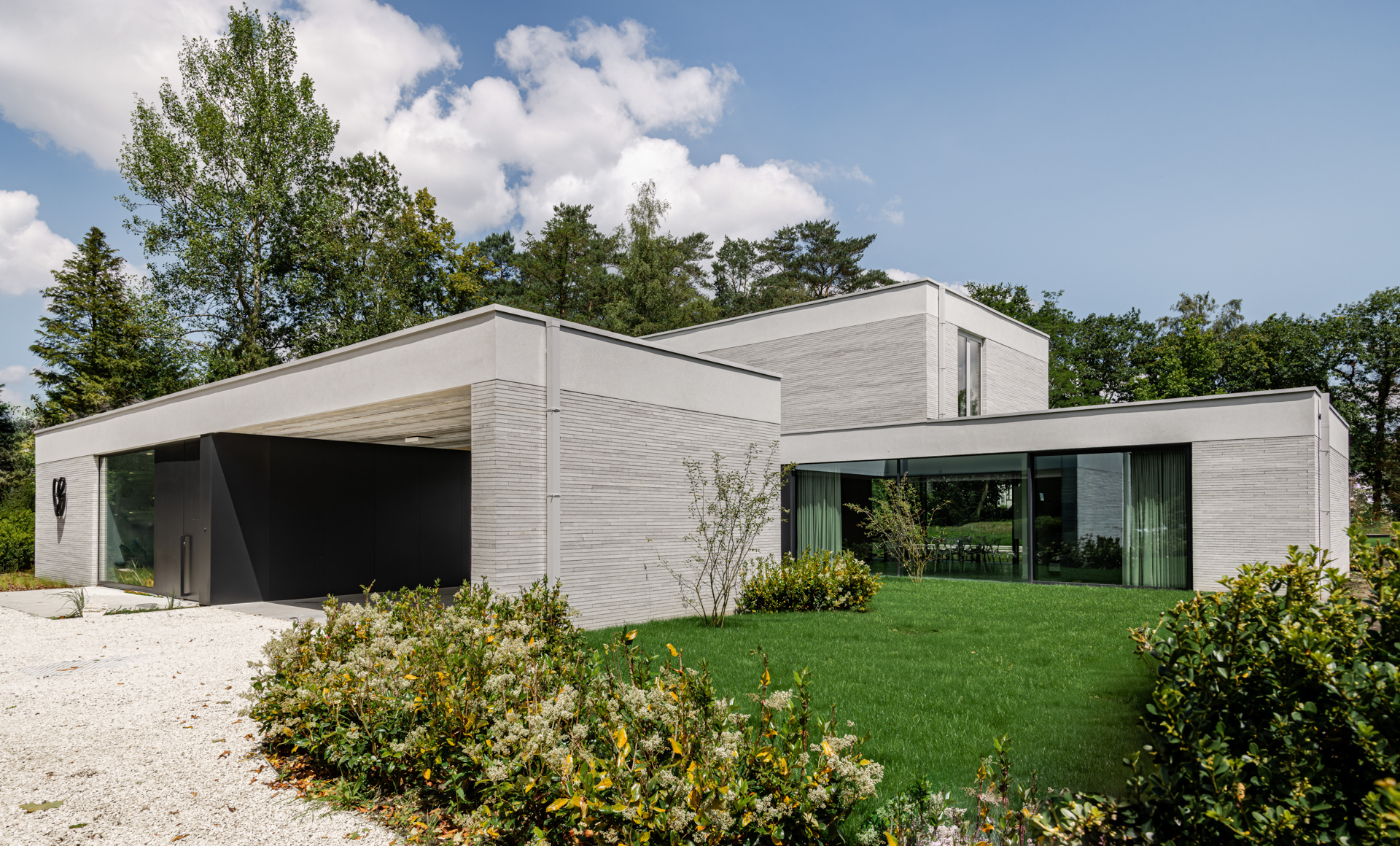
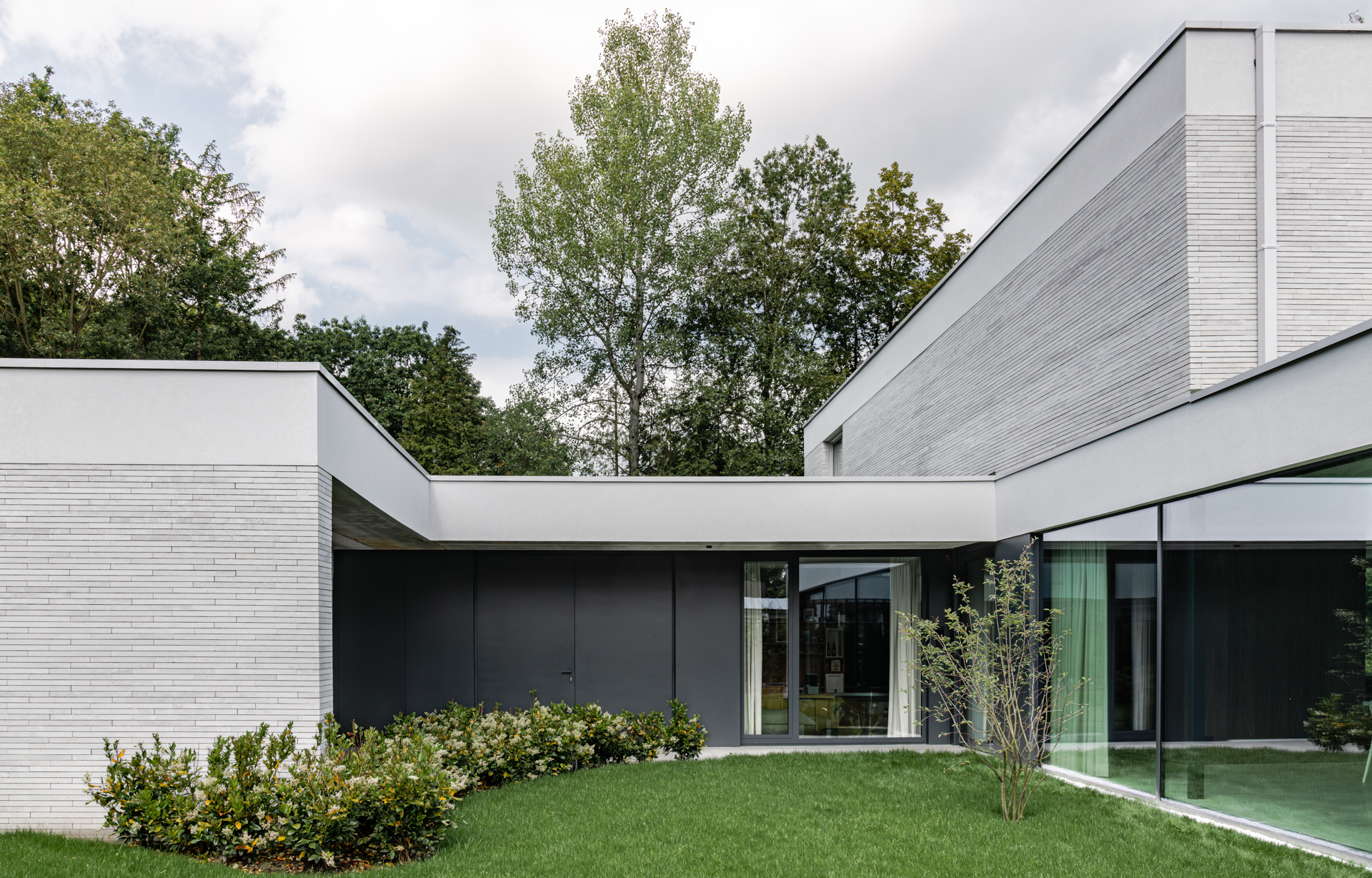
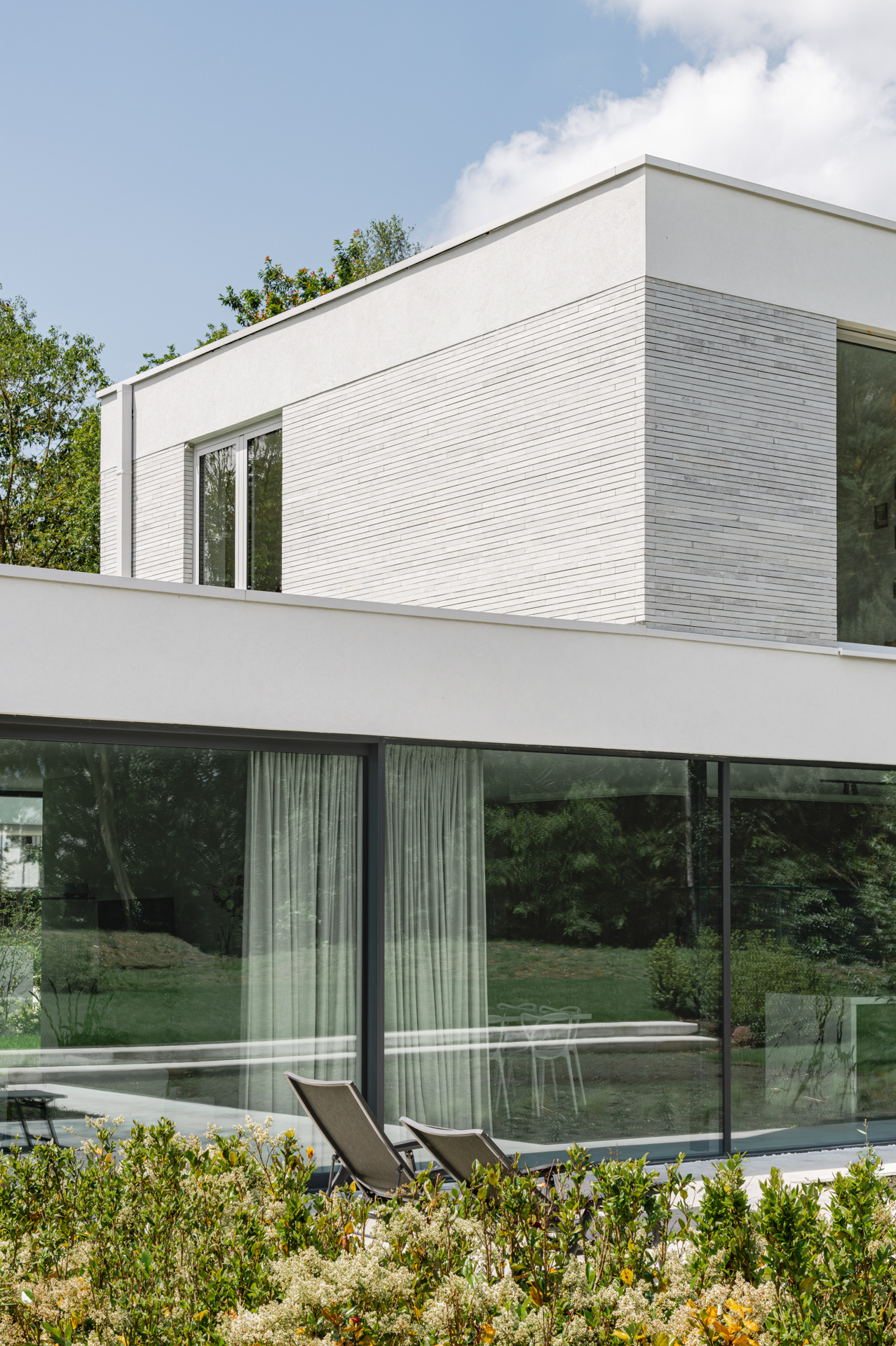
The brick facade with long masonry bands gives the house its strongest line. Those stretched courses pull the volume sideways and make the openings feel even wider. The exterior does not rely on decoration; it relies on proportion, on the tension between solid wall and transparent opening, and on the repeated dark window frames that cut neatly through the masonry. The result is a house that reads as compact and open at the same time.
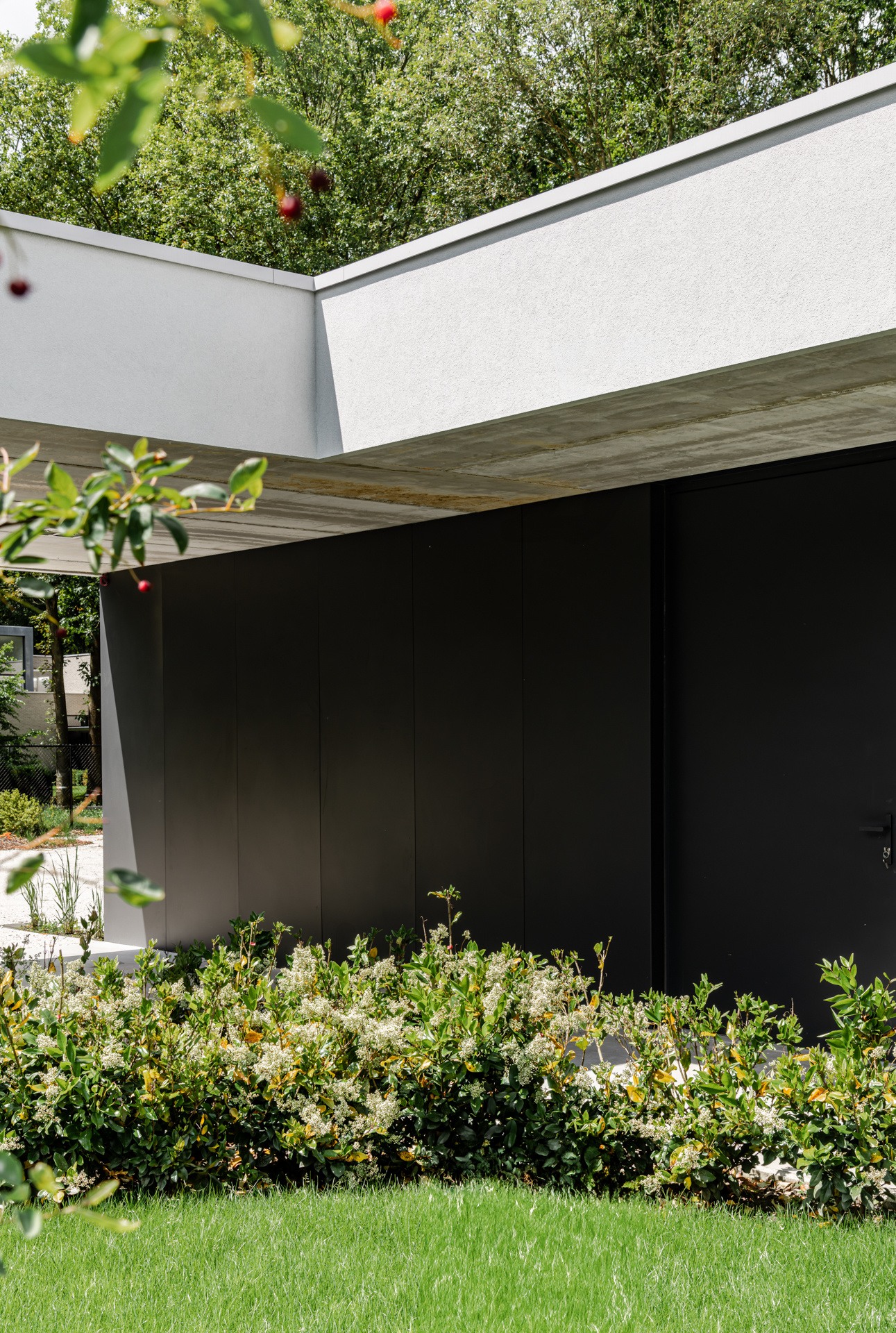
From the street, the concrete and aluminum windows add a colder edge to the brick. That contrast matters here. It sharpens the profile of the facade and keeps the composition from softening into something too domestic or too polished. The dark frames sit back visually, letting the glass openings stand out. Seen together, the materials establish a clear industrial modern home with practice space, one that uses restraint instead of ornament.
Large glass openings that pull light deep inside
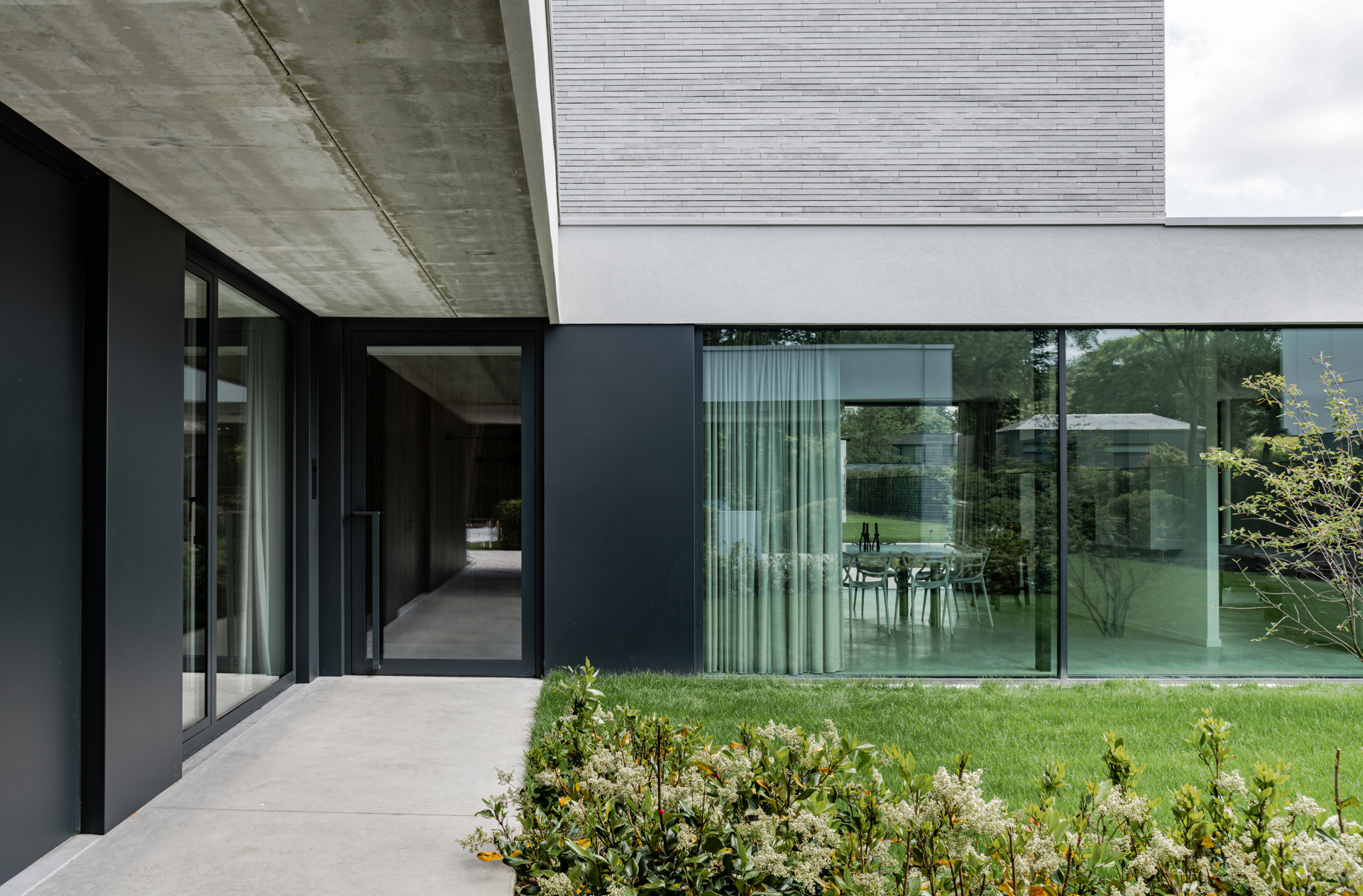
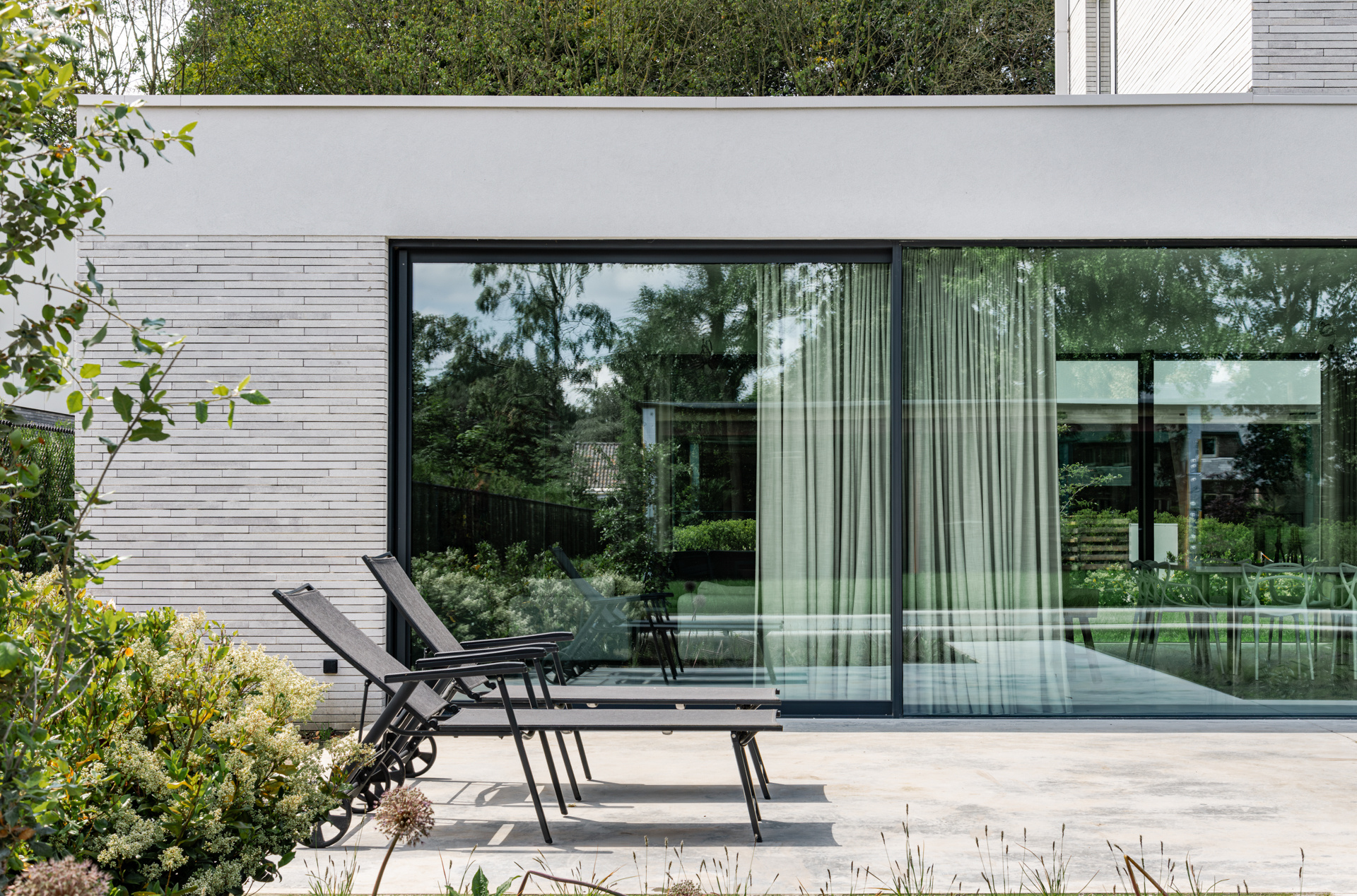
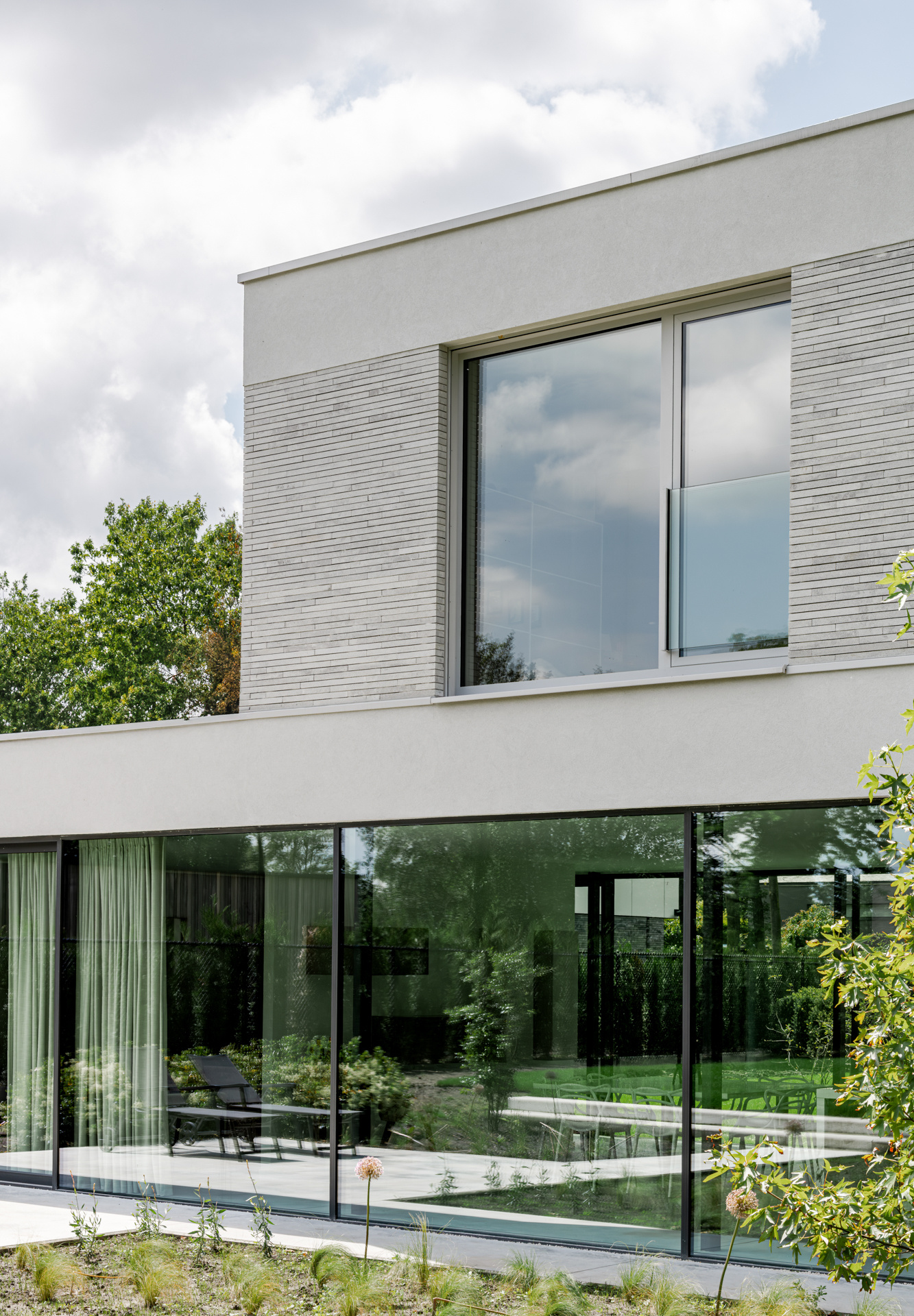
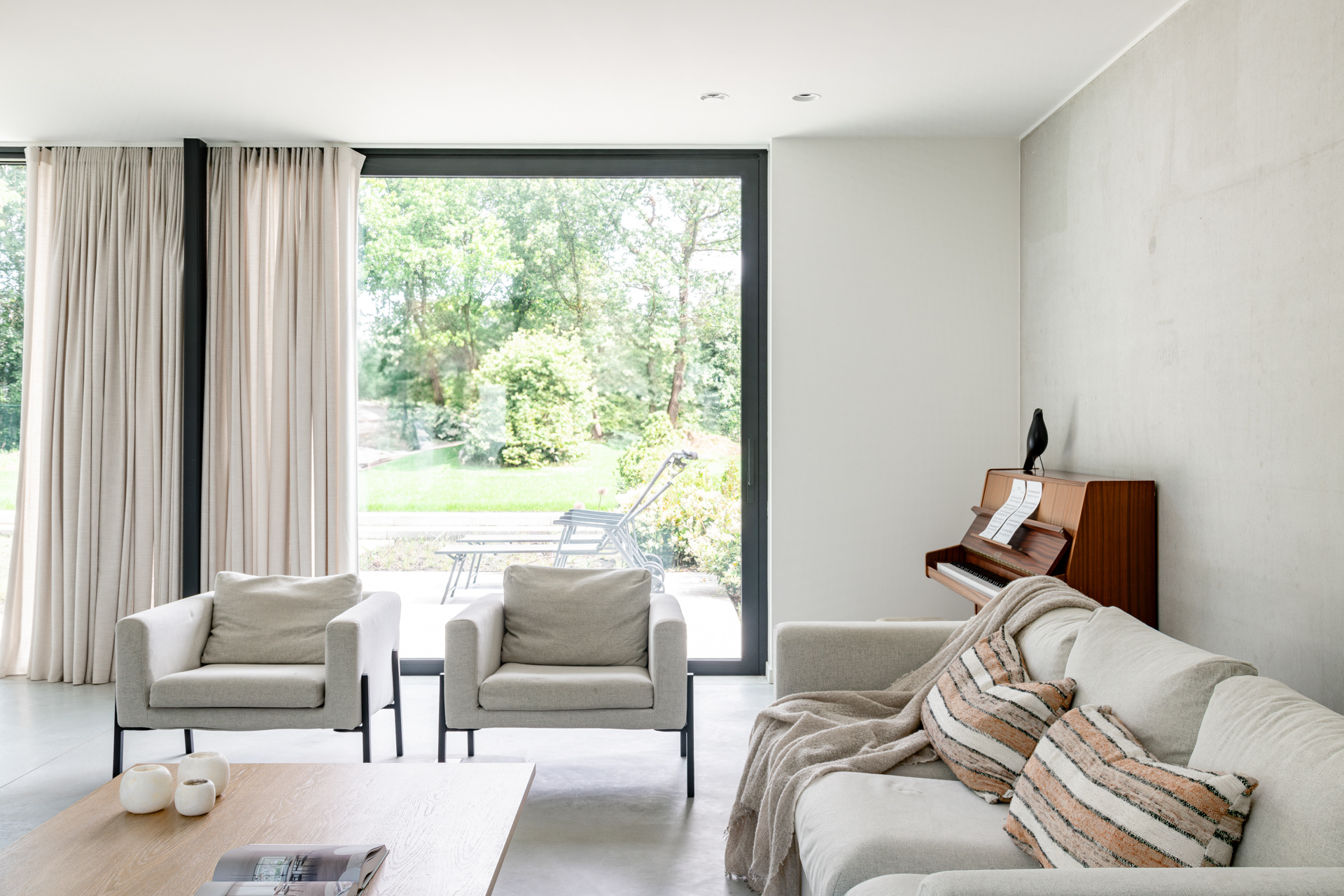
Large glass openings and dark window frames shape the most open moments of the house. They enlarge the view and let the rooms connect to the terrace and lawn outside. In the images, the glazing runs broad and low across the elevation, with the landscape sitting just beyond the threshold. A transparent balustrade on the terrace keeps the edge light, so the ground plane and the interior read almost as one continuous route.
Overhangs and crisp roof edges add another layer to that connection. They sharpen the silhouette, but they also control how the facade meets daylight. The lines stay clean, and the window rhythm remains visible even where the house turns a corner. This is where the industrial modern home with practice space becomes more than a formal description: the glazing is not only a visual feature, it is how the house opens itself to the outside without losing its solid brick base.
Living and working in one house, without a hard split
The layout is made for a young family with two children, yet the house also includes a practice area. That dual use is written into the way the home is described: living and working in one home, not as two separate worlds, but as a single daily routine. The plan leaves room for both. It means the house has to handle movement, privacy, and arrival in a practical way, while keeping the main living spaces calm and legible.
What stands out is the absence of theatrical separation. The practice space belongs to the same architectural language as the rest of the house. The materials repeat, the lines stay straight, and the transitions remain measured. For a family home, that matters. A child’s route, a visitor’s arrival, and a workday all pass through the same building, but the composition keeps each function readable through structure, openings, and surface changes rather than through decorative signals.
Minimal interior details with wood and natural stone
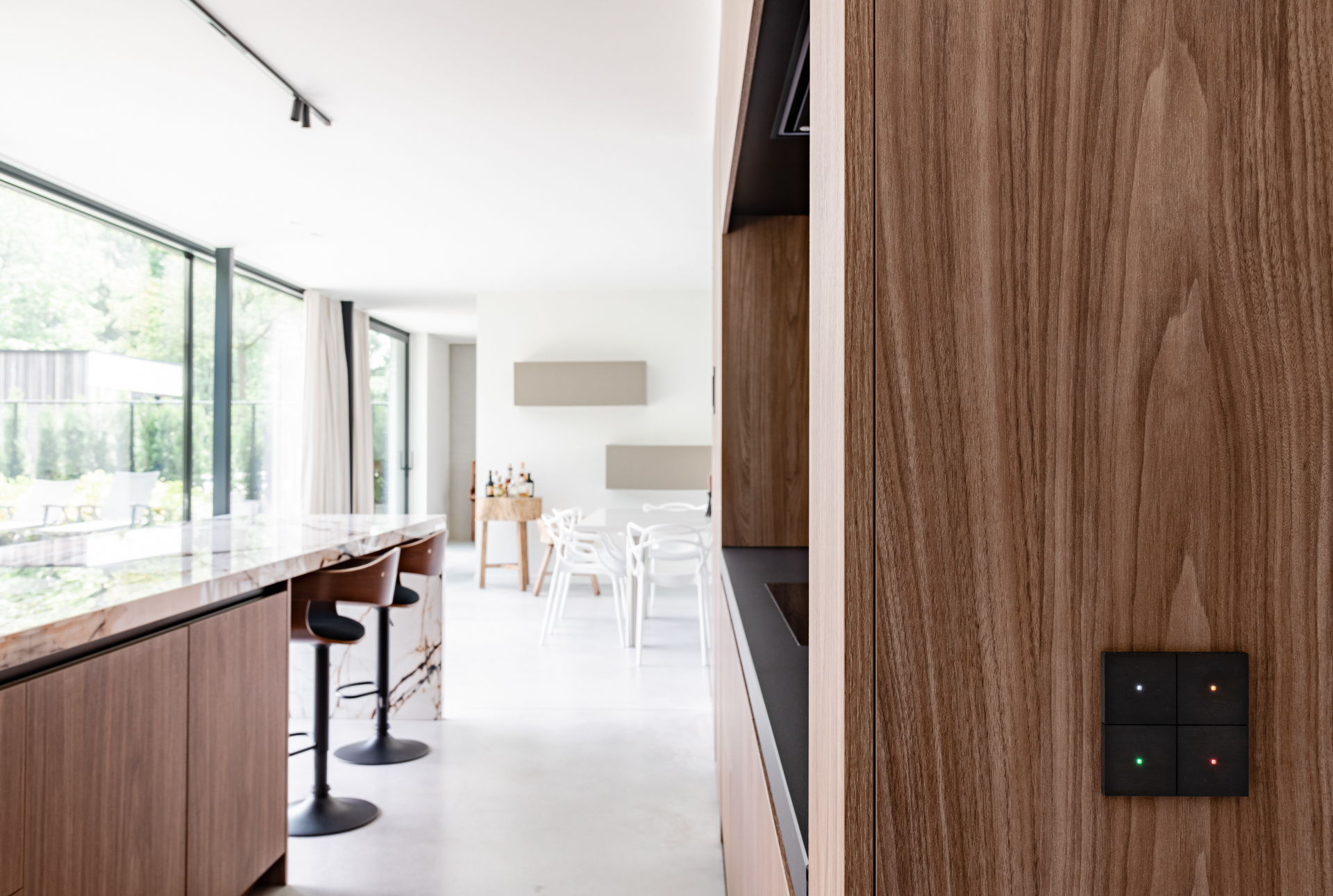
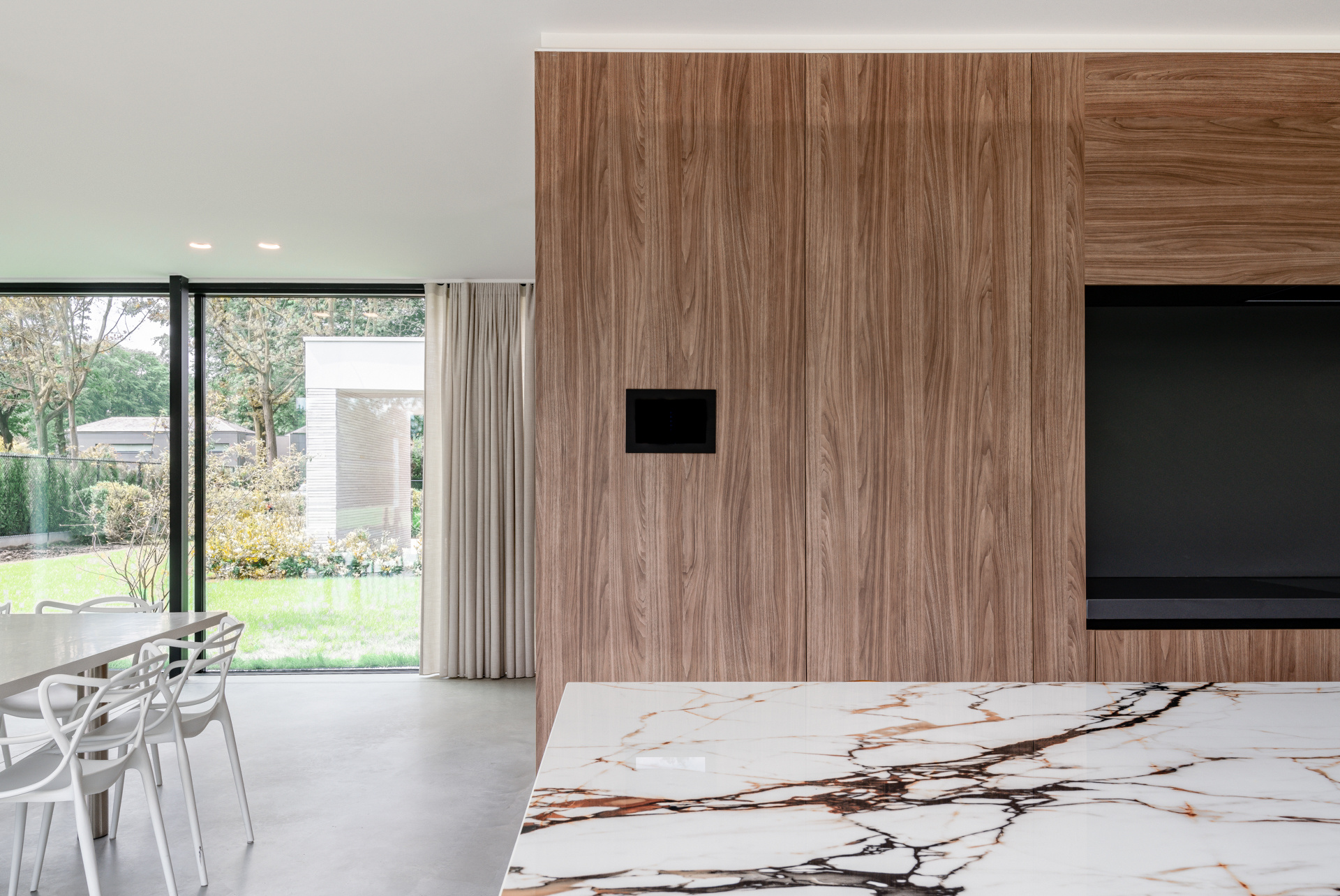
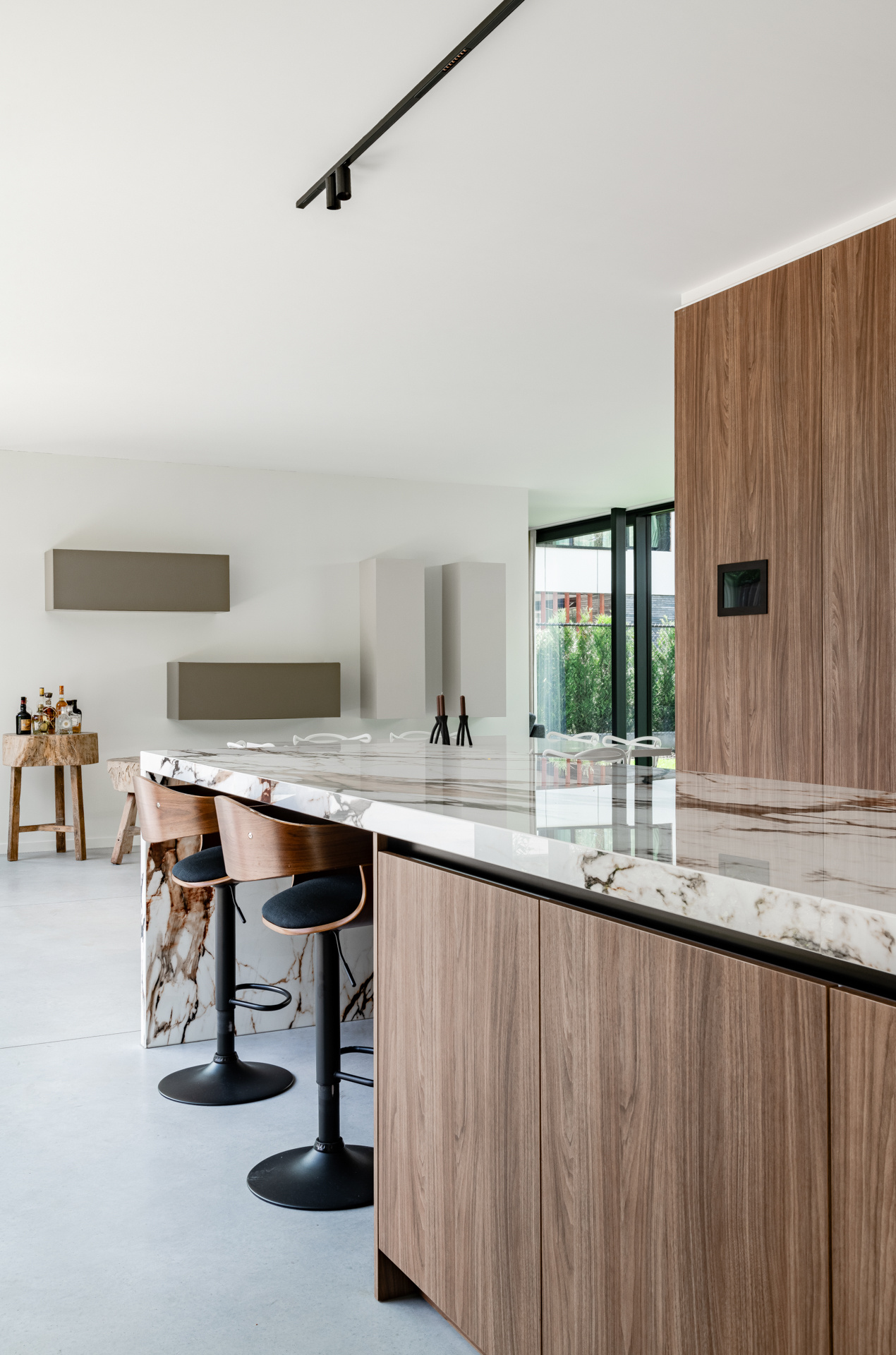
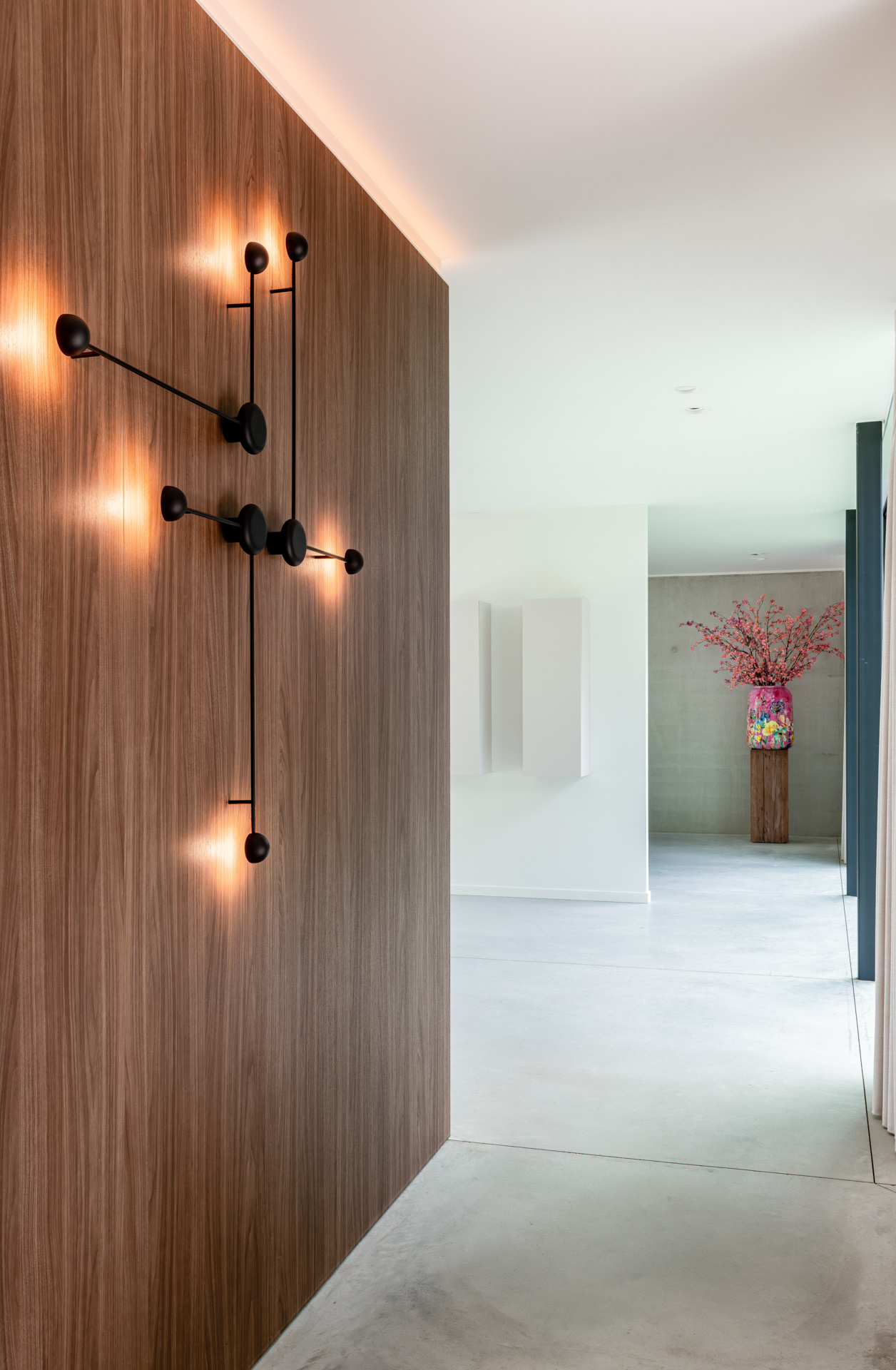
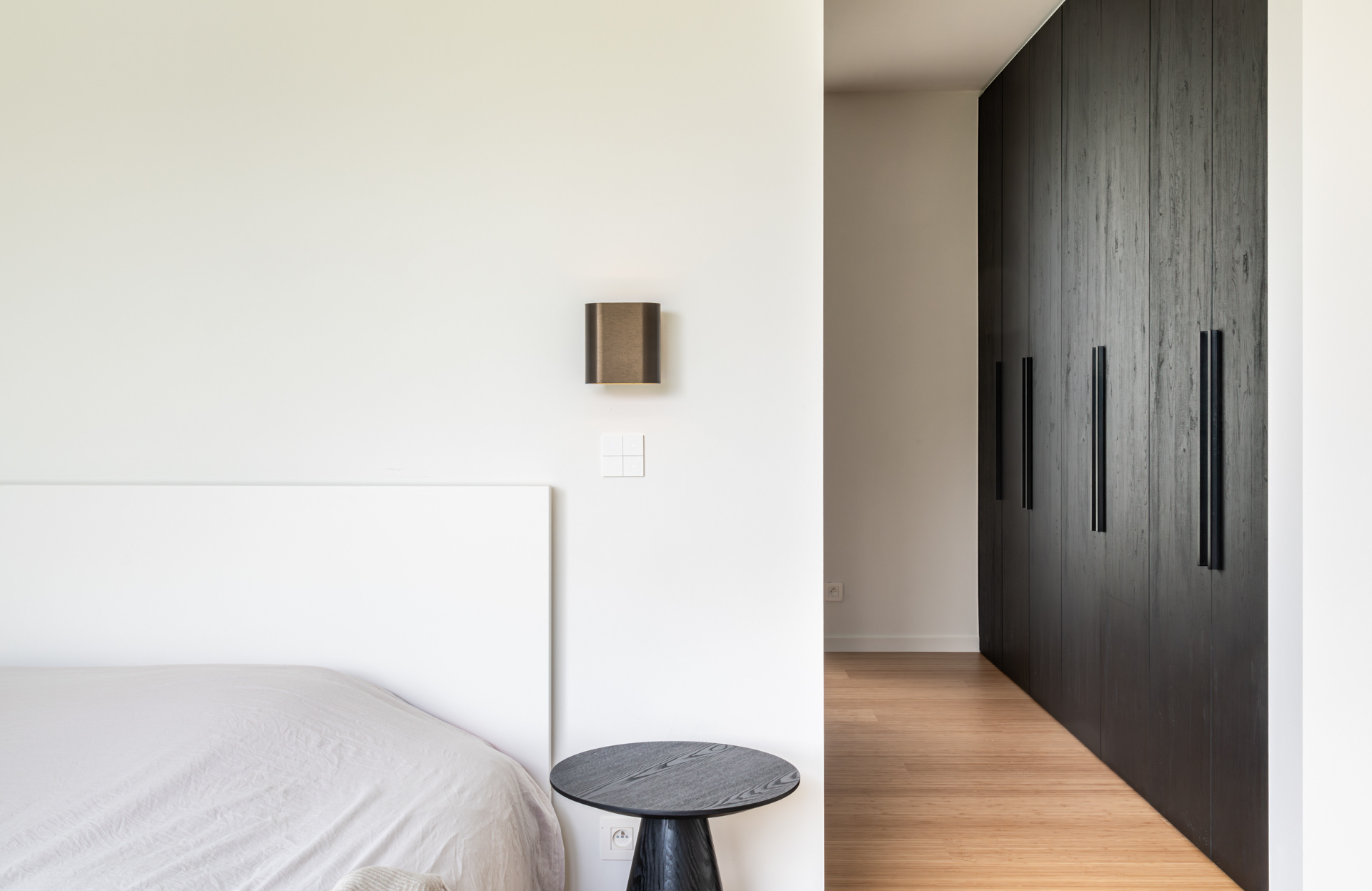
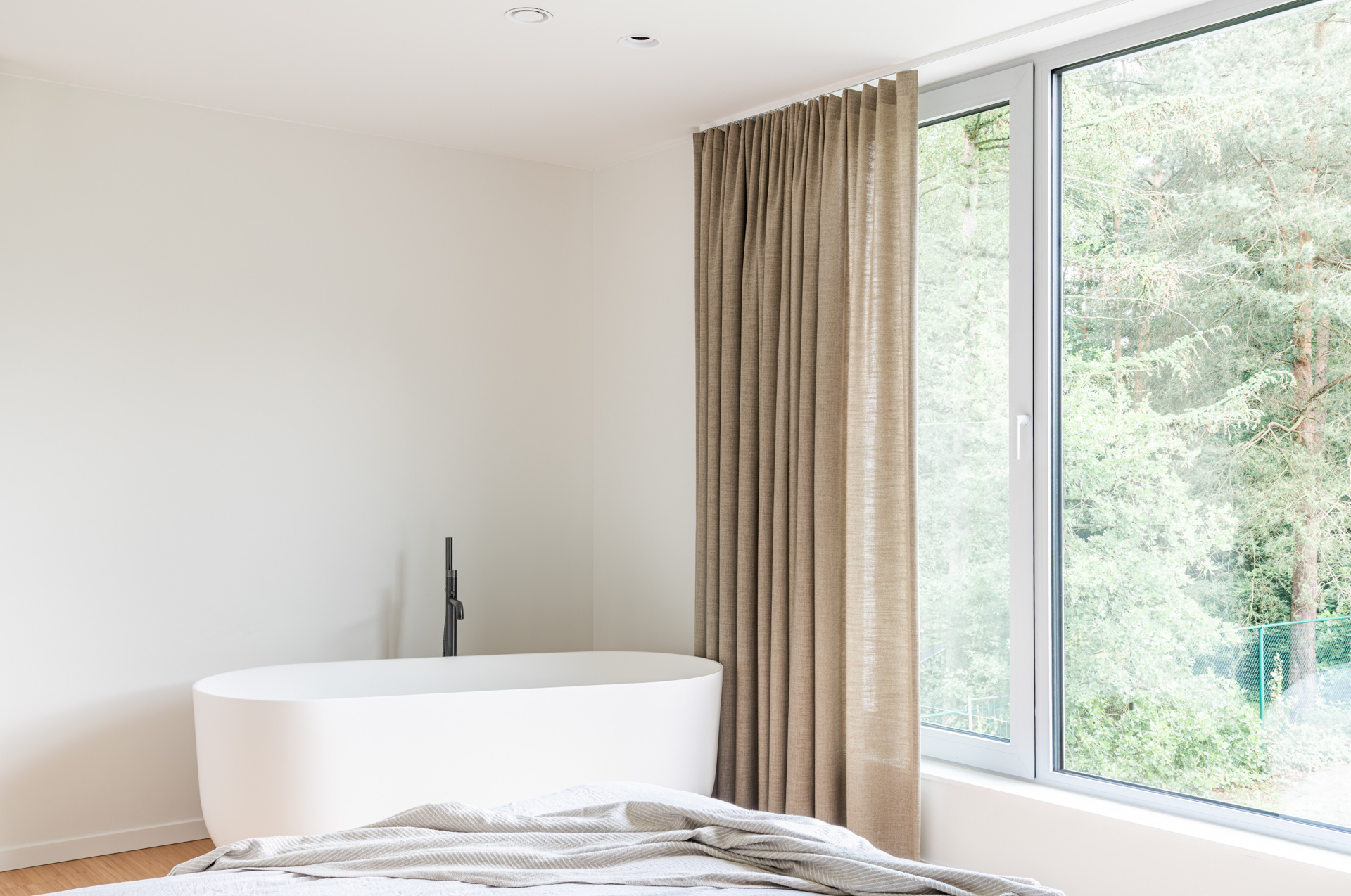
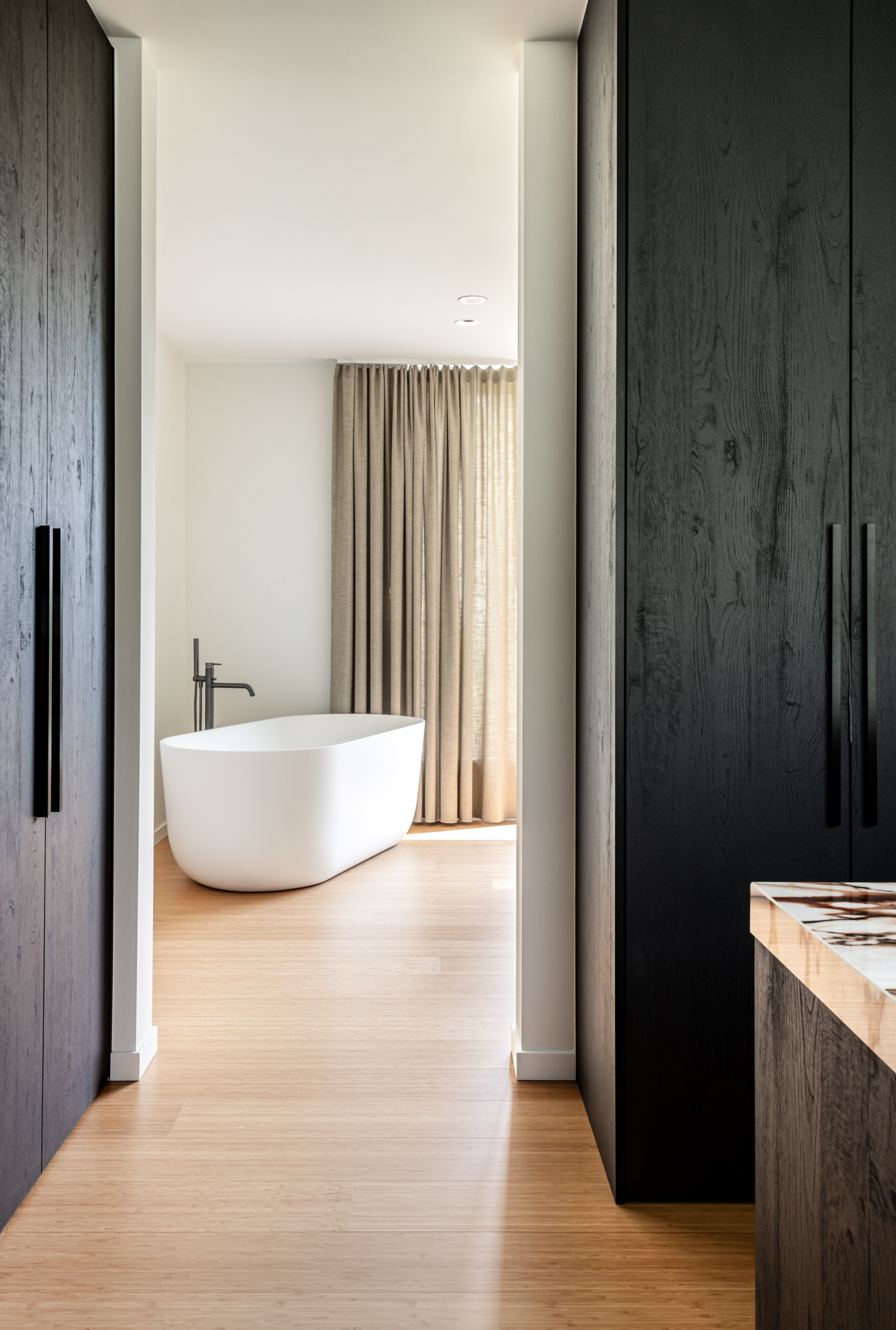
Inside, the palette becomes quieter. Matte white walls form a pale background, while wood panels and built-in elements add depth where the plan needs it. The minimalist interior details with wood and natural stone are most visible in the kitchen and adjoining living spaces, where a stone-look worktop sits against warmer timber surfaces. The combination is practical in use, but it also gives the room a firmer visual anchor than white walls alone could provide. That makes the industrial modern home with practice space part of the architectural character rather than a loose finish.
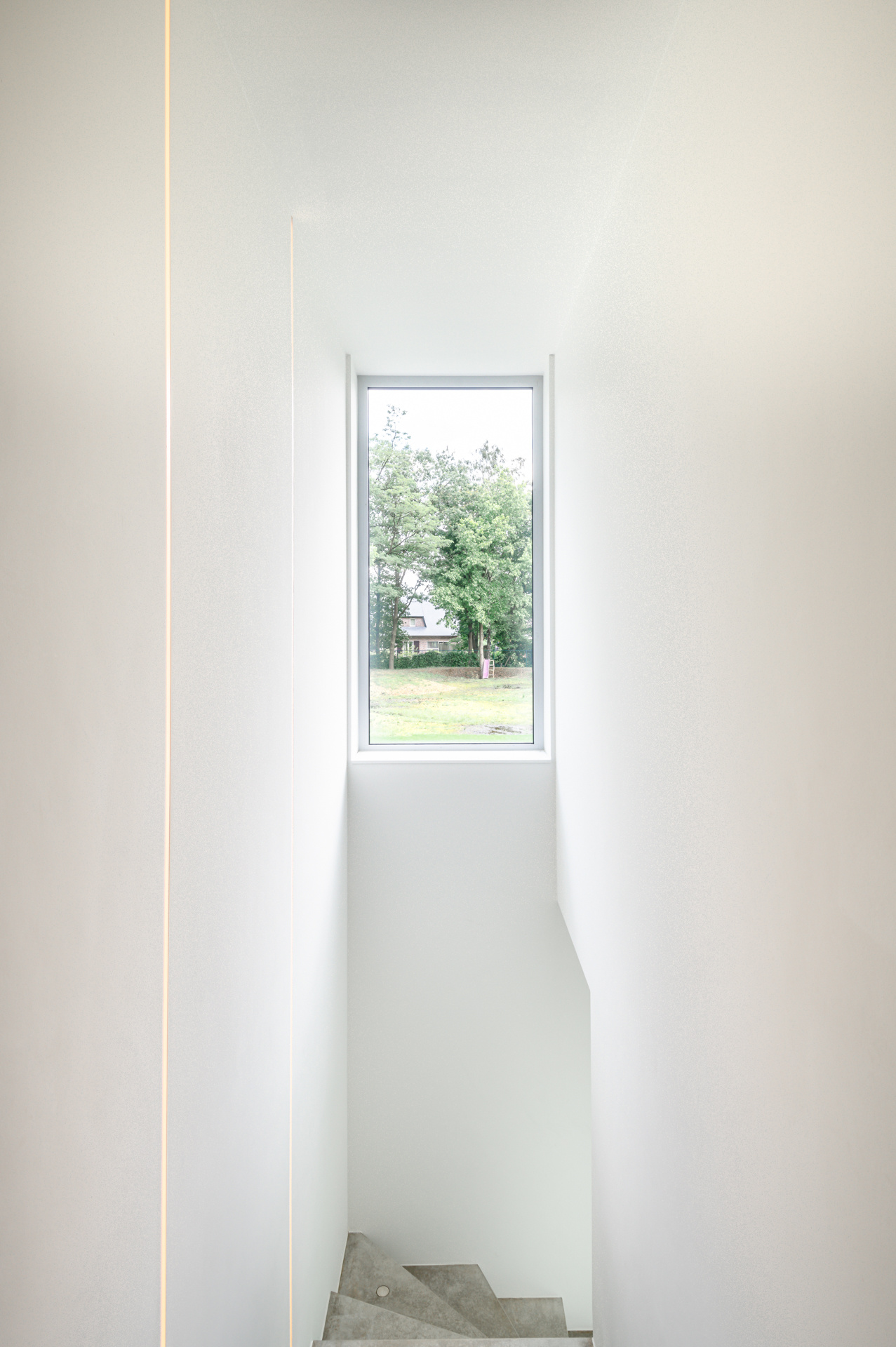
Subtle ceiling spots keep the interior reading clean. They avoid visual clutter and let the surfaces remain continuous. In the photographed rooms, the light lands on the wood grain, on the edges of the cabinetry, and on the stone-like surface of the worktop. Nothing is overly reflective. That matte, controlled finish suits the industrial modern home with practice space, because the interior depends on simple planes, clear junctions, and well-placed material shifts.
A kitchen that stays close to the architecture
The kitchen is treated as part of the architecture rather than as a separate stage. Built-in storage, timber fronts, and the natural-stone-look work surface keep the composition low and orderly. The island or worktop reads as a horizontal plane in the room, echoing the long brick bands outside. That link between inside and outside is subtle, but it is there. Both use line, not excess, to define the space.
Because the room sits within a broader minimalist interior, every detail needs to carry weight. The joinery does some of that work. So does the surface of the top, which catches light differently from the wood around it. The result is a kitchen that feels grounded without becoming heavy. It supports the idea of living and working in one home by staying composed, easy to read, and visually tied to the rest of the house.
Bathroom surfaces kept crisp and practical
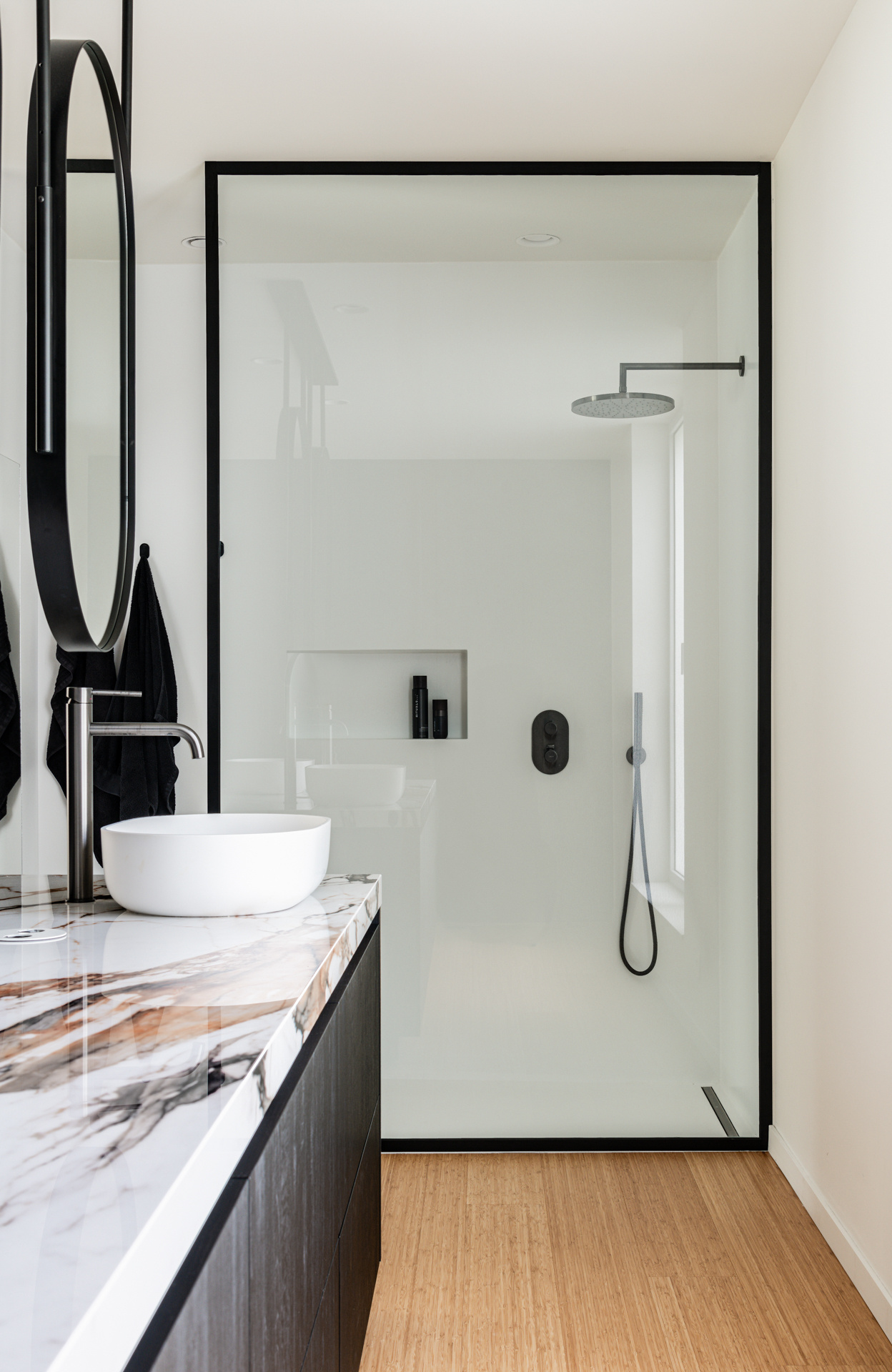
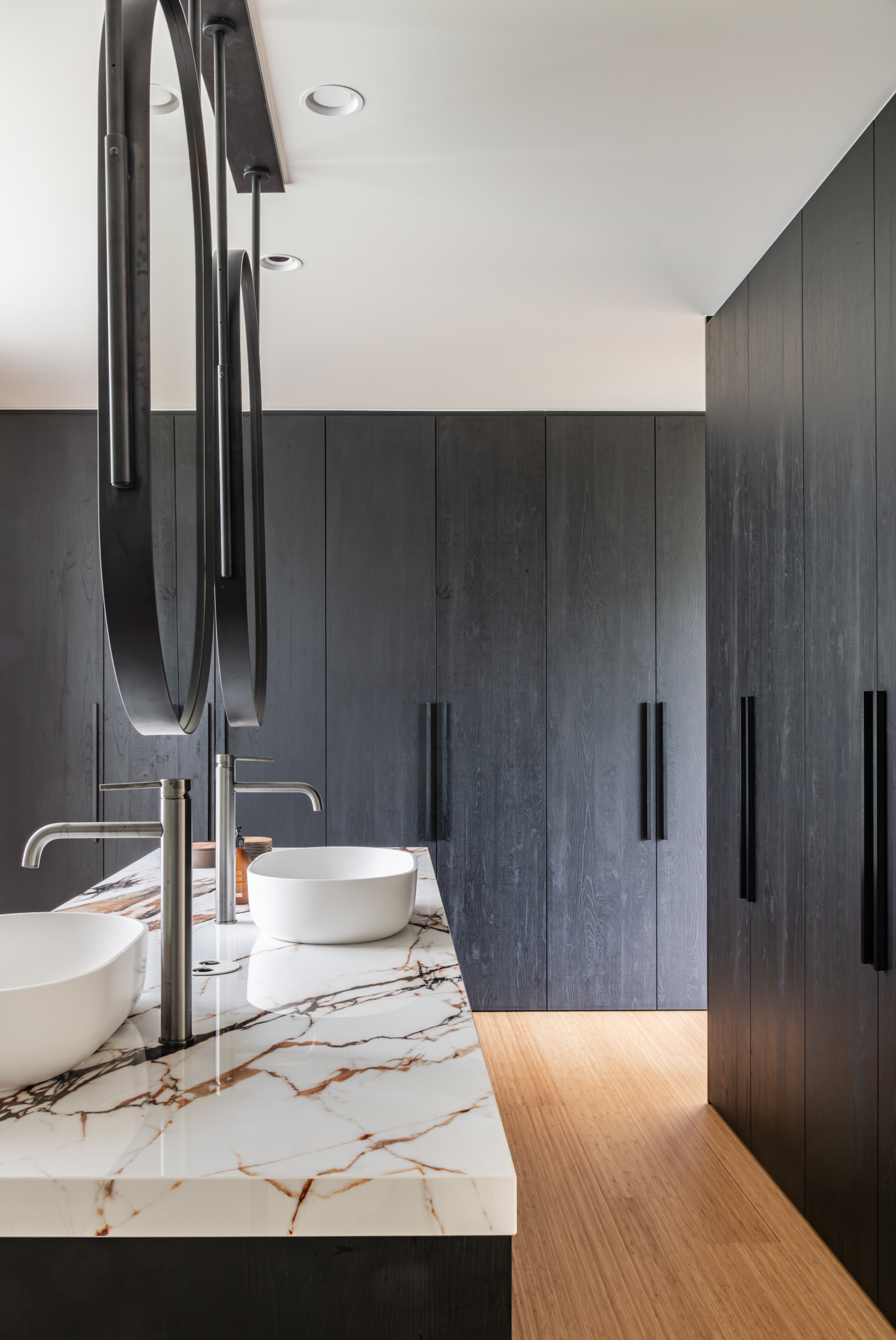
The bathroom imagery follows the same logic. A large walk-in shower, ceramic surfaces, and a natural-stone-look vanity top create a room that is visually quiet but not empty. The pale walls and clear lines of the glazing and fixtures make the space feel straightforward. Nothing is overloaded with pattern. The materials remain in control, which allows the room to fit naturally within the wider industrial modern home with practice space.
Here too, the detail matters more than the label. A stone-like top, a shower screen, and straight-edged tiling tell the story better than any decorative gesture could. The room holds onto the project’s overall discipline: simple planes, precise joins, and a restrained palette. That consistency helps the interior move from one function to another without changing language.
Why the material mix works so well here
The house is strongest when the materials are allowed to stay honest. Brick holds the mass, glass opens it, concrete and aluminum frame it, and wood softens the interior where people actually spend time. None of those materials is pushed into the foreground for effect. They stay close to their purpose, which is why the composition feels direct. The brick facade with long masonry bands gives the exterior its tempo, while the large glass openings and dark window frames keep the plan visually light.
That same discipline continues inside through the minimalist interior details with wood and natural stone. A family of four needs rooms that work hard, especially when one part of the home is used for practice. The project responds by keeping the architecture readable from outside to inside. It is an industrial modern home with practice space, but the more precise way to see it is as a house where line, material, and use stay in step.
Want to see more of VELOR architecten? View the page of VELOR architecten for even more great projects and company information.

Contributors
.png)
NEW 2026 Jubileum Edition The Best Interior Designers Benelux
Order Now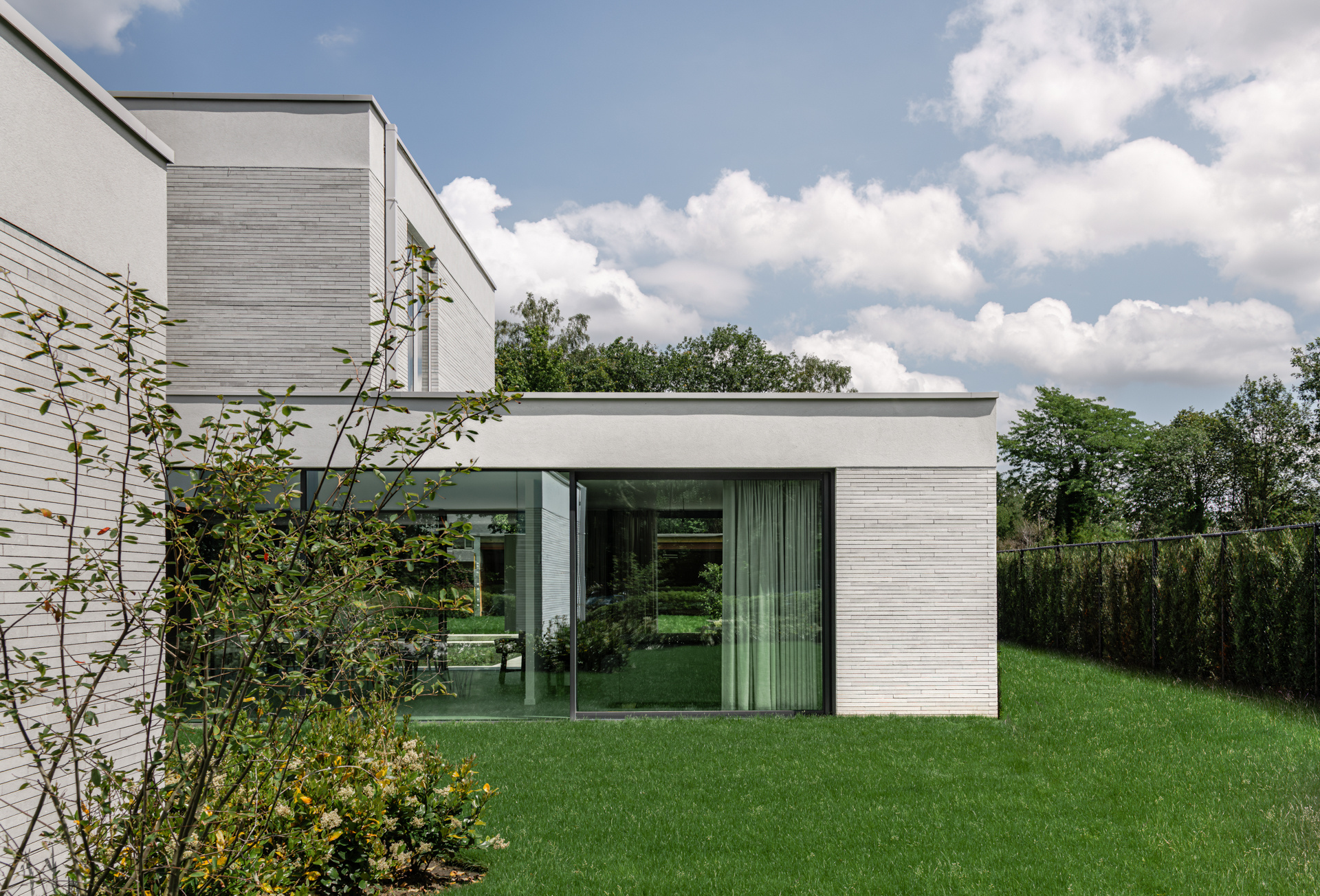
NEW 2026 Jubileum Edition The Best Interior Designers Benelux
Order Now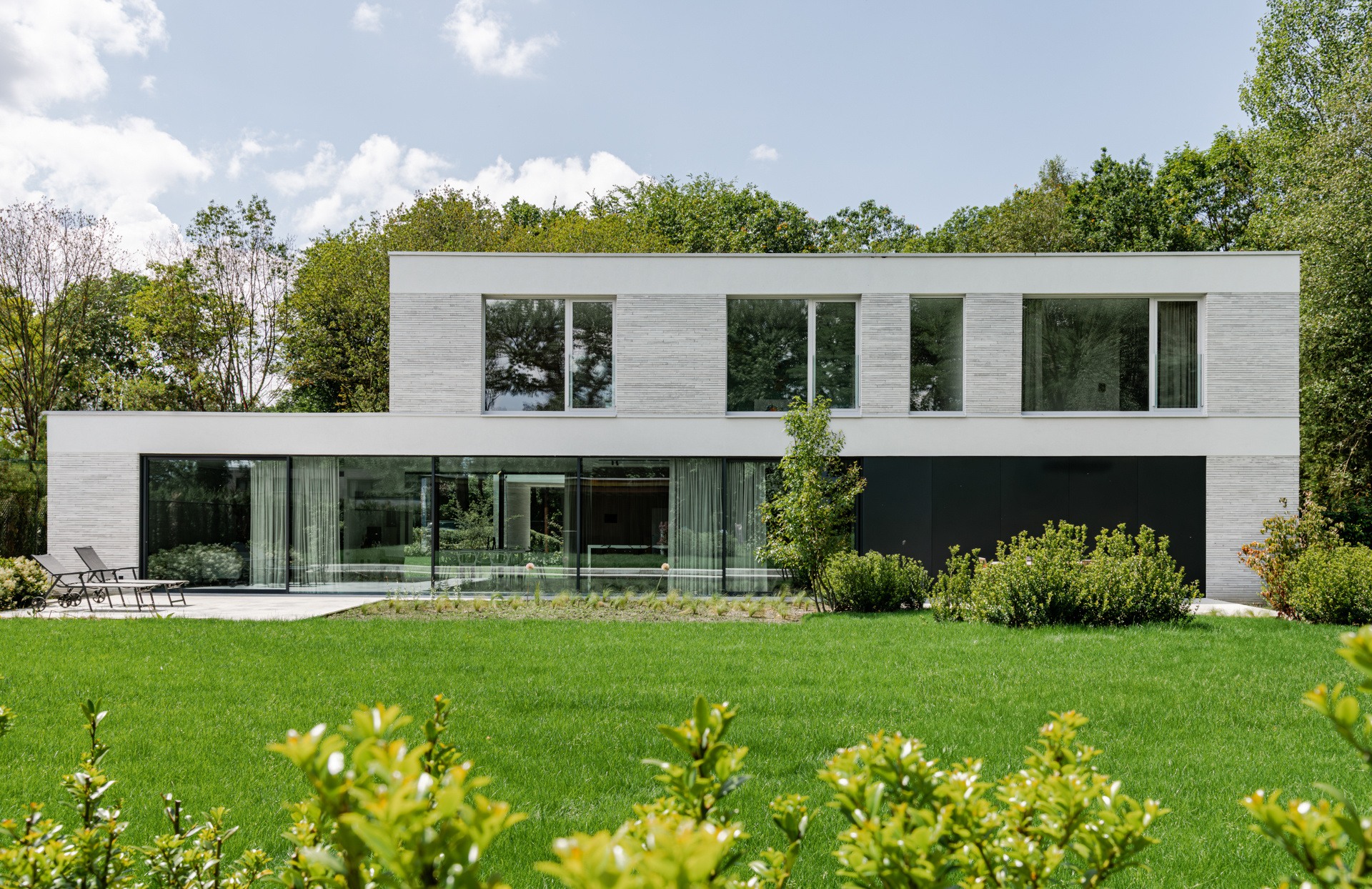
NEW 2026 Jubileum Edition The Best Interior Designers Benelux
Order Now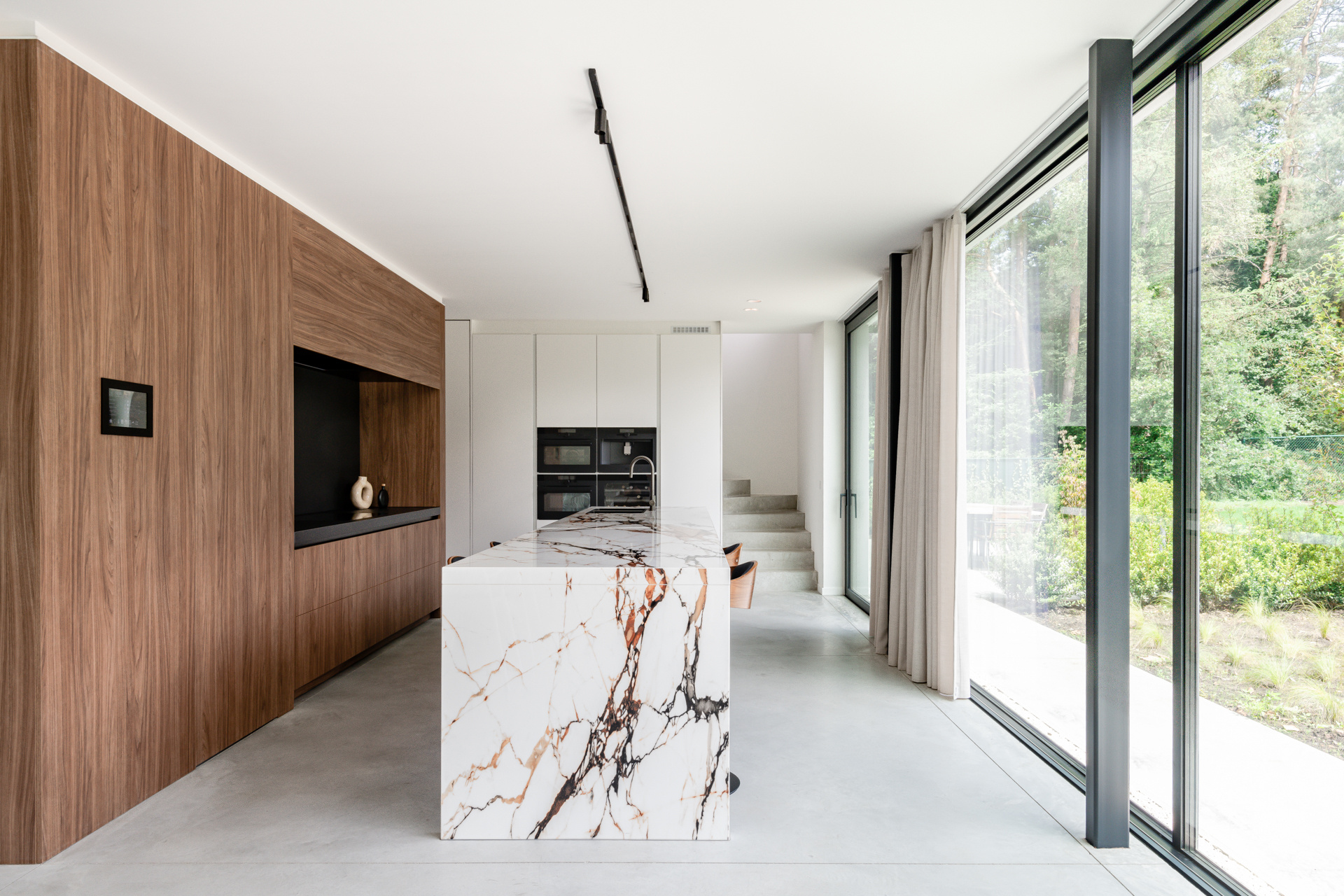
NEW 2026 Jubileum Edition The Best Interior Designers Benelux
Order Now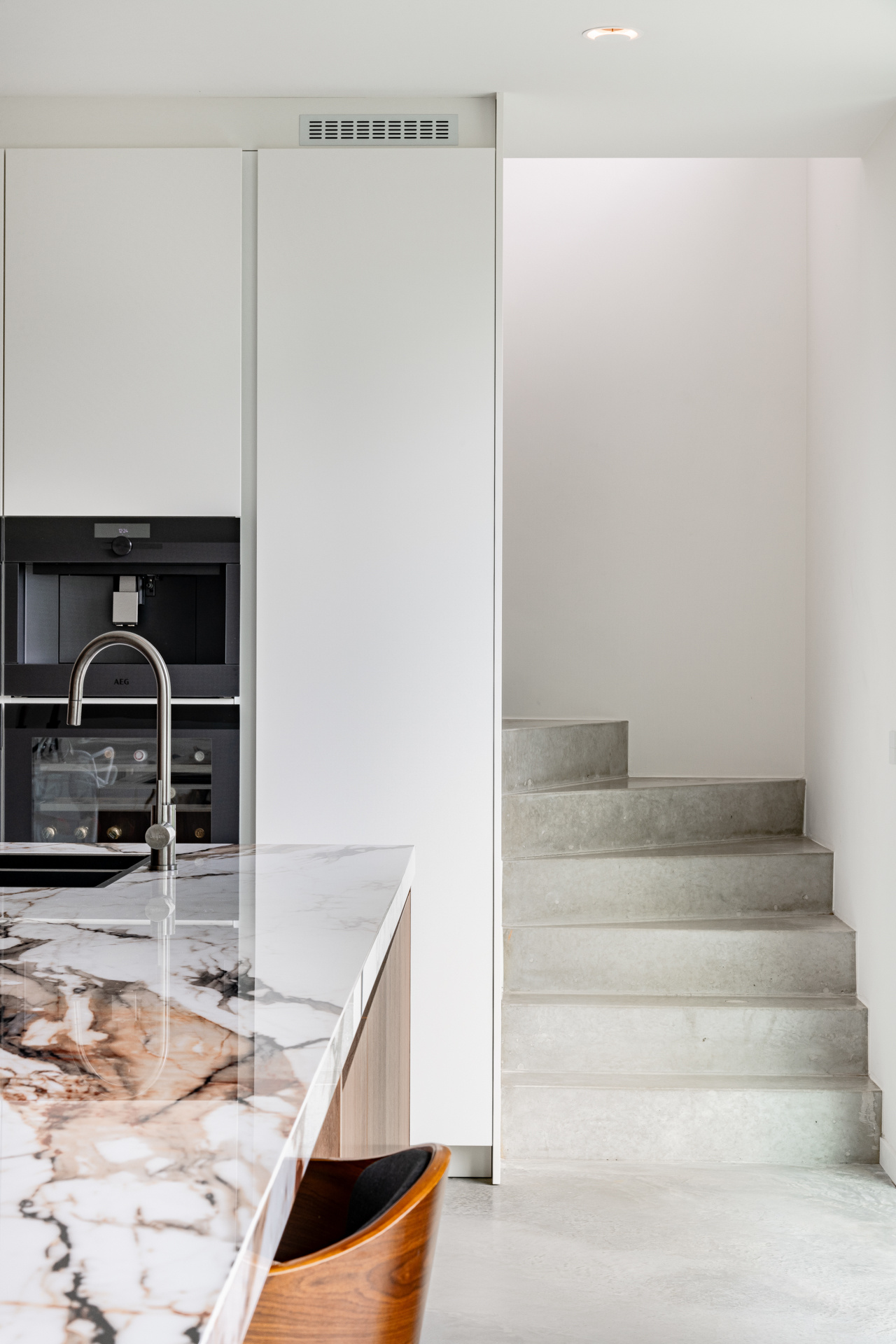
NEW 2026 Jubileum Edition The Best Interior Designers Benelux
Order Now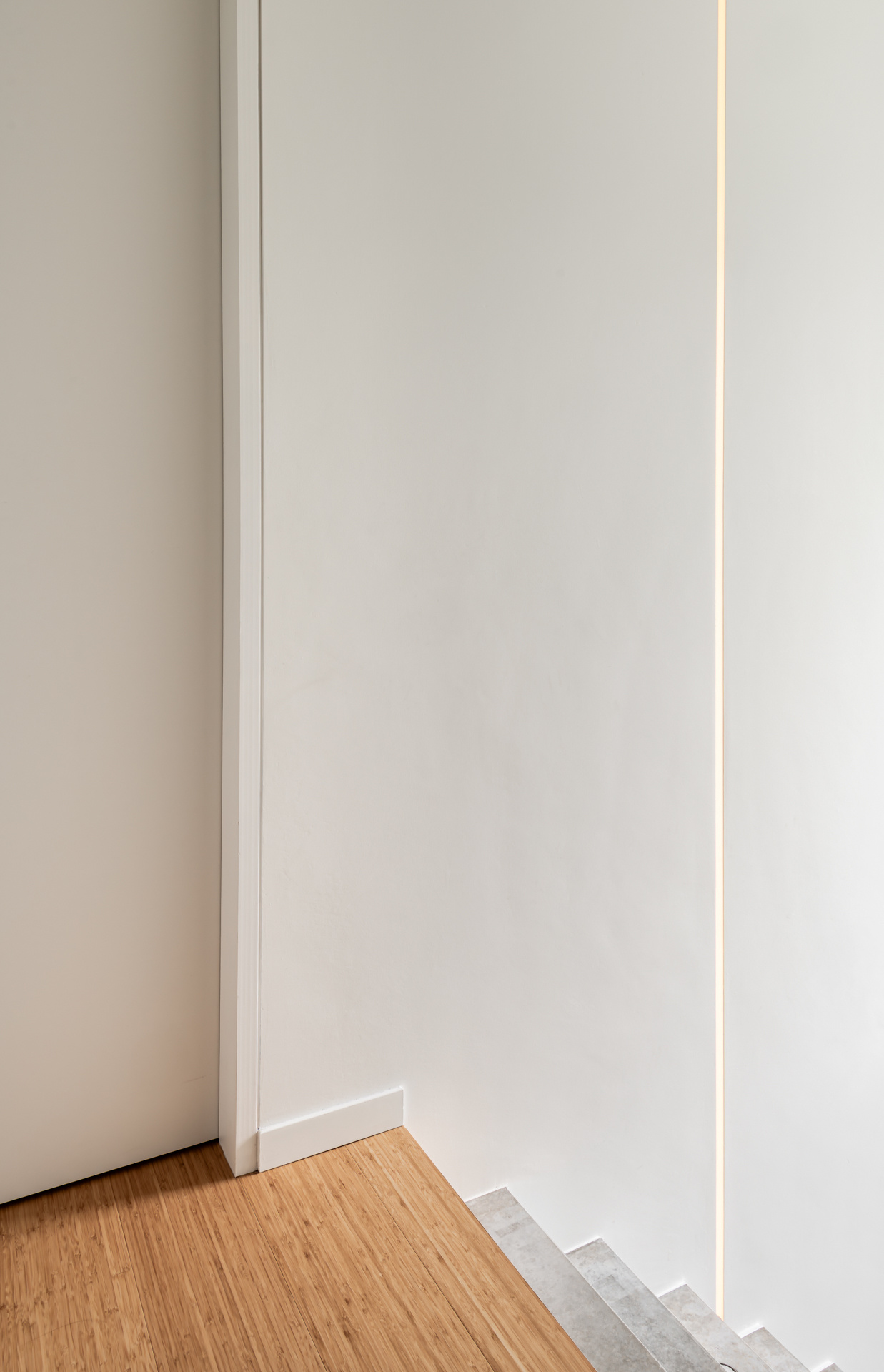
NEW 2026 Jubileum Edition The Best Interior Designers Benelux
Order Now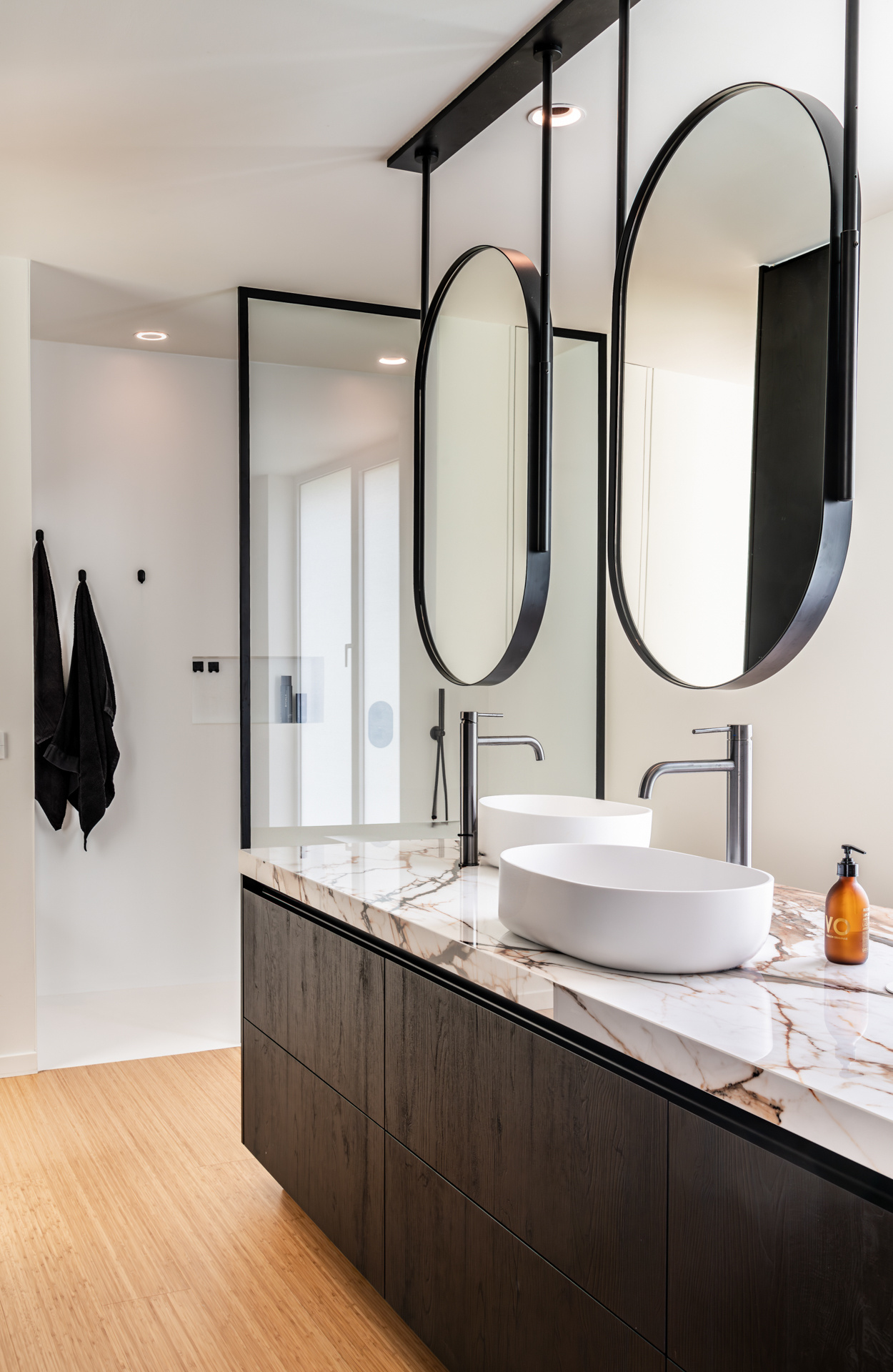


%20-%20)
%20-%20)
%20-%20)
%20-%20)
%20-%20)
%20-%20)
%20-%20)
%20-%20)
%20-%20)
%20-%20)
%20-%20)
%20-%20)
%20-%20)
%20-%20)
%20-%20)
%20-%20)
%20-%20)
%20-%20)
%20-%20)
%20-%20)
%20-%20)
%20-%20)
%20-%20)
%20-%20)
%20-%20)
%20-%20)