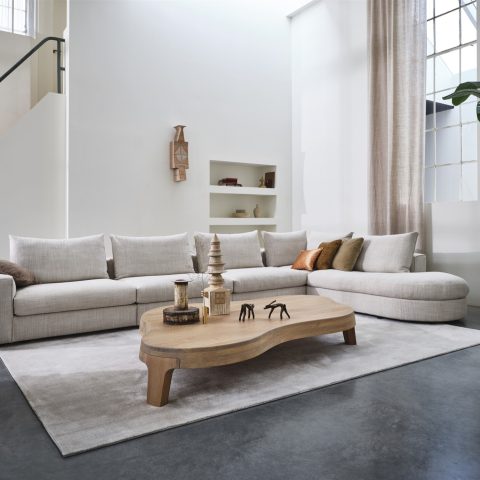








Malibu sectional sofa with chaise
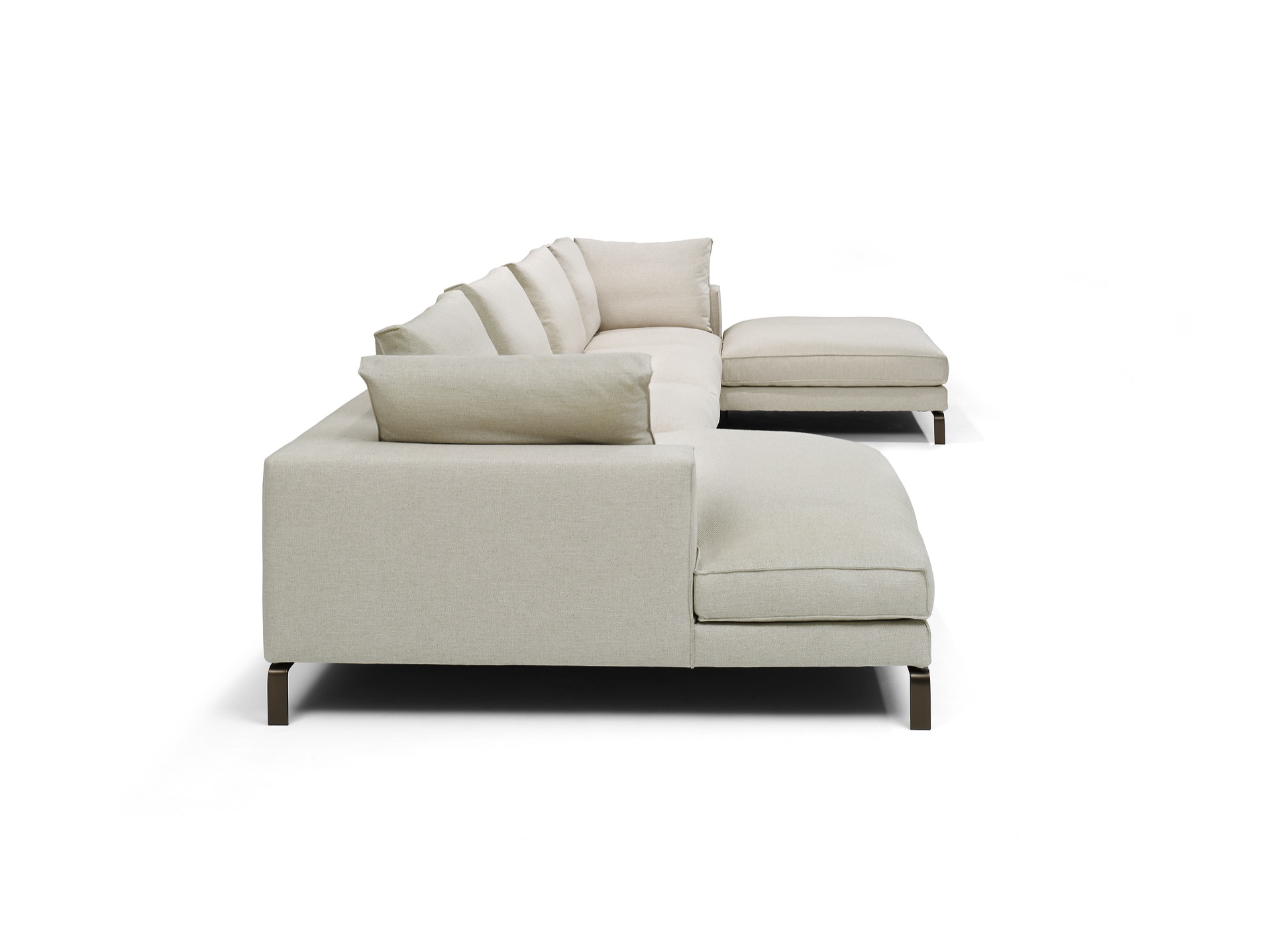
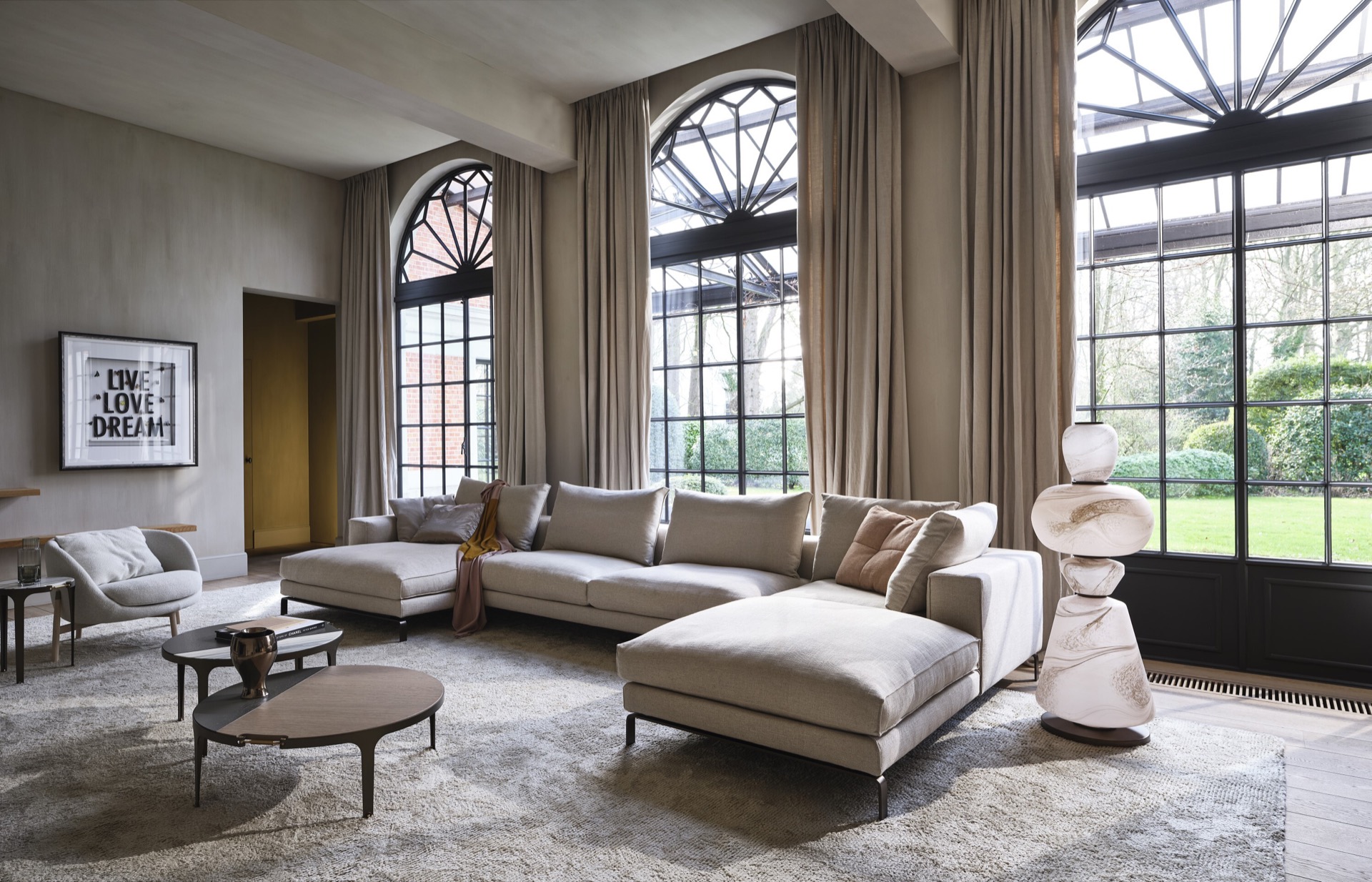
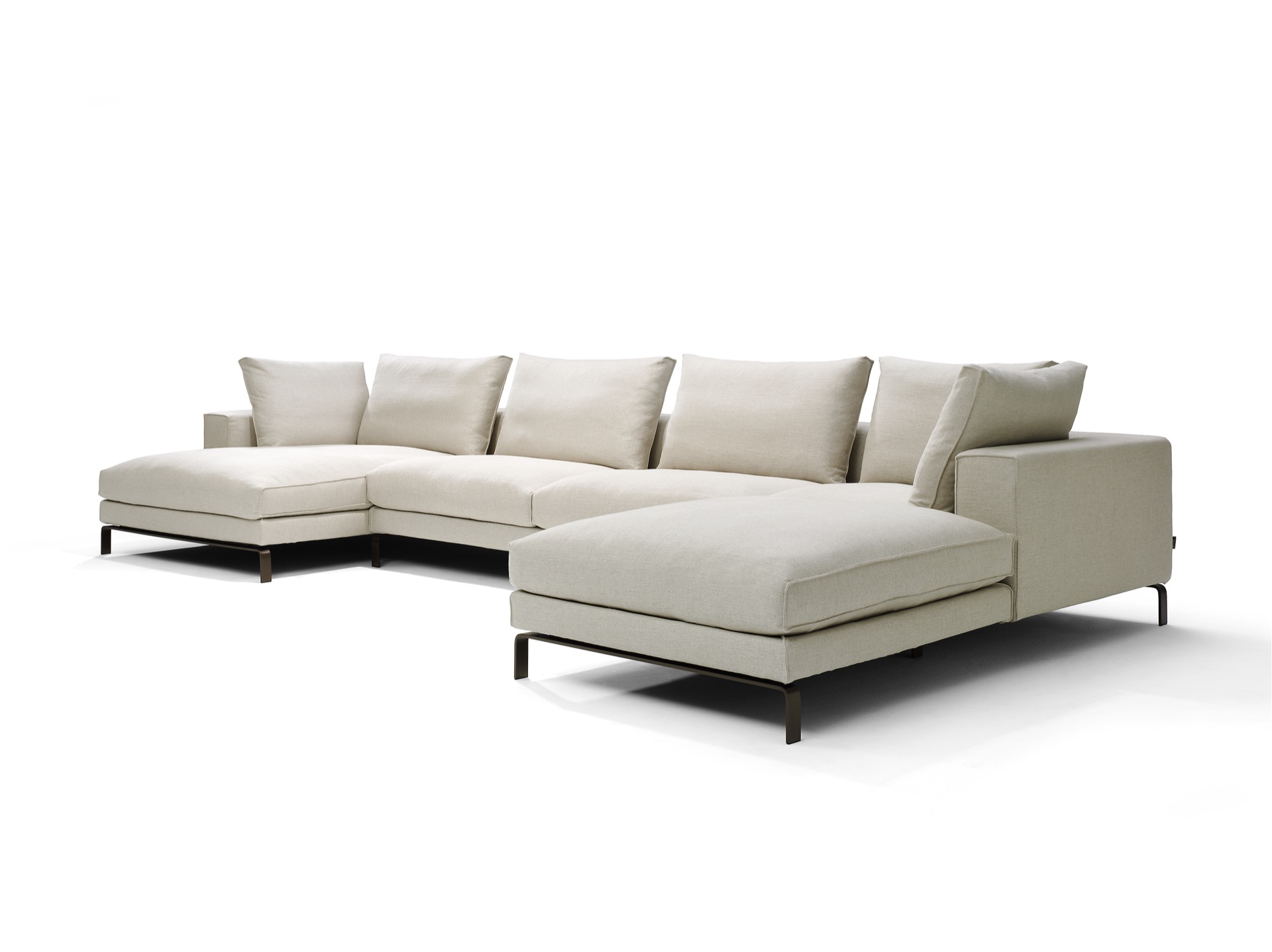
The chaise stretches the layout into a long, low line, while the slim legs keep daylight visible underneath. In the images, the sectional sofa with chaise reads as a set of clear blocks rather than a heavy mass: seat, corner, and extension are all easy to pick out. The neutral fabric upholstery softens the profile without hiding the edges, and that makes the sofa feel precise from every angle.
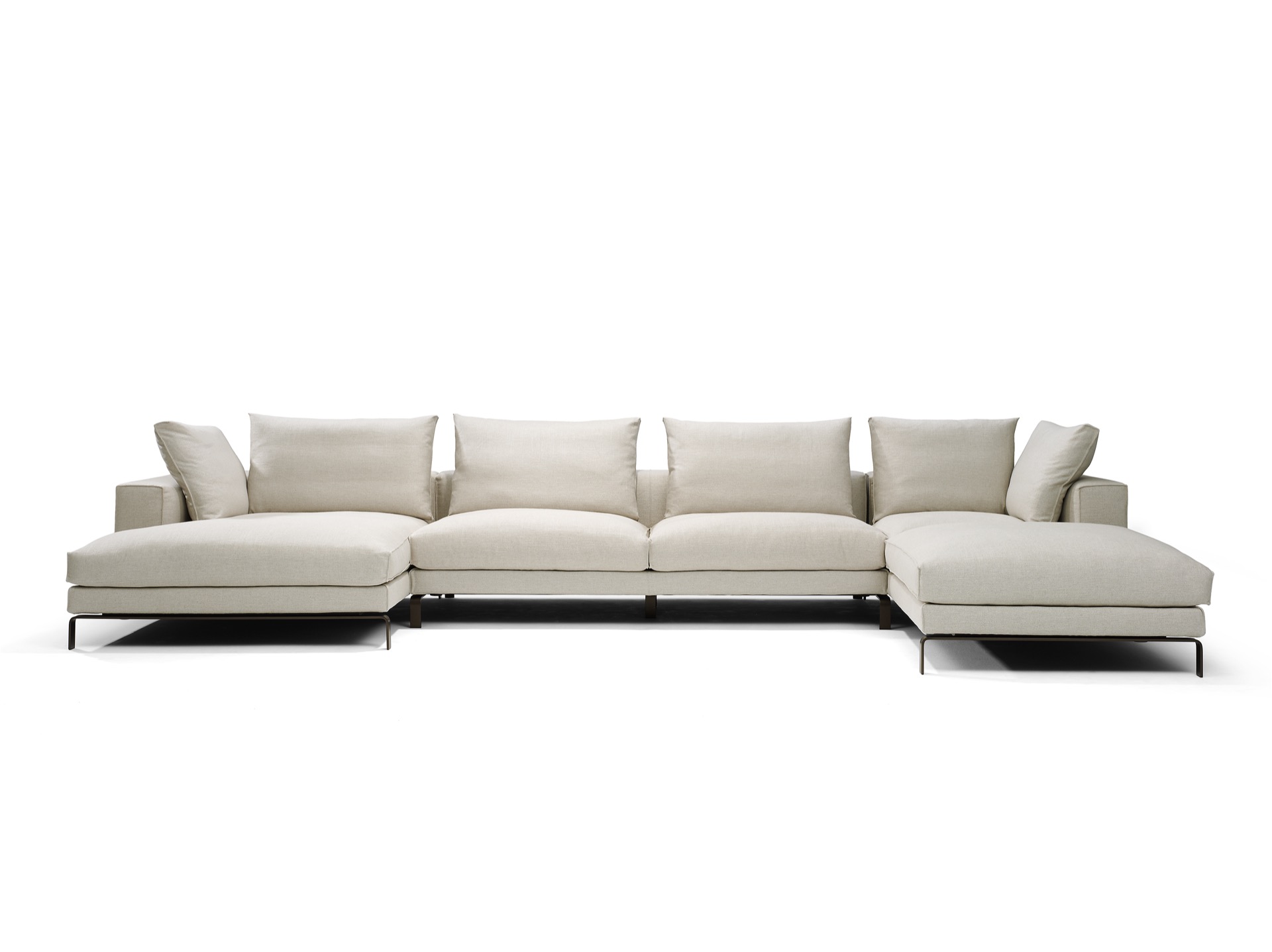
Seen in the studio, the same form becomes more graphic. The cushions sit in measured volumes, the seams draw thin lines across the surface, and the dark base marks a narrow frame under the upholstery. It is the kind of modular sofa layout that relies on proportion: nothing is oversized, yet the chaise still gives the composition its length and direction.
How the chaise shapes the room
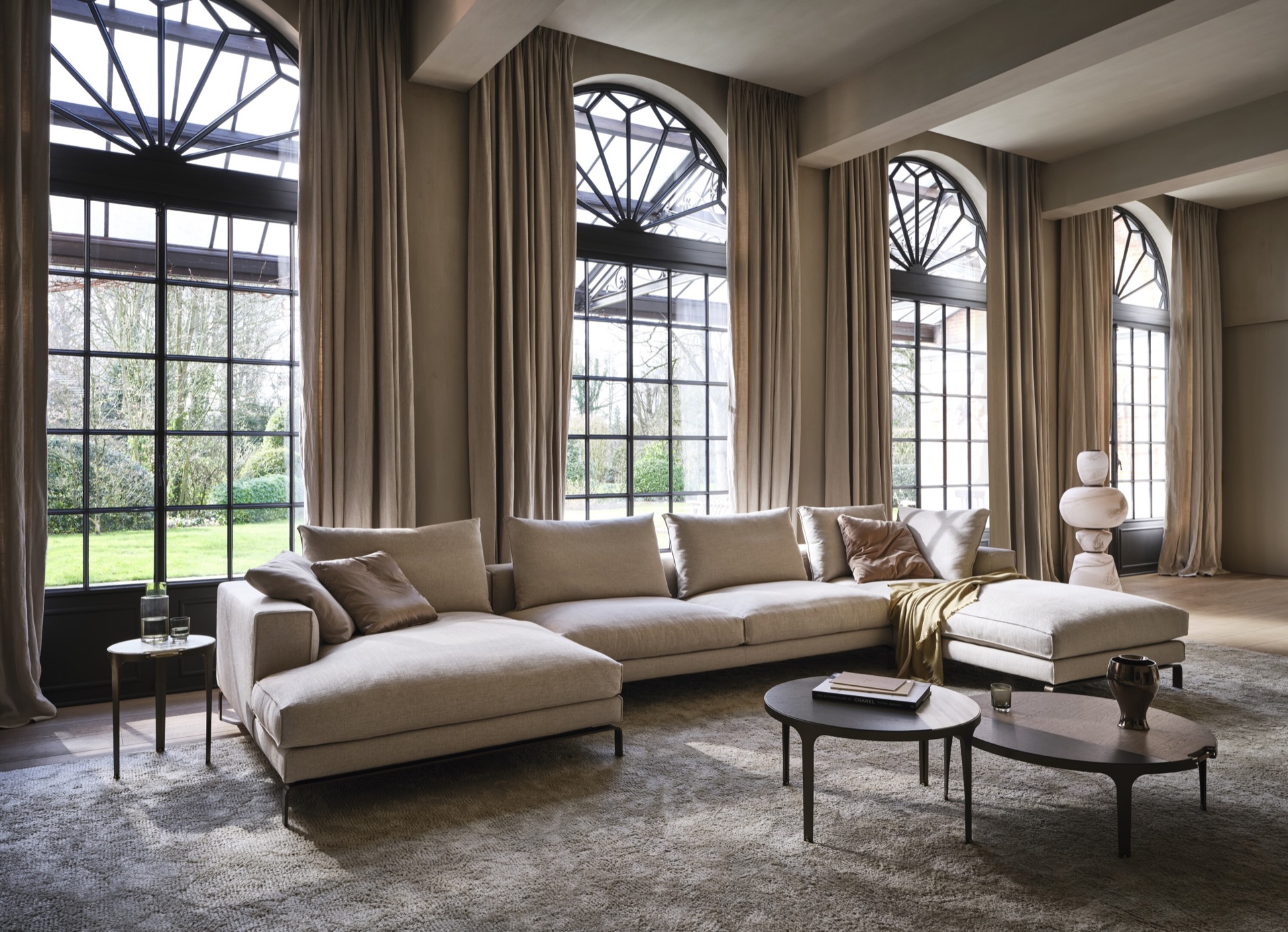
The chaise does more than extend the seat. It changes the way the sofa occupies the floor, turning one side into a clear resting line and leaving the opposite edge open. That asymmetry shows up well in the interior photographs, where the sofa sits against tall glazing and beneath curved window openings. The long module echoes the room’s width, while the low back keeps the view across the space open.
In the brighter shots, the sofa’s outline sits against pale curtains and a light floor, so the frame reads almost as a drawn line. The effect is close to a floating sofa look, helped by the visible clearance under the base. This is where the sectional format feels deliberate rather than bulky: the modules stay readable, and the chaise remains the anchor point of the plan.
Slim sofa legs and the space below
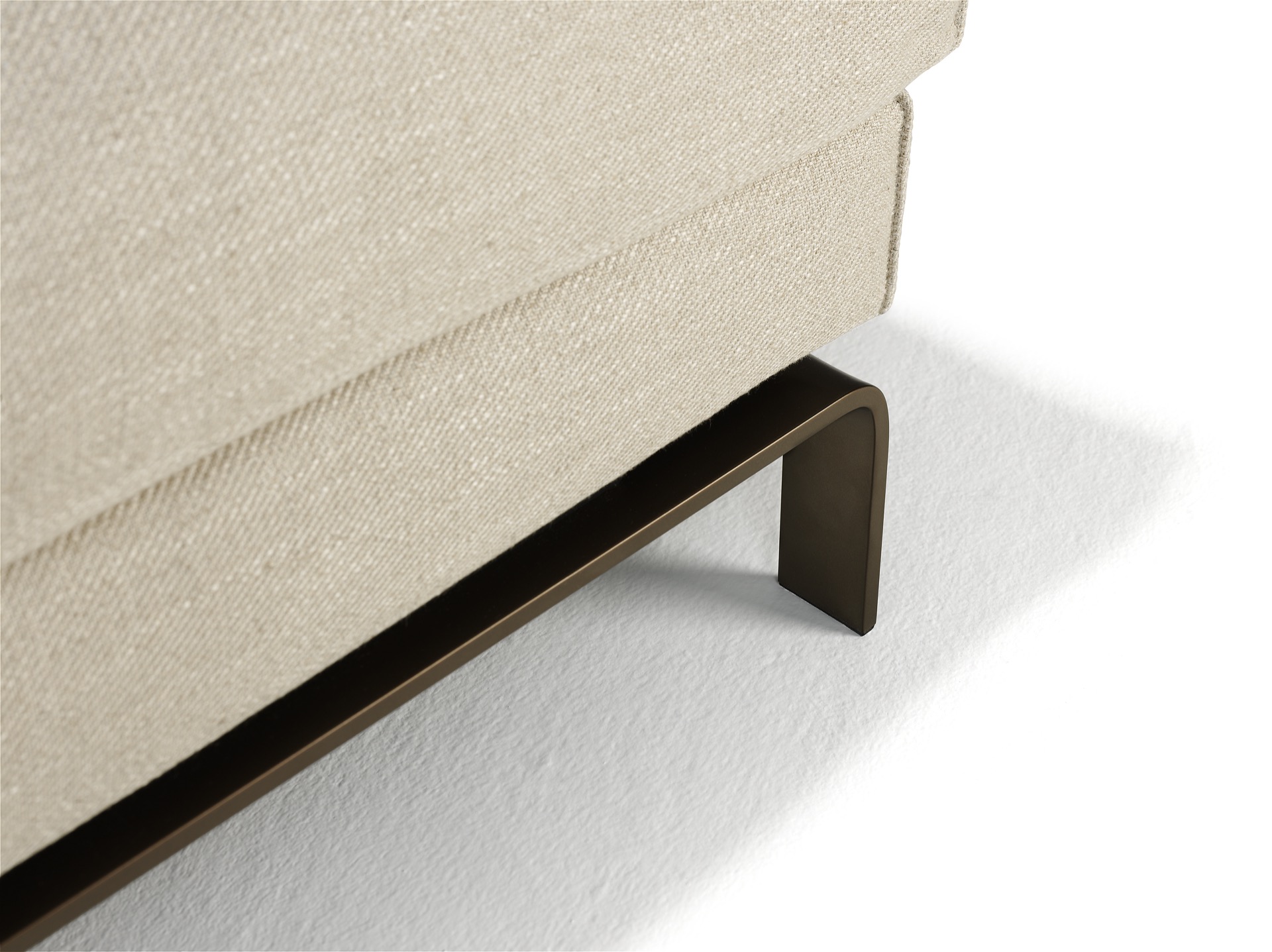
The legs are thin enough to leave a clear shadow line under the seat. That gap matters. It gives the sofa a lighter stance and prevents the broad cushions from sitting flat against the floor. In close-up, the darker metal base forms a narrow contrast with the pale upholstery, and the detail is clean rather than decorative. The slim sofa legs support the long body without drawing attention away from the main silhouette.
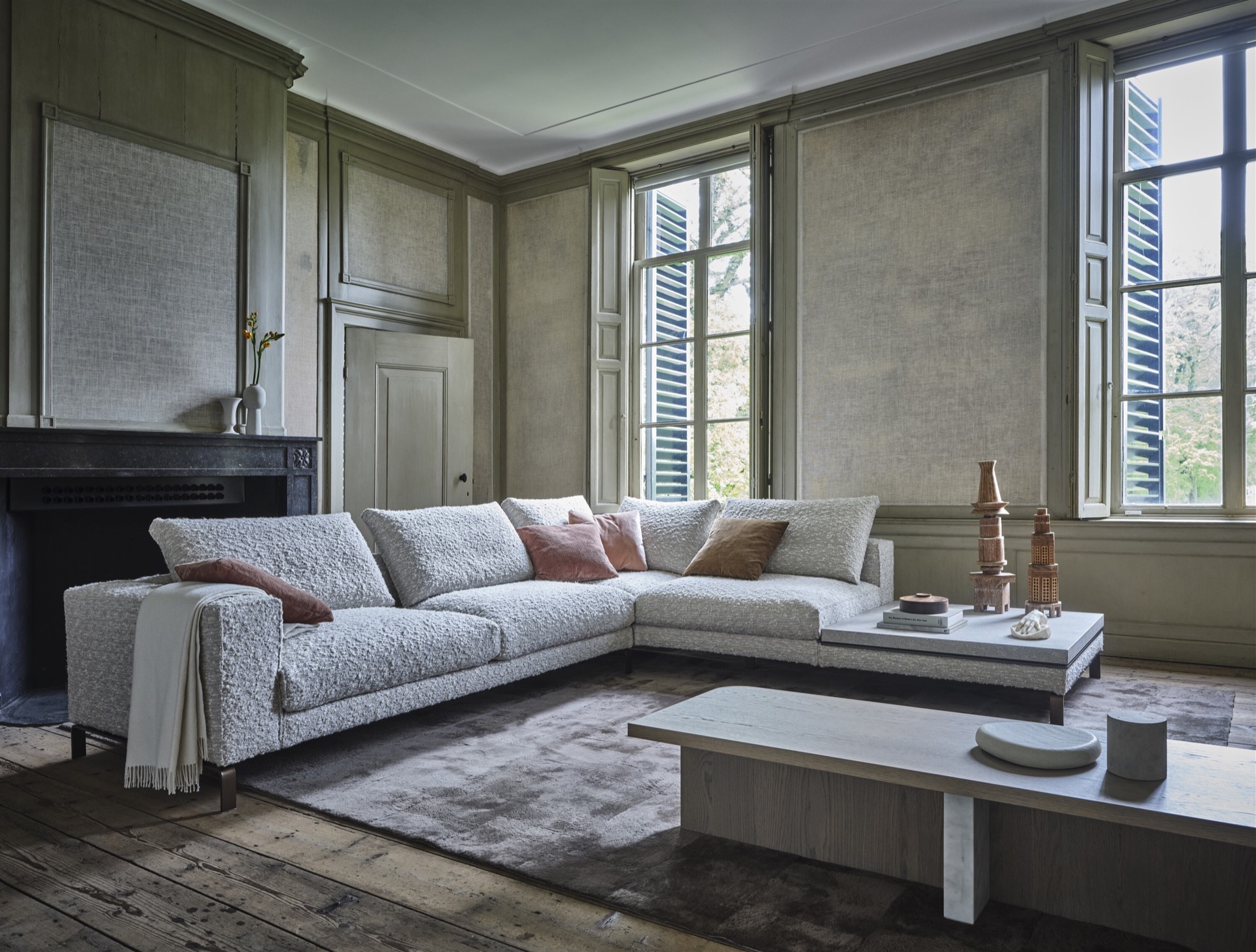
From the side, the understructure is even more visible. The sofa lifts just enough for the floor to run beneath it, which keeps the sectional from feeling closed off. In a room with patterned stone, wood flooring, or a large rug, that small gap becomes a useful visual break. It lets the modules stay distinct and gives the whole piece a more open reading in plan and in profile.
Neutral upholstery with visible texture
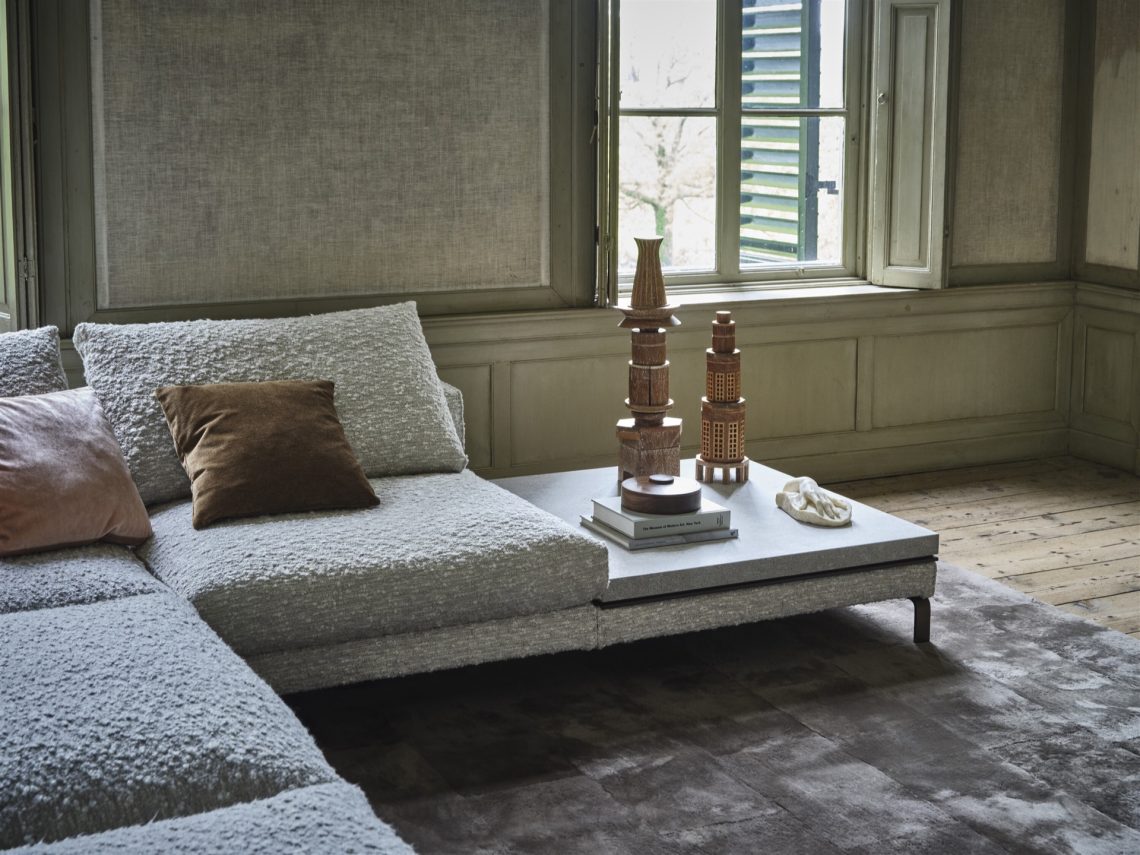
The upholstery is restrained in tone, moving between beige, ecru, and a muted grey in the different images. That neutrality makes the seams and cushion divisions easier to see. The fabric does not flatten the shape; it shows it. In the detail shots, the weave has enough texture to catch light, and the edge finishing stays crisp where the seat meets the back and arms. This is neutral fabric upholstery used to define form, not to hide it.
Several seat and back cushions are arranged in clean rectangles, which strengthens the modular reading of the sofa. You can see how the sections align without becoming rigid. The result is calm, but not soft-focus. In the studio views, the upholstery surface holds a steady matte appearance, while the interior images pick up a bit more shadow on the seams and corners. Those small changes keep the object readable from different distances.
Studio product details that reveal the build
The product shots on white background strip away the architecture and leave only the proportions. Here the chaise, corner, and main seat modules are easy to compare. The stitched lines, the squared cushions, and the narrow base all point to a controlled build. These studio product details are useful because they show how the sofa is assembled: as a sequence of parts that sit together without losing their individual edges.
One close-up isolates the leg and the underside of the seat. The matte dark finish reads differently from the fabric, and that contrast keeps the base visually separate. Another image focuses on the textile itself, where the weave and the edge seams become the main subject. Together, they explain why the sectional works both as a lounge piece and as a clear product form.
Made to read as one line or several blocks
What stands out across the series is the sofa’s ability to change reading depending on viewpoint. From the front, it presents a continuous line of cushions. From the side, the chaise and corner module break that line into separate parts. That dual reading is what makes the sectional sofa with chaise effective in both studio and living room settings: it can sit as one composed shape, or reveal its structure in pieces.
The interior photographs strengthen that impression. Large arched windows, tall curtains, and a pale ceiling keep the room open around the sofa, so the shape never loses its outline. In one frame the grey version sits on a patterned rug; in another, the beige upholstery is set against wall panels and recessed openings. The setting changes, but the same geometry remains visible, and the chaise keeps pulling the eye along the length of the seat.
Material choices kept close to the form
The source mentions upholstery options in the full range of fabrics and leather from the collection, and that flexibility sits naturally with the sofa’s modular structure. The body is still the same clear shape, whether it is covered in textile or leather. The frame can also be finished in bronze or gun metal, which suits the narrow base and the darker leg detail seen in the images. Nothing here changes the outline; it simply shifts the material reading.
That restraint helps the sofa stay legible in different interiors. A pale textile version blends into light rooms and lets the seams stand out. A darker finish would pull more attention to the base and the edge of the chaise. In either case, the form depends on the same set of visible cues: a long seat, a corner turn, slim legs, and a body that appears to hover slightly above the floor.
Even without extra decoration, the sofa carries enough detail to hold a room. The shape of the chaise, the spacing under the base, and the measured cushion layout give it a quiet but clear presence. Seen across the studio and interior photographs, the sectional sofa with chaise remains consistent: a modular form, a light stance, and a surface that shows its texture as soon as the light shifts.
Photographs by Sigurd Kranendonk and Pieter Kleiterp. Styling by Anya van de Wetering.
Want to see more of LINTELOO? View the page of LINTELOO for even more great projects and company information.


NEW 2026 Jubileum Edition The Best Interior Designers Benelux
Order Now €125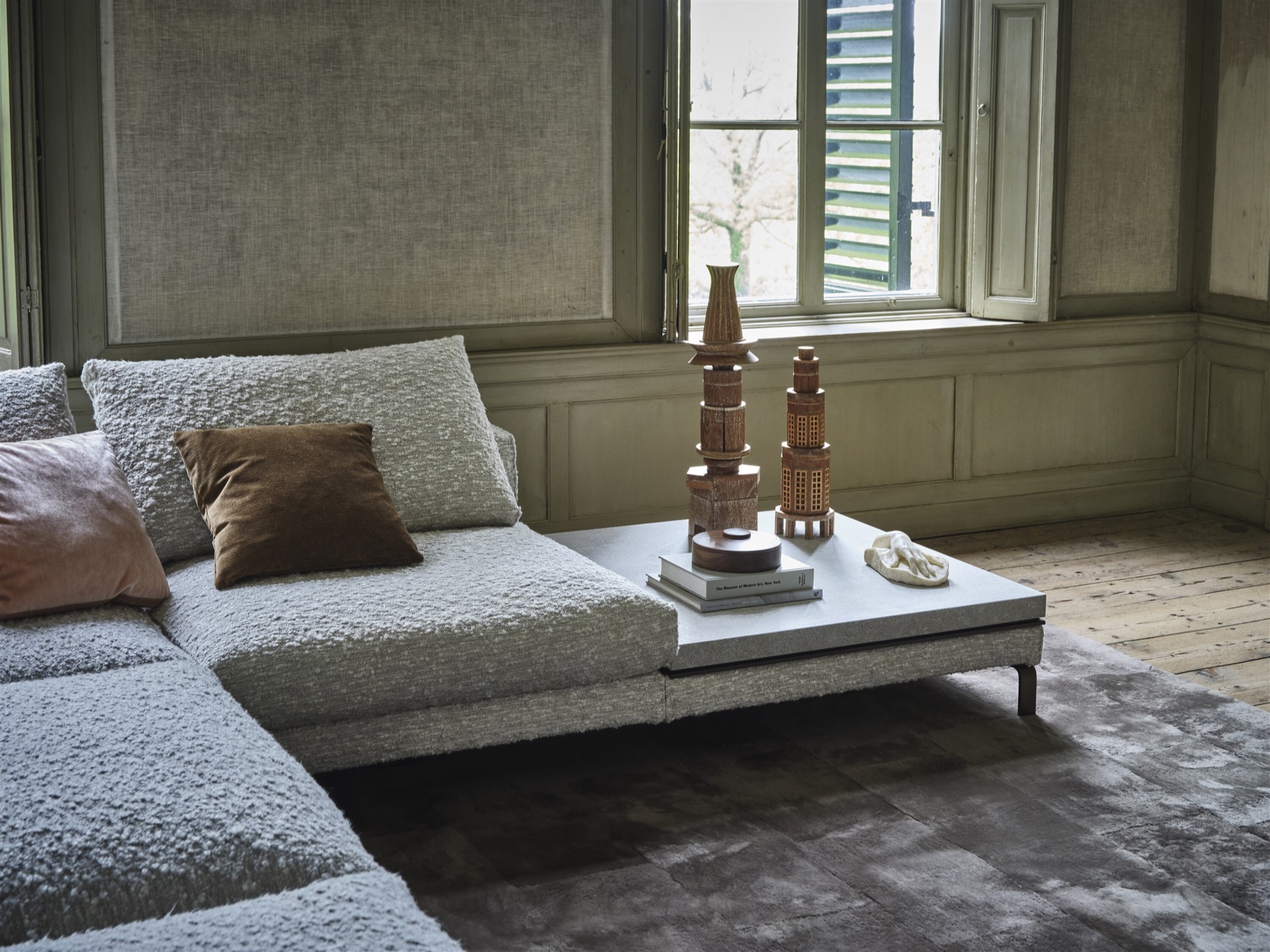
NEW 2026 Jubileum Edition The Best Interior Designers Benelux
Order Now €125