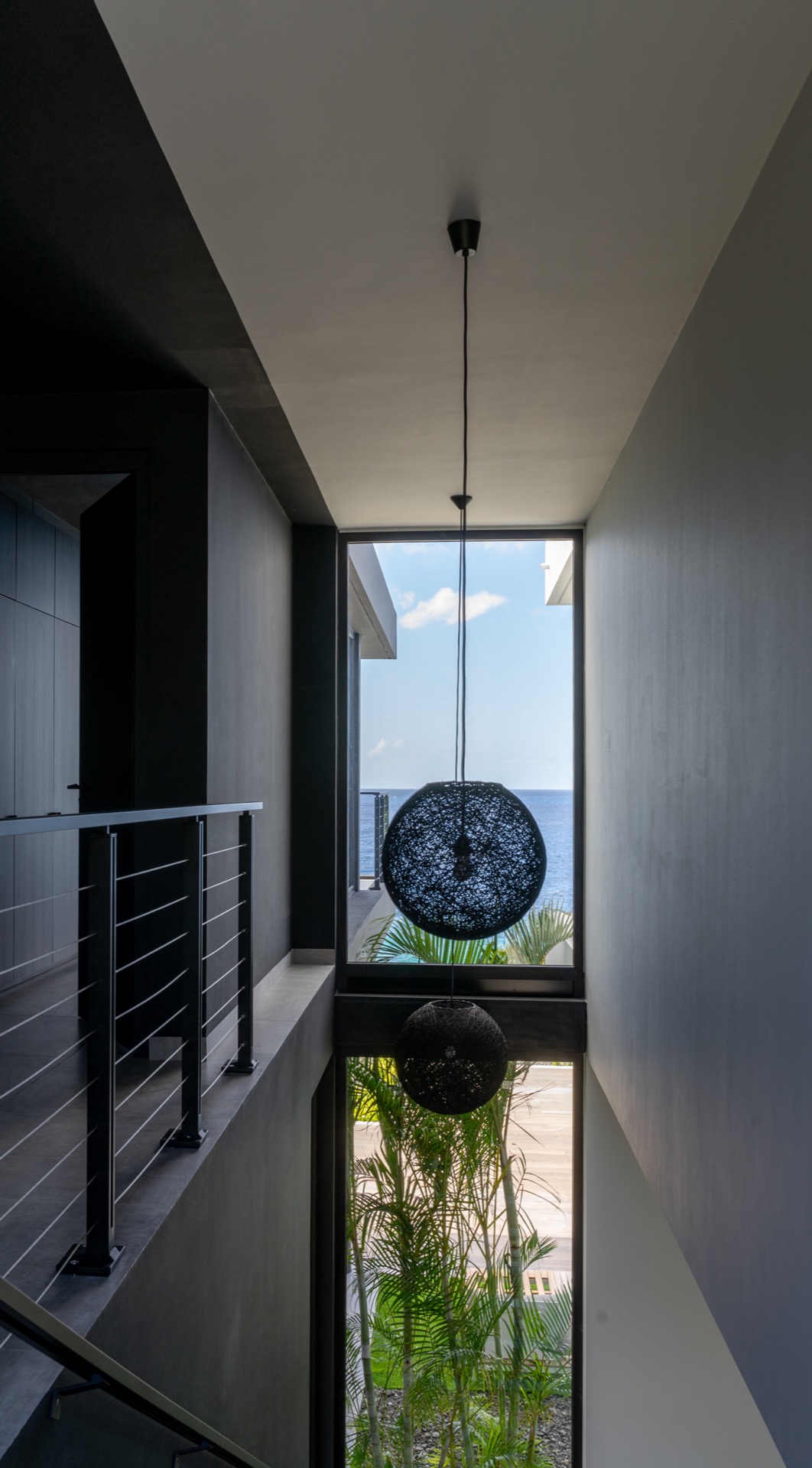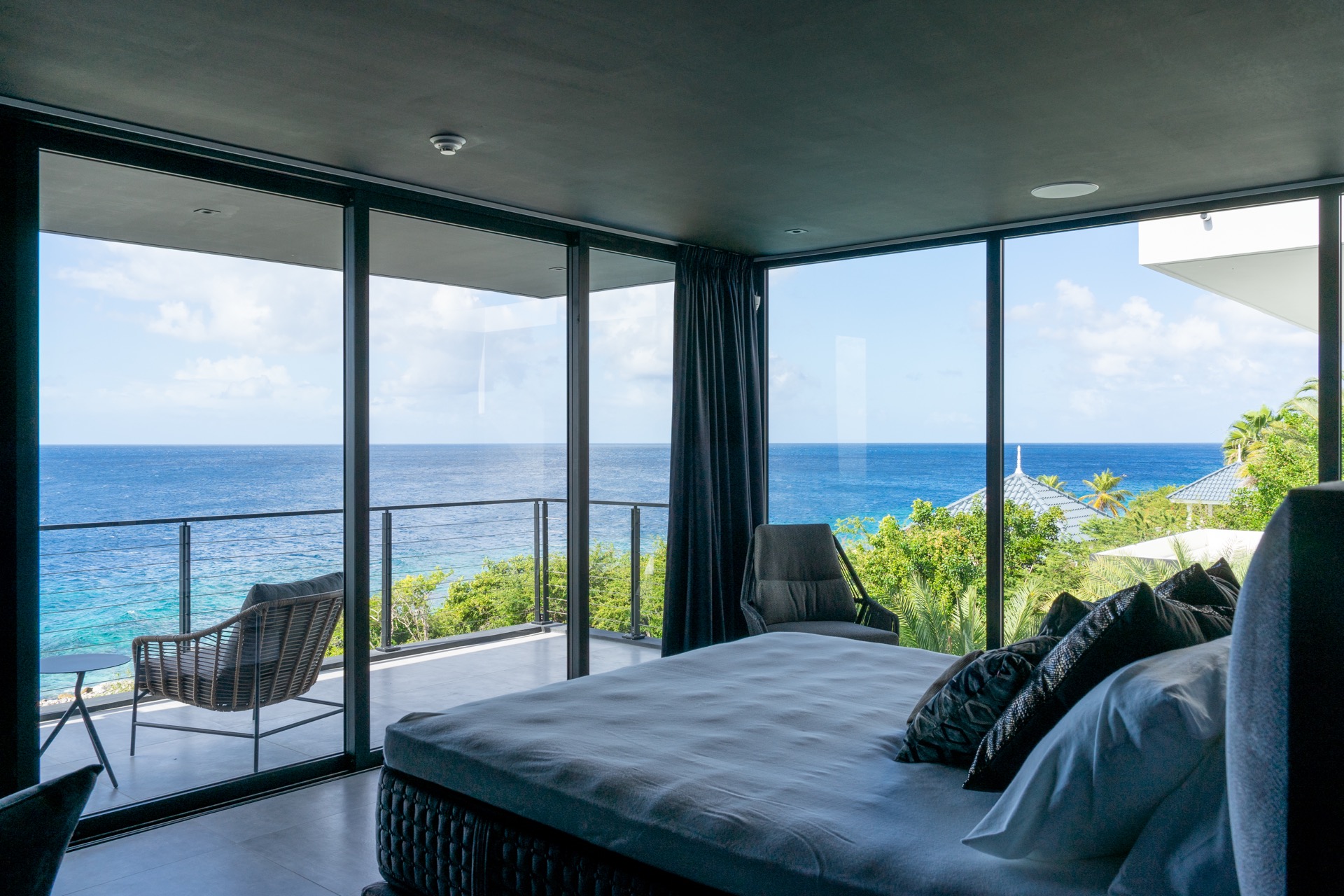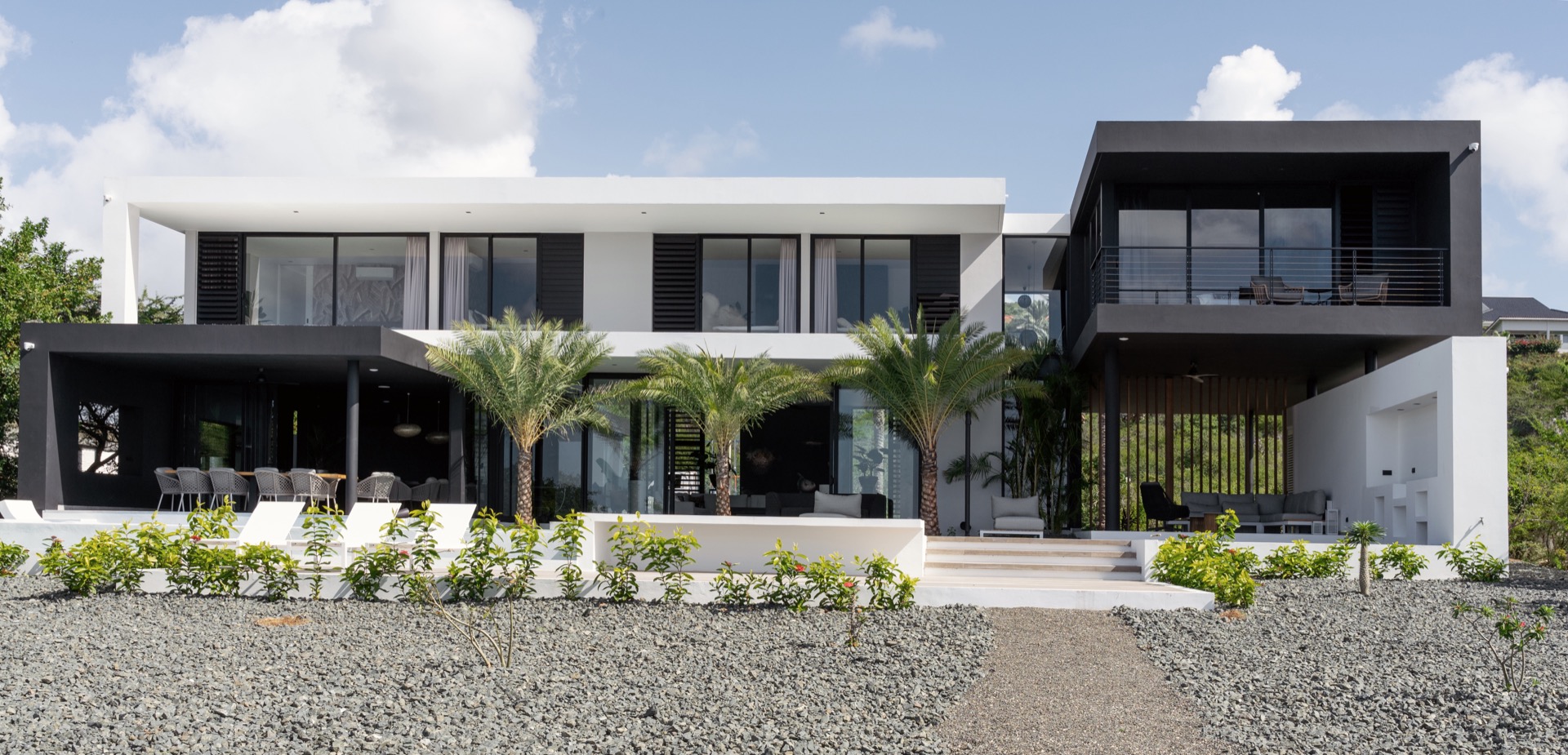







Modern architectural villa with natural elements and panoramic views
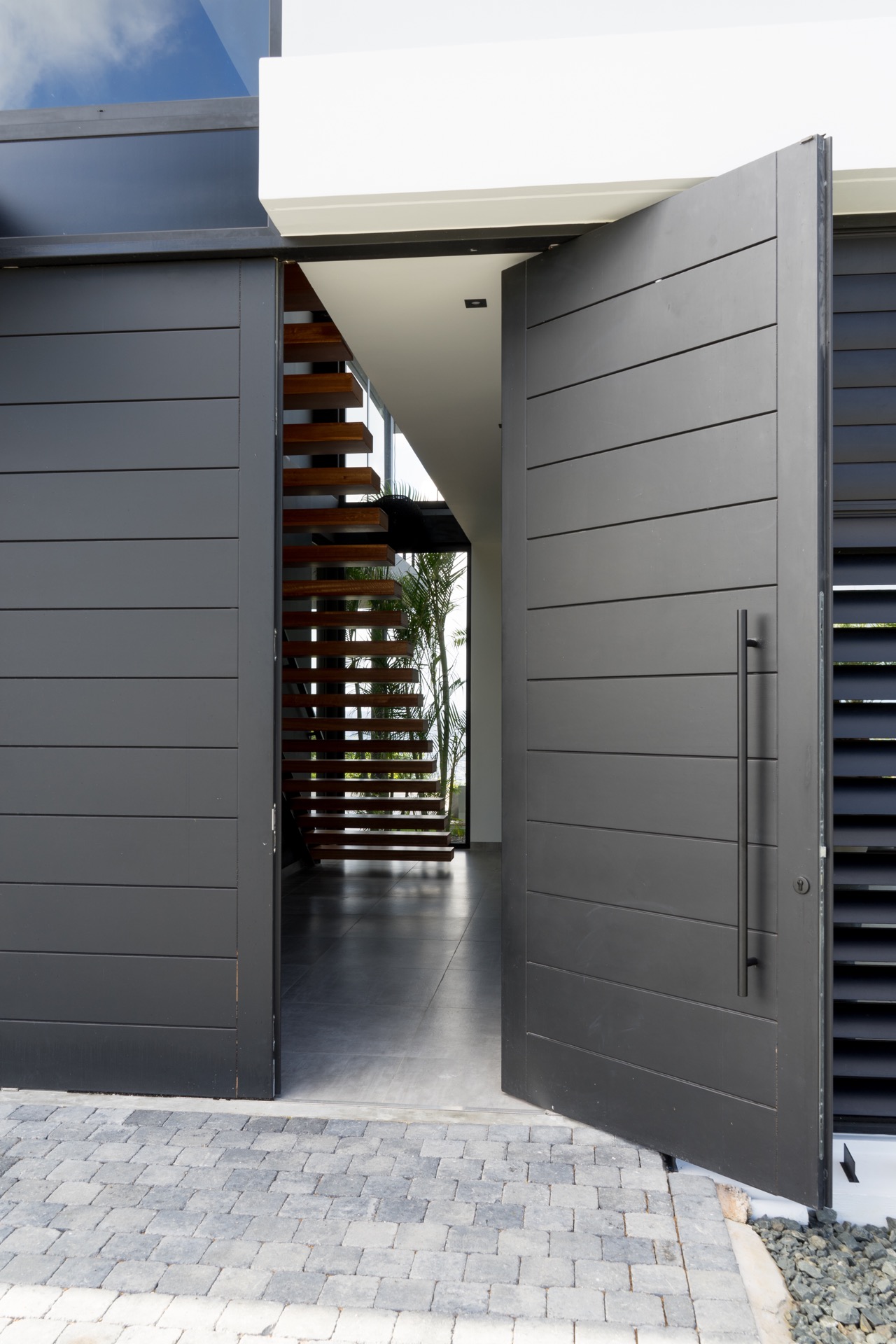
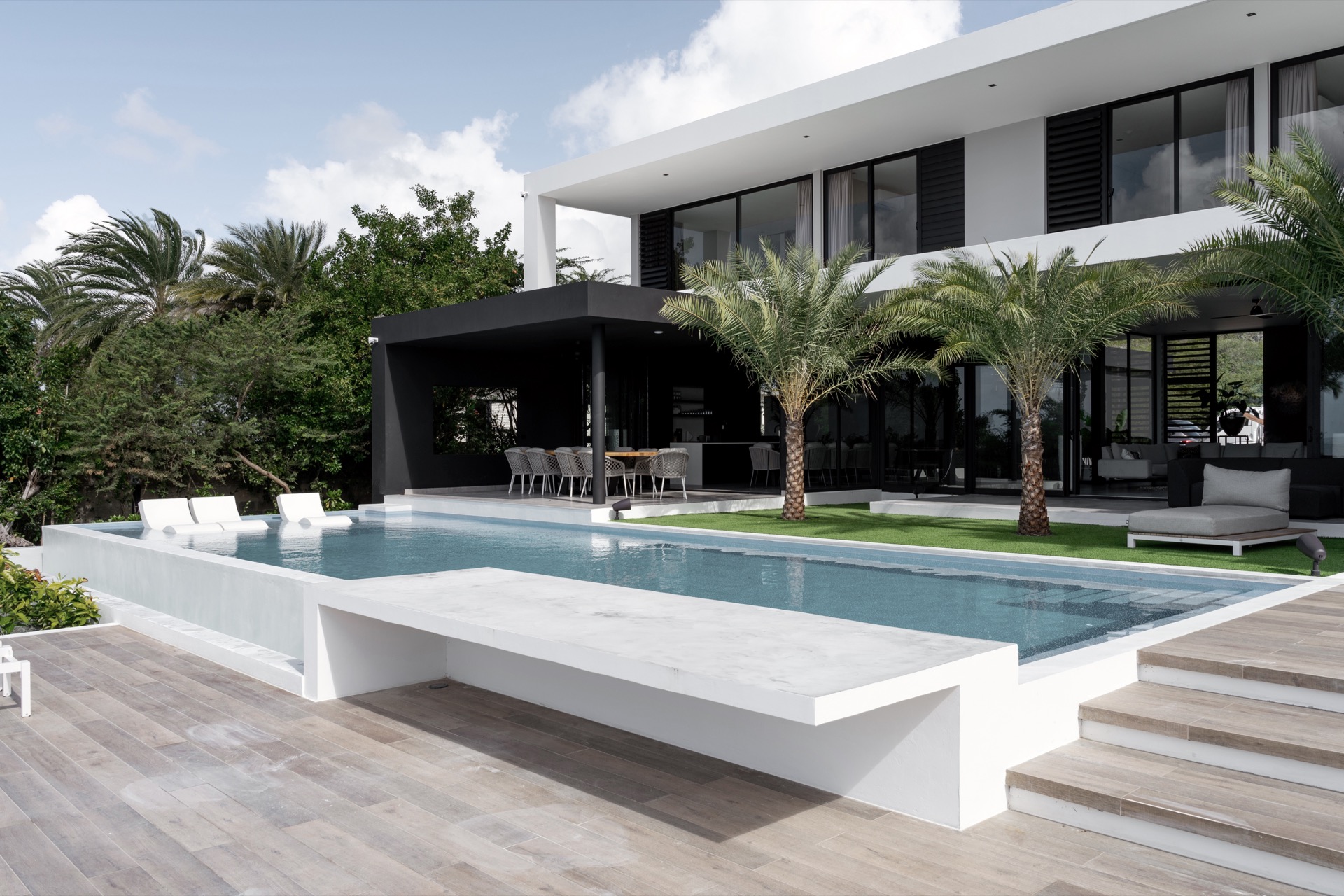
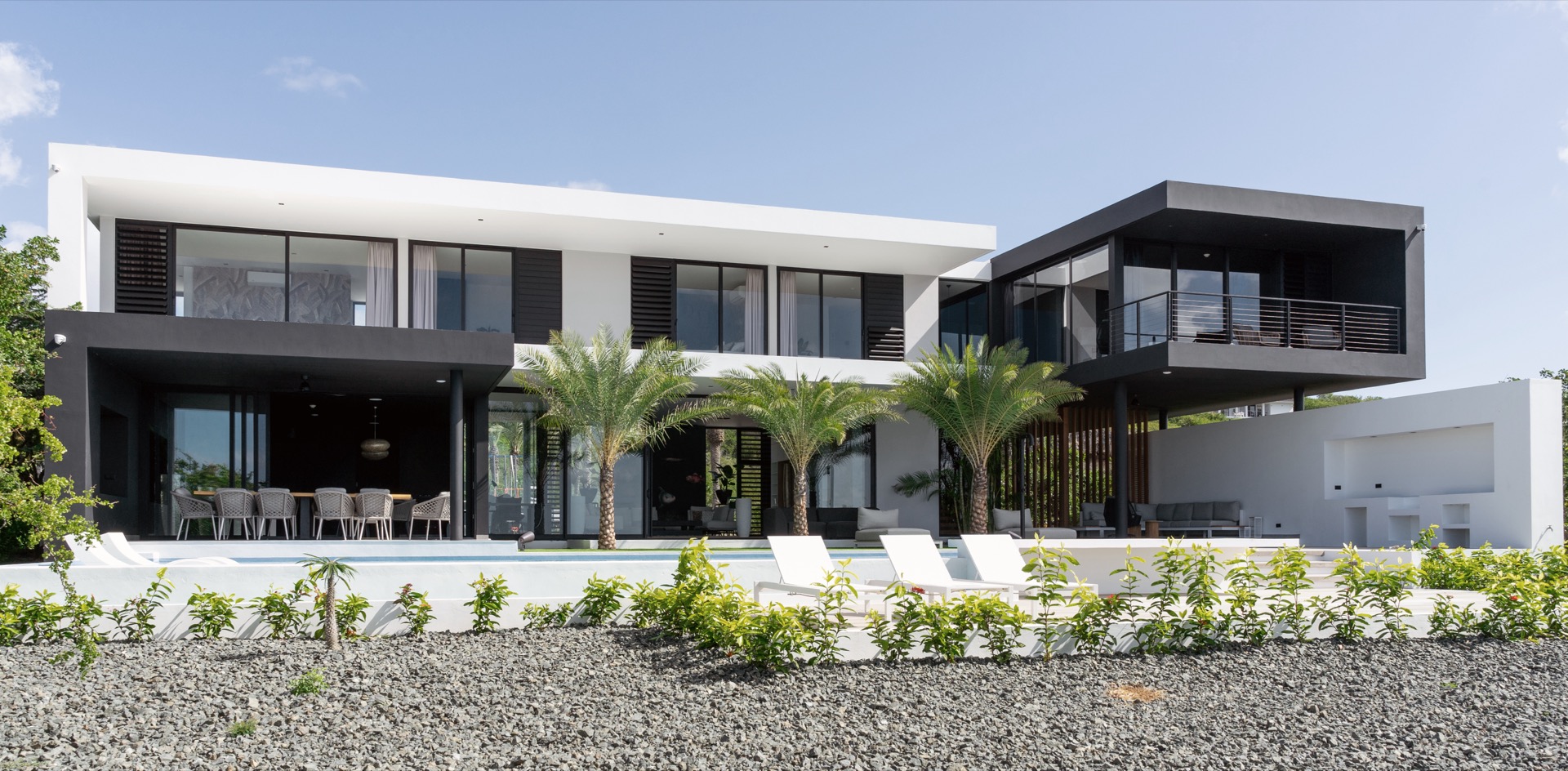
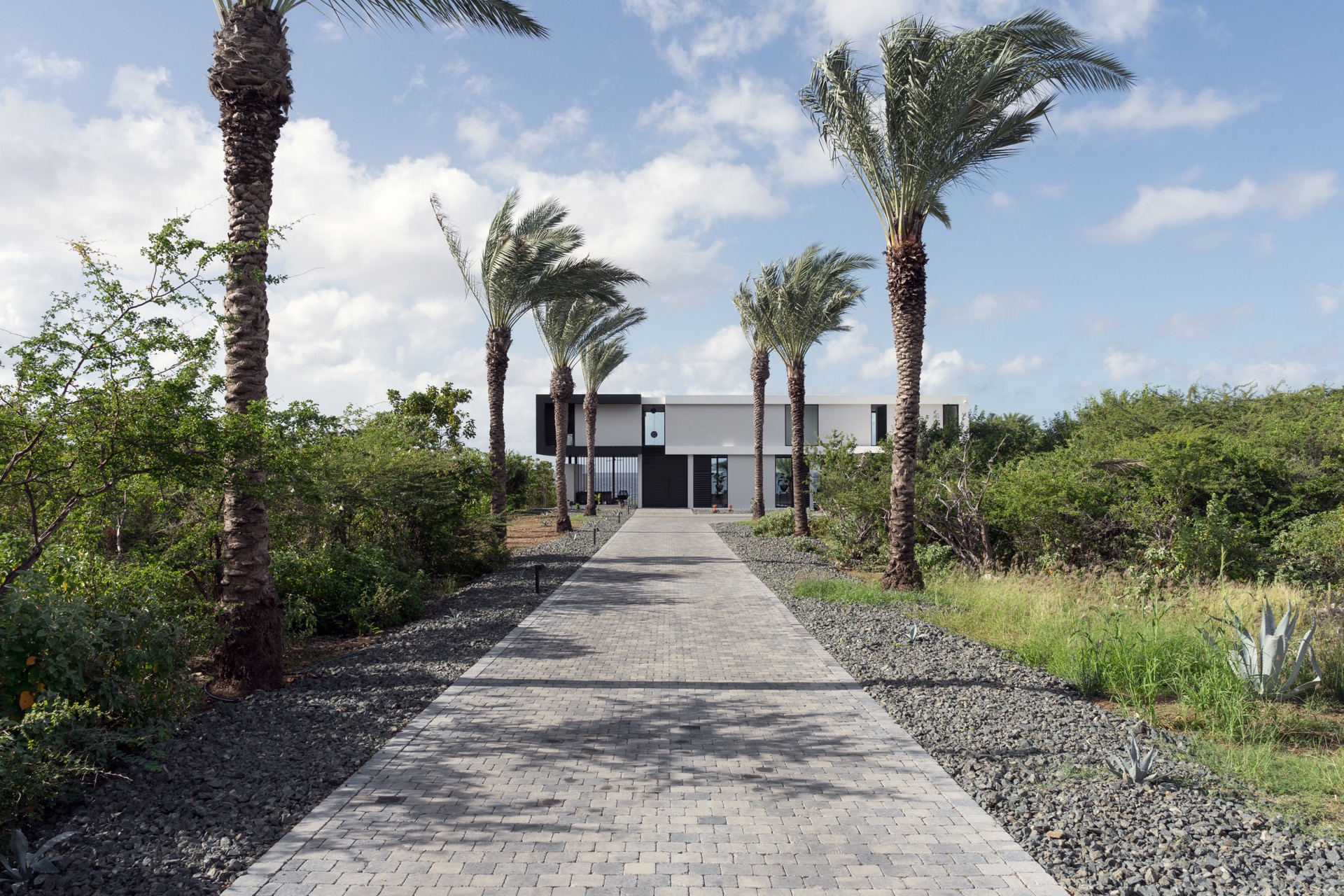
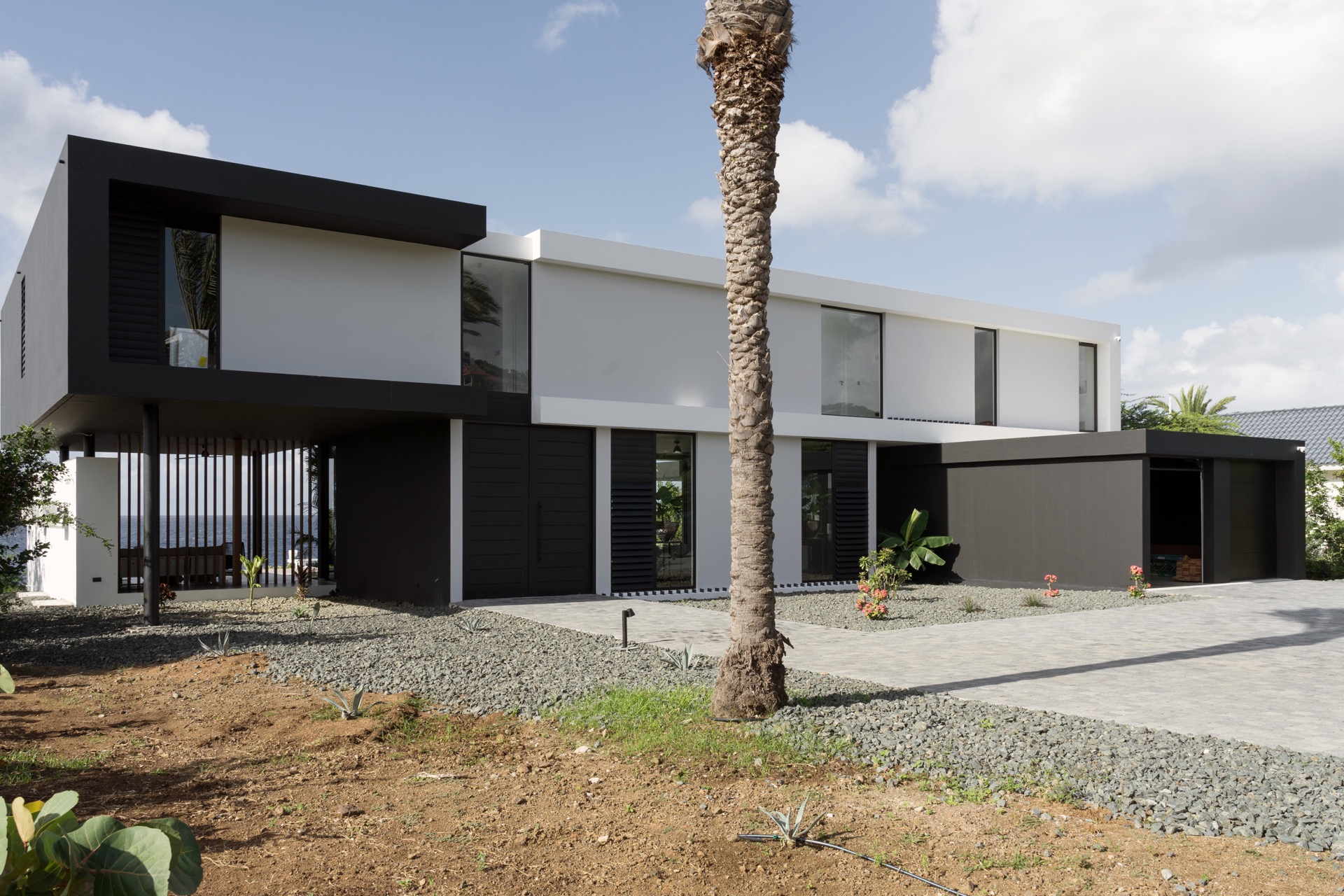
The modern architecture is immediately visible in the way the project is framed. Two striking volumes clad in deep black frame the horizon, setting a composed tone for this modern villa. Both boxes align with the landscape yet present distinct profiles: a solid, protective street-facing facade contrasts sharply with a wide glass rear that opens toward an expansive ocean view. This duality forms a spatial narrative around enclosure and openness, navigating privacy and connection to nature.
modern architecture as the architectural starting point
Concrete anchors the structure with smooth, planar surfaces that meet the large glass panels in clean junctions. Vertical wooden slats soften some edges, introducing a tactile rhythm while maintaining restraint. The interplay between dark cladding and transparent expanses punctuates the villa’s volumes with sharp lines and sculptural clarity. Outdoor terraces extend from these forms, creating a layered relationship to the garden and swimming pool.
Translating Natural Elements Inside
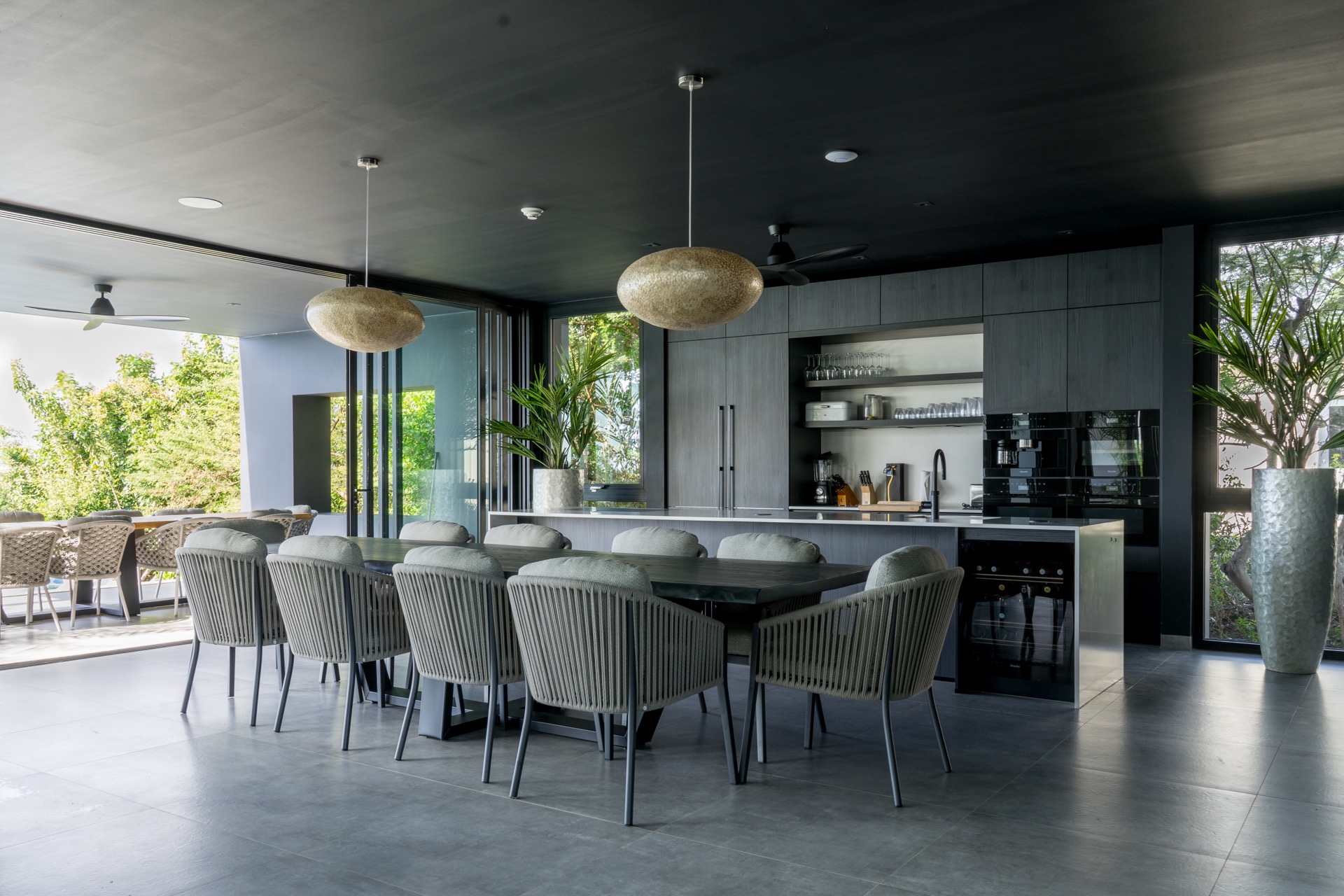
Interior spaces emphasize natural materials, with timber flooring and cabinetry appearing against neutral walls. The effect is grounded and restrained, allowing daylight to articulate surfaces through broad expanses of glass. Large pivot windows frame views of greenery and ocean, their proportions aligning with the villa’s geometric language. Plants, positioned thoughtfully throughout rooms, introduce organic shapes that quietly animate these minimal palettes.
Light and Views as Spatial Organizers
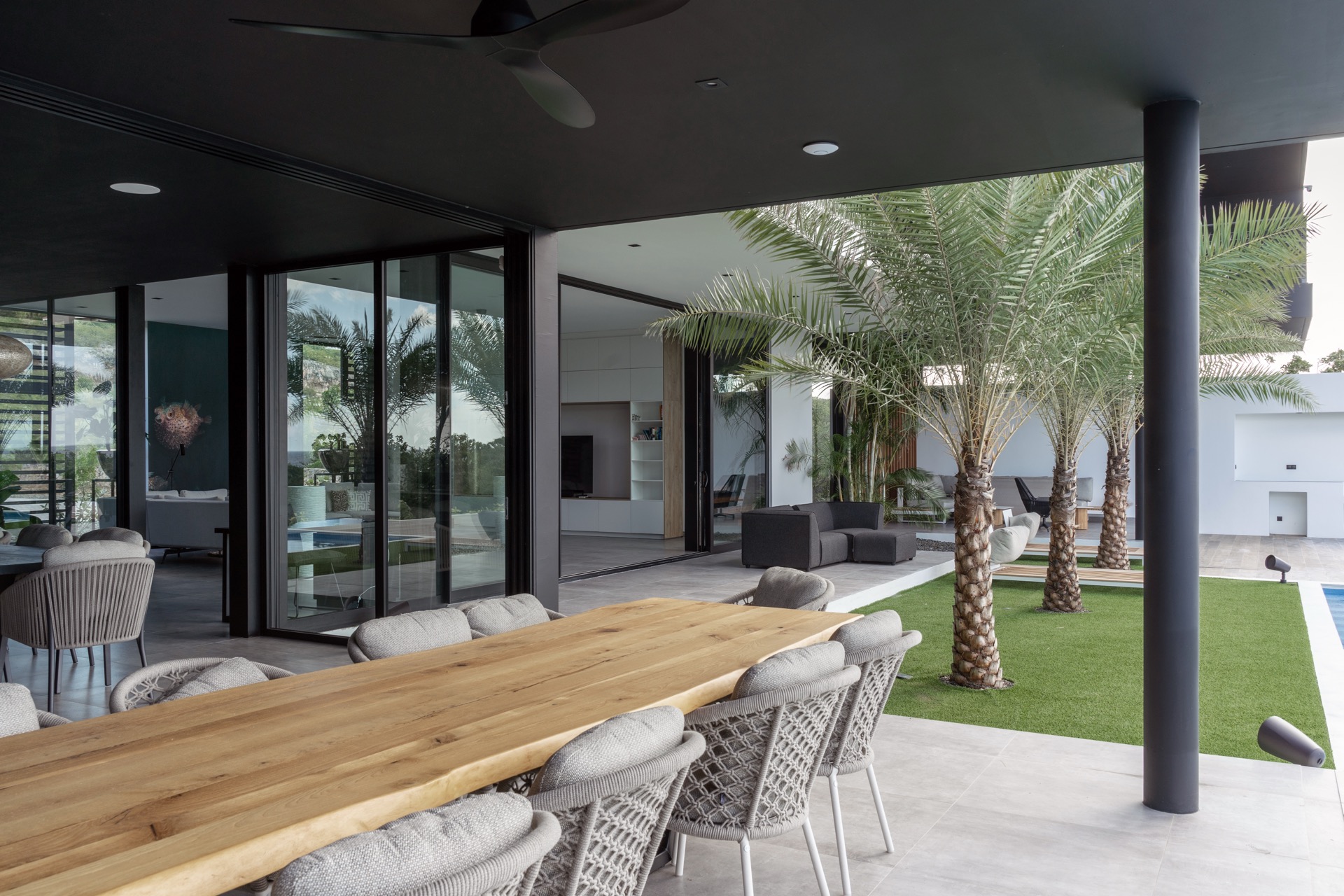
The rear facade’s height and width allow sunlight to flood living areas, modulating during the day with changing angles. This openness configures the main spaces around visual axes that direct attention to the outdoors. The living room’s large sliding panels blur the threshold between interior and exterior, while bedrooms contain framed glimpses of the landscape, offering varied experiences of exposure and shelter.
modern architecture as the architectural starting point
The outdoor swimming pool lies adjacent to a stone-paved terrace dotted with lounge seating. This area nestles within a garden where palms and bamboo plants provide vertical accents and shade, complementing the hard landscaping with texture and movement. These features respond to the villa’s modern forms, balancing structured geometry with elements that shift in the breeze. That makes the modern architecture part of the architectural character rather than a loose finish.
Functional Spaces Configure a Flow
Public and private zones appear clearly delineated through spatial planning and material transitions. Entrance areas remain enclosed, with minimal fenestration promoting privacy. Beyond this threshold, spaces unfold towards the rear facade, where openness prevails. The kitchen and dining zones occupy positions that mediate between indoor comfort and outdoor leisure, linked directly to terraces.
Details Supporting the Architectural Intent
Joinery and fixtures are kept simple, often with matte black finishes that echo the external cladding’s tone. A double vanity and walk-in shower in the bathrooms use honed stone surfaces, solidifying the natural theme. Throughout, subtle changes in texture and proportion avoid any sense of monotony, crafting an environment that is rich in tactile and visual contrasts without excess.
Connecting Modern Architecture to Its Environment
The villa’s siting enhances views to the ocean while respecting the scale of surrounding greenery. The open rear facade acts as a vantage point for daylight and landscape, its transparency framing nature in carefully composed views. The solid front confronts the street with understated solidity, its natural wood and concrete finishes relating to local materials though reinterpreted through modern architectural language.
Spatial Transitions Informed by Contrast
Movement through the villa is choreographed by alternating openness and enclosure. Narrower corridors lead to expansive living zones where sightlines open fully to the outdoors. The sequence invites occupants and visitors to transition from cocooned, intimate spaces into panoramic, sky-lit rooms. This dynamic sequence underpins the architecture’s dialogue between human scale and natural setting.
Integration of Outdoor Elements with Interior Design
Furniture arrangements emphasize flow and sightlines, staying low-profile to avoid obstructing views. Indoor plants soften architectural edges and echo the garden’s palette, extending the villa’s material logic inside. Natural light settles on smooth surfaces and timber grains, enlivens textured fabrics, and animates stone finishes, making daily shifts in illumination a part of the space’s character. That makes the modern architecture part of the architectural character rather than a loose finish.
Want to see more of STATE of Architecture? View the page of STATE of Architecture for even more great projects and company information.


.png)