







Modern kitchen with island
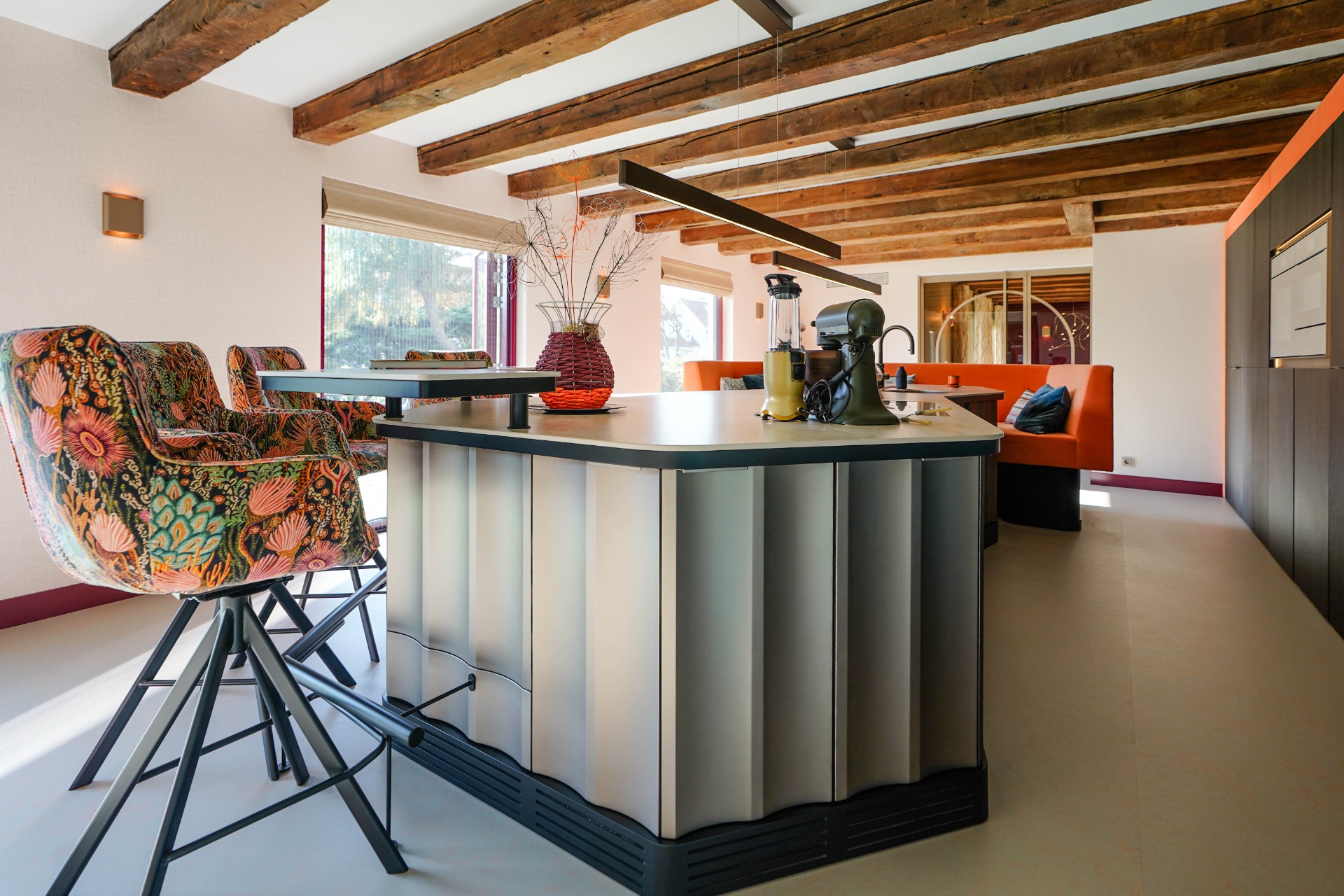
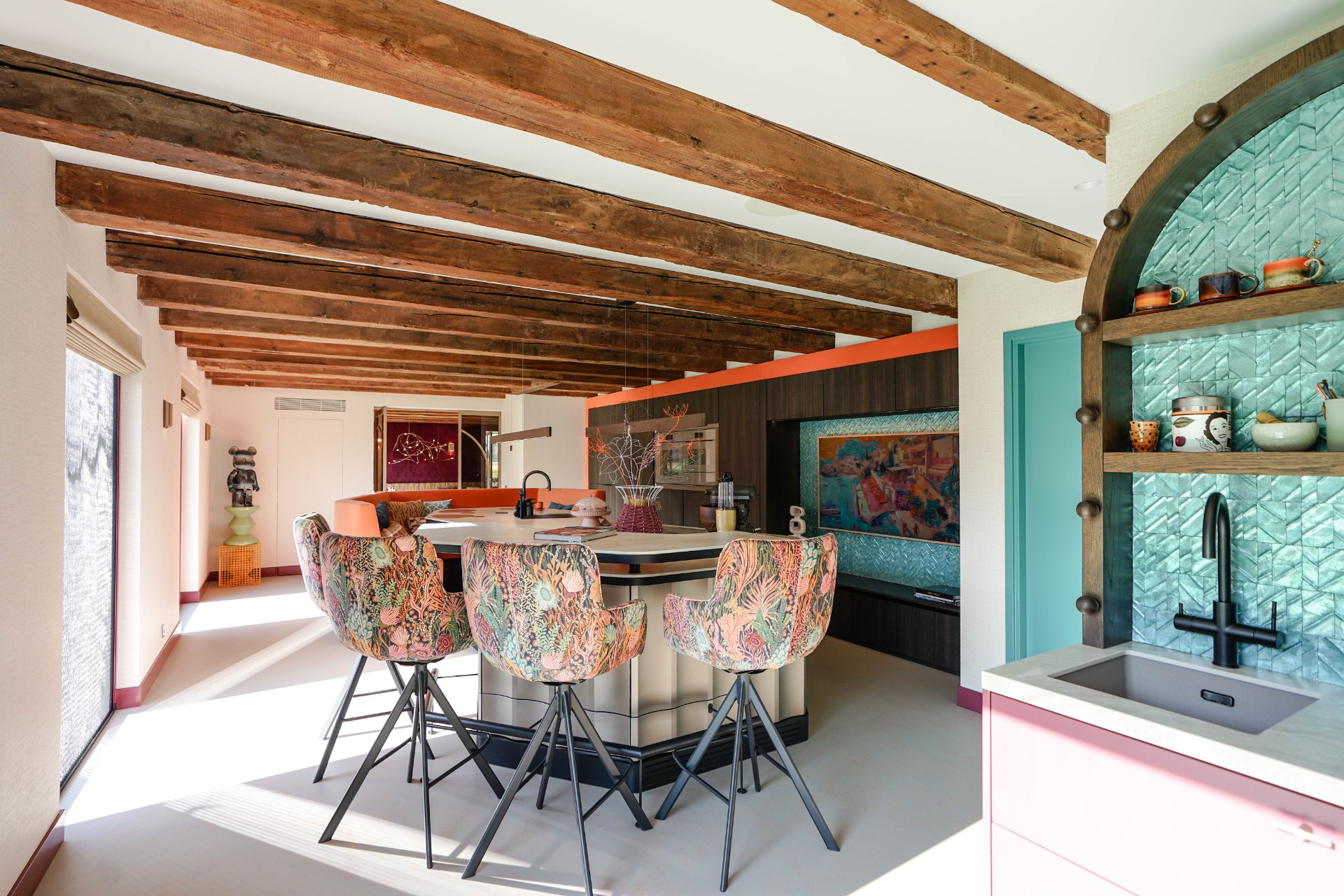
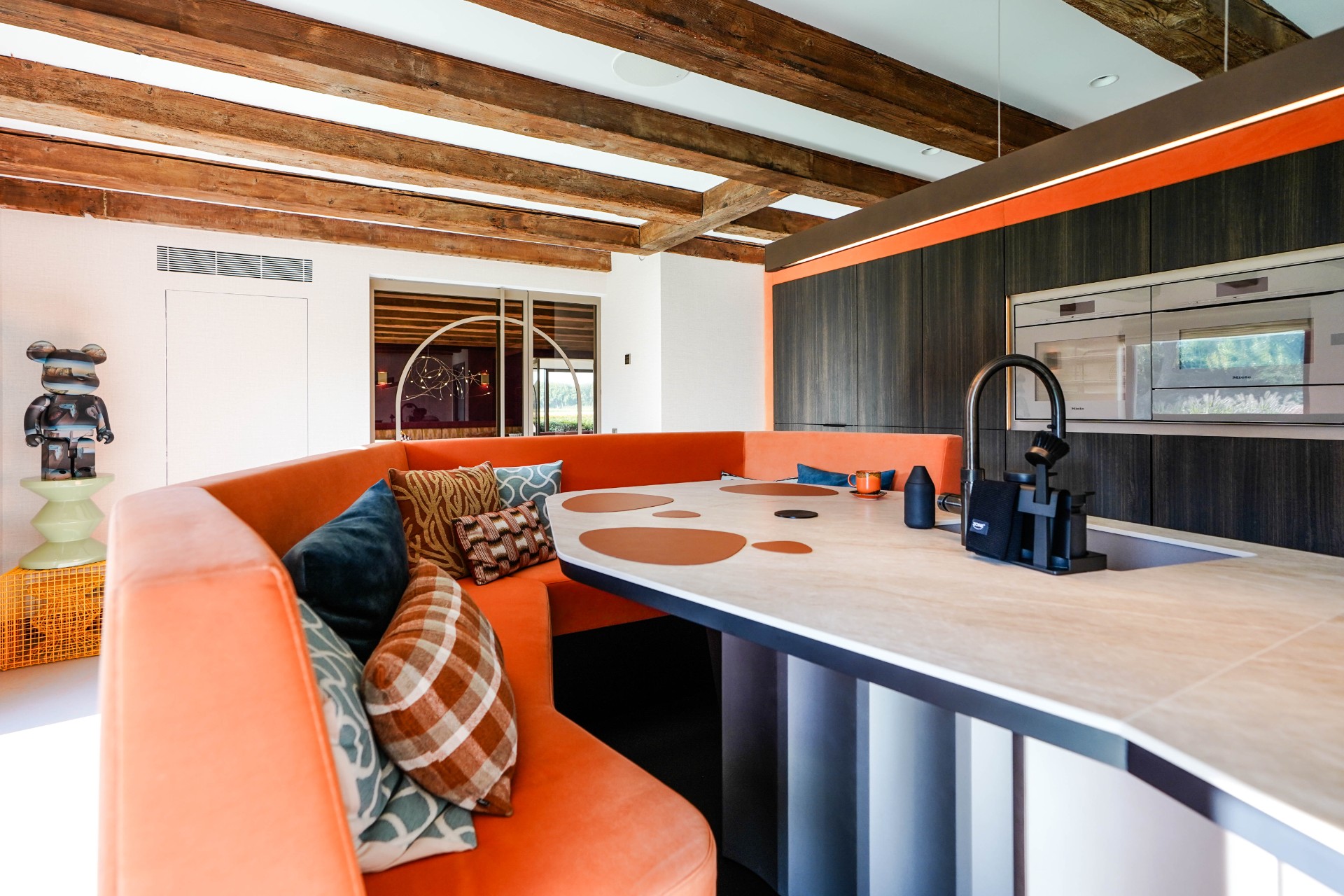
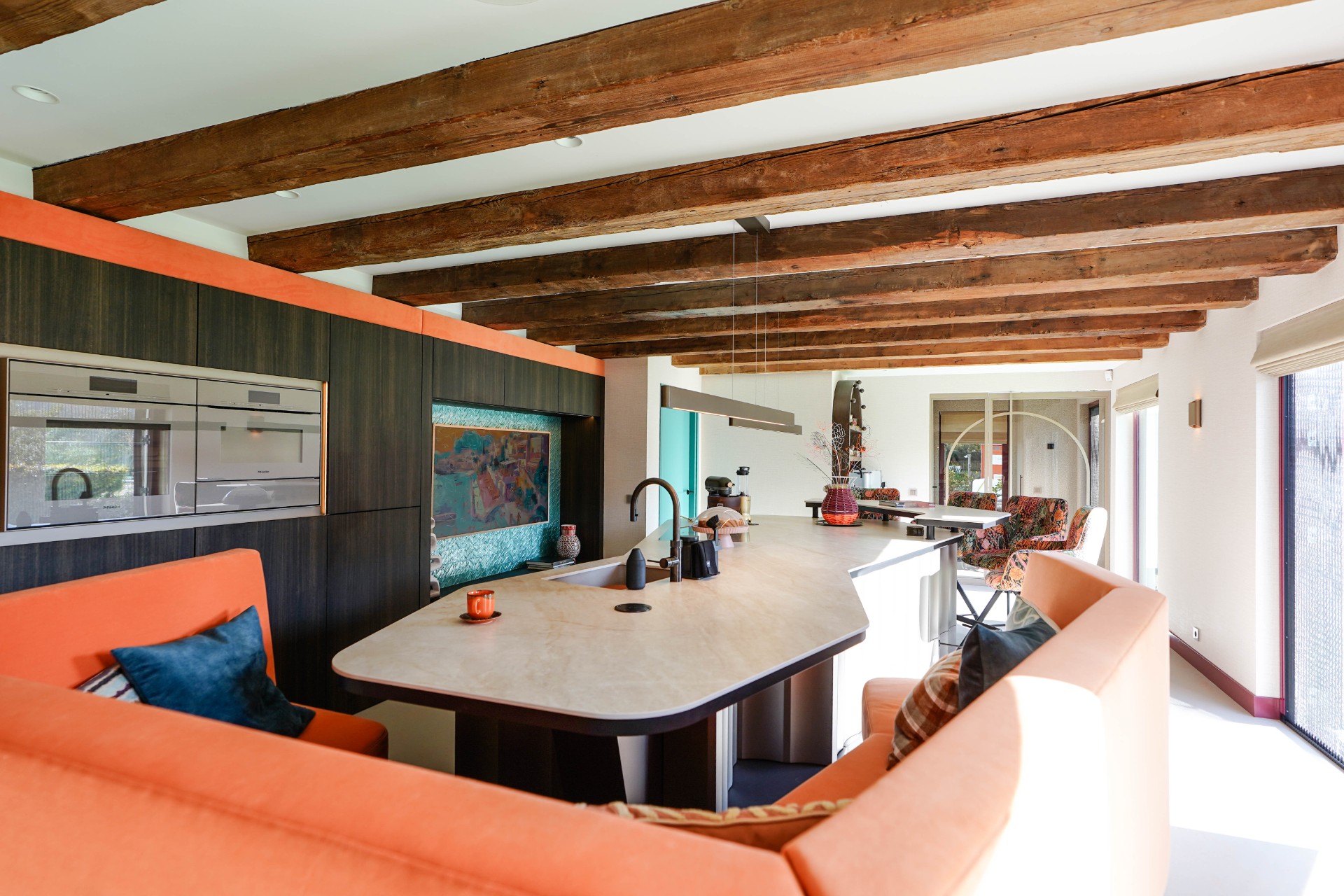
The first thing you notice is the island: broad, low, and set slightly apart from the surrounding run of cabinetry. In this kitchen with island, the central volume is shaped with an octagonal logic that softens the room’s geometry and gives the work zone a clear focal point. Dark cabinet fronts hold the perimeter in place, while the island pulls the eye forward with its sculptural profile and calm, measured finish.
The island sets the pace of the room
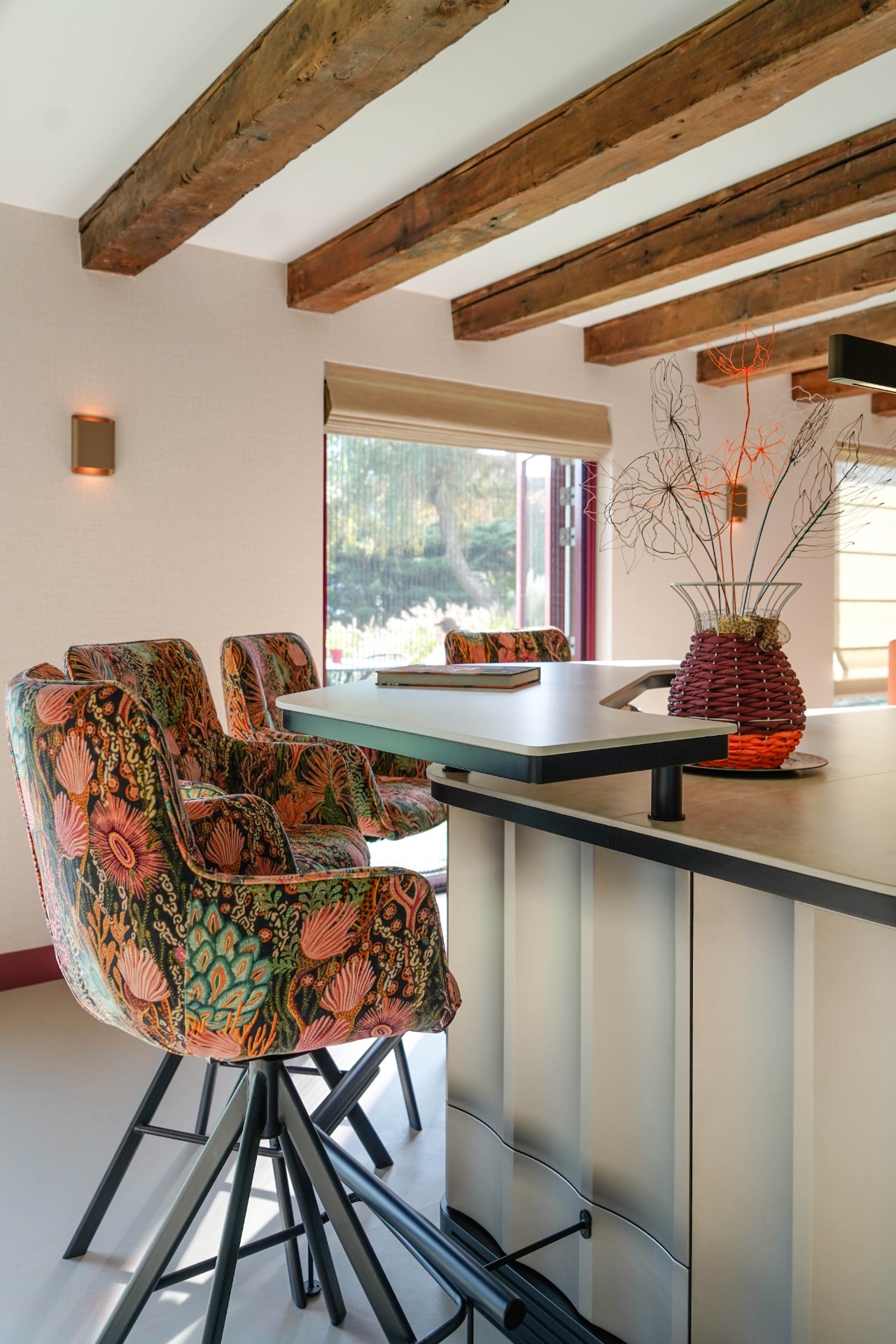
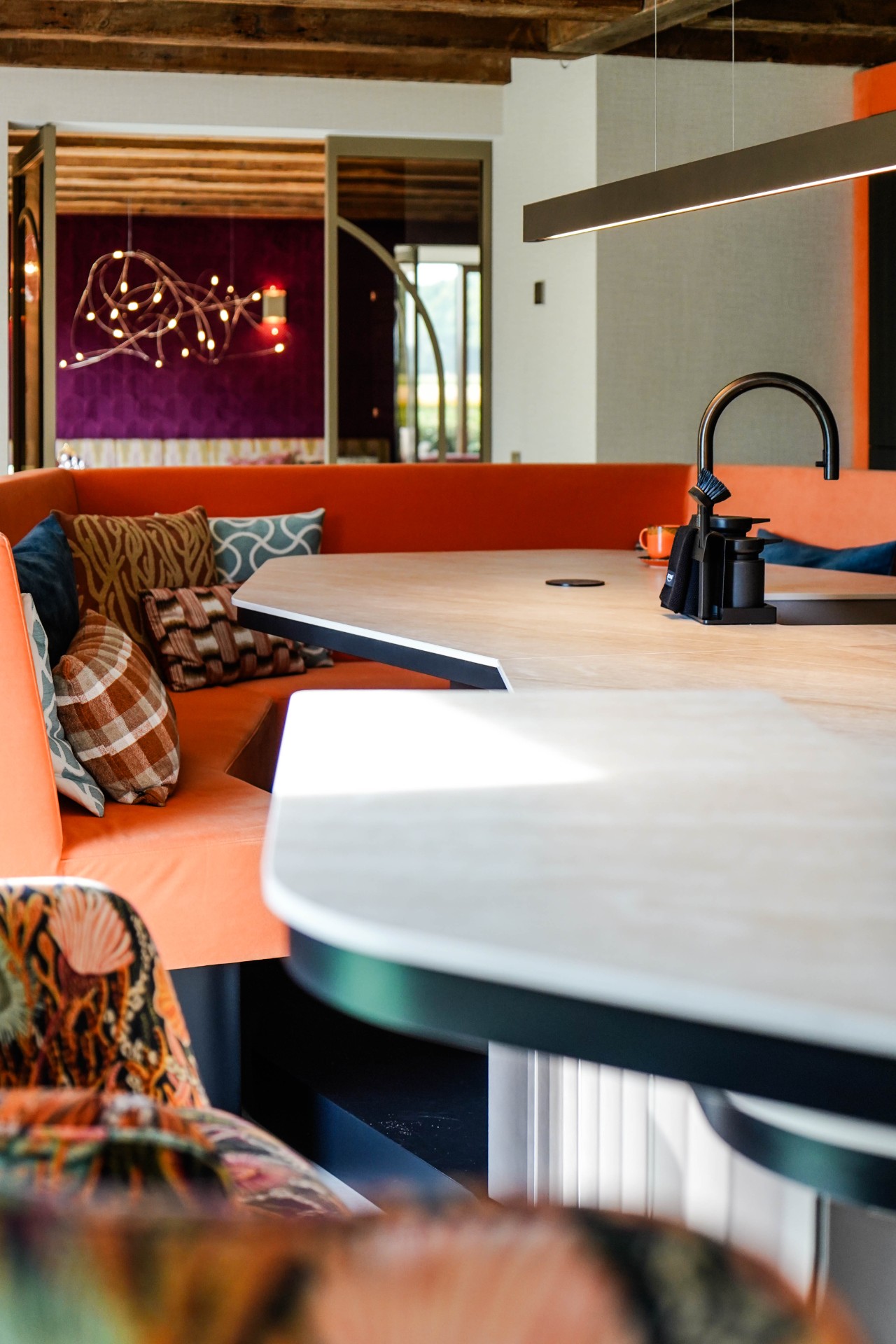
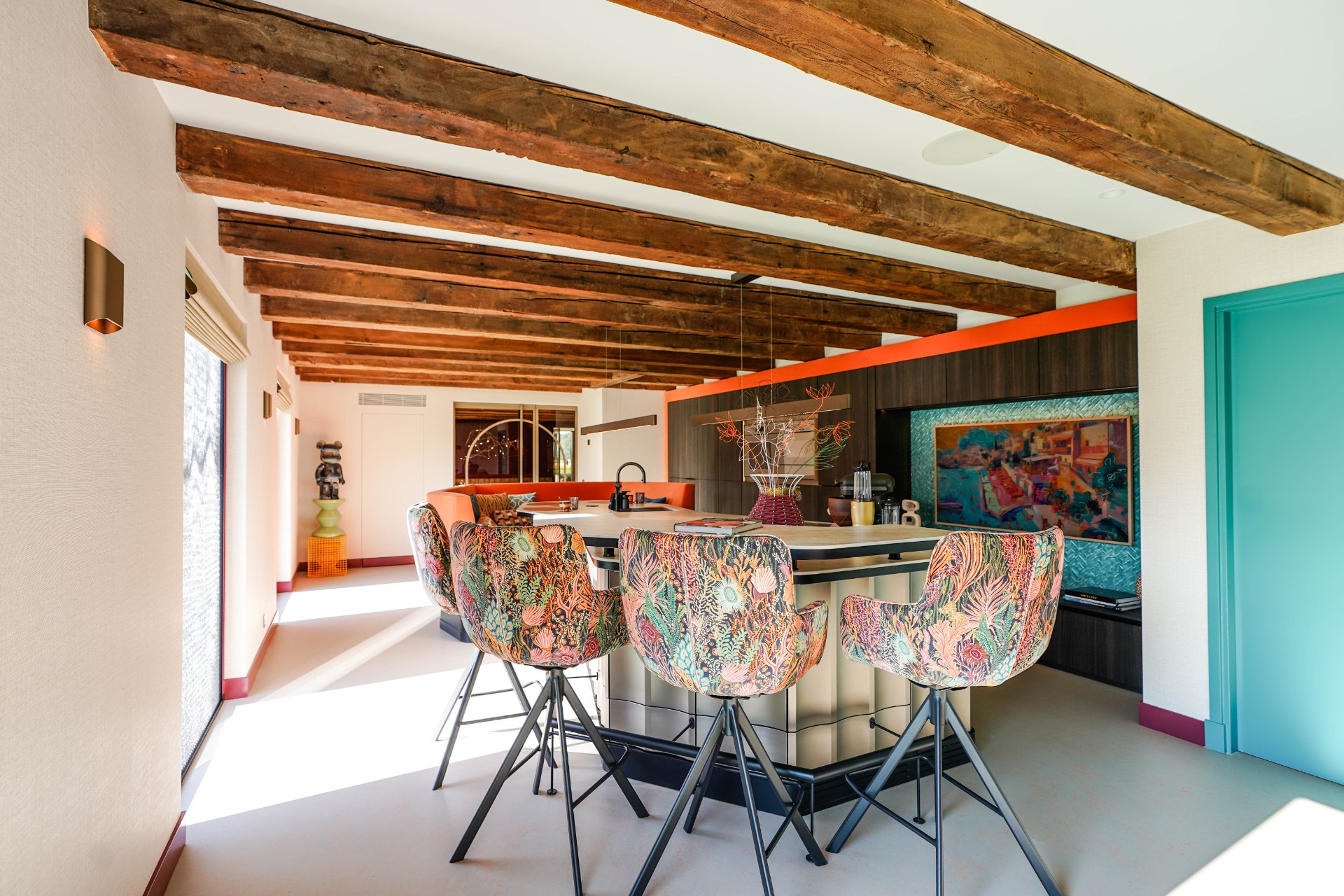
The octagonal kitchen island sits at the center like a piece of furniture built for movement around it. There is enough surface to work at, yet the form never feels purely technical. Its edges read as deliberate rather than sharp, and the stone-like worktop adds a matte counterpoint to the darker cabinetry behind it. That contrast gives the room its structure. The island also establishes the main route through the space, turning the kitchen into a place you pass through as much as you use.
Seen from across the room, the island connects the kitchen to the rest of the interior without needing extra gestures. The composition stays open. Light reaches the work surface from several directions, and the island’s proportions keep it grounded under the larger volume of the room. This is where the modern luxury kitchen becomes legible: not through excess, but through the clarity of its central piece and the way every surrounding element seems to defer to it.
Dark cabinetry and a ceiling that keeps the room grounded
Along the walls, dark kitchen cabinets form a measured backdrop. Their flat fronts absorb more of the room than they reflect, which lets the island and the lighter worktop stand out. Above, visible wooden ceiling beams interrupt the clean ceiling plane and bring a slower rhythm to the room. They also make the kitchen feel less sealed off, especially where daylight reaches in through the window zone at the edge of the space.
The beams do not compete with the cabinetry. Instead, they run across it, adding a horizontal layer that changes how the room reads in section. In a kitchen with island, that matters: the eye can move from floor to ceiling to wall without losing the central point. The result is a room that feels composed from strong parts rather than softened by decoration. The darker fronts, timber overhead, and pale work surface give each zone its own weight.
Subtle lighting, used where it counts
Lighting stays close to the architecture. In the images, an orange light strip kitchen detail traces part of the frontage and adds a thin line of color against the darker surfaces. It does not flood the room. Instead, it marks the join between volumes and highlights the kitchen’s edges at night or in lower light. Inset spots in the ceiling and soft illumination around the wall units keep the surfaces readable without flattening them.
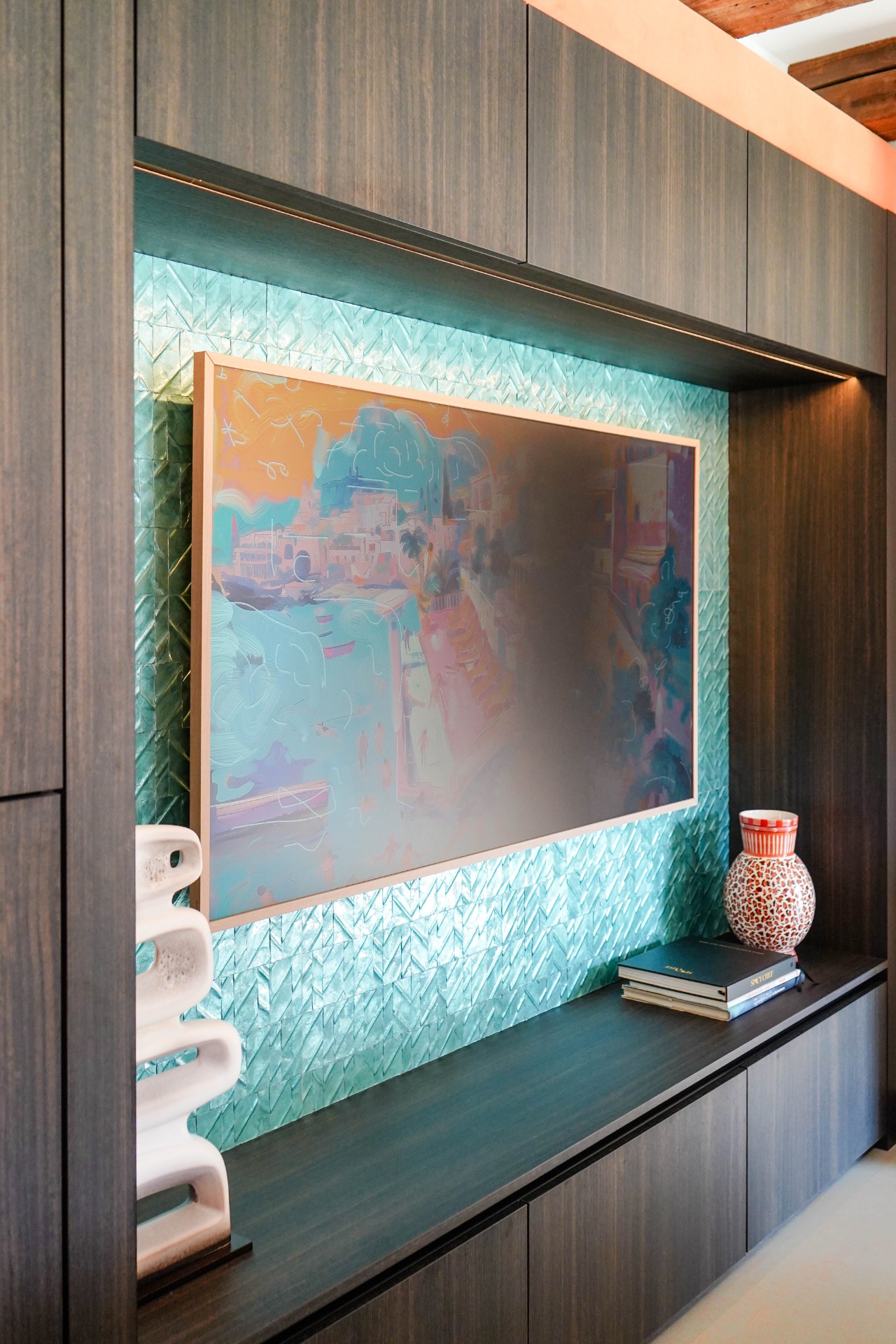
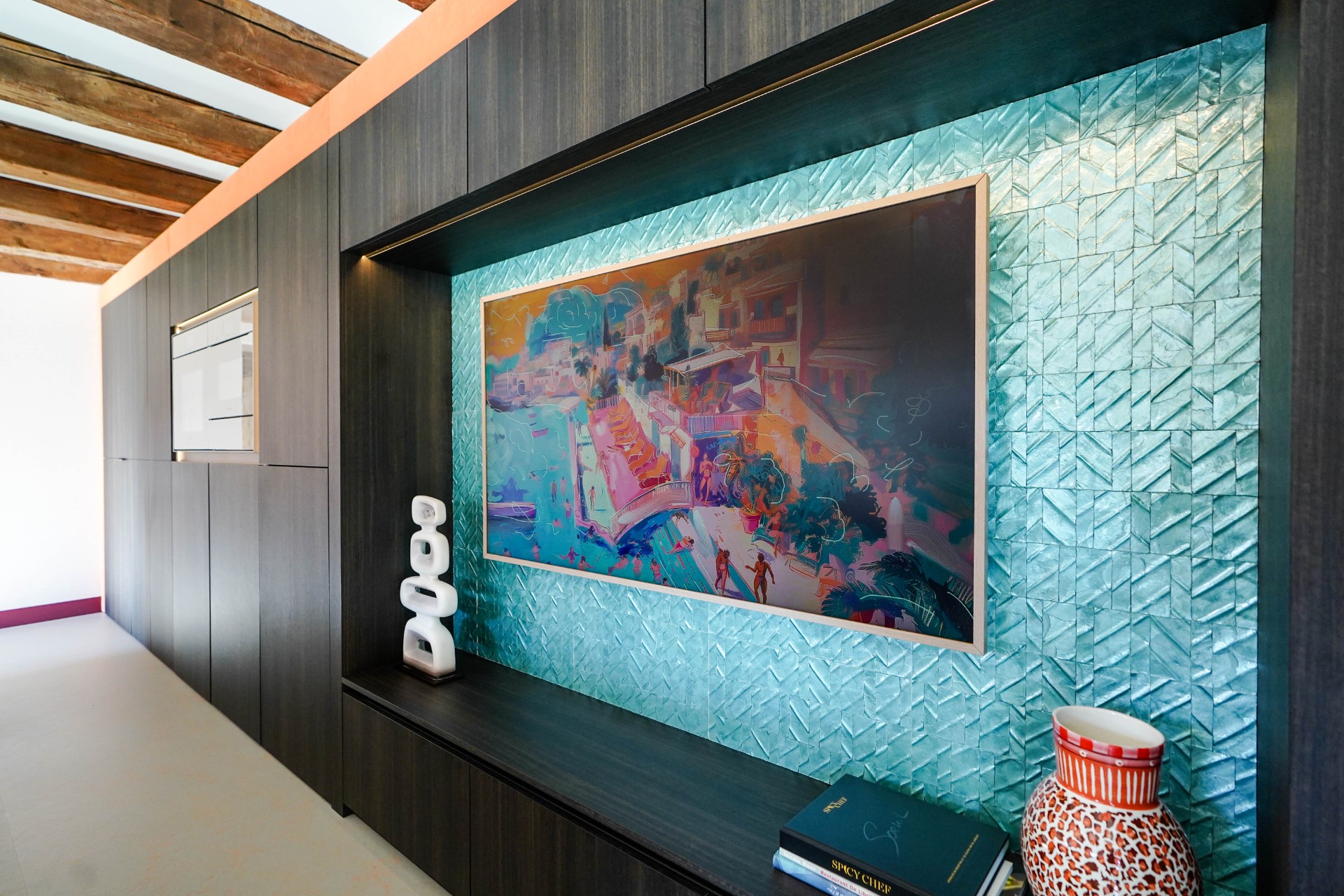
That restraint is what keeps the room from feeling overdesigned. The lighting works with the cabinet lines, the island perimeter and the beam structure above. It picks out thresholds, not features for their own sake. Even the built-in niche reads this way: as a pause in the wall, edged by light and framed by tile, rather than as a separate object. In a modern luxury kitchen, these smaller interventions do much of the visual work.
A teal glass tile wall changes the tempo
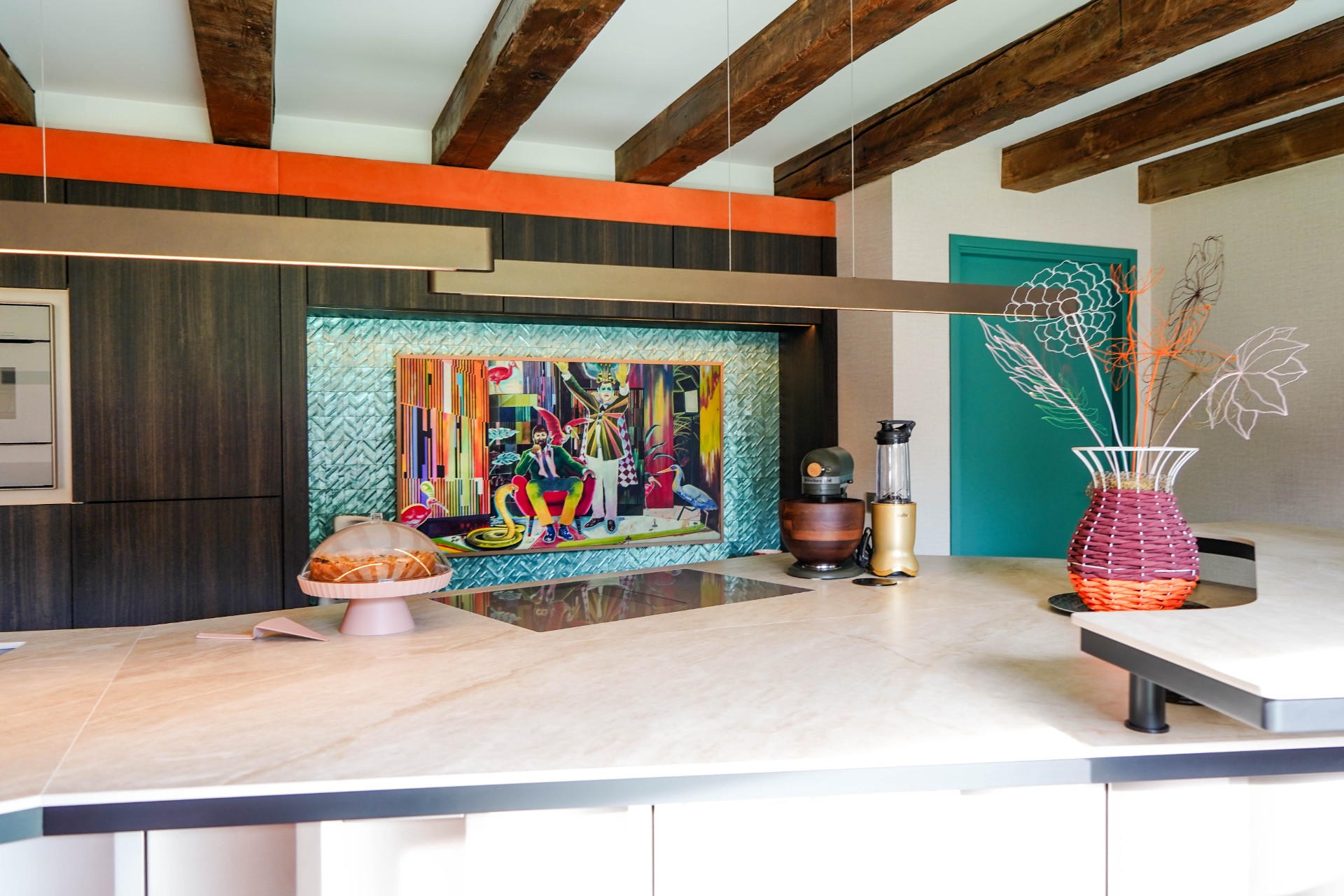
One wall shifts the mood through material alone. The teal glass tile wall introduces color and texture in a band of reflective surface that catches light differently from the dark cabinets. At close range, the tile pattern has depth, almost like a relief. It sits behind a built-in niche, where the opening cuts into the colored field and gives the wall a clear pause. The effect is precise, not loud, and it gives the kitchen a second focal point beyond the island.
The contrast between the teal tiles and the surrounding darker joinery sharpens the room’s geometry. The wall does not simply decorate the cooking zone; it defines it. The niche is useful, but it also shapes the composition by creating a break in the surface and a place for the eye to rest. Together with the island, it makes the room feel organized around more than one axis, which is why the space reads as carefully composed even at first glance.
Material changes do the heavy lifting
Wood, tile and stone-like surfaces each carry a different visual weight here. The beams above soften the ceiling line, the cabinetry anchors the room, and the tiled wall introduces sheen and color. Between them sits the worktop, which reflects a little more light and helps separate the island from the darker base below. These material shifts are what give the kitchen depth. Nothing is overworked, yet each surface has a clear role in the composition.
The integrated appliances stay within that same logic. They are not set out as features to be noticed, but tucked into the cabinetry so the lines remain uninterrupted. That restraint keeps attention on the volume of the room and on the transitions between surfaces. In a kitchen with island, those transitions are often where the design lives: at the edge of a front, the corner of a niche, or the point where light lands on a worktop.
A kitchen made for movement, not display
What makes this modern luxury kitchen convincing is the way it handles movement. You can read the route around the island, the line of the wall units, and the pause created by the niche without having to inspect the room closely. The space is open enough for circulation, but the central island keeps it from dissolving into a blank plan. It gives the room a clear center and a reason to gather around it.
That sense of focus is reinforced by the repeated dark-and-light contrast: dark kitchen cabinets, a pale worktop, teal tile, and the timber beams above. None of those elements is alone in the room. They work because they are spaced against each other. The kitchen feels complete in the visual sense that matters most on a project page: you can understand it quickly, then keep discovering how the surfaces, light, and built-in details continue to hold it together.
Want to see more of TK Studio? View the page of TK Studio for even more great projects and company information.


NEW 2026 Jubileum Edition The Best Interior Designers Benelux
Order Now €125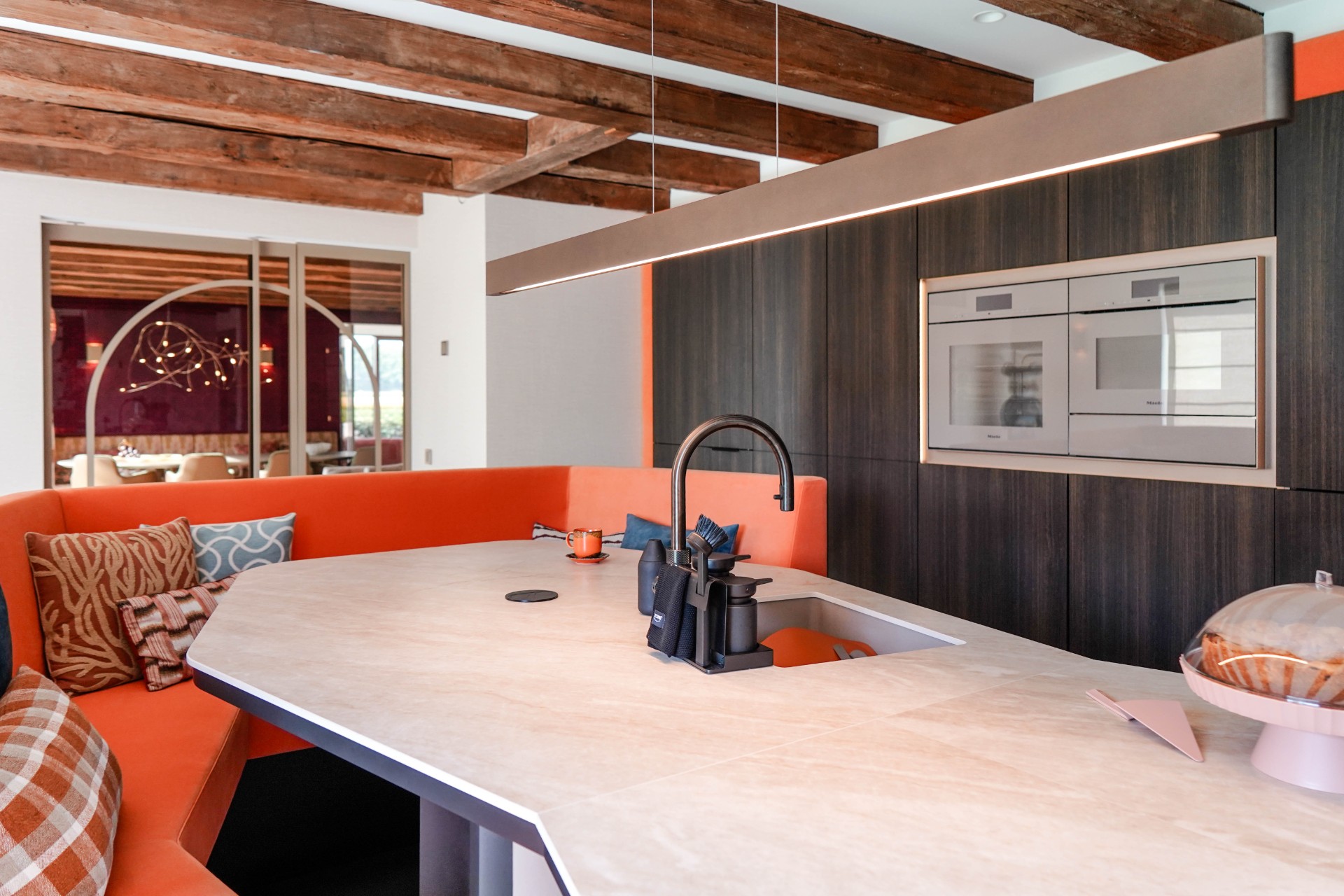
NEW 2026 Jubileum Edition The Best Interior Designers Benelux
Order Now €125