








Oak staircase with matte black balustrade
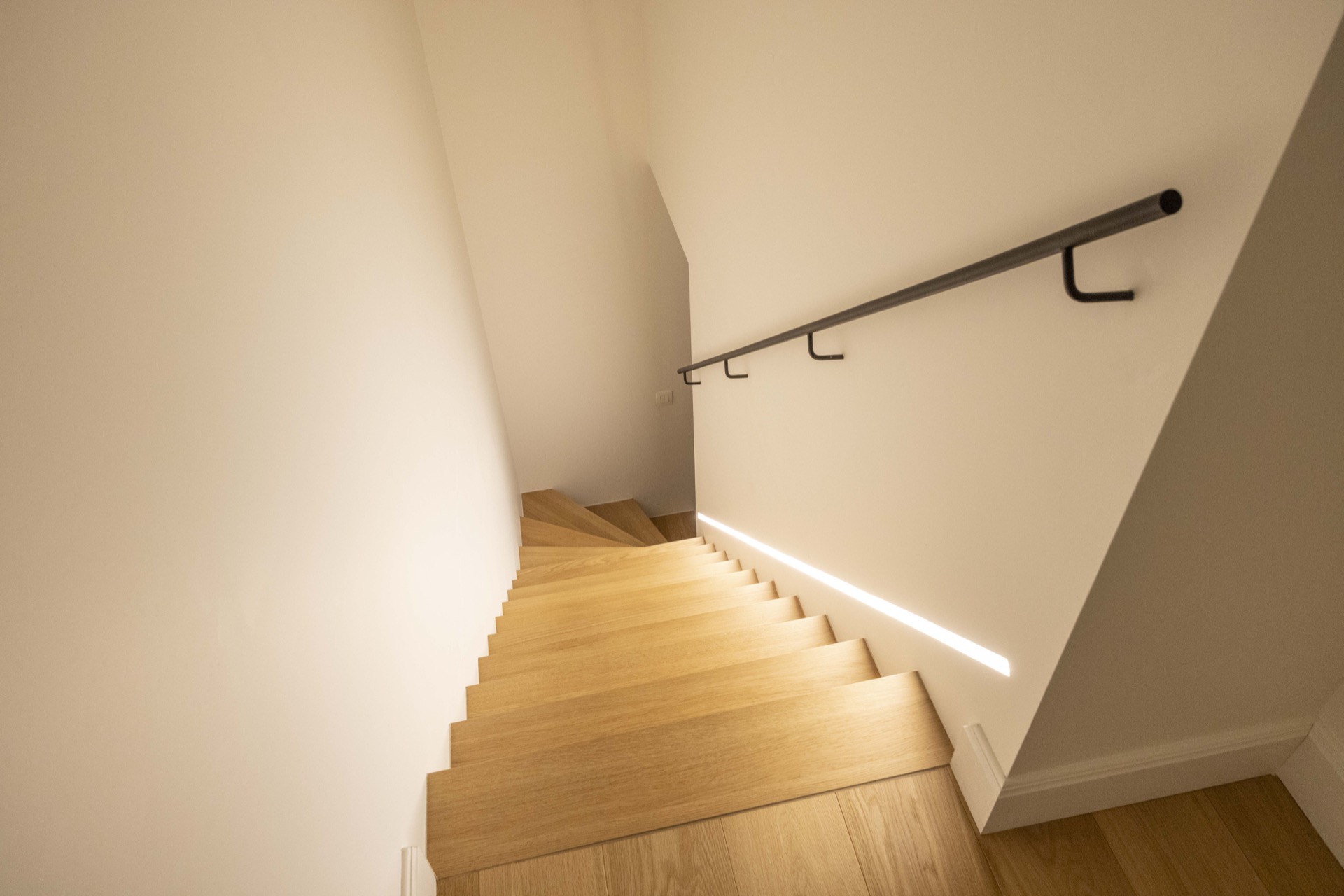
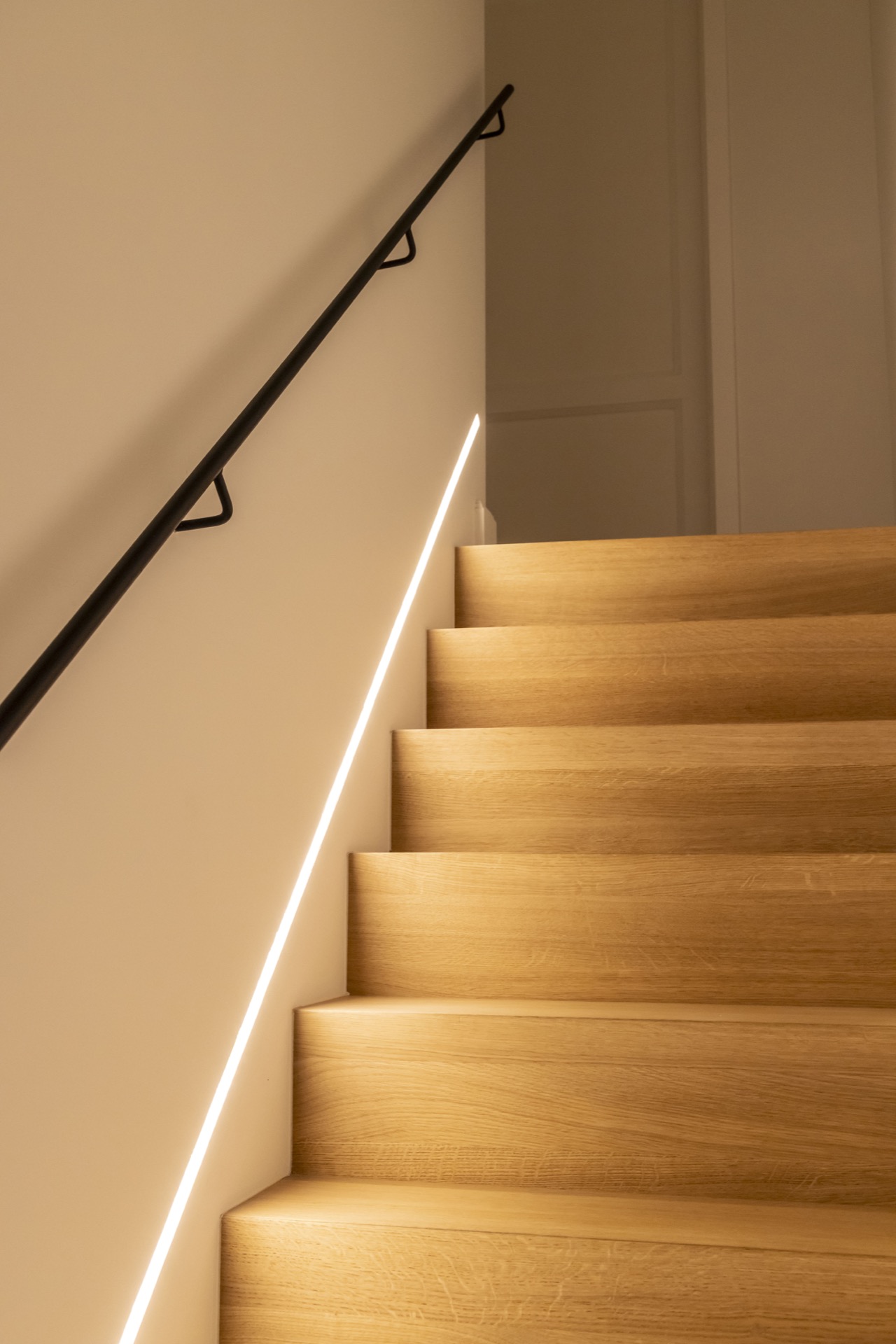
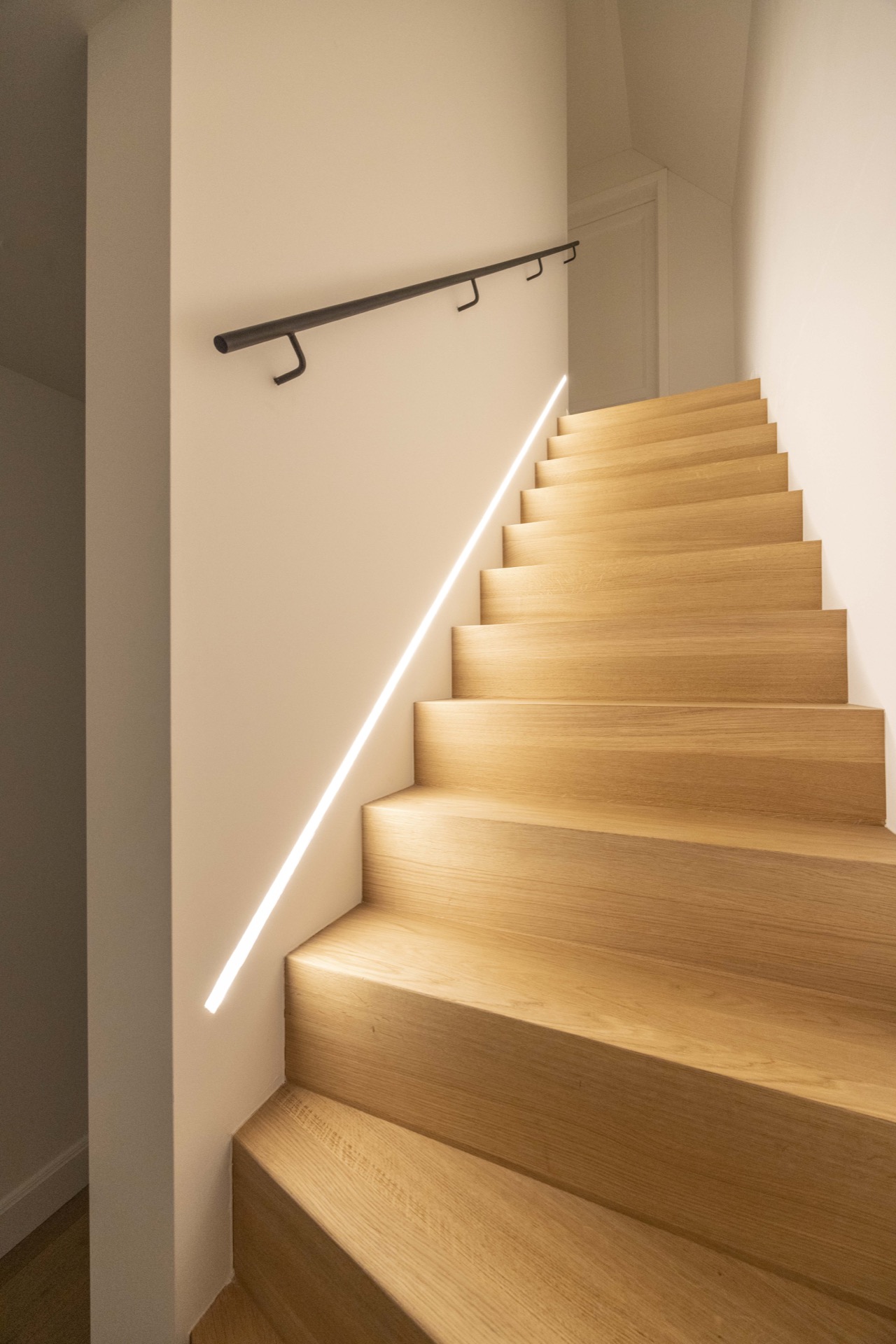
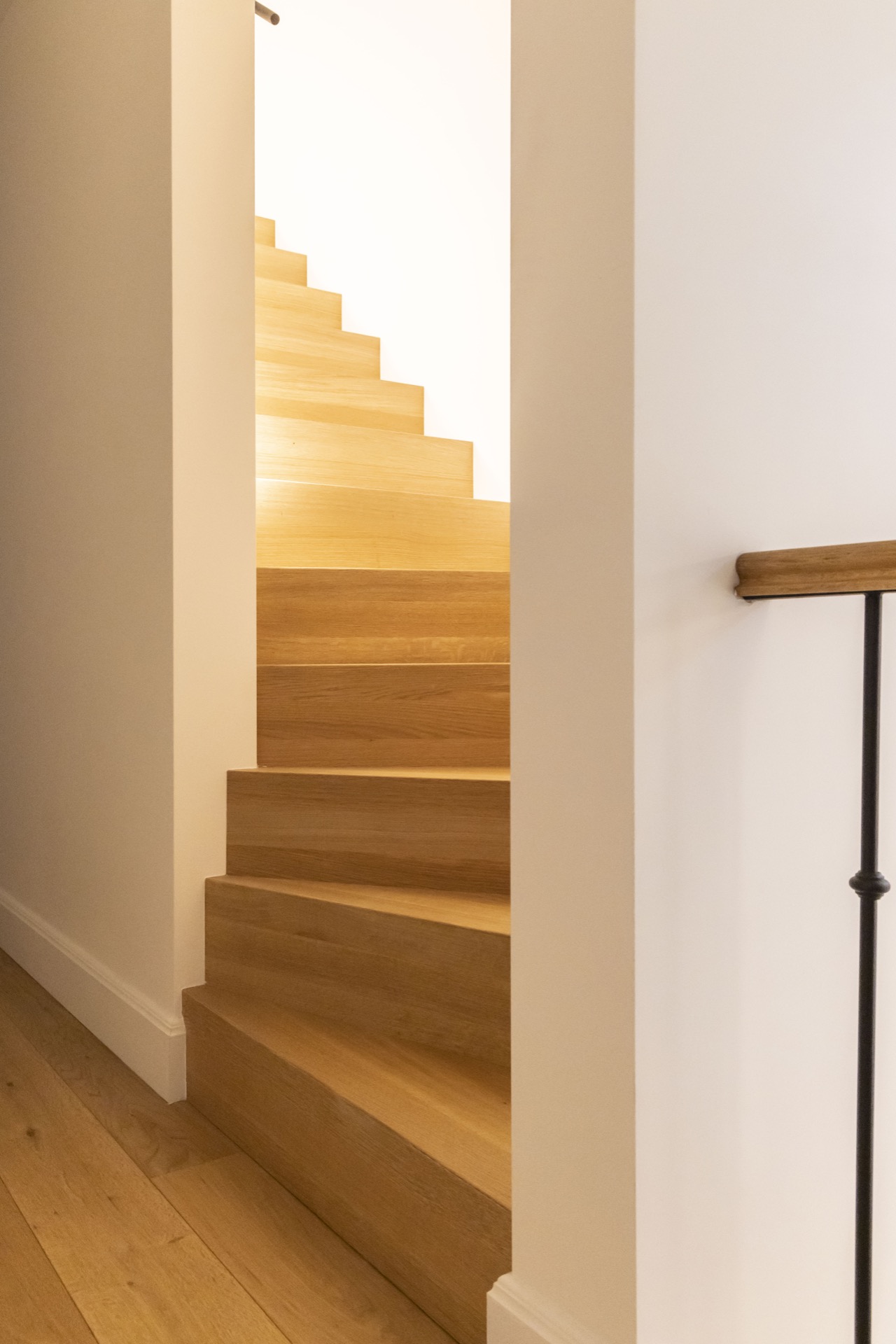
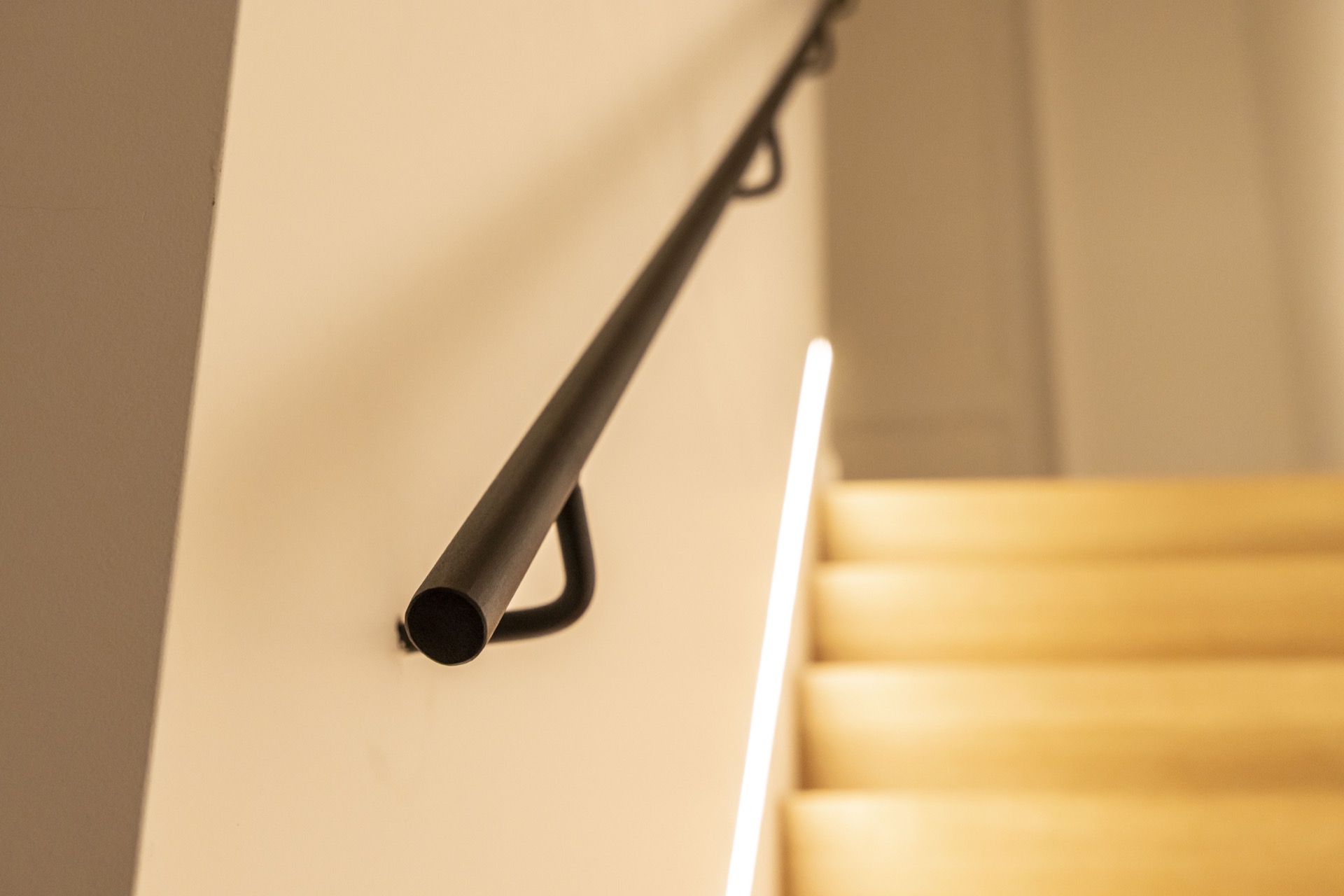
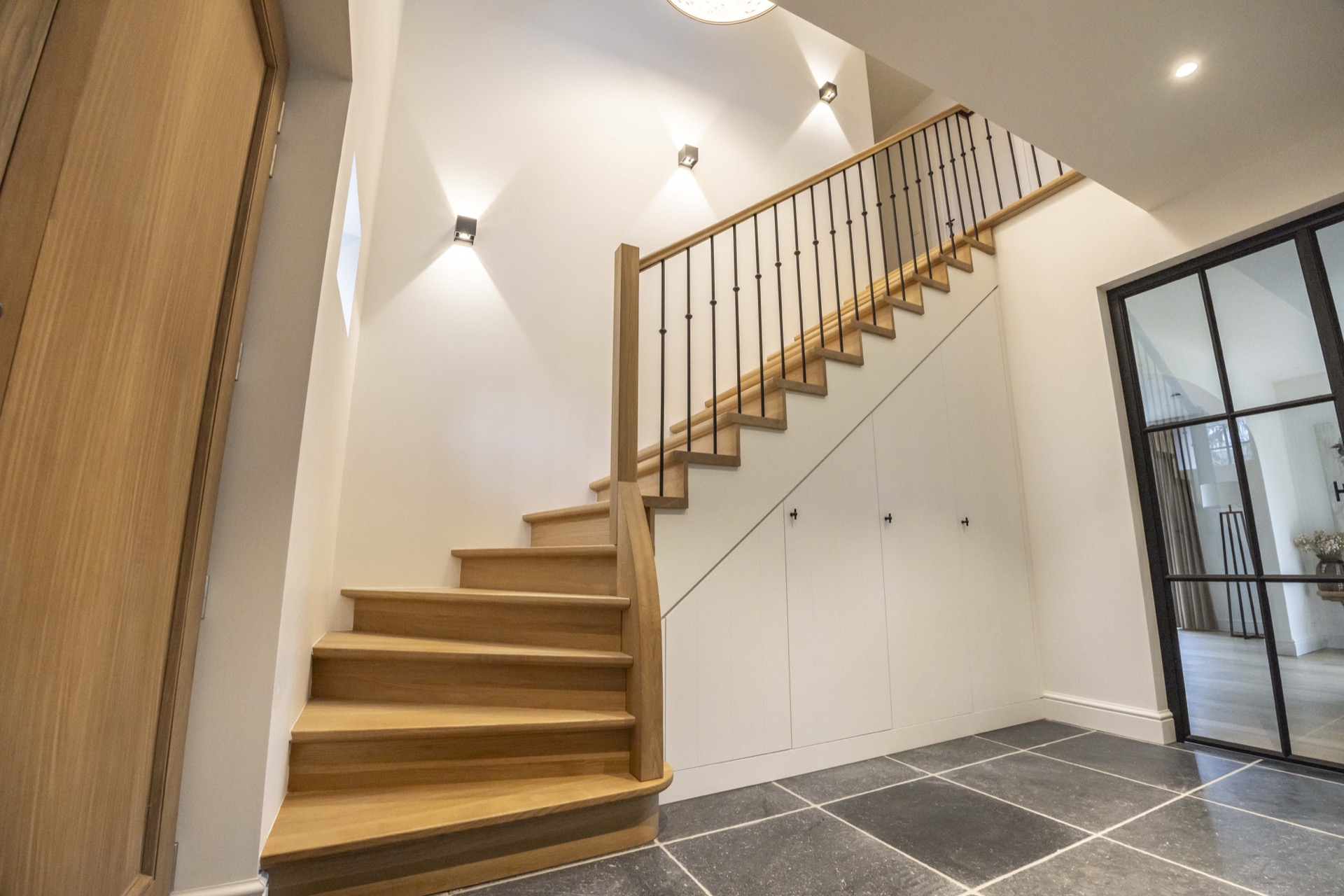
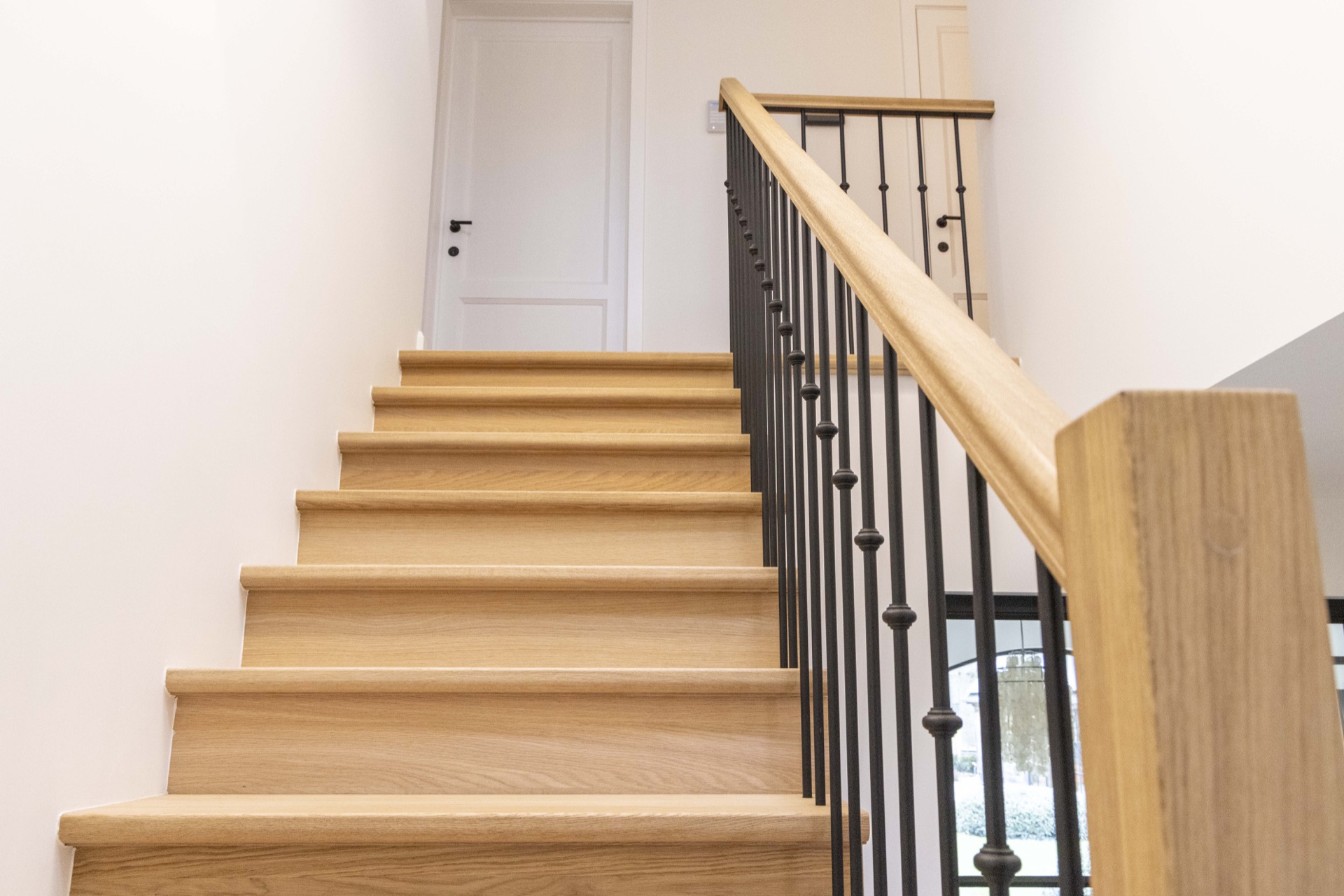
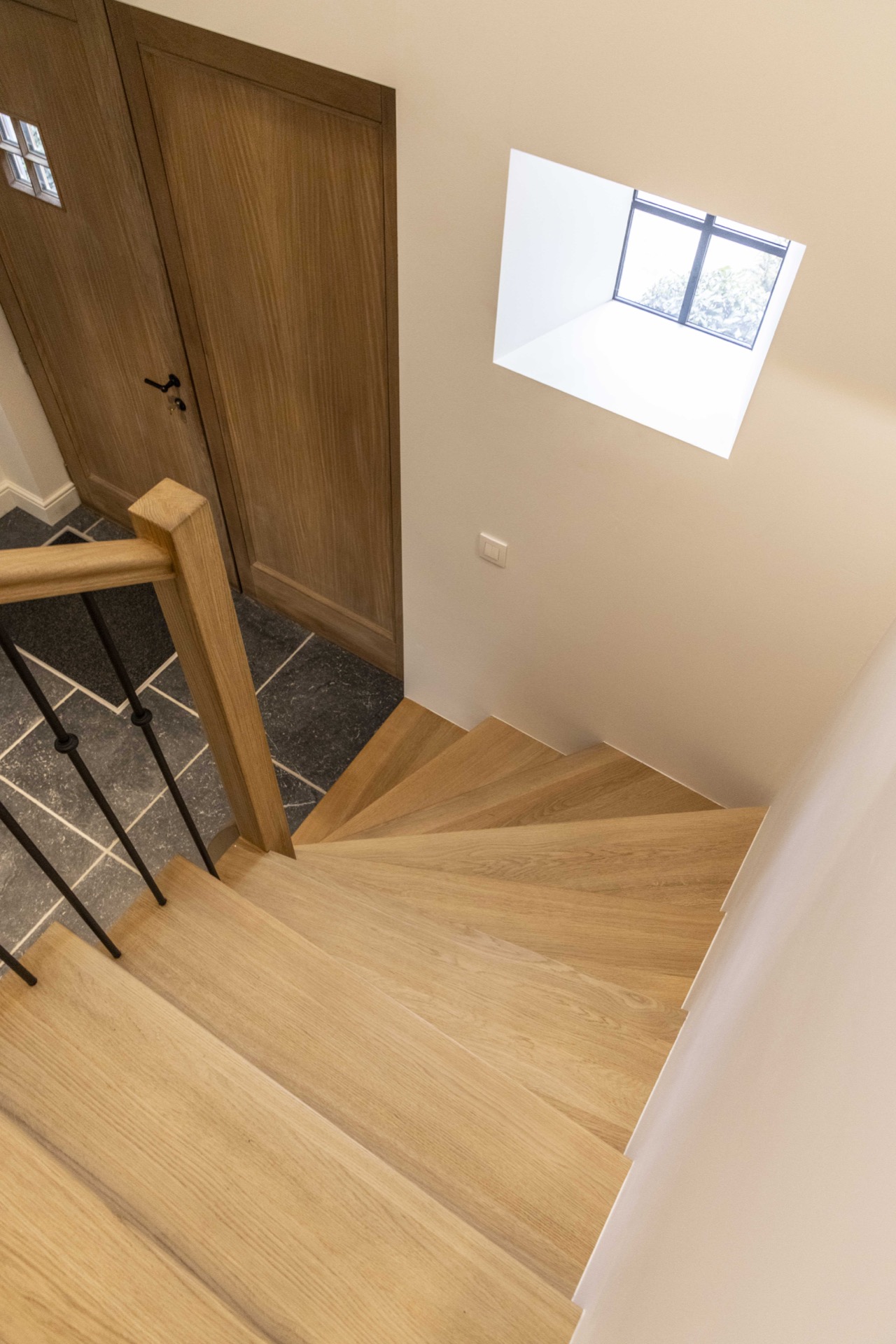
The oak staircase sets the tone as soon as it comes into view. Oak treads rise in a clean line, while the handrail follows the same material language, keeping the route visually quiet. Against the white wall, the black steel spindles draw a sharper edge through the composition. A strip of linear staircase lighting runs along the side, tracing the ascent and making the wood grain read more clearly.
Oak steps with a steady, drawn line
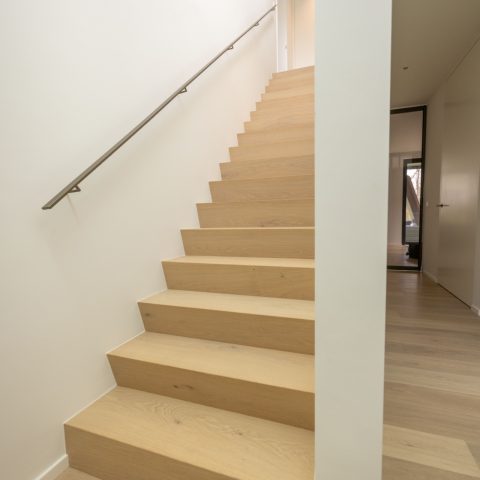
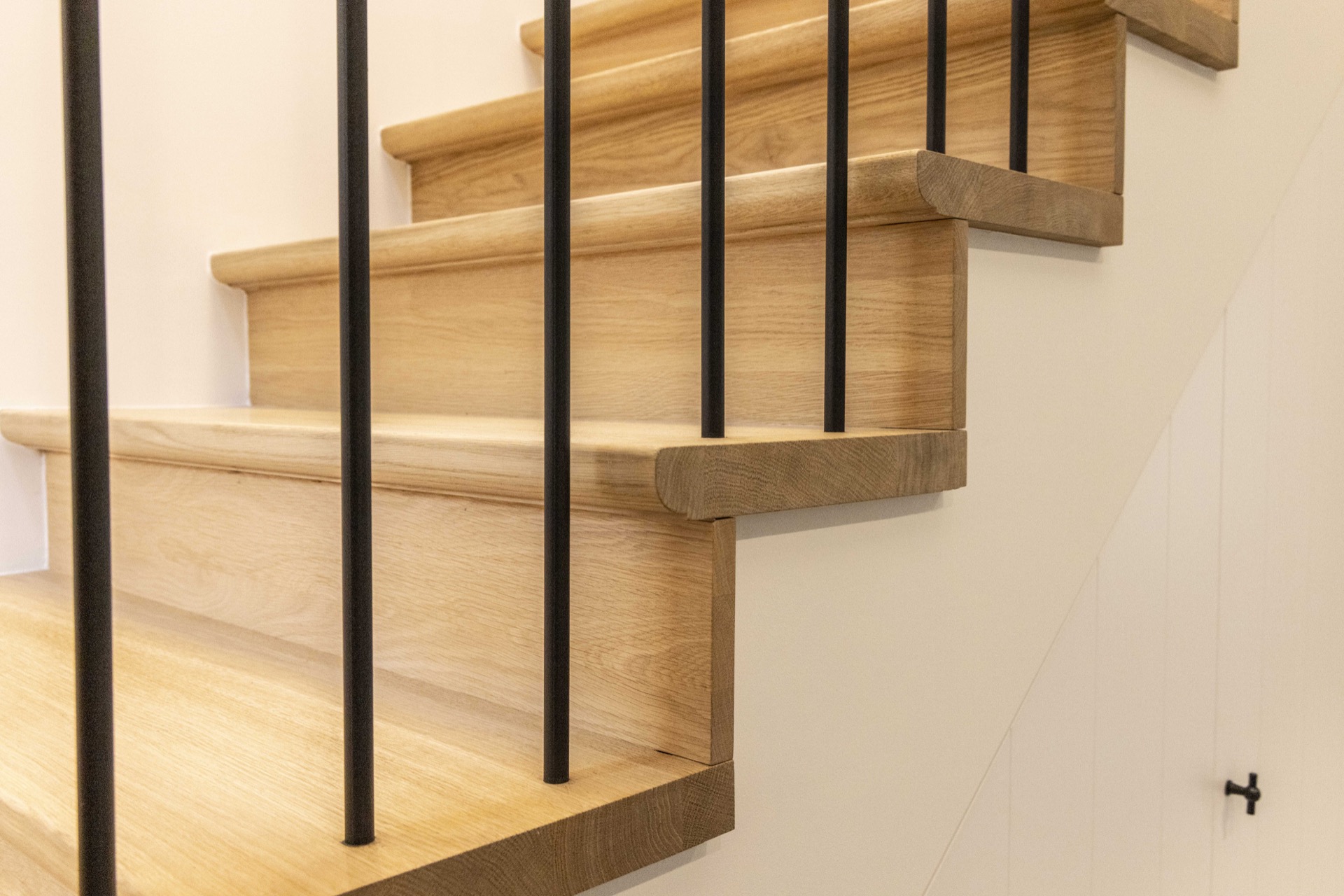
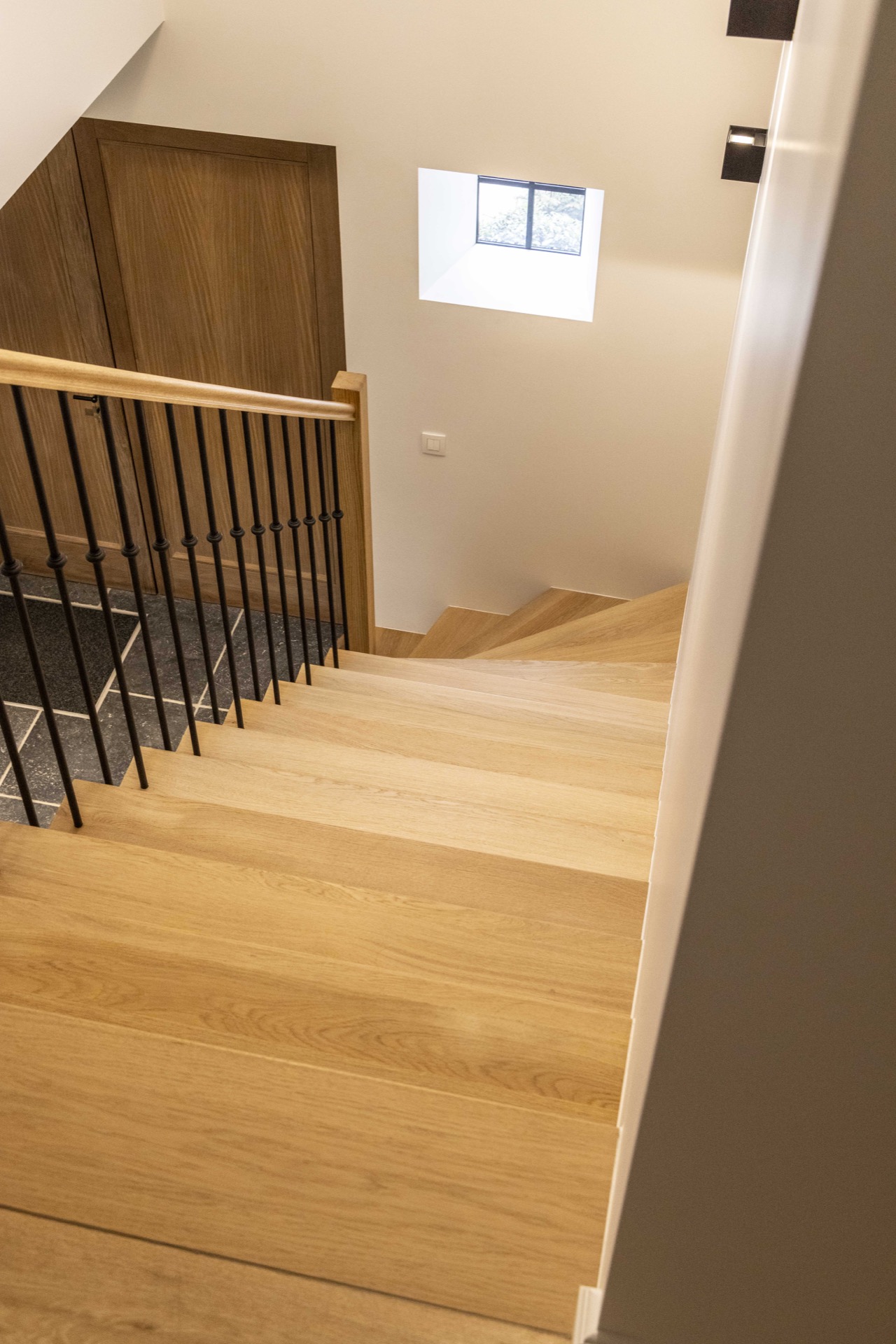
The treads are made of oak, with a visible front edge that carries through each step. That detail gives the staircase a measured rhythm when seen from below and from the landing. The wood surface softens the straight geometry of the run, but it does not hide it. You can read the stair as a series of precise layers, each one aligned to the next, with the grain of the oak adding movement across the otherwise calm surfaces.
The oak handrail repeats that material logic. Instead of introducing another finish, it stays with the same wood, so the handhold reads as part of the stair rather than an added element. On the wall side, the pale plaster and the warm tone of the oak sit close together without blending into one another. The contrast is subtle, but it keeps the staircase legible from several angles in the room.
A matte black balustrade that draws the eye upward
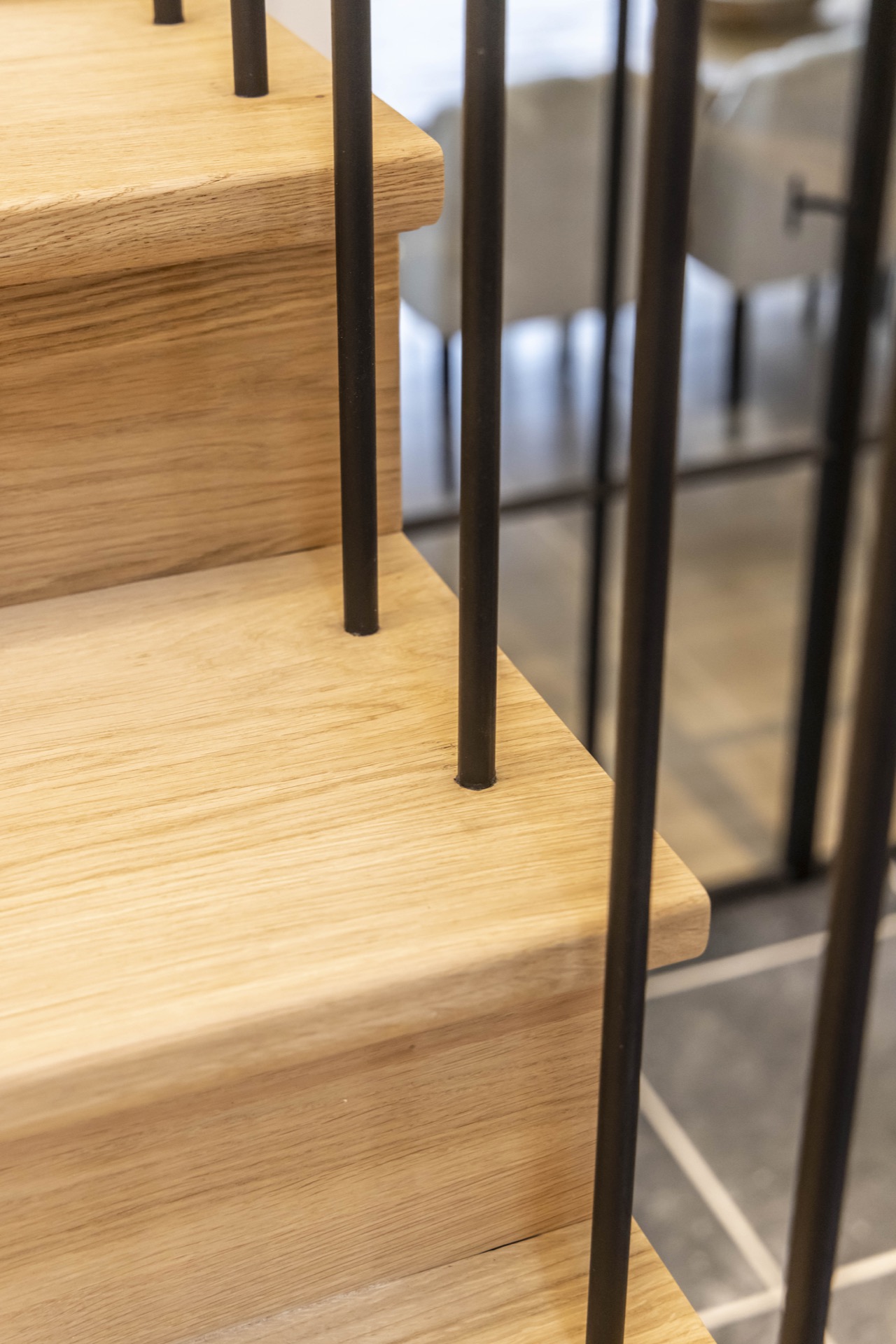
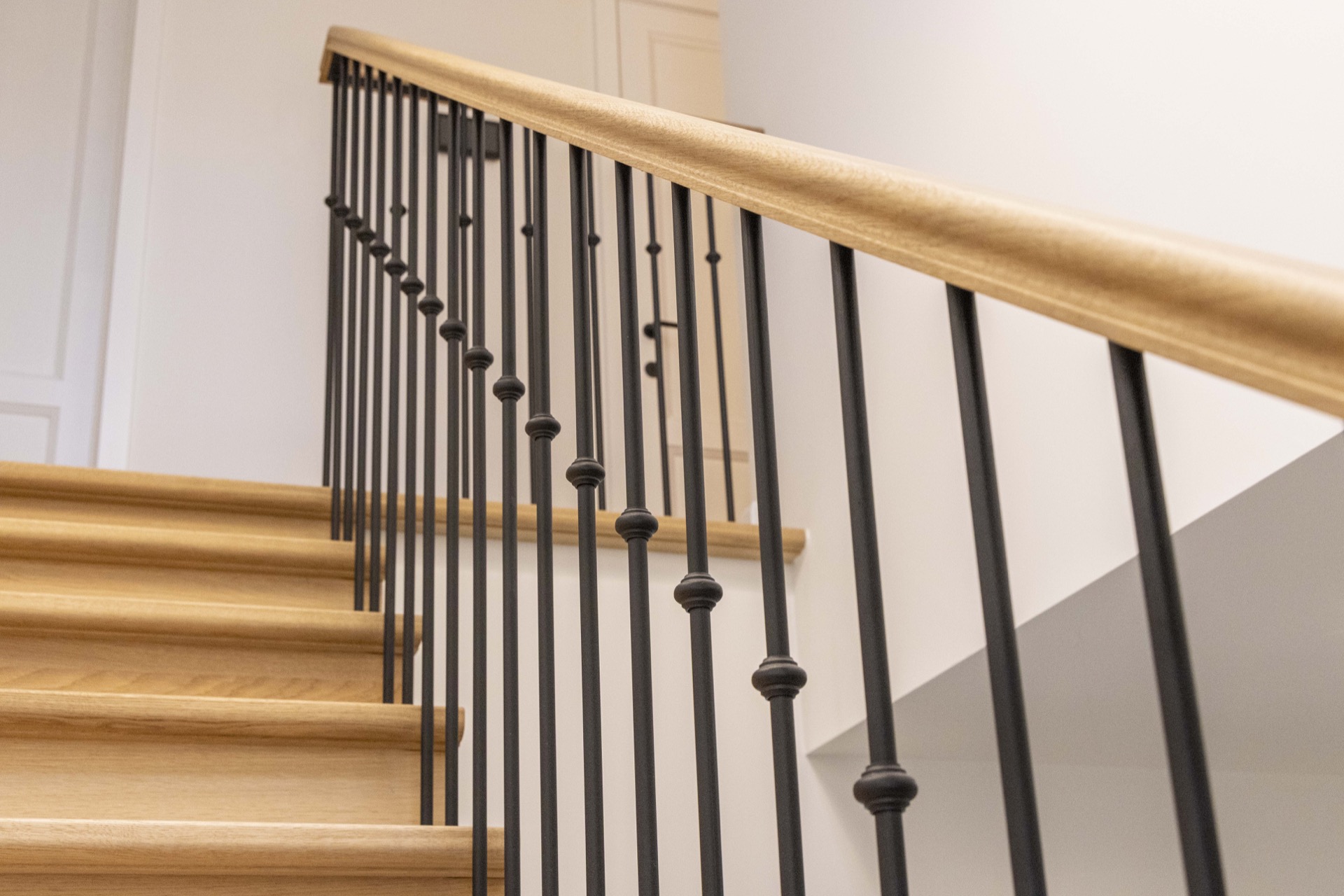
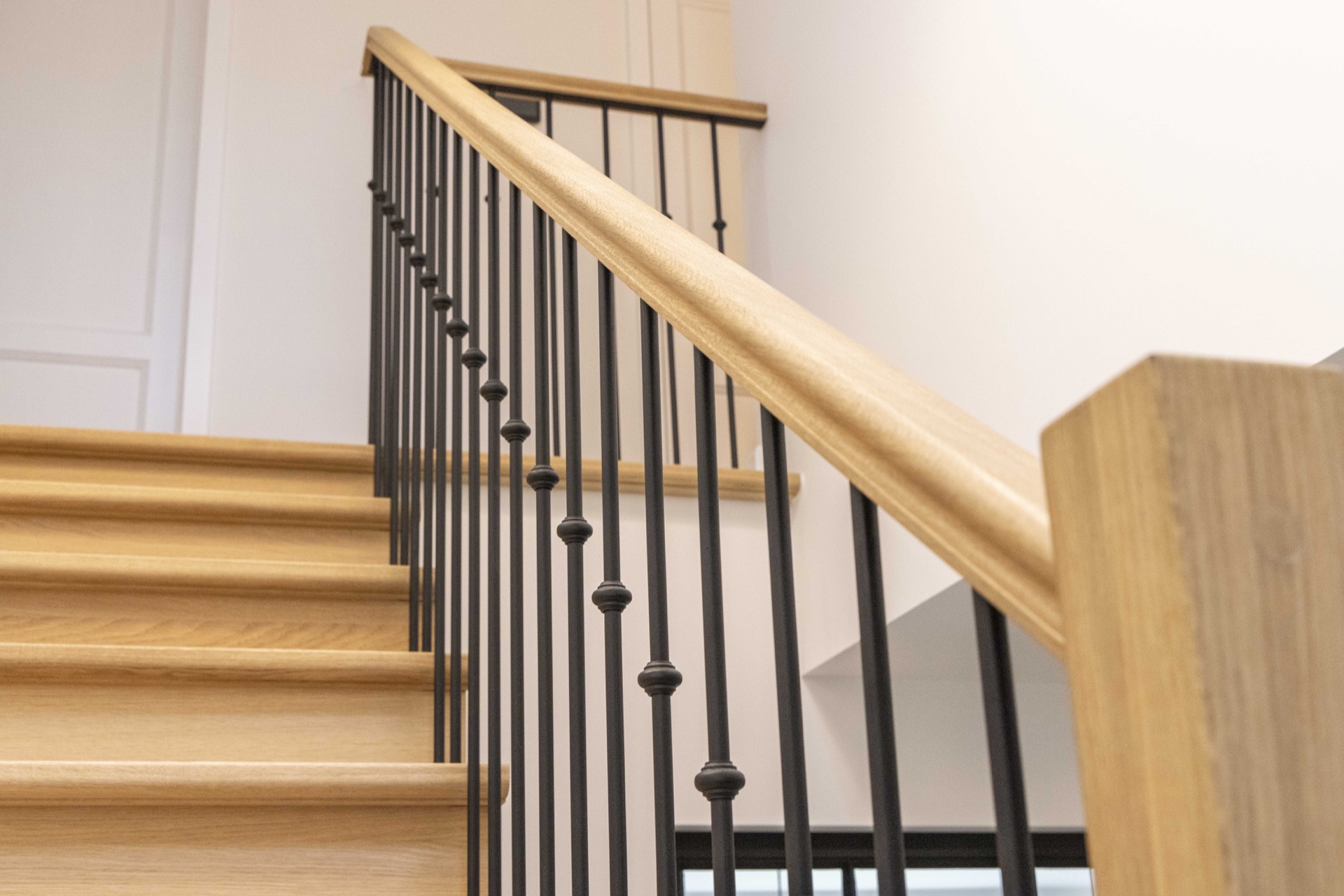
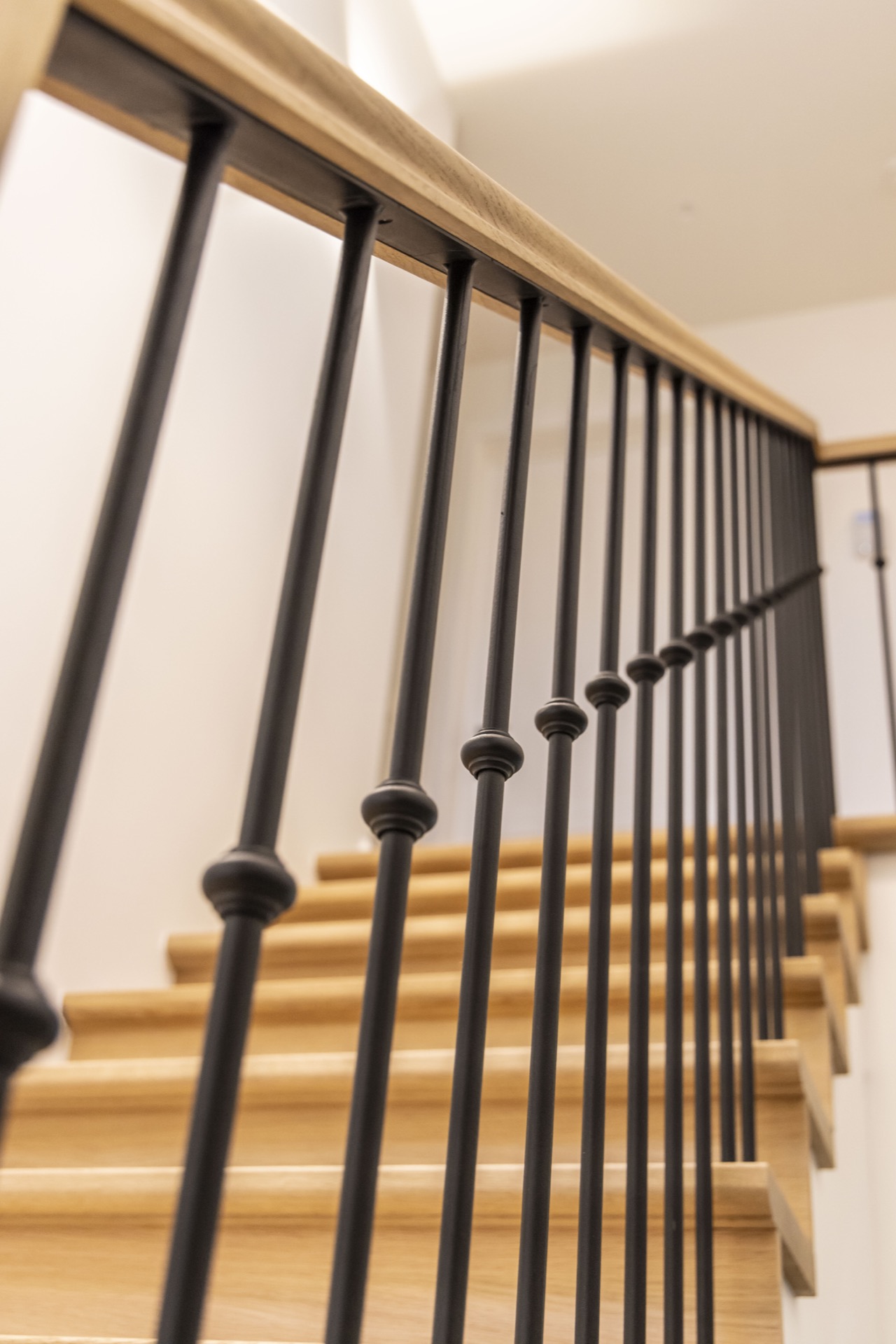
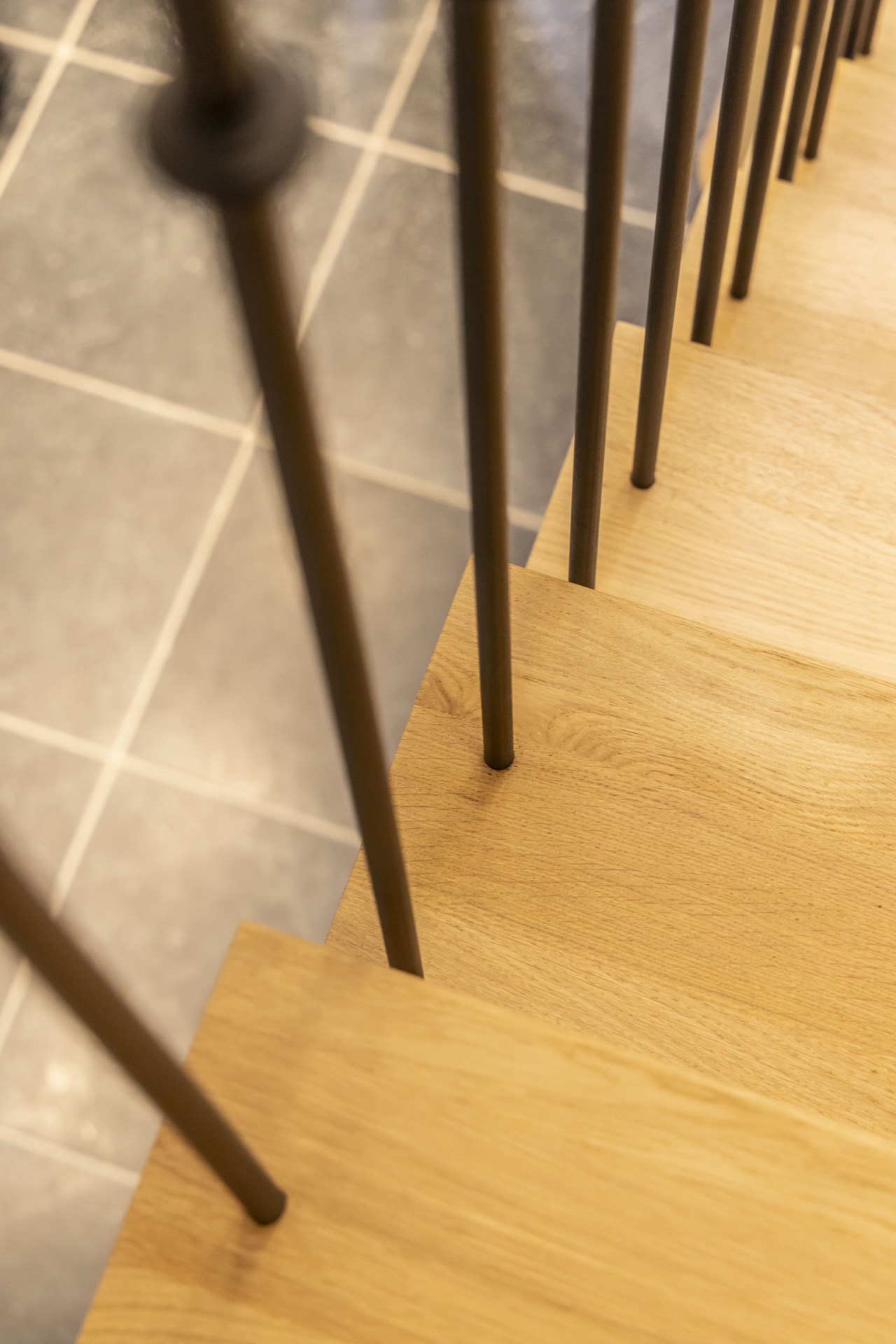
The balustrade gives the stair its sharper line. Fine black steel spindles rise vertically, set against the light wall and the oak steps. Their matte finish keeps reflections low, which makes the silhouette read clearly without becoming glossy or heavy. In the close views, the spindles reveal small crafted details at the ends, a quiet touch that breaks the straight repetition and keeps the rail from feeling purely mechanical.
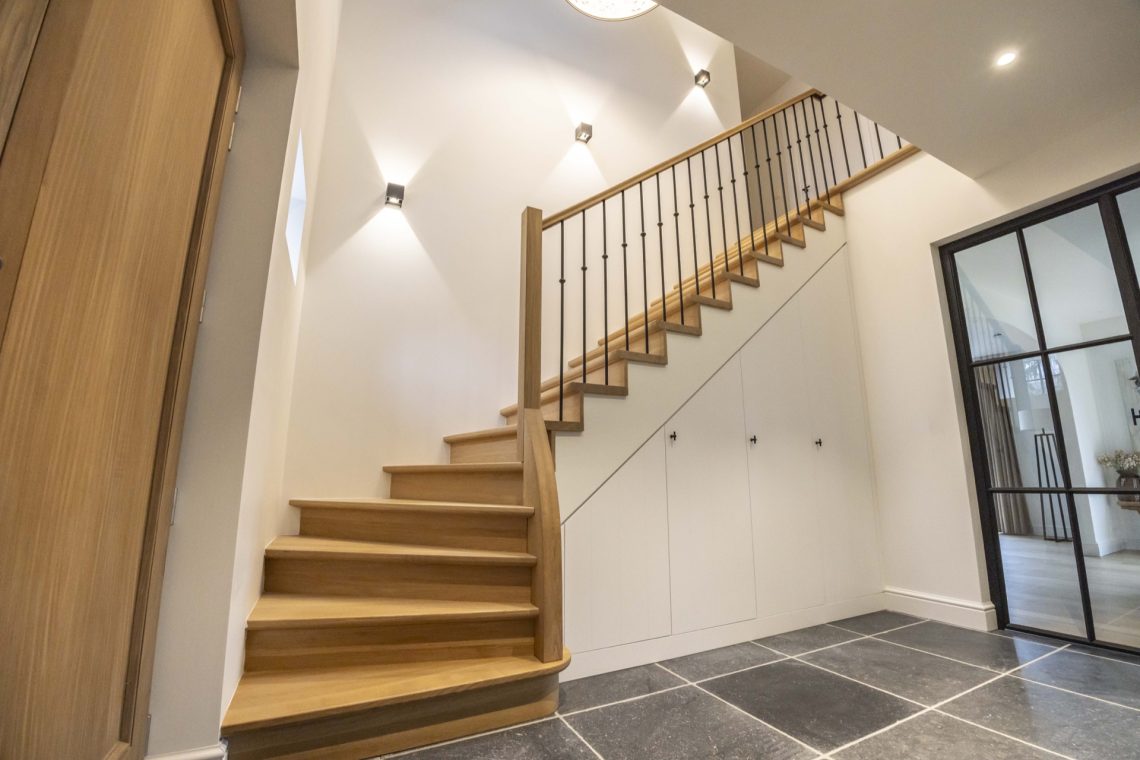
From the wider interior view, the black steel spindles act almost like a measured grid in front of the stair. They frame the rise without closing it in. That openness matters here: the stair remains visually light, even with the darker metal running through the centre of the composition. The result is a modern timeless staircase that depends less on ornament than on proportion, line and the contrast between oak and steel.
Where wood and steel meet
The meeting point between the oak handrail and the matte black balustrade is where the design becomes most specific. Wood sits above metal, and the change in material is easy to read. In one close-up, the rounded handrail contrasts with the slimmer vertical spindles below it. In another, the oak treads appear behind the rail, tying the parts together through colour as much as through shape. Nothing feels overdrawn; the stair simply uses its materials with restraint.
That restraint also appears in the side view of the stair. The wall remains plain, the openings around it are clean, and the dark rail breaks the white field in a controlled way. Because the staircase is not crowded by extra finish or decoration, the profile of each tread stands out. The eye moves from the lower steps to the upper run without interruption, guided by the oak edges and the vertical steel bars.
Linear staircase lighting along the side
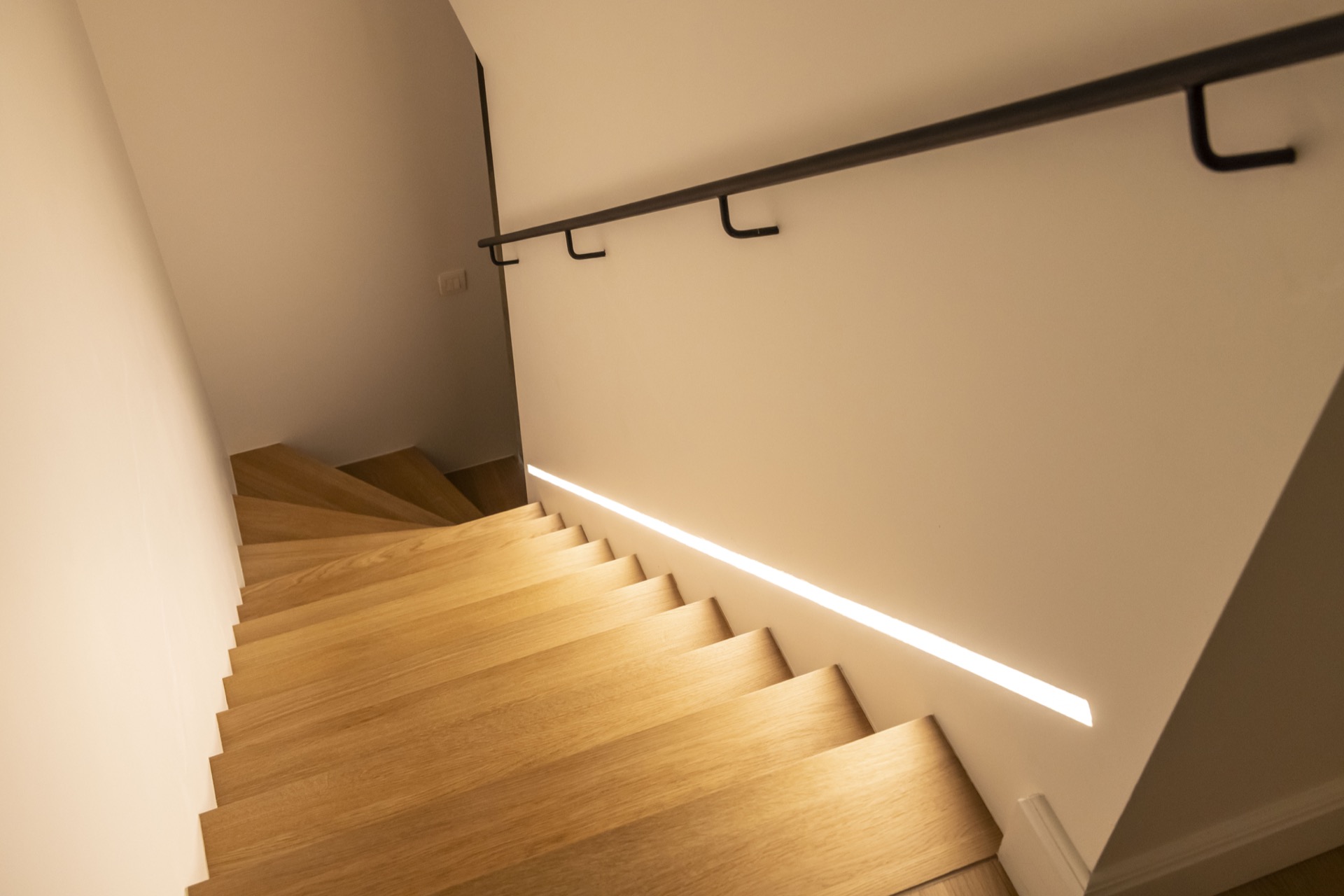
A narrow line of light runs beside the stair and changes the mood of the entire composition. It is not a decorative fixture placed for emphasis; it follows the stair edge and marks the route. In the photos, the light creates a low ribbon against the wall and under the run, allowing the treads to stand out while keeping the surrounding surfaces calm. The effect is understated, but it gives the staircase a clearer presence in the room after dark.
The lighting also separates the stair from the wall with a thin glow. That gap makes the edges of the steps easier to read and reinforces the linear character of the design. Combined with the oak and black steel, it gives the staircase a quiet structure: wood for the surfaces you touch, metal for the vertical frame, light for the outline. It is this three-part reading that gives the project its modern timeless staircase character without relying on excess detail.
Detail views that keep the material story clear
The close-up photographs are especially revealing because they isolate what the wider view only suggests. The oak grain becomes more visible, the painted wall feels smoother, and the black steel spindles show their spacing more clearly. In one image, the rounded handrail sits in front of the stair run and gives the whole composition a firmer top line. In another, the treads are seen almost like stacked planes, underlining the stair’s clean construction.
Even in the tighter shots, the staircase never loses its relationship to the room. White walls stay in the background, and the pale surfaces prevent the oak from reading too dark. The black metal, meanwhile, keeps the stair from becoming overly soft. That push and pull between materials is what makes the oak staircase feel resolved: not decorative, not severe, but direct in the way it uses colour, line and light.
Seen from the entrance, the staircase becomes more than a route between floors. It also organizes the interior around a clear contrast of oak, matte black steel and white plaster. The steps rise with a steady cadence, the handrail follows without interruption, and the linear staircase lighting traces the side like a thin guide. Together these elements make the staircase easy to read from every angle shown in the project images, which is where much of its appeal lies.
Photographic credit: boostU.
Want to see more of DP Trappen – Custom Stairs for Professionals? View the page of DP Trappen – Custom Stairs for Professionals for even more great projects and company information.


NEW 2026 Jubileum Edition The Best Interior Designers Benelux
Order Now €125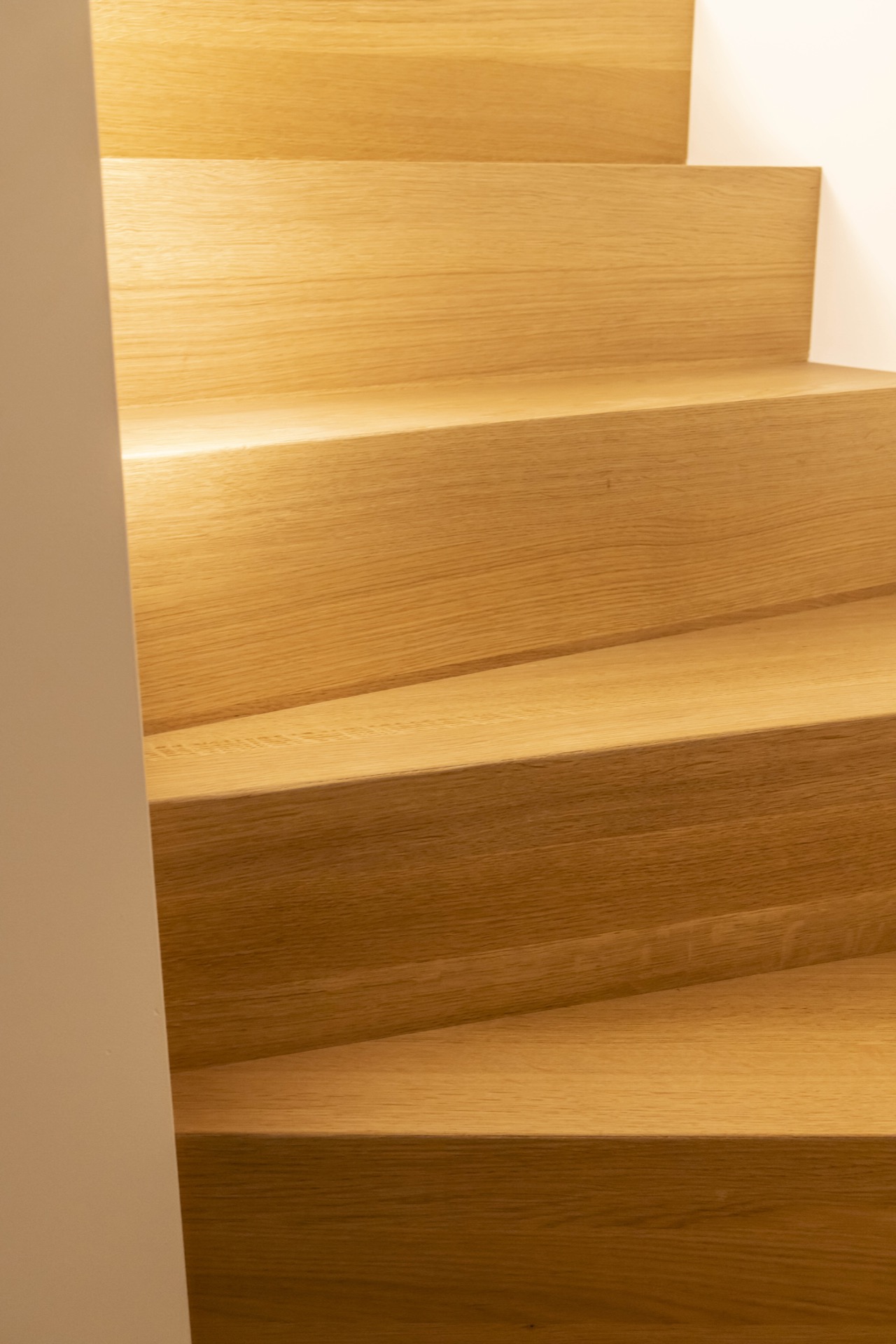
NEW 2026 Jubileum Edition The Best Interior Designers Benelux
Order Now €125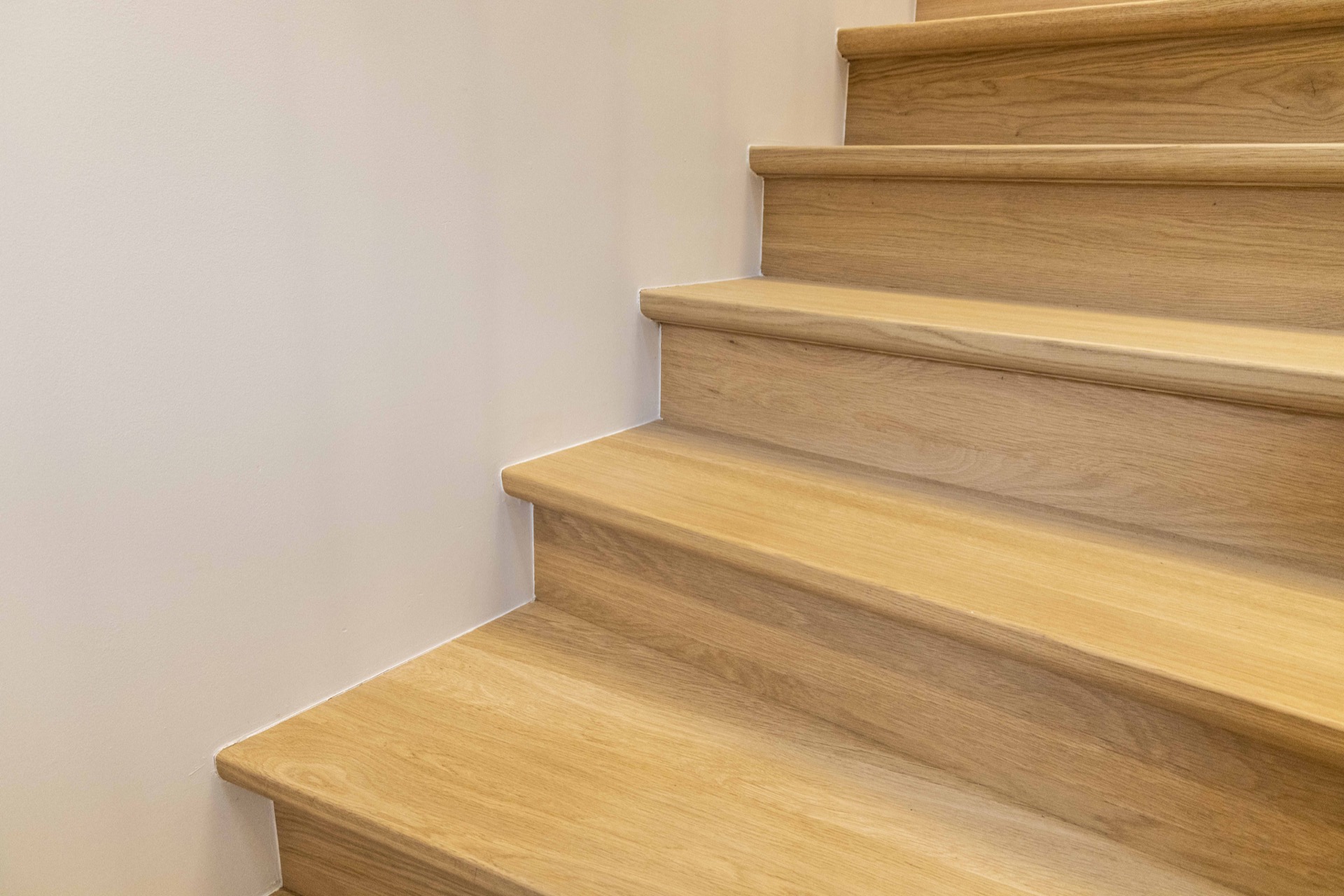
NEW 2026 Jubileum Edition The Best Interior Designers Benelux
Order Now €125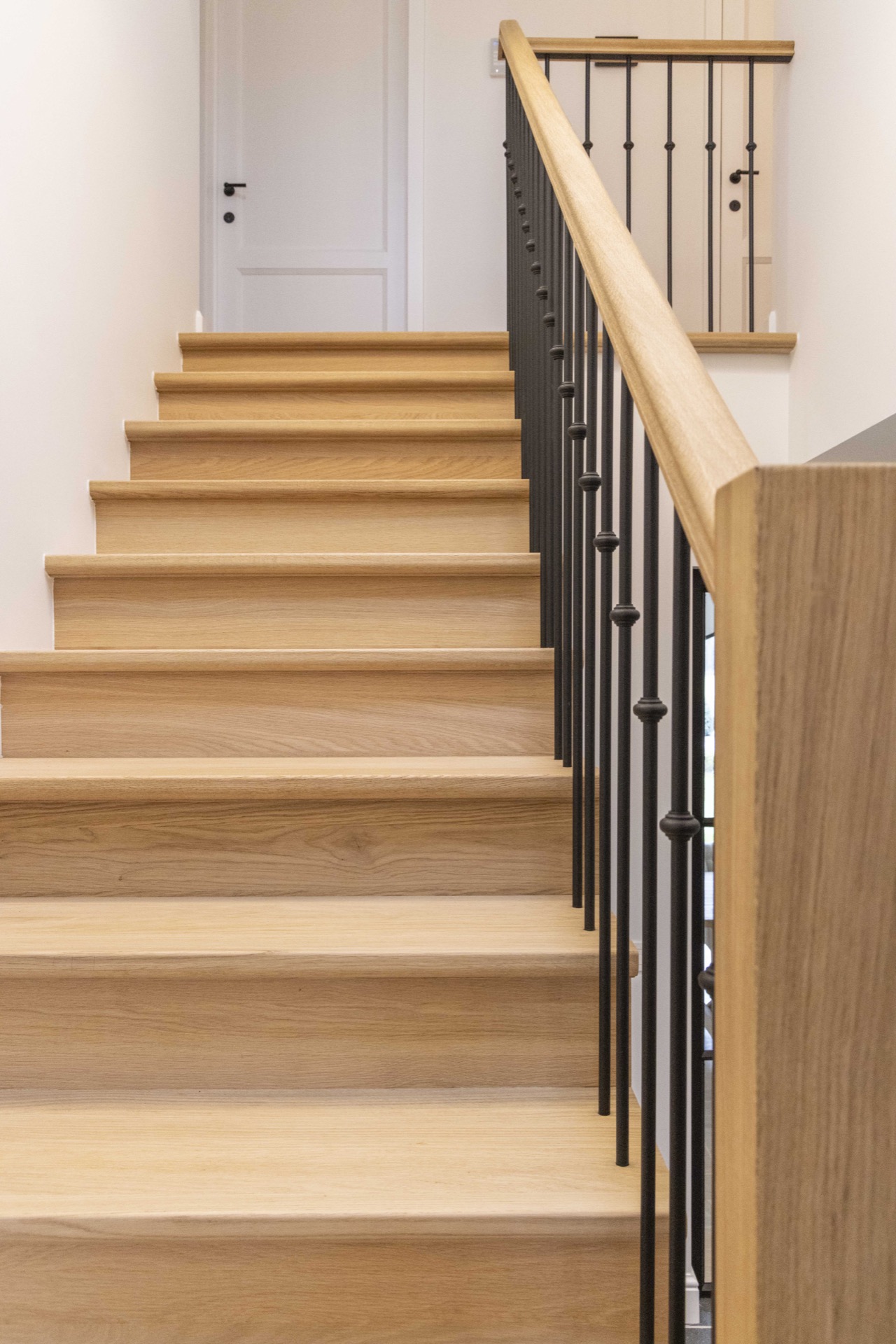
NEW 2026 Jubileum Edition The Best Interior Designers Benelux
Order Now €125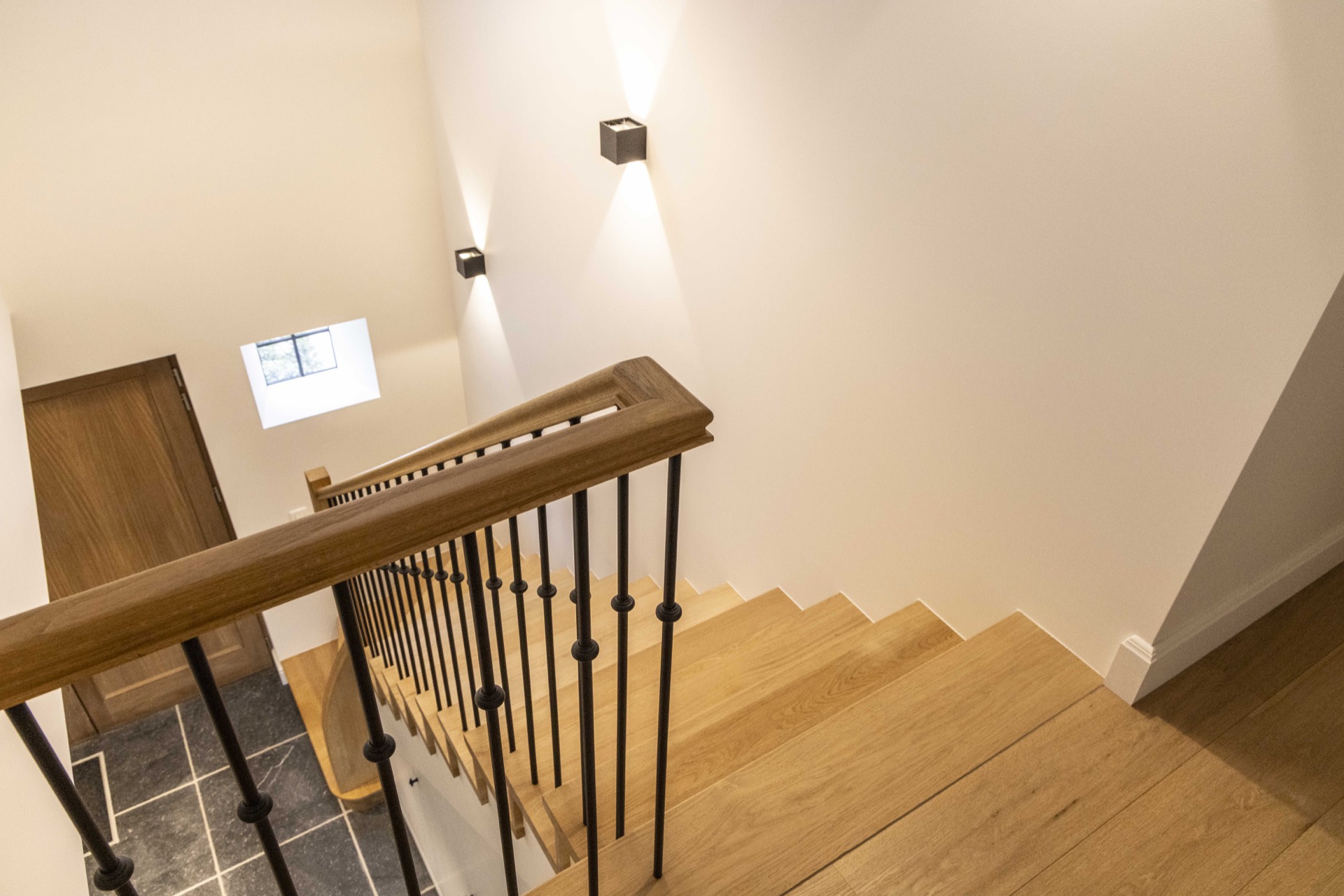
NEW 2026 Jubileum Edition The Best Interior Designers Benelux
Order Now €125