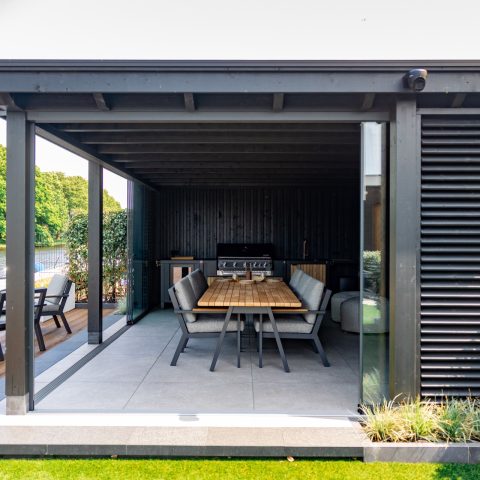









The ultimate experience: an outdoor kitchen with fire unit
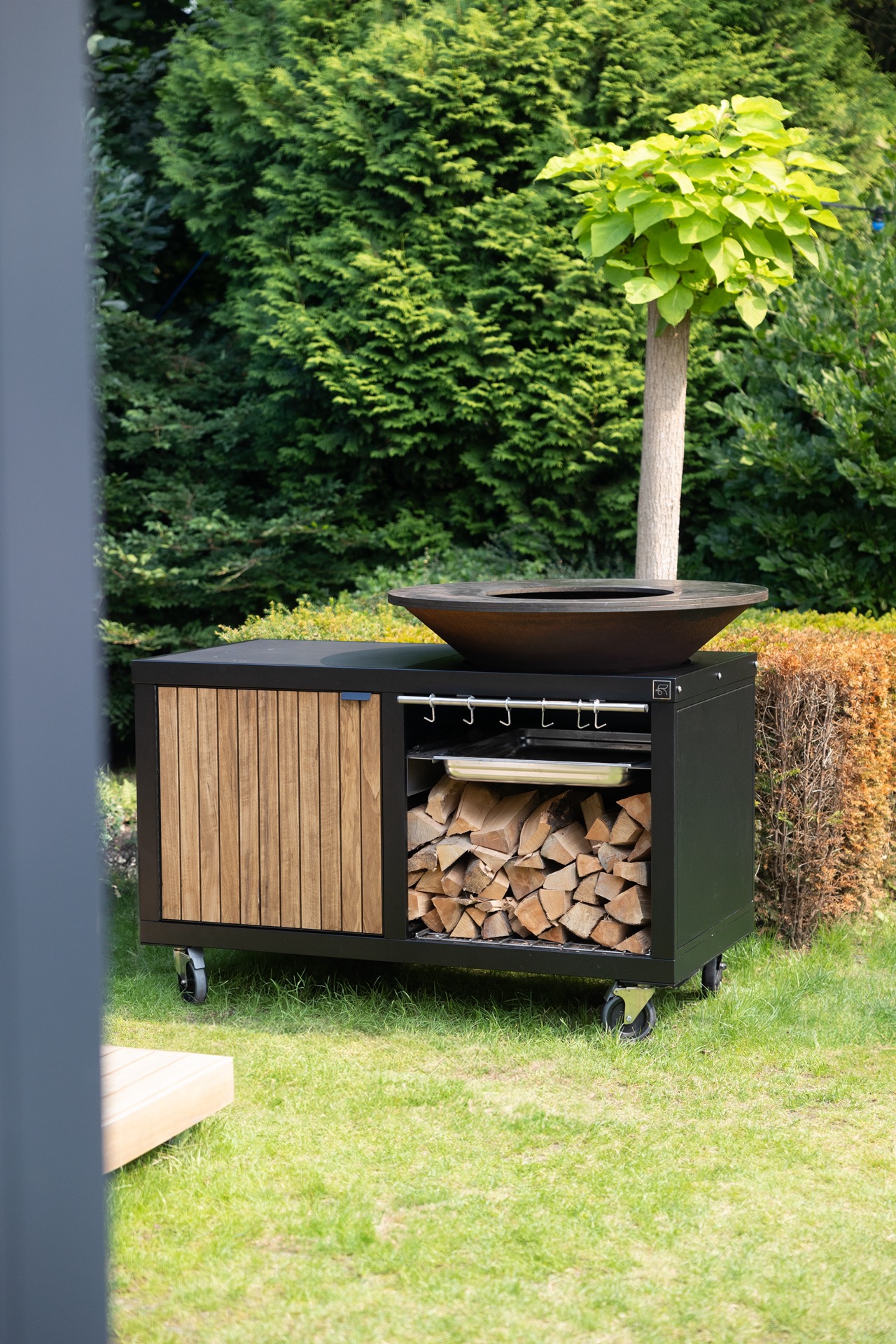
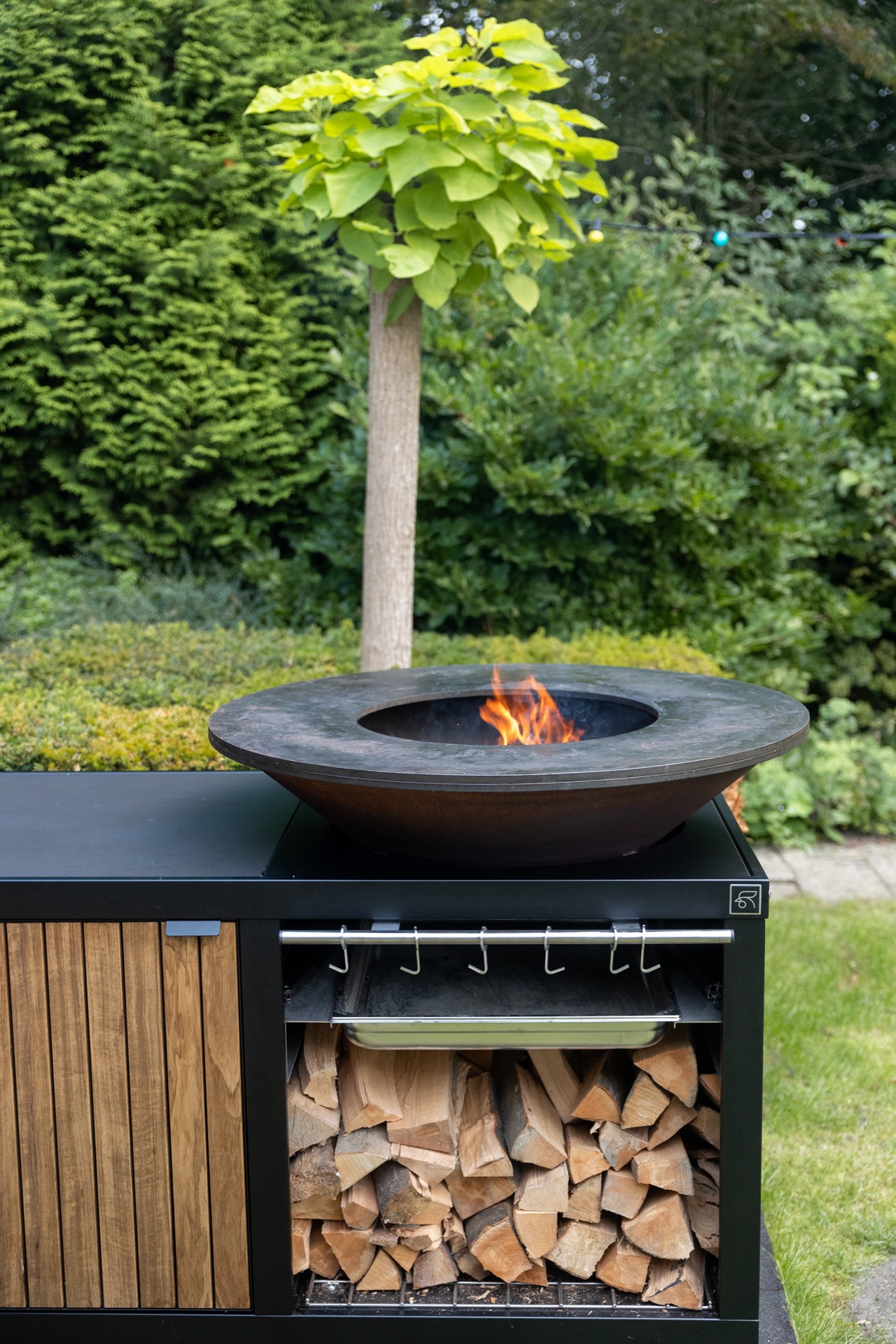
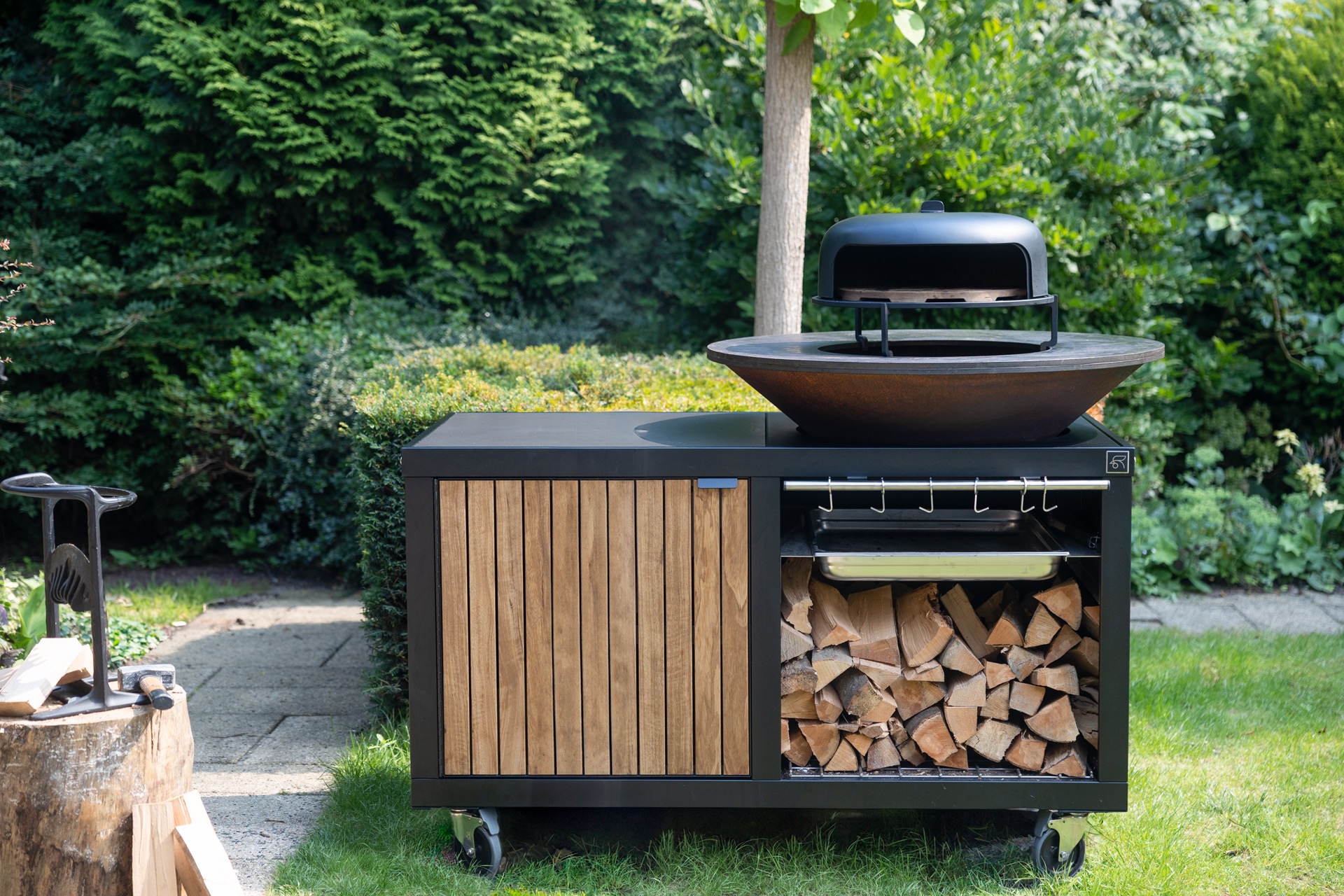
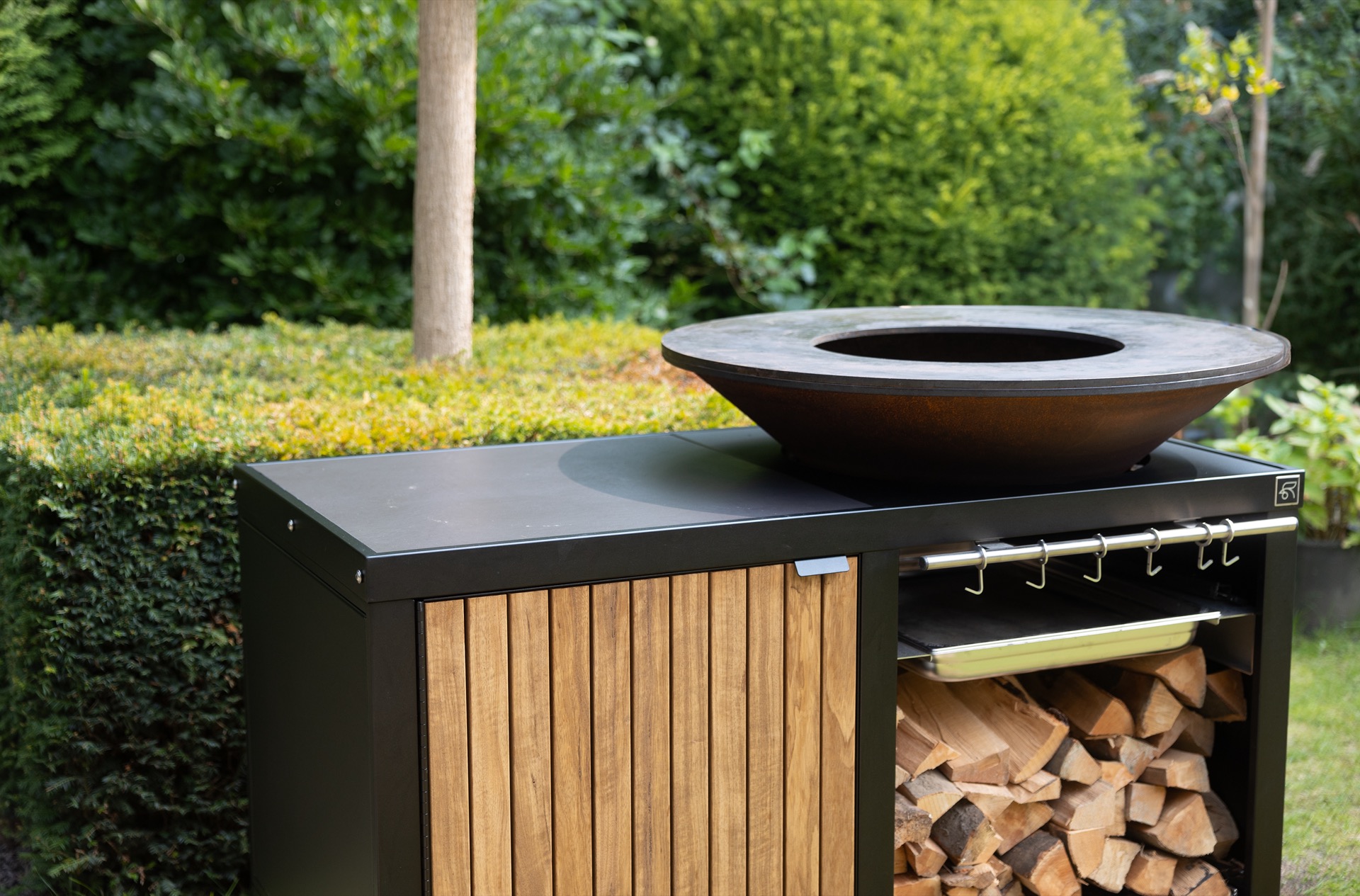
A black steel frame, a round fire bowl and a strip of stacked logs set the tone immediately. The outdoor kitchen reads as one piece, but the details do the work: vertical timber slats at the front, a dark worktop, and an open niche where the firewood sits in view. In the middle, the built-in fire unit draws attention with its circular shape and the opening where flame becomes part of the scene. It is an outdoor kitchen with fire unit that is made to be used, not just looked at.
A round cooking surface that changes the rhythm of the garden
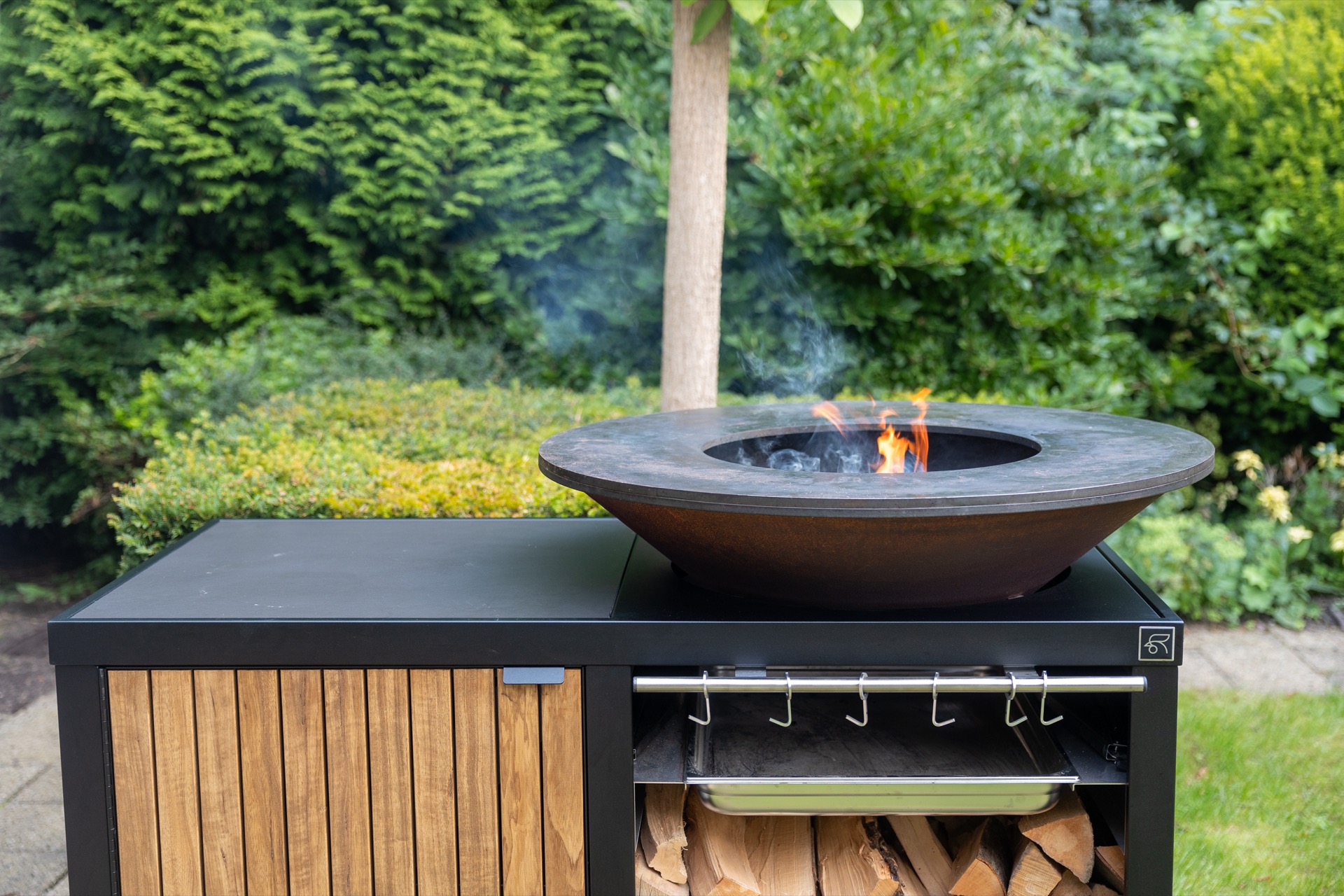
The fire bowl is not treated as an accessory. It sits on top of the kitchen like a central element, with a wide circular cooking surface around the flame. That shape allows different zones to appear across the plate, from hotter edges near the fire to cooler areas farther out. For outdoor cooking, that means one setup can hold several moments at once: a pan warming, food grilling, and a pot resting nearby. The form is simple, but it changes how people gather around the outdoor kitchen.
Seen from the front, the project has the presence of a compact outdoor room placed in the garden. The black structure grounds the composition, while the timber panels soften the straight lines of the steel. A grey or dark slab-like worktop extends the base and gives the round top element a clean edge to sit on. Nothing is overdesigned. The eye moves from the open fire zone to the storage below, and from there to the side rail with hooks, which adds a practical layer to the composition.
Built-in firewood storage keeps the structure visually grounded
The niche for firewood is one of the most legible parts of the design. Logs are stacked openly, not hidden away, so the storage becomes part of the composition rather than a leftover compartment. That choice gives the outdoor kitchen with firewood storage a more direct visual logic: fuel, fire, and cooking surface are all connected in one view. In the photographs, the wood adds a warm brown note against the black steel and dark worktop, and it keeps the lower part of the kitchen from feeling closed off.
There is also a clear industrial note in the way the materials are combined. Steel frames the cabinet, timber defines the front, and the round cooking bowl sits above them like a separate object. The mix is restrained, but not flat. The surfaces contrast in texture: smooth metal, visible grain in the wood, and the matte look of the cooking zone. In a green garden setting, that contrast stands out without fighting the surroundings. The outdoor kitchen remains visually strong while still belonging to the lawn and planting around it.
Flame, opening and smoke in close-up
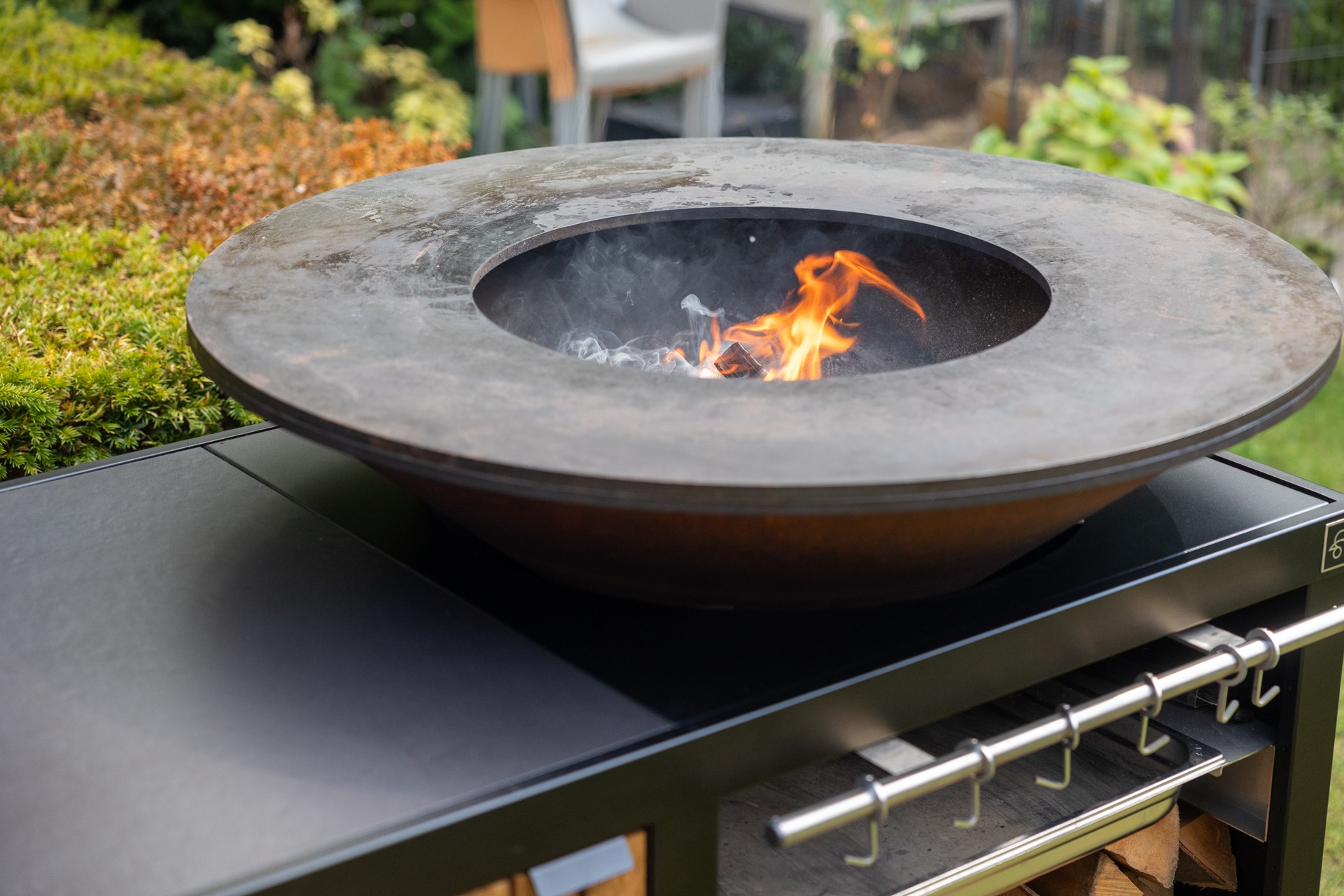
Several images focus tightly on the opening in the bowl, where flame is visible through the round cut-out. That small detail matters. It shifts the unit from a static object into something active, and it explains why the outdoor kitchen with fire unit works so well as a social point in the garden. The fire is not tucked away. It is visible from the side, from above, and in close-up, with the metal rim framing the glow. Smoke appears in some shots, which reinforces the sense of live outdoor cooking rather than a staged display.
The close views also reveal how the upper ring is finished. The circular edge reads as a precise line against the darker body below, and the opening sits deep enough to keep the flame contained while still leaving it easy to read visually. Around that core, the rest of the kitchen stays understated. The result is a clear hierarchy: fire first, cooking surface second, storage and support below. That order is what gives the project its strength.
Steel, timber and a clear working edge
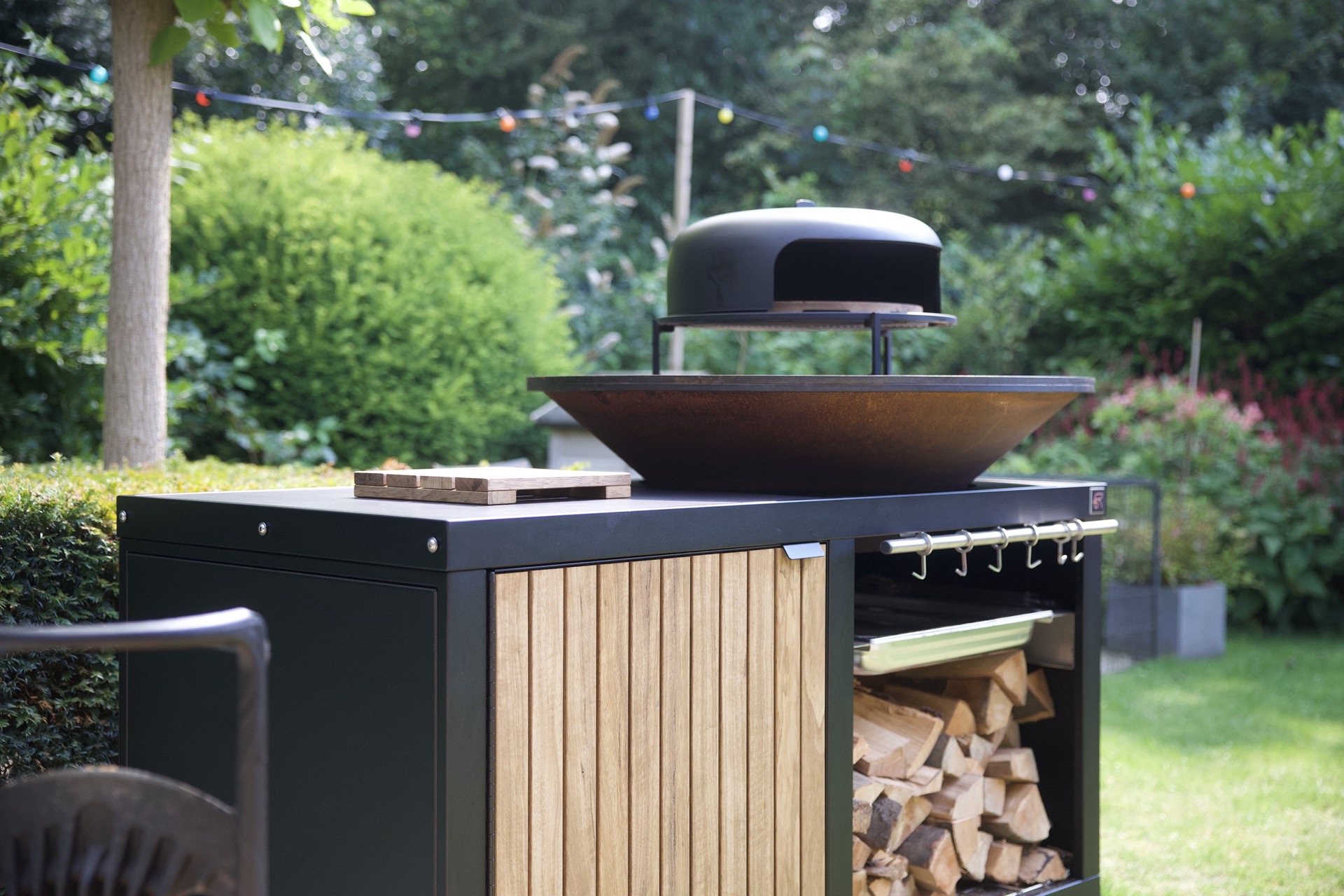
The outdoor kitchen does not rely on ornament. Its character comes from proportions and material transitions. Vertical slats break up the front panel, the side rail with hooks introduces an extra working line, and the wheeled plinth mentioned in the images suggests a base that is ready to move or be positioned with precision. Even without adding unnecessary gestures, the kitchen offers enough detail to feel considered. Each component has a role, and each role remains visible.
As a modern outdoor kitchen, it balances cooking, storage and presentation in one compact footprint. The open log niche, the round fire bowl and the dark outer casing are all readable at once, which makes the composition easy to understand from a distance. Up close, the different finishes begin to separate. The wood has texture. The steel absorbs light. The worktop forms a calm horizontal line. Together they give the kitchen a strong outline in the garden without turning it into a heavy block.
Made for outdoor cooking, not just for display
The source text positions the setup around shared outdoor cooking, and the photographs support that reading. This is a place where food can move from preparation to heat to serving in one zone. The round cooking bowl and broad plate make that possible, while the open fire brings a sense of activity to the garden. It is a luxury outdoor kitchen in the sense that it combines several functions without needing extra furniture or loose equipment around it. The setup keeps the work area consolidated and the visual field clear.
Because the structure is described as weather-resistant and made with corten steel in the source text, the material language is practical as well as visual. The combination with stainless steel outdoor kitchen elements is mentioned too, which underlines the use of durable finishes in the wider concept. Nothing here feels temporary. The materials are chosen to sit outside and to keep their shape in a setting that changes with the seasons. That makes the outdoor kitchen with fire bowl feel anchored, even when the flame is out.
A kitchen that turns the garden into a gathering point
The strongest quality of the project is the way it organizes people around a central object. The round fire unit creates a point of attention, and the surrounding cabinet turns that point into a working kitchen. Instead of separating cooking from social space, the design brings them together in one compact zone. The result is a clear outdoor room in miniature: logs below, fire in the middle, and a work surface ready for use. In the images, the green garden around it makes that structure feel even more deliberate.
Anyone looking for an outdoor kitchen or a custom outdoor kitchen can read the project as a practical reference as much as a visual one. It shows how a built-in fire unit can shape the whole composition, how firewood storage can become part of the design, and how steel and timber can carry a strong but restrained character. The page invites a personal conversation about the possible configurations, which fits a project like this. The details are already visible. What remains is how they are assembled.
Want to see more of Roostr Buitenkeukens? View the page of Roostr Buitenkeukens for even more great projects and company information.


NEW 2026 Jubileum Edition The Best Interior Designers Benelux
Order Now €125