









Round floor hatch with safety glass (matte black stainless)
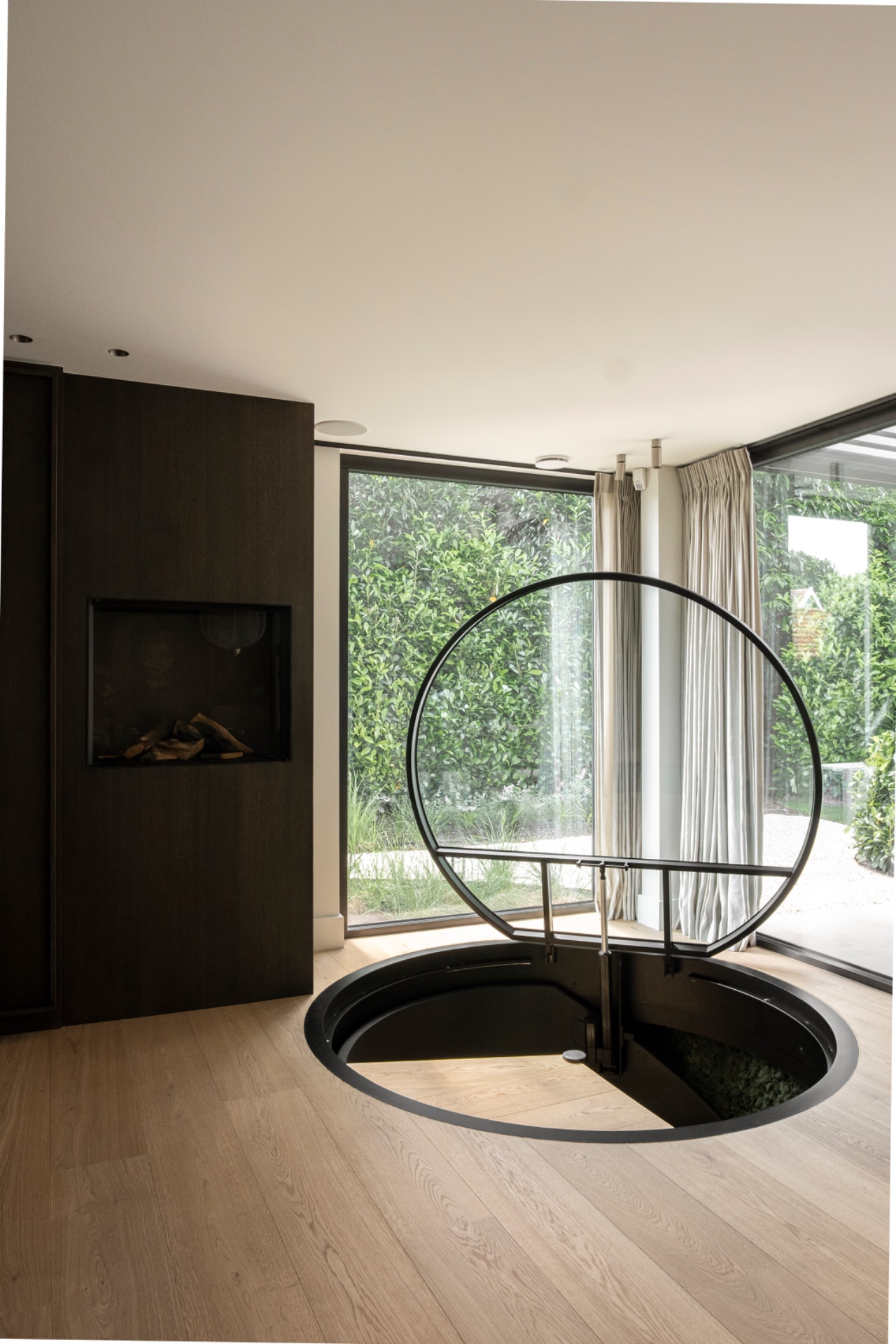
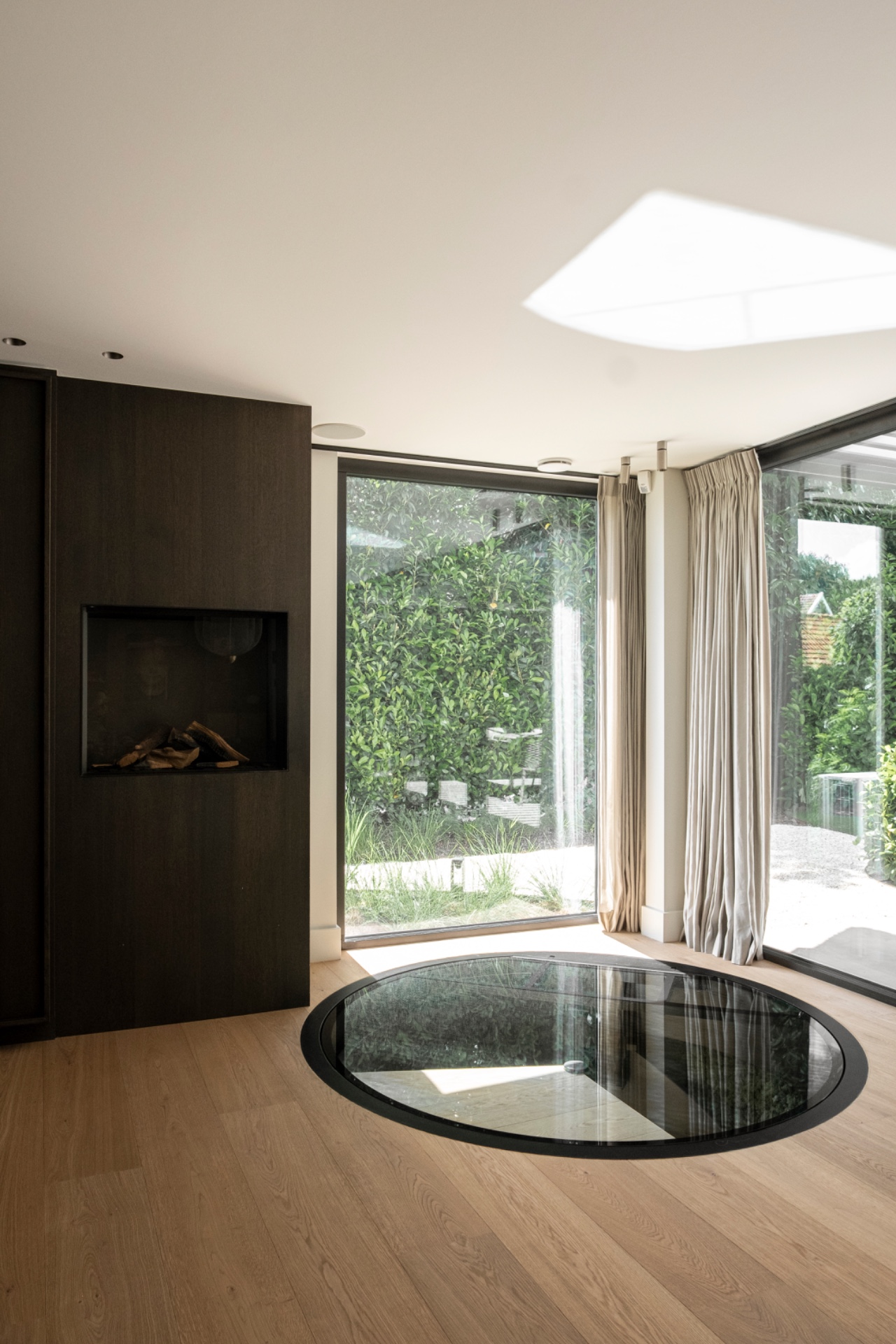
A dark metal rim cuts a clean circle into the timber floor, and the glass lid lets the lower level read through from above. The result is a round floor hatch with safety glass that does more than close an opening: it marks the route to the space below with a clear, measured gesture. At 1910 millimetres across, the hatch sits as a strong point in the room, where the round form stands apart from the straight lines of the floorboards and surrounding walls.
A circle set into a field of wood
The first thing that catches the eye is the contrast between the warm timber floor and the matte black stainless edge. That dark ring keeps the opening visually sharp, while the round floor hatch stainless steel construction gives the surface its fixed outline. The form is simple, but the reading is precise: a circular lid, a narrow metal border, and a transparent centre that catches reflections from the room above. It feels anchored, not added later.
The hatch lid is finished with layered, tempered safety glass, so the surface stays open in appearance while remaining firm in use. Light moves through the glass and into the lower level, which keeps the opening from feeling heavy. In the images, the transparent lid also reveals part of the void beneath, turning the floor into a visible threshold instead of a closed plane. That small shift changes the way the room is read from above.
Access to the lower staircase area without visual noise
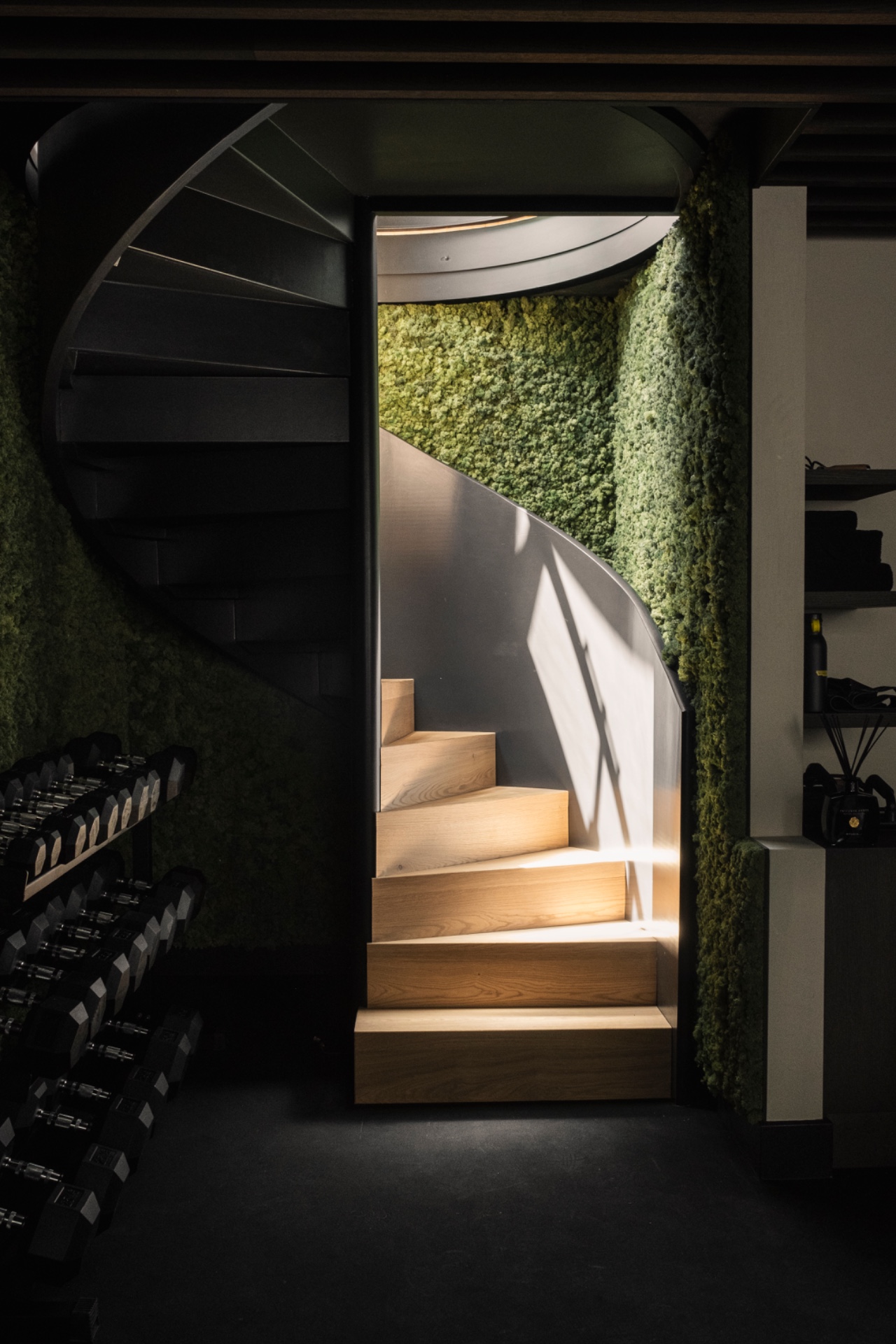
Below the opening sits a spiral staircase, reached directly through the hatch. The route down is visible in the imagery: dark framing around the opening, wooden treads below, and a surrounding space finished with green wall cladding and darker surfaces. The hatch therefore serves a clear purpose, but it does so with very little visual interruption. It opens the way to the lower staircase area and leaves the rest of the interior largely undisturbed.
That restraint matters in a room where materials already do much of the work. The round geometry softens the grid of the floor, while the glass keeps the connection between levels readable. From the side, the opening appears almost like a lens in the floor. From above, it becomes a deliberate marker, a place where movement starts rather than a detail hidden from view.
The matte black finish and the steel frame
The matte black stainless hatch has a muted surface, without shine or ornament. It works with the timber rather than competing with it, and the dark tone helps the circular edge remain legible in the floor. The steel frame gives the hatch its structure, while the glass lid keeps the top surface visually light. Together they create a piece that reads as part of the interior architecture, not as separate hardware.
Seen in detail, the material mix is direct: steel, safety glass, and wood. There is no excess in the assembly. The metal edge defines the opening, the glass lid covers it, and the floor around it provides the wider setting. That clarity is what gives the hatch its strength in the room. It can be read in one glance, yet it rewards a closer look at the junction between rim and panel.
Motorised opening for everyday use
An integrated automatic floor hatch motor handles the opening and closing. With the jalousie switch, the lid moves smoothly and quietly, which is important in a space where the hatch is meant for regular use. The mechanism stays out of sight, so the visible expression remains calm and exact. What you notice is the result: a round opening that can be operated without strain, and a lid that settles back into place with the same measured precision.
The technical side is embedded rather than displayed. That choice keeps the attention on the line of the circle and the transparency of the glass. It also means the hatch can function as part of daily circulation without changing the look of the room each time it is used. The motion is practical, but the visible outcome stays architectural. This is where the round floor hatch with safety glass becomes more than access: it becomes part of the room’s rhythm.
How the opening changes the room above
From the main living space, the hatch works as a focal point in the floor. The reflective glass picks up light and nearby surfaces, so the opening is never flat. It has depth. The dark rim frames that depth and keeps the circle crisp against the lighter timber boards. In the photographs, the nearby fireplace wall and large window also reinforce the sense of orientation, but the hatch remains the one detail that draws the eye downward.
The view through the glass adds a second reading to the interior. You see the lower level, the stair line, and the darker frame around the opening, all from a single point in the floor. That transparency gives the room a layered quality without introducing clutter. It is a straightforward move, yet it alters how the space is experienced. The hatch becomes a visible hinge between levels, not just a covered void.
Detail, proportion, and what the photos reveal
The image set shows the hatch in more than one way: as a full circle in the floor, as a close detail of the glass and metal edge, and as a threshold above the stair zone below. In each view, the proportion feels deliberate. The opening is large enough to read clearly, yet the surrounding floor still carries the room. That balance is important, because the hatch needs presence without taking over the entire surface.
One of the clearest details is the way the round shape contrasts with the straight floor boards and the linear edges of the interior. Another is the dark metal rim, which gives the glass a firm outline. Together they make the hatch easy to read from a distance and satisfying to inspect up close. It is an architectural opening, but also a carefully resolved object in its own right.
The lower space in the photographs adds another layer to that reading. Wooden treads, darker framing, and a greener wall surface sit below the opening, showing exactly what the hatch gives access to. That visible connection between levels is what gives the project its spatial interest. The hatch is not hidden away in a service corner. It sits in the room as a clear part of the circulation, with the round form, steel frame, and safety glass lid all doing their work quietly and in plain view.
What stays with you is the way the opening edits the floor without breaking it. The circle is strong enough to register immediately, while the glass keeps the space below in sight. The automatic movement, controlled by the switch, adds a practical layer that supports everyday use. And because the materials are restrained, the whole assembly holds together as a precise piece of interior architecture rather than a mechanical afterthought.
Want to see more of Linfi: custom electrically operated floor hatches? View the page of Linfi: custom electrically operated floor hatches for even more great projects and company information.



NEW 2026 Jubileum Edition The Best Interior Designers Benelux
Order Now €125


%20-%20)
%20-%20)
%20-%20)
%20-%20)