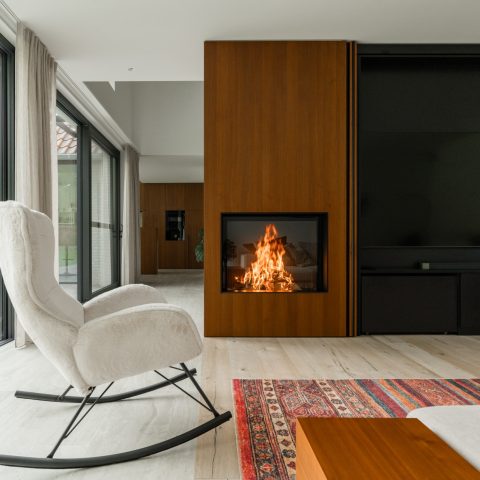









Vertical gas fireplace in a modern built-in wall
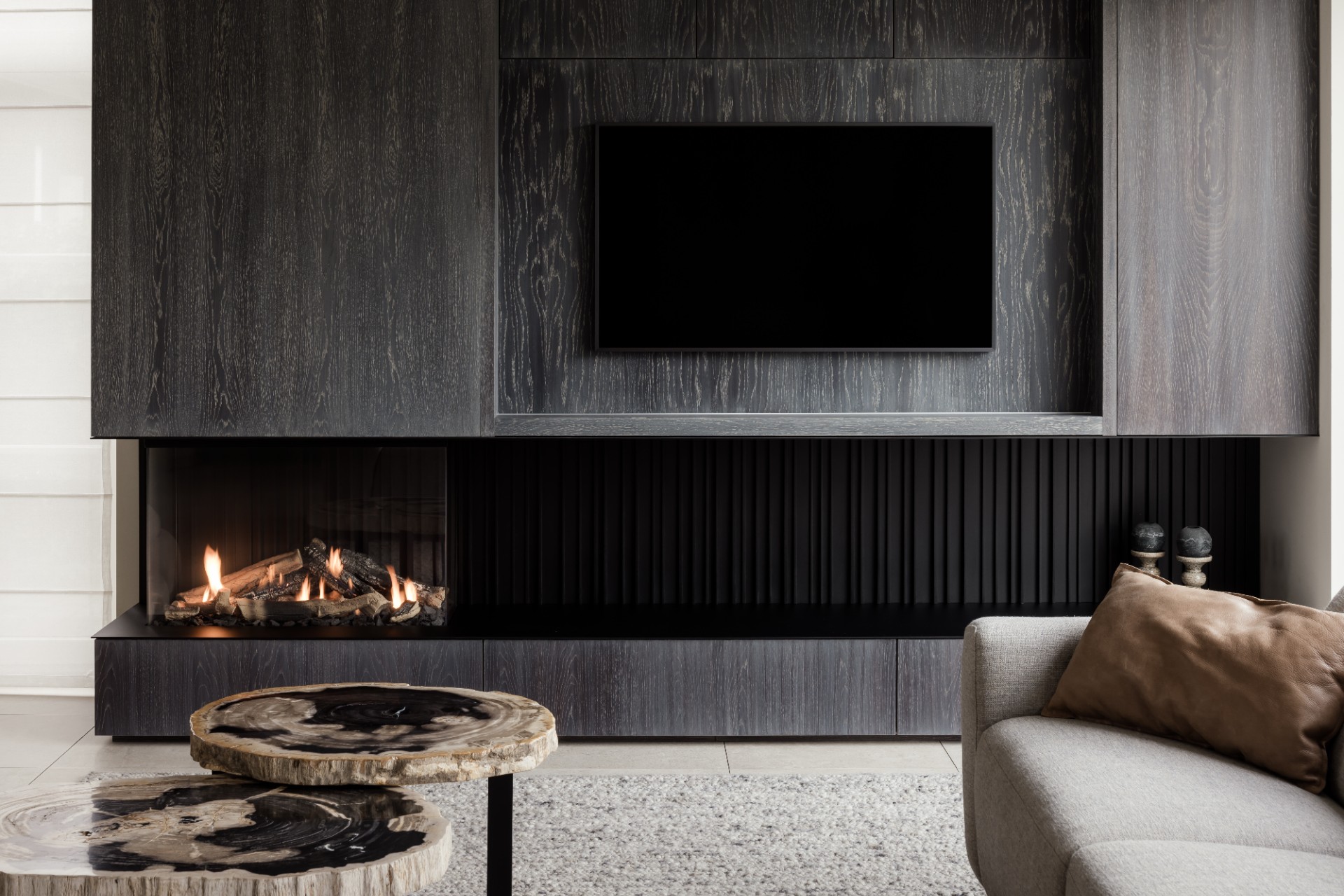
The vertical gas fireplace is the first thing the room registers. Set into a deep opening, it rises through a built-in fireplace wall of dark wood grain panels, with the flames visible behind glass rather than across an open hearth. The composition is tight and measured: horizontal edges, narrow vertical ribs and a clean frame around the fire. It reads as a modern fireplace, but the flame view keeps the focus on movement rather than on the enclosure.
Three-sided view, one clear centre
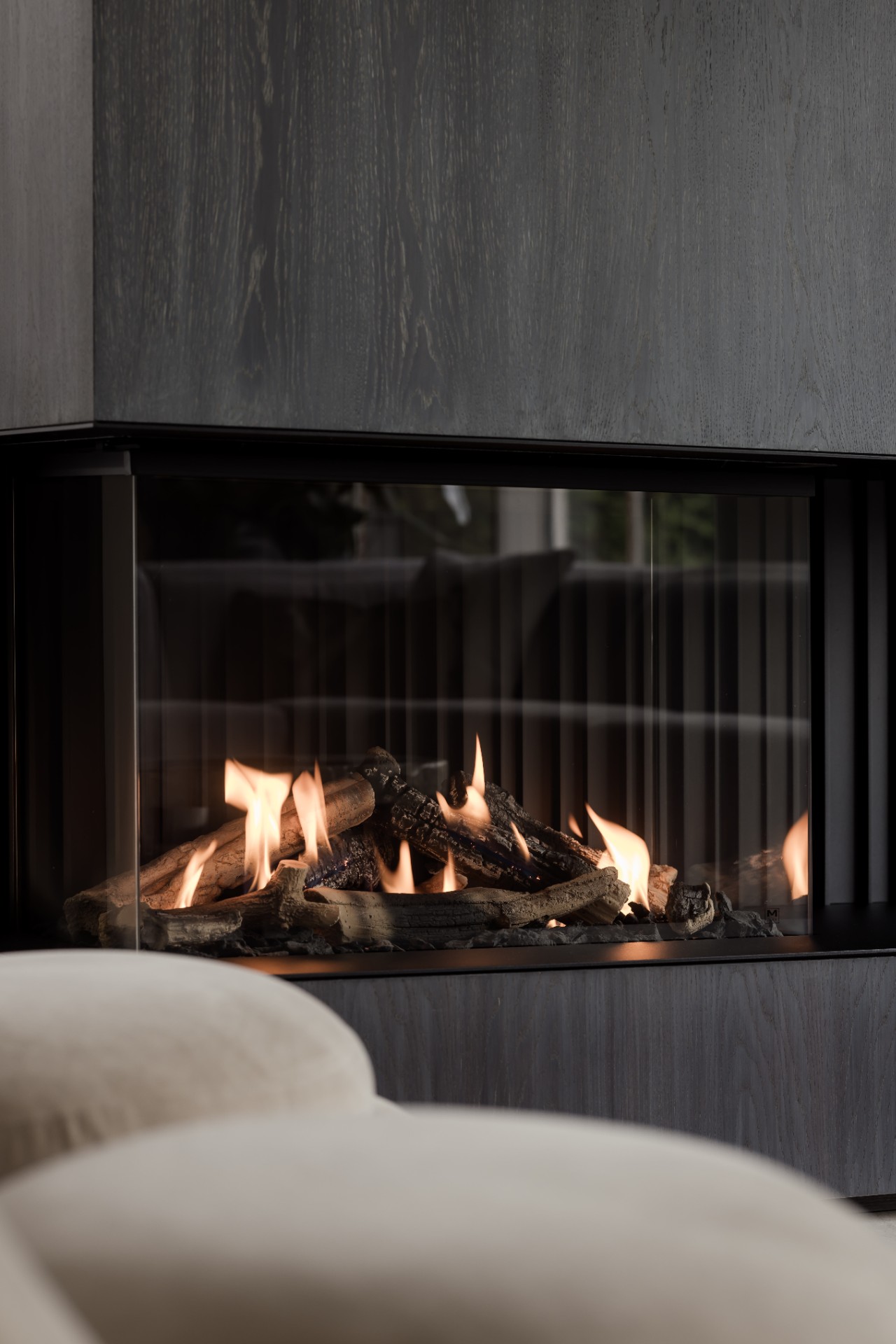
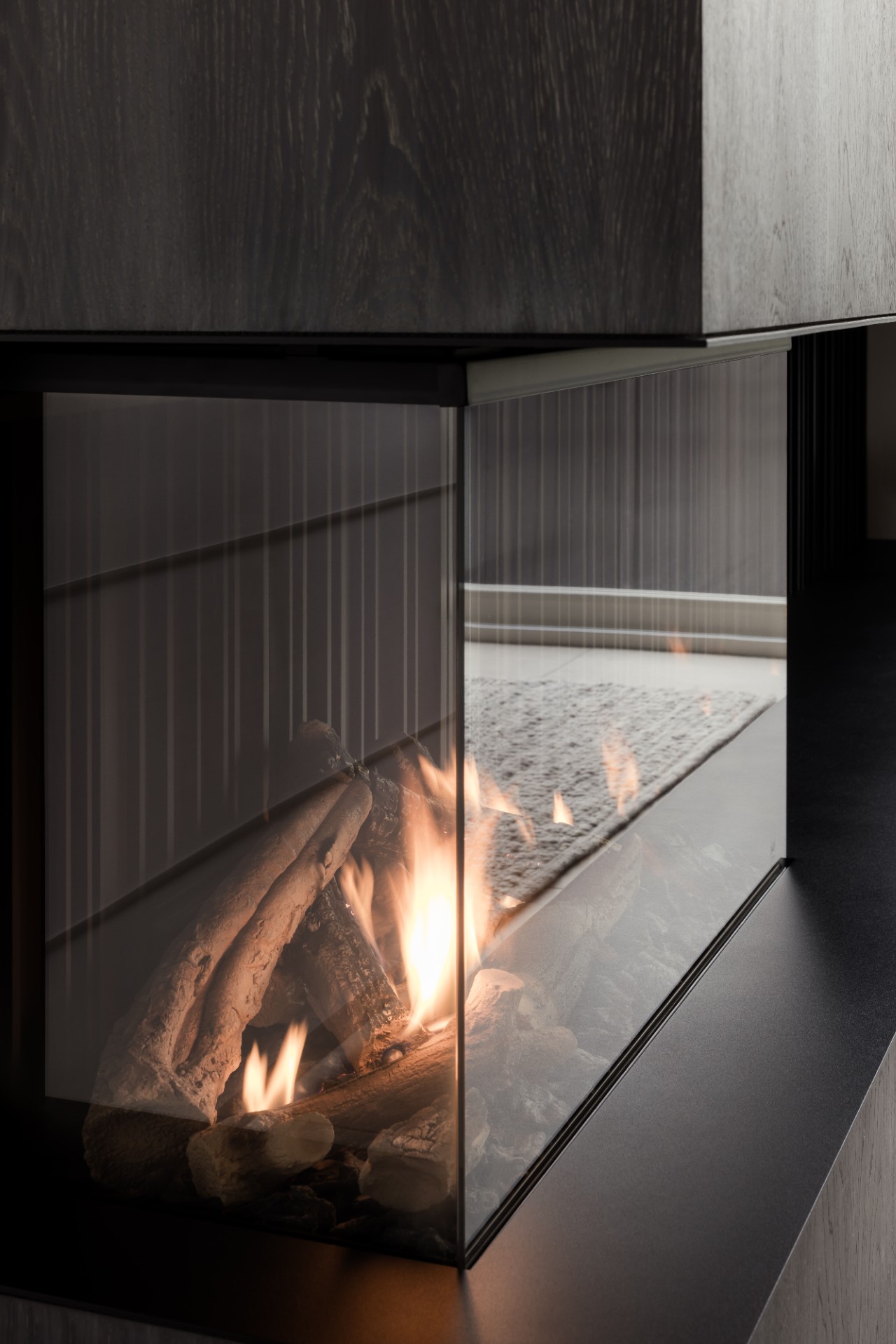
From several angles, the fire stays readable. The project highlight describes the True Vision 1050 DC as a vertical gas fireplace with visibility from three sides, and that wide viewing field is exactly what the images suggest. The glass front stretches the flame line upward, while the double corner detail gives the opening extra depth. Instead of a flat insert, the wall holds a tall cut-out that pulls the eye inward and up, where the flame pattern shifts behind the glass.
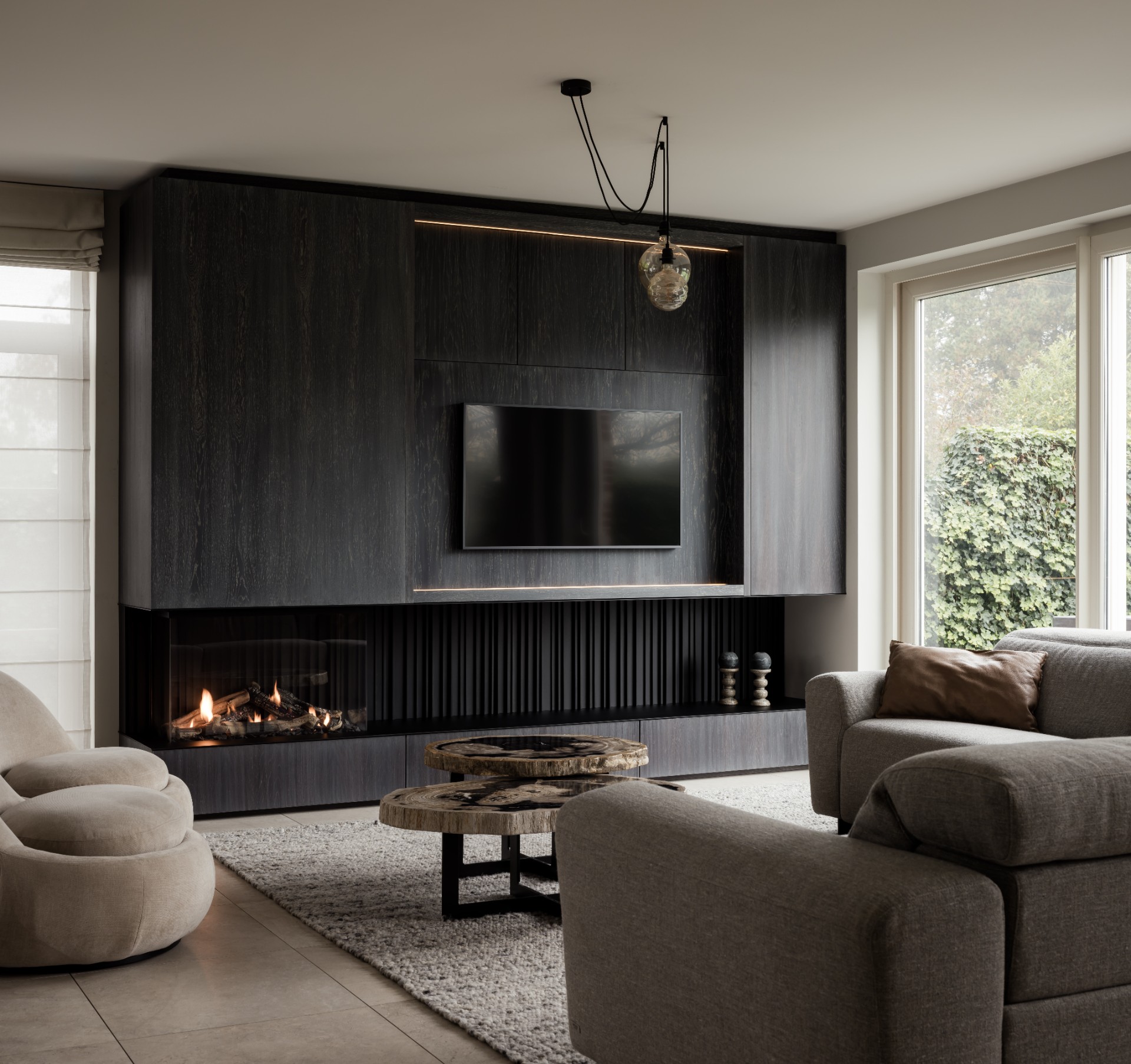
The result is not a decorative add-on but a built-in fireplace wall that shapes the room around it. Dark panels wrap the opening and keep the surround visually calm, so the fire can carry the movement. The stone-like floor at the base and the restrained furniture nearby leave the wall to do the work. Even in a still image, the linear gas fireplace feels active because the vertical format narrows the view and concentrates the flame.
Dark wood grain and sharp edges
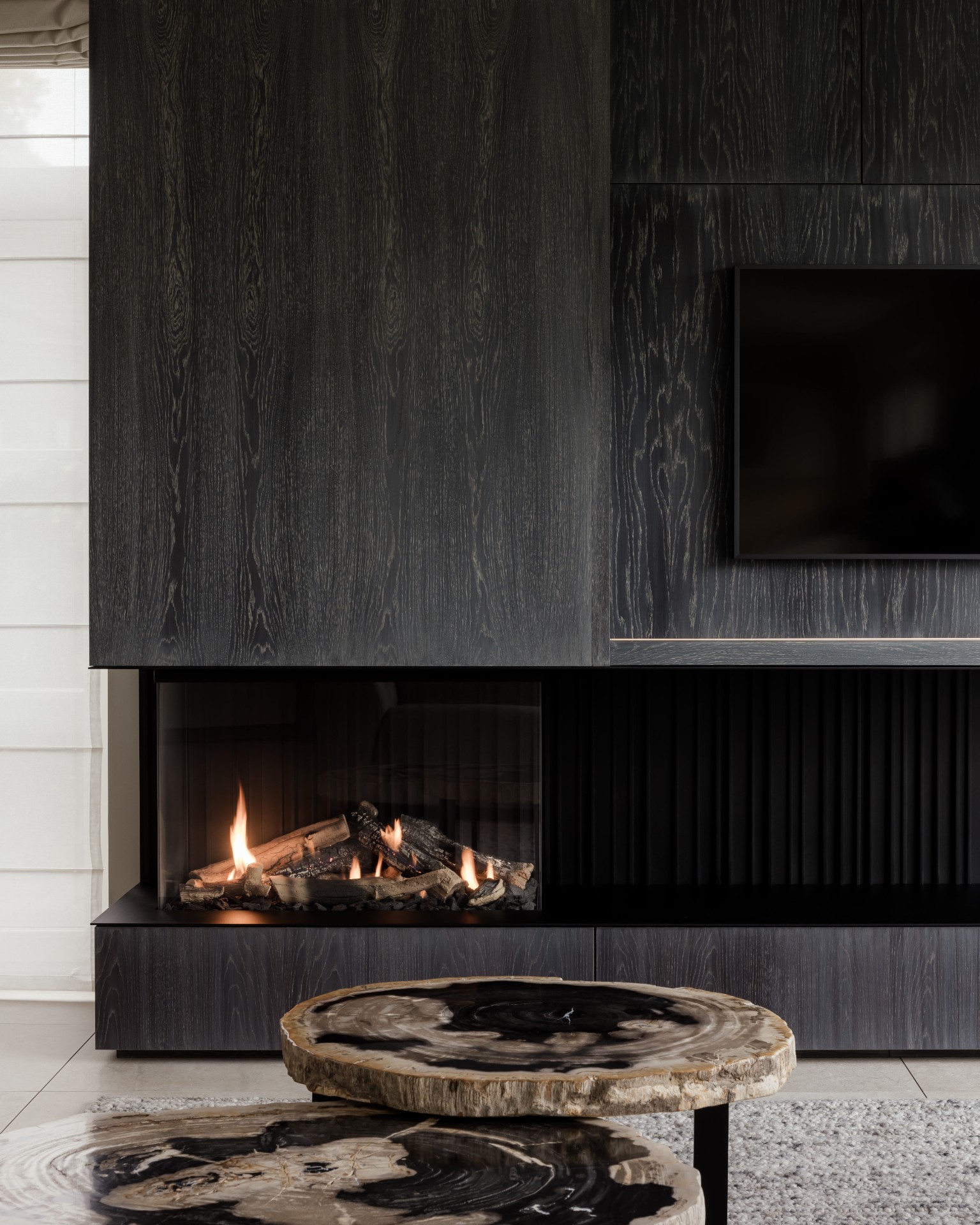
The wall surface matters as much as the fire itself. Large wood-grain panels in a deep tone span the surrounding field, and the pattern gives the composition a steady grain without turning busy. Thin lines break the surface into clean zones, with a bright strip of light running along the upper edge. That line lifts the wall visually and keeps the built-in fireplace wall from sinking into the darker background. It is a simple move, but it changes the whole reading of the installation.
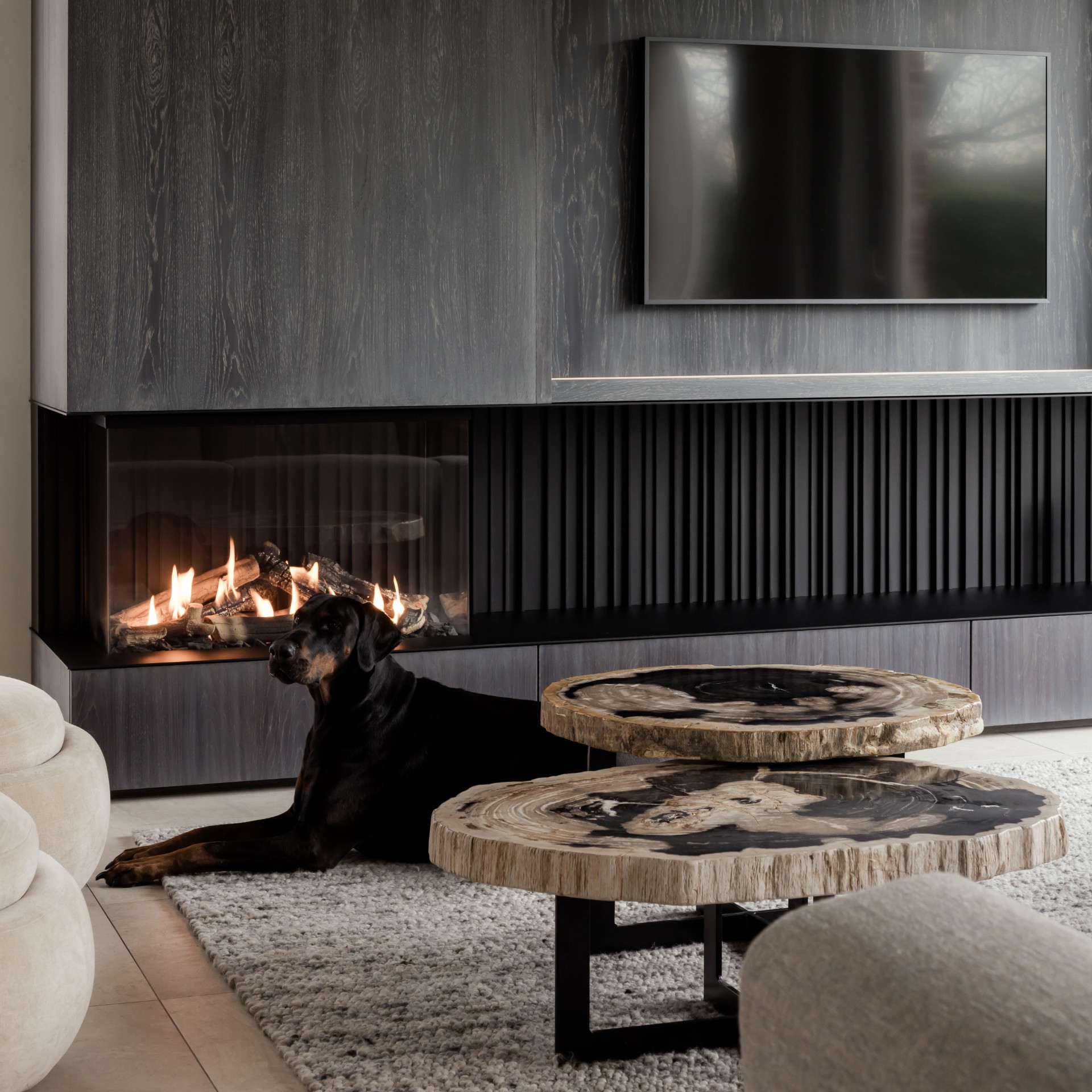
Up close, the finish has more variation than the overall view suggests. The vertical ribs beneath the fire opening create a measured rhythm, while the rectangular surround tightens the frame. These details make the gas fireplace feel embedded rather than placed in front of the wall. In the wider room, the dark finish contrasts with the lighter floor and pale seating, so the fireplace wall becomes a strong vertical marker inside the open interior.
Glass front, reflection and flame
The glass front fireplace gives the project its sharpest detail. In the close-ups, reflections sit lightly on the surface, but the flame remains visible and distinct behind the pane. The anti-reflective glass is mentioned in the source material, and visually it helps reduce the barrier between room and fire. That effect is subtle, yet it makes the vertical gas fireplace easier to read from a distance and more immediate when you stand closer to the opening.
Because the glass remains visually quiet, the fire can take over the lower part of the composition. The logs, burner line and flame movement sit inside a restrained frame, which gives the opening a precise edge. This is where the project differs from a more ordinary modern fireplace: the view is not broad and low, but tall and compressed, with the flame column rising inside a narrow field. The glass front fireplace turns that movement into the main event.
A wall that works like a fitted piece of joinery
The built-in fireplace wall feels closer to bespoke cabinetry than to a separate appliance. Its proportions are controlled, with the fire opening set into a tall rectangular field and the surrounding panels brought right up to the edges. The wood-grain fireplace wall has enough texture to register, yet it never competes with the flames. That balance comes from the layout: strong verticals, a dark frame, and a single bright opening at the centre.
In the wider view, the room stays understated around the installation. A sofa, low tables and pale surfaces recede while the wall pulls the composition together. The fireplace does not sit in the room as an object; it is cut into the architecture. The linear gas fireplace format reinforces that effect, since the tall opening, the slim lines and the controlled lighting all point toward the same vertical axis. It is an arrangement that depends on proportion more than on ornament.
Maintenance details hidden in plain sight
The project also includes a practical side that stays mostly invisible in the image set. The source text mentions a tilting door, which simplifies maintenance, and that note fits the rest of the design approach. Nothing about the wall looks overworked. The panels meet the opening neatly, the frame stays slim, and the fire remains easy to access without disturbing the overall line of the installation. Those are small details, but they explain why the finish reads so cleanly.
Ecowave and Ecoswitch are named as system features in the source material, linked to variable output and easier operation. They are not shown as visual elements, yet they belong to the way the fireplace is presented: controlled, integrated and clearly intended as part of daily use. In a project like this, that matters because the visual strength comes from restraint. The fire is visible, the wall is precise, and the moving parts stay out of sight as much as possible.
Why the vertical format changes the room
The height of the opening changes how the space is read. A conventional horizontal fire line spreads attention sideways, but this vertical gas fireplace pulls it upward, toward the upper edge of the wall and the light strip above. That shift gives the room a stronger centre and lets the fireplace wall act as a tall marker inside a wider living area. The effect is immediate, especially when the surrounding surfaces are kept dark and plain.
For anyone looking for gas fireplaces that rely on proportion rather than ornament, this project shows how much a vertical cut-out can do. The flames are framed tightly, the built-in installation keeps the wall neat, and the glass front preserves the view. Nothing here is overstated. The room is shaped by one clear element, and the vertical gas fireplace holds it together through material, light and a carefully controlled opening.
Placement and service: JDB Haarden en Interieur
Photography: Katoo Peeters
Want to see more of M-design Fireplaces? View the page of M-design Fireplaces for even more great projects and company information.


NEW 2026 Jubileum Edition The Best Interior Designers Benelux
Order Now €125