








Veton ONE teak EV charger with integrated charging cable
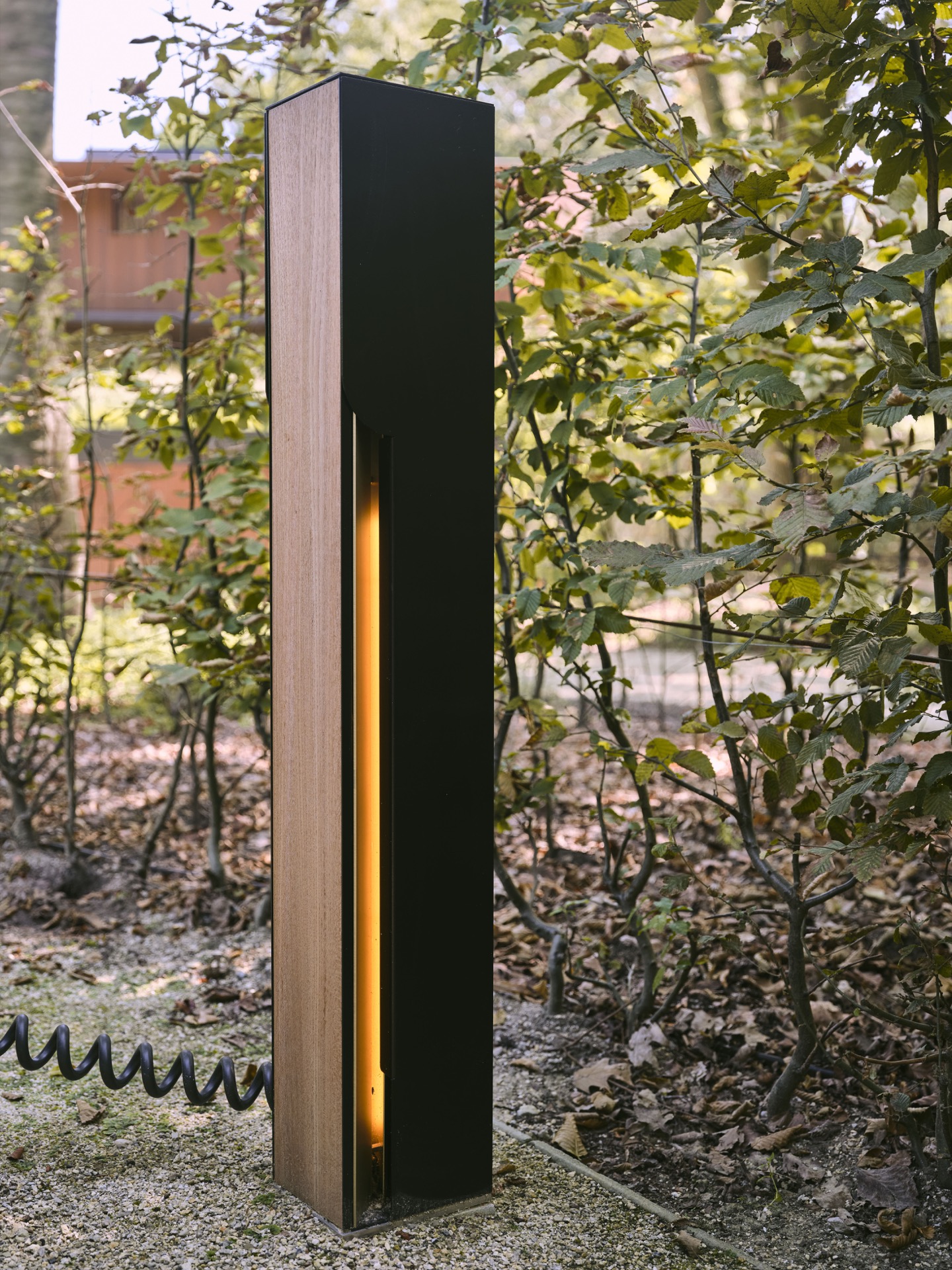
Teak panels, a slim steel frame and a line of warm light give this teak EV charger a quiet presence in the garden. The unit is built for outdoor use, yet the material choice keeps the profile from reading as purely technical. One side stays dark and crisp, while the teak surface softens the vertical mass. It is the kind of modern outdoor EV charger that sits naturally beside gravel, planting and a paved route without asking for extra visual space.
Teak EV charger as a spatial starting point
The body is read in layers. Teak sits against black surfaces, and the contrast makes the charger easy to understand at a glance. The form is tall and narrow, with straight edges that keep the object close to the line of a post rather than a bulky cabinet. In the images, the charger stands among gravel and low planting, so the material mix does more than decorate the surface: it helps the unit belong to an outdoor setting that already contains texture.
The warm light strip runs along the edge and brings attention to the height of the unit after dark. It does not flood the area; instead, it traces the outline and leaves the rest of the form in shadow. That restraint suits a teak EV charger meant for driveways and parking areas, where the object needs to be visible without becoming the dominant feature. The result is calm, but not plain. The detail work is doing the visual work.
An integrated charging cable keeps the setup tidy
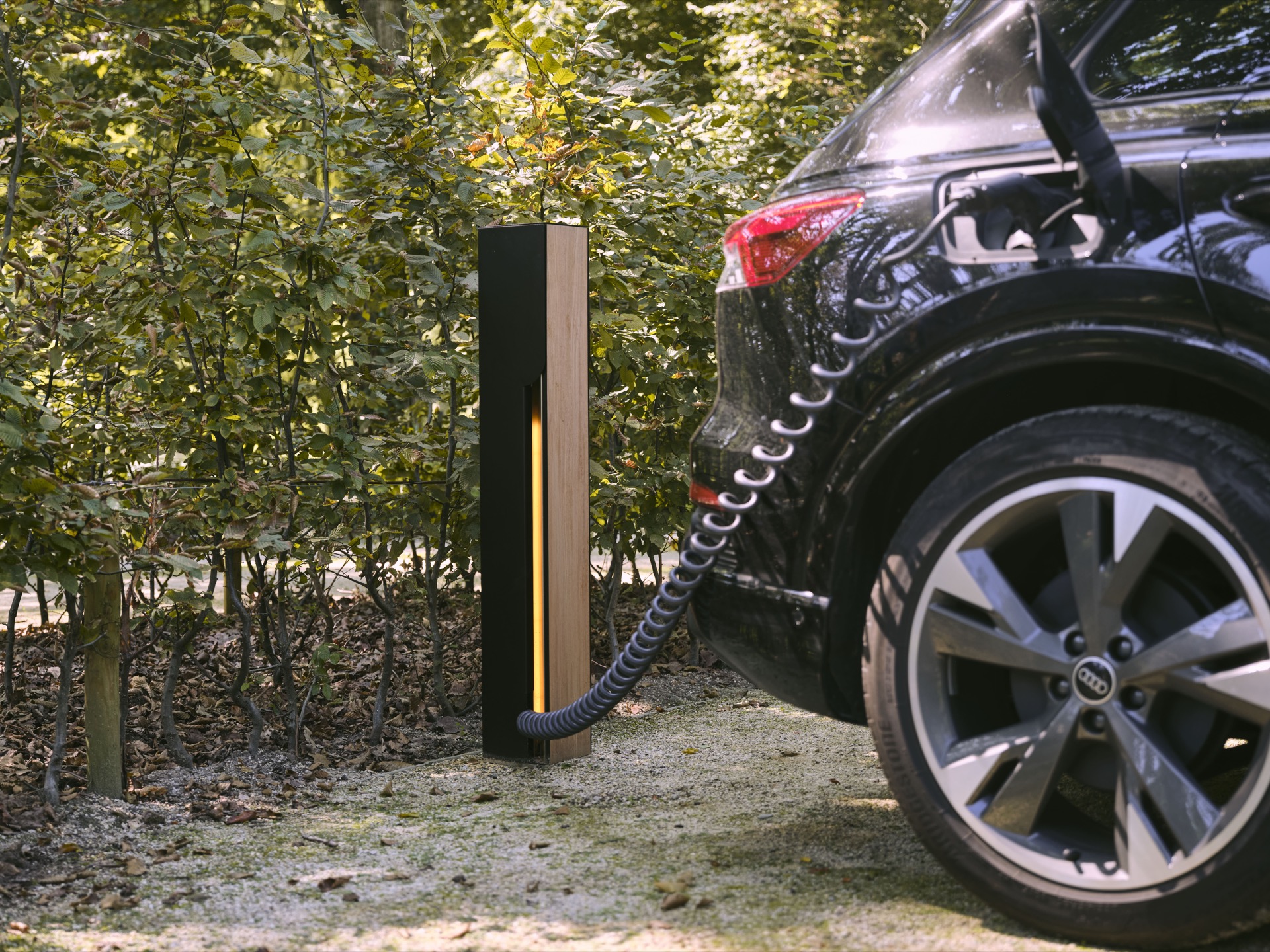
The most practical part of the design is the integrated charging cable. Users do not need to carry a separate cable or store one in the car or garage, which makes daily use more direct. The source text also notes that this can help reduce wear and loss. That is a careful claim, and it fits the image of a charger designed around routine rather than occasional use. The cable sits within the unit instead of becoming a loose accessory around it.
That approach changes the look of the installation as well. Without a cable draped nearby or coiled on the ground, the area around the charger stays visually clear. The line of the charger remains legible from top to bottom, and the ground surface around it is easier to read. In a driveway or parking bay, that clarity matters. It keeps the focus on the charger itself and on the path leading to it.
Made for residential driveways and business parking
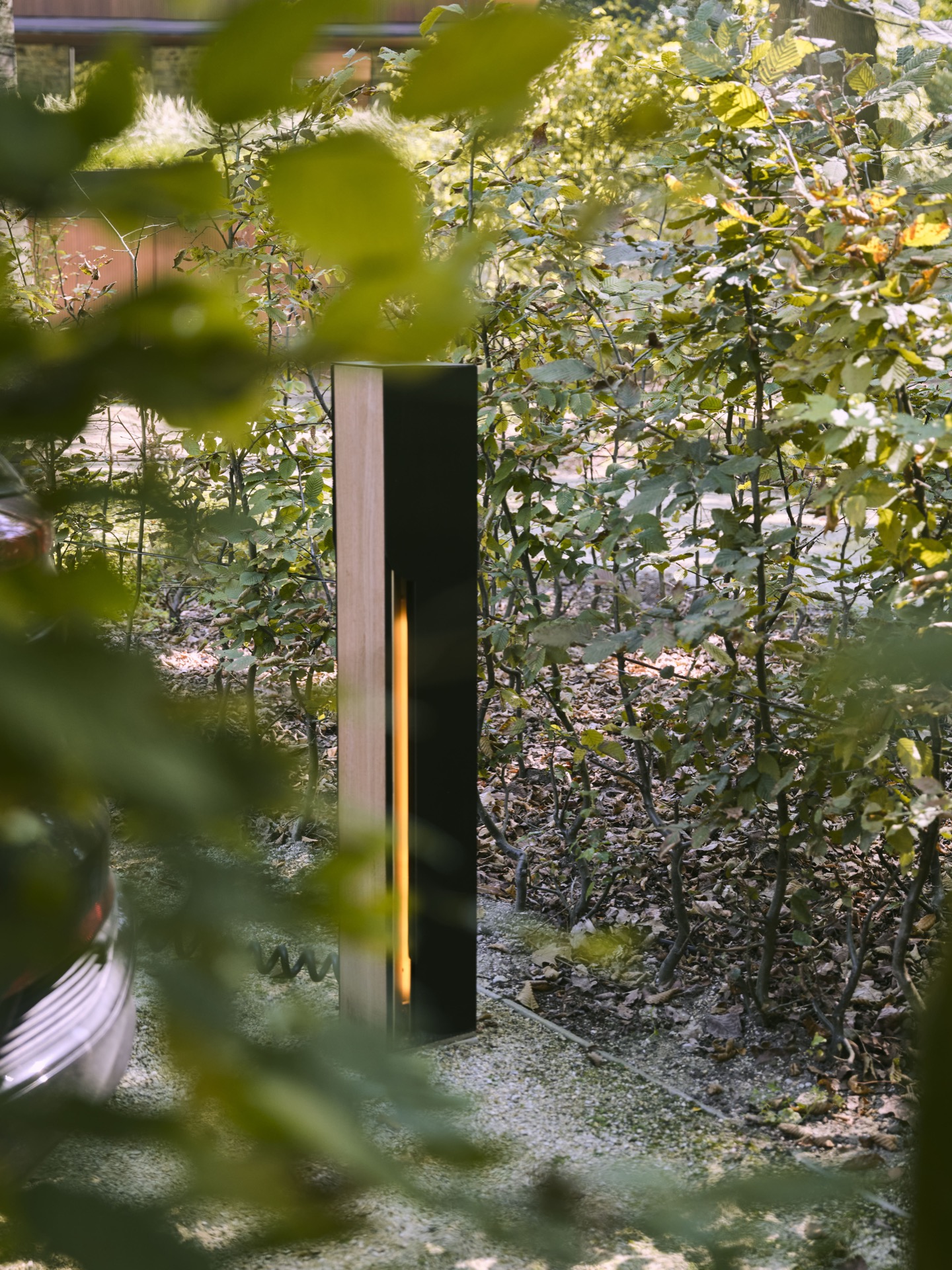
The project is described as suitable for a range of outdoor settings, from residential driveways to stylish business parking areas. That flexibility is visible in the design language. The charger does not rely on a domestic look or a corporate one; it stays neutral enough to sit in either context. Gravel, planting and a parked car in the background show how easily the unit can be understood next to everyday circulation and parking, rather than as a separate technical object.
In a driveway, the vertical shape can sit close to the edge of a route without interrupting it. In a parking area, the same form works as a clear point of use that can be found quickly. The teak finish adds a measured amount of material warmth, while the black frame keeps the charger visually disciplined. That mix helps the object hold its place in different outdoor environments without needing additional decoration.
Warm light without visual noise
The lighting is one of the most visible features in the photographs. A narrow band of light follows the side of the unit, producing a soft edge rather than a glare. This gives the charger a second reading in the evening: not just a functional post, but a slim illuminated line among darker surfaces. Because the light is integrated into the body, it does not add clutter. It reinforces the geometry already present in the teak and steel construction. Teak EV charger remains connected to the layout, materials and daily use of the home.
Seen close up, the light accent also reveals the depth of the assembly. There is a small gap between surfaces, and the glow slips through that opening. It is a simple move, but a telling one. Instead of ornament, the design uses light to mark the edge, the seam and the silhouette. For a warm light EV charger, that precision matters more than any decorative flourish. The object stays legible from near and far.
Close-up details that define the unit
The detail images focus on the meeting point between teak and black material. That junction gives the charger its character. The surfaces do not try to disappear into one another; they stay distinct, so the construction remains easy to read. The teak has a grain that softens the hard line of the metal, while the dark finish keeps the form compact. Together they create a controlled contrast that suits an outdoor charger intended to sit in view.
A side view shows how the body holds its narrow profile even when framed by leaves and planting. The charger keeps a clear outline against the softer garden background, and the warm light strip helps that outline stand out. The surrounding gravel also plays a role. It sets off the vertical object and gives the installation a grounded base. Nothing in the scene feels overstated; the charger simply sits where a charger needs to sit.
A charger that works as part of the route
Because the unit is standing and self-contained, it can be placed where movement already happens: along a driveway edge, near a parking spot, or beside a paved approach. The images suggest that this placement is deliberate. The charger does not occupy a central courtyard position or demand a platform. It belongs to the route between arrival and parking, which is exactly where an EV charger is most useful. The teak finish helps it avoid the look of purely technical equipment.
That usefulness is matched by the restraint of the overall form. There are no extra handles, screens or visual interruptions in the material reading shown here. Instead, the eye moves from the top edge to the illuminated side and down to the base in the gravel. For a teak EV charger with an integrated charging cable, that clarity is part of the design value. It keeps the object direct, readable and ready for daily use in outdoor conditions.
What the photographs make clear
The final impression comes from repetition across the images: teak, black steel, warm light, gravel, planting. Each element is modest on its own, but together they build a charger that feels placed rather than dropped in. The object is compact, upright and easy to locate. Its integrated cable keeps the visual field clean, while the material mix gives it enough presence to stand beside a house, a path or a parking area without becoming loud.
Seen as a portfolio piece, this teak EV charger shows how an everyday technical item can be shaped with enough attention to material and light to hold its own in an outdoor setting. The design is not trying to hide what it does. It simply gives the charger a clear form, a quiet illumination and a finish that sits comfortably against gravel and planting.
Want to see more of Veton? View the page of Veton for even more great projects and company information.



NEW 2026 Jubileum Edition The Best Interior Designers Benelux
Order Now €125