







Modern kitchen with oak and steel look
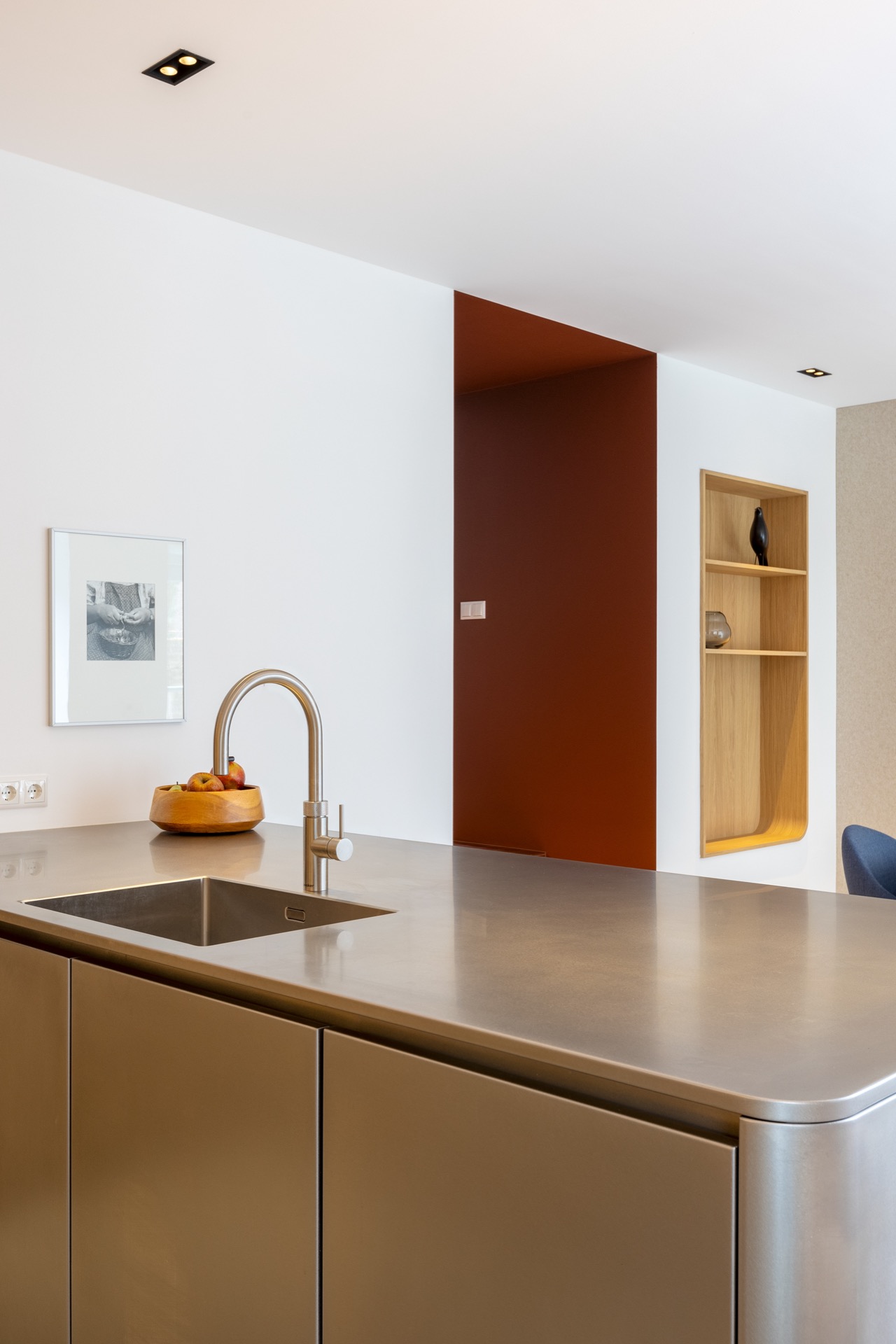
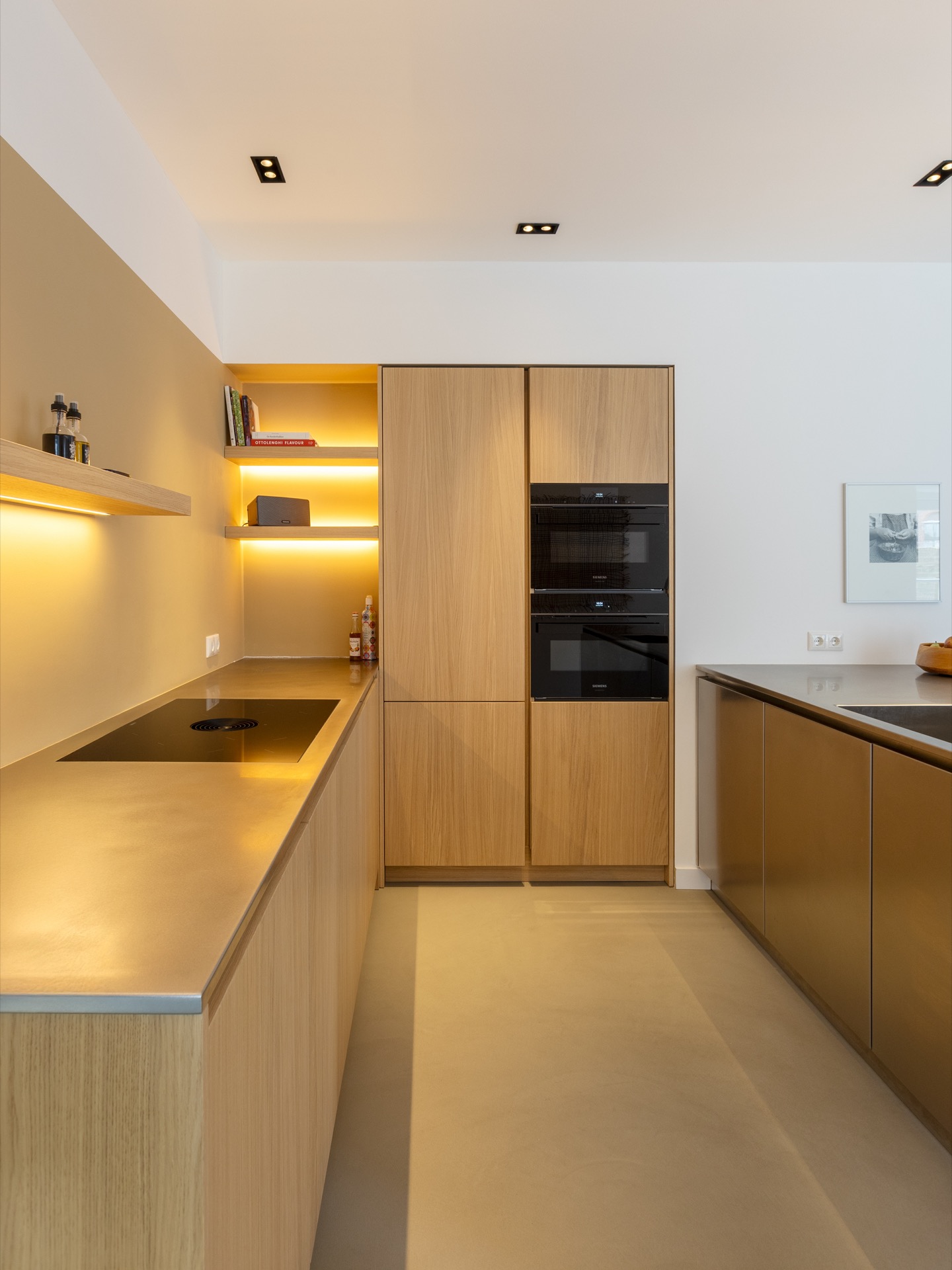
The first thing you notice is the surface contrast: oak fronts on one side, a steel-look island on the other, with light sliding across the worktop and the wall behind it. In this modern kitchen with oak and steel look, the materials do most of the talking. The composition stays restrained, yet the mix of wood, pale walls and metal gives the room a sharp edge that sits comfortably inside an older house.
Oak fronts, steel-look island
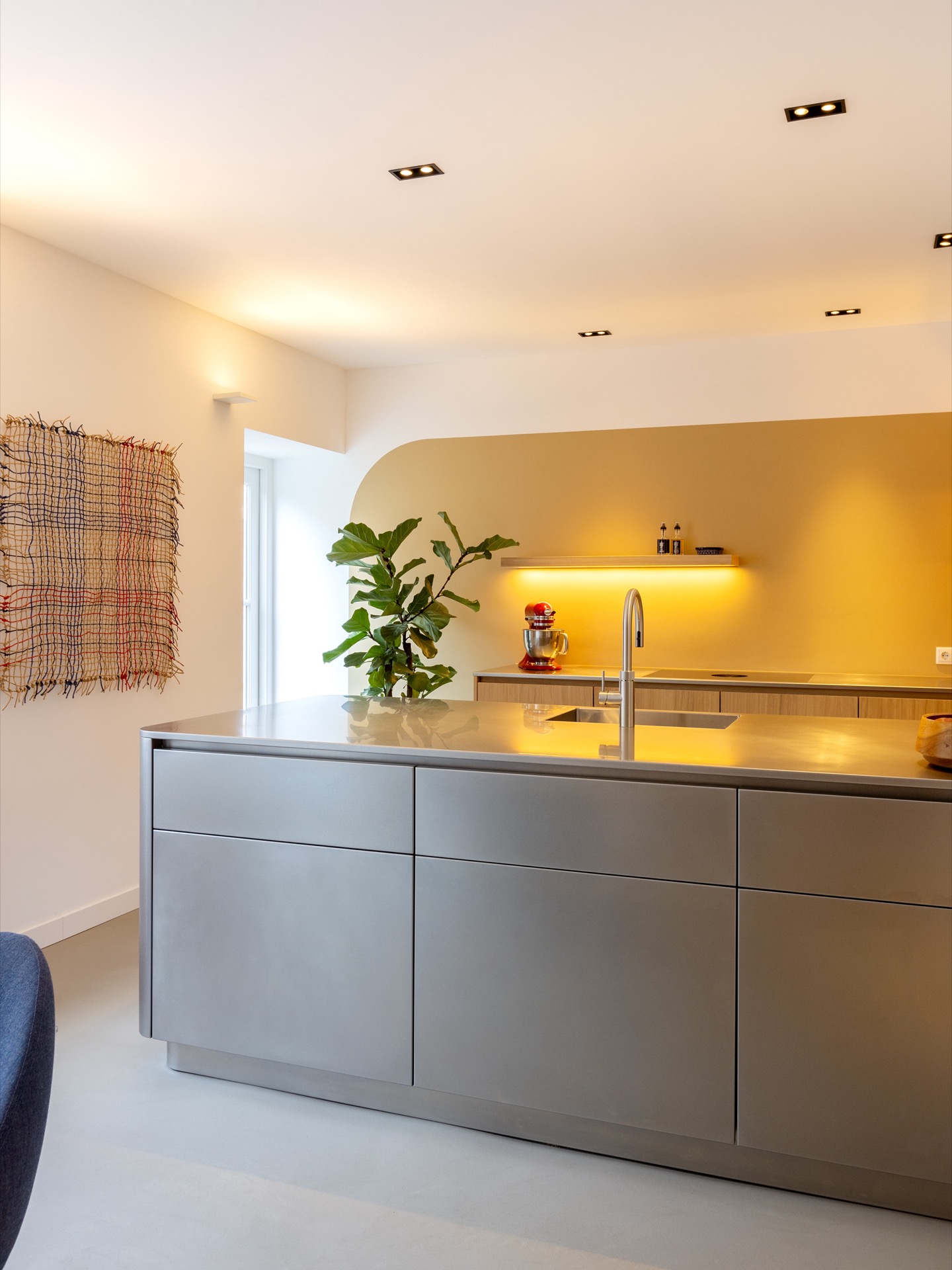
The oak cabinet wall sets a steady rhythm across the room. Its grain softens the long horizontal lines of the joinery, while the steel-look island brings a cooler, harder plane into the middle of the plan. That wood and steel contrast is visible from several angles: in the main view, in the sink area, and in the way the island reflects the light more directly than the surrounding fronts. Nothing is overworked. The shapes stay plain, which lets the material change carry the room.
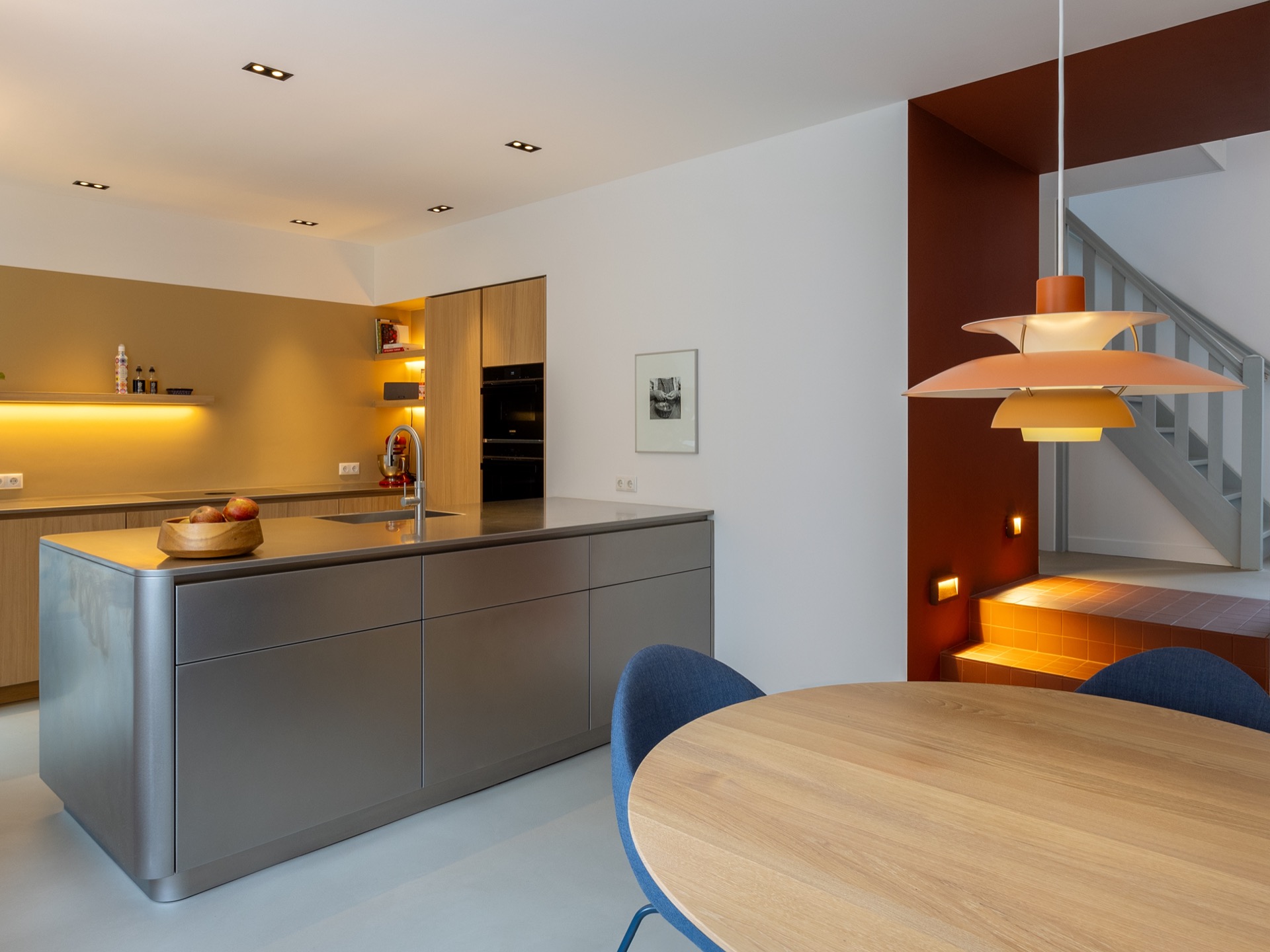
Seen as a whole, the kitchen reads as a measured composition rather than a display of individual objects. The front surfaces are smooth and understated, with built-in appliances tucked into the cabinetry. The worktop remains light in tone, so the darker island line does not close the space in. Instead, it gives the room a clear centre. This is where the modern kitchen with oak and steel look becomes legible: one material absorbs light, the other returns it.
Built-in lighting sets the pace
Lighting is not treated as an afterthought here. Ceiling spotlights punctuate the room and keep the working areas even, while warmer light washes across the wall zone behind the counter. In the images, that glow turns the backsplash area into a distinct band of colour, almost amber at times, which separates the practical surface from the paler wall above. The effect is quiet but precise. It makes the kitchen feel composed without pushing it into display mode.
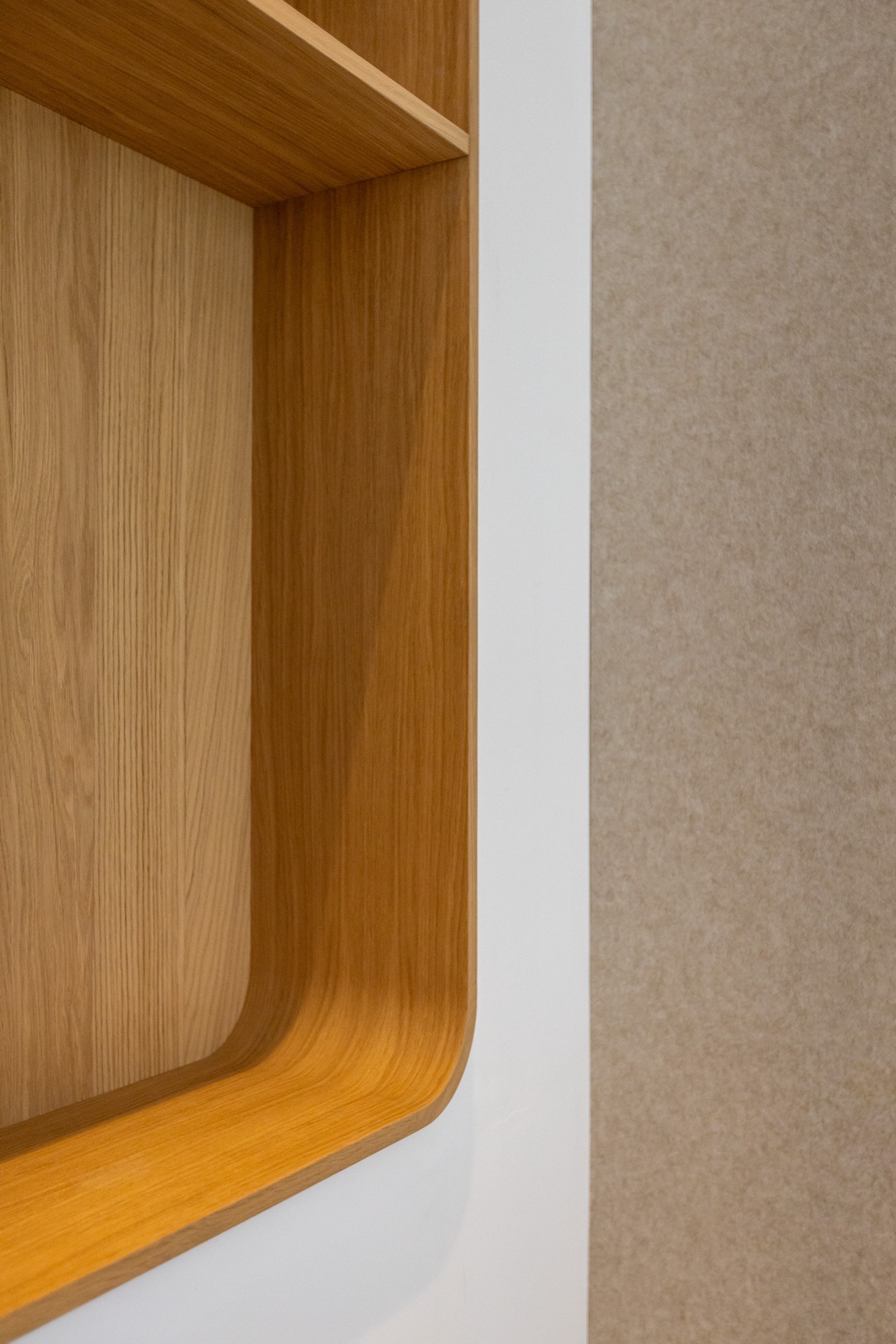
Warm kitchen lighting also draws attention to the depth of the joinery. Open niches and recessed sections catch the light differently from the flat doors beside them. That small shift matters, because the kitchen depends on layers rather than decoration. The illuminated wall line, the shadow under the cabinets and the bright plane of the worktop each hold their own place. Together they guide the eye from one material to the next.
A steel-look island with a clear working edge
The island is the most direct counterpoint to the oak wall. Its steel-look finish gives the sink zone a more technical character, especially in the close-up where the tap, basin and work surface sit tightly together. The finish is cool and reflective, but it does not dominate the room. Instead, it marks the place where water, preparation and movement meet. In a kitchen like this, the island is not just an object in the middle; it is the point that ties the whole layout together.
From the side, the island also frames the transition to the rest of the home. The nearby wall colours remain light, and the floor pattern continues beyond the kitchen threshold, so the room does not feel sealed off. The contrast is strongest where the steel-look surface meets the oak fronts. That meeting line is clean and direct. It gives the kitchen its tension, but also its clarity.
Details that keep the room grounded
A closer look reveals how much the project depends on smaller moves. The open wooden niche with rounded inner corners breaks the otherwise straight cabinet language. It sits inside a white surround, almost like a framed recess cut into the wall. Elsewhere, the cabinetry hides storage behind flat fronts, leaving the surfaces calm and allowing the grain of the wood to remain visible. These details matter because they keep the kitchen from reading as a simple monolith. The joinery feels made for the room, not dropped into it.
The surrounding architecture stays present in the background. White walls and a few warmer wall zones give the kitchen room to breathe, while the stair and adjoining surfaces appear in the wider views as a reminder that this is part of a larger house. The old structure does not compete with the kitchen. Instead, the new elements settle into it through proportion and restraint. That is where the project gets its character: in the controlled meeting of old walls, pale finishes and precise new surfaces.
What the images reveal about use
The photographs show more than a finished arrangement. They show how the kitchen works in daylight and under artificial light, how the sink zone sits in relation to the island, and how the oak fronts hold the field of view. In the wide shot, the room feels linear and measured. In the detail images, the cabinet edges, built-in equipment and illuminated recesses become the focus. The result is a kitchen that reads clearly from a distance and still rewards a close look.
It is this clarity that gives the modern kitchen with oak and steel look its appeal. The room does not depend on ornament or visual noise. It relies on a few exact decisions: oak for warmth, a steel-look island for contrast, and layered lighting to bring depth to the surfaces. The materials are easy to read, yet they never flatten the space. Instead, they let the old house remain visible around the edges while the kitchen sets its own measured tone inside it.
Photography
Nanette de Jong
Contributors
Miele, Quooker, Bora
Want to see more of Van Ginkel Keukens? View the page of Van Ginkel Keukens for even more great projects and company information.


NEW 2026 Jubileum Edition The Best Interior Designers Benelux
Order Now €125