





Villa interior renovation: warm walnut-style details, an indoor-outdoor feel, and a transformed kitchen island
A villa interior renovation can change a room without erasing what was already there. Here, the starting point was to keep existing elements in play and work with them as carefully as possible. That approach shows in the mix of clear colours, natural materials and restrained lines. Wood carries much of the scheme, but it does not sit alone. Stone, textile and glass keep the rooms from feeling closed in, while the overall layout stays calm and easy to read.
Villa interior renovation as a spatial starting point
The first move was not to add more, but to edit what was already present. That is the practical side of a sustainable interior renovation: keep the structure, keep the useful parts, and let new surfaces do the work where they matter. The result is a home that still feels simple in outline, yet less severe than before. Warm browns, muted neutrals and sharper accents appear in short, deliberate bursts, so the rooms never flatten into one note. Every shift in material seems chosen to be seen.
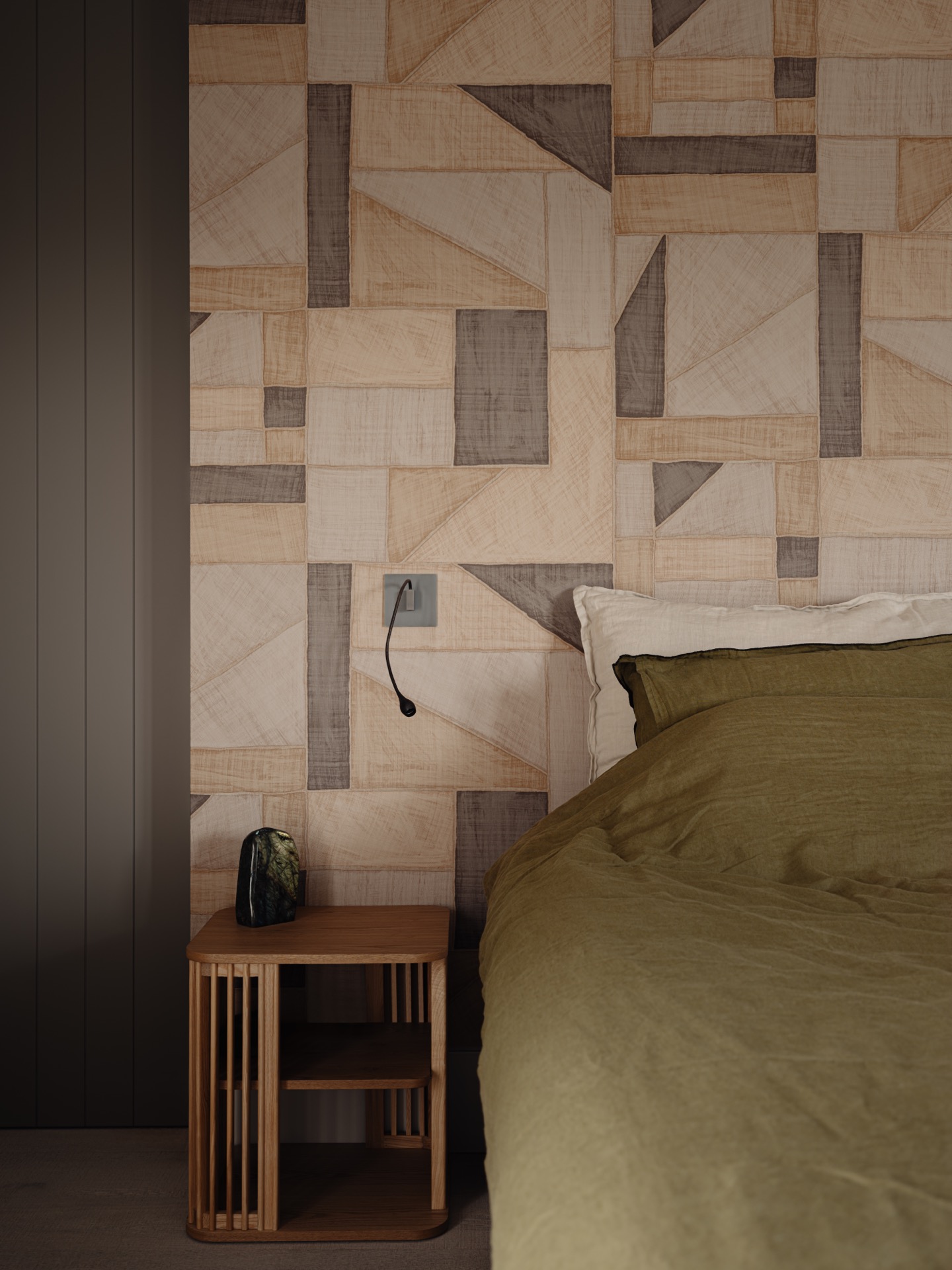
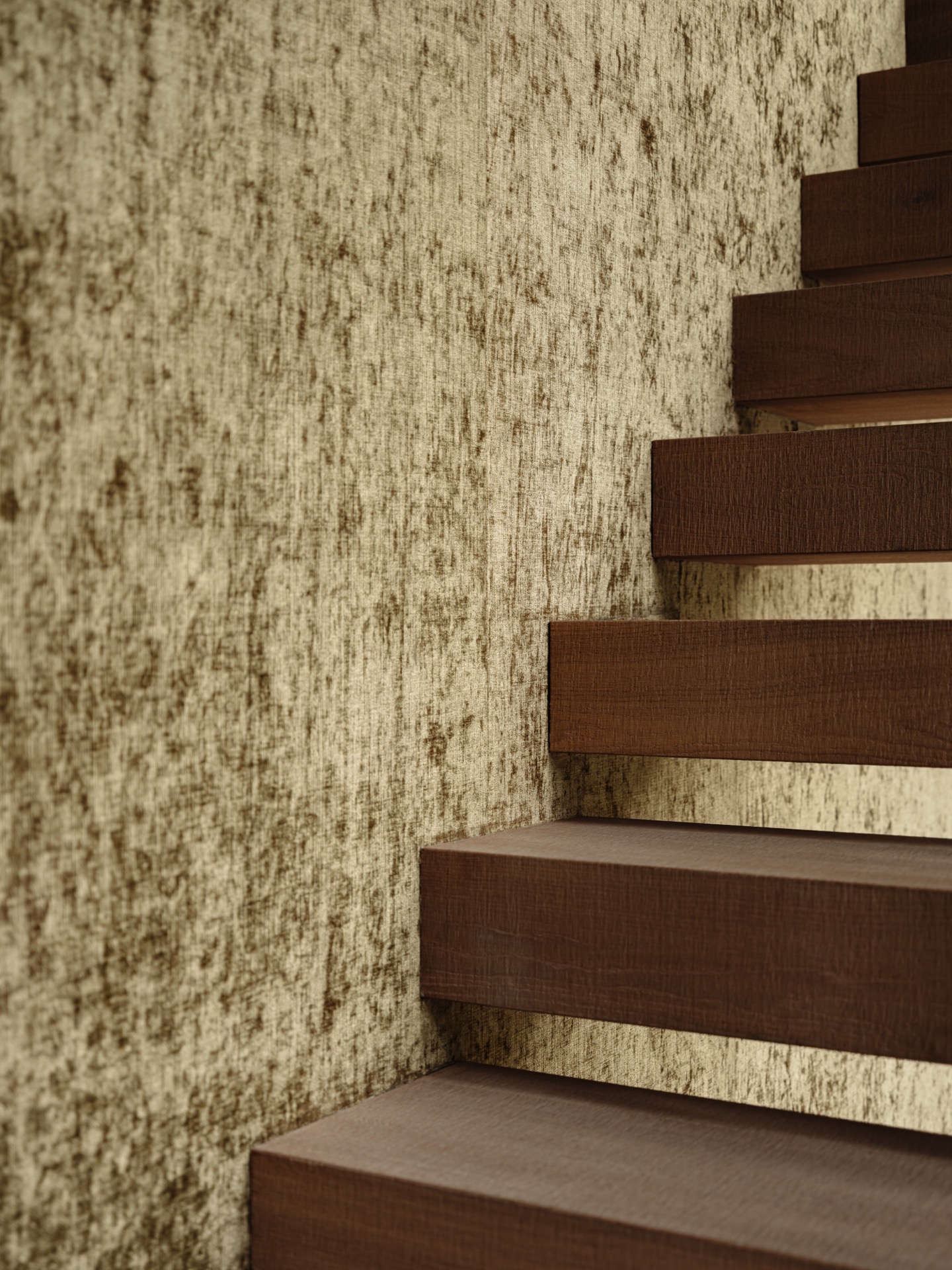
That restraint is visible in the way textures are layered. A rougher surface sits beside a softer one. A plain wall meets a patterned panel. Even the lighting follows that logic, with different heights and shapes breaking up the straight run of ceilings and walls. It is a villa interior renovation that relies on edited gestures rather than a full reset, and that keeps the spaces grounded in what was already there.
Wood window frames and curtains pull the rooms outward
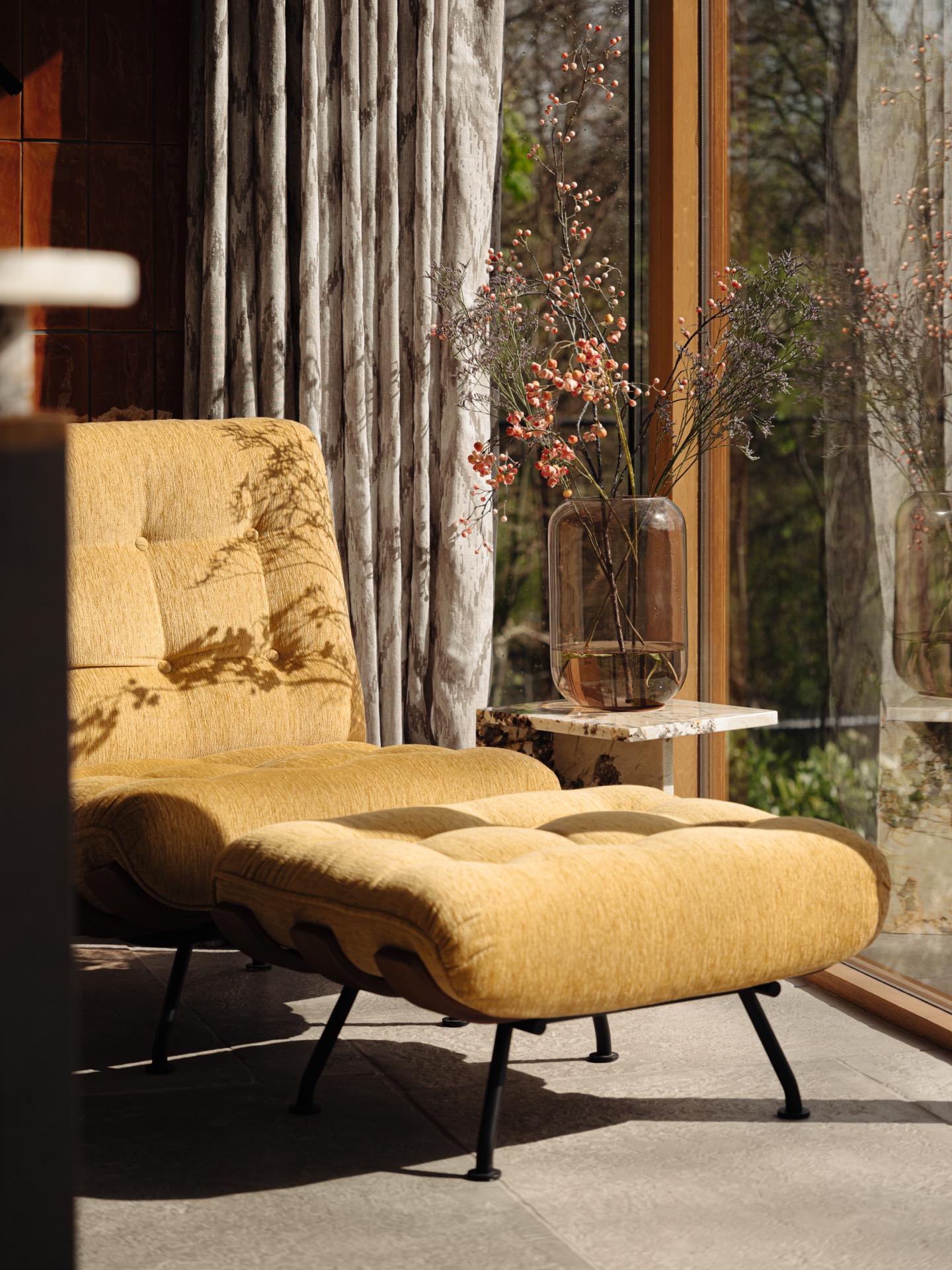
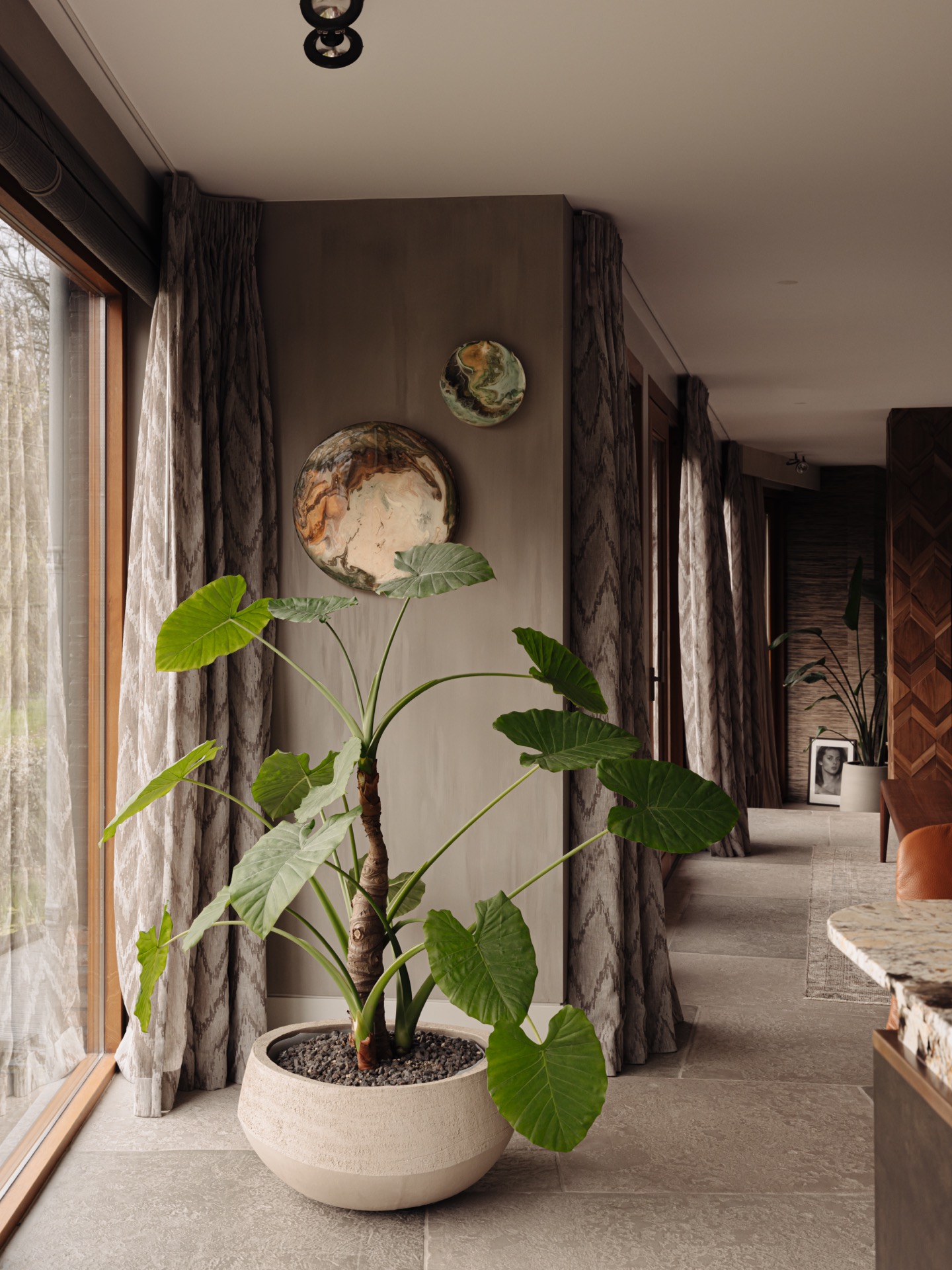
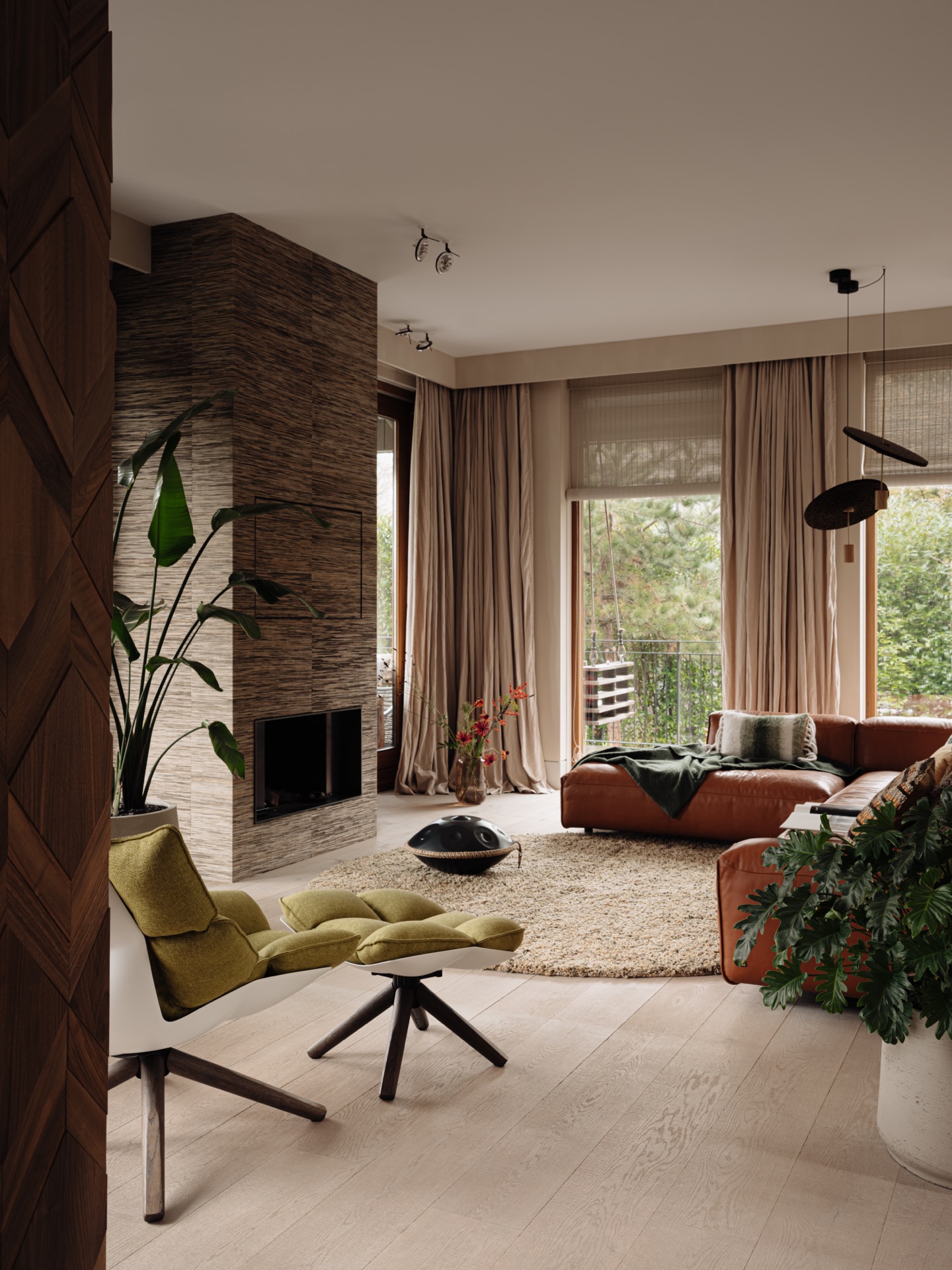
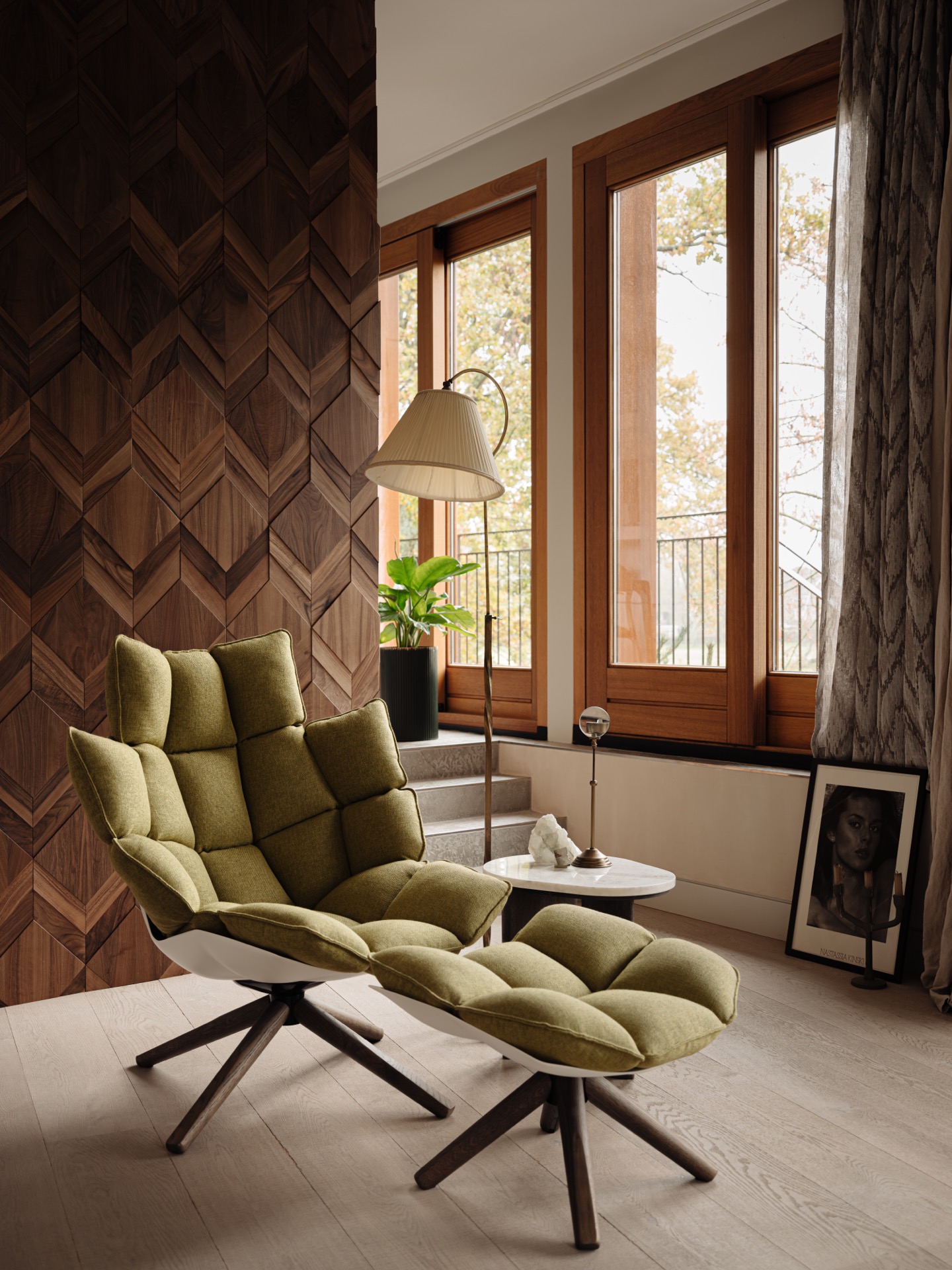
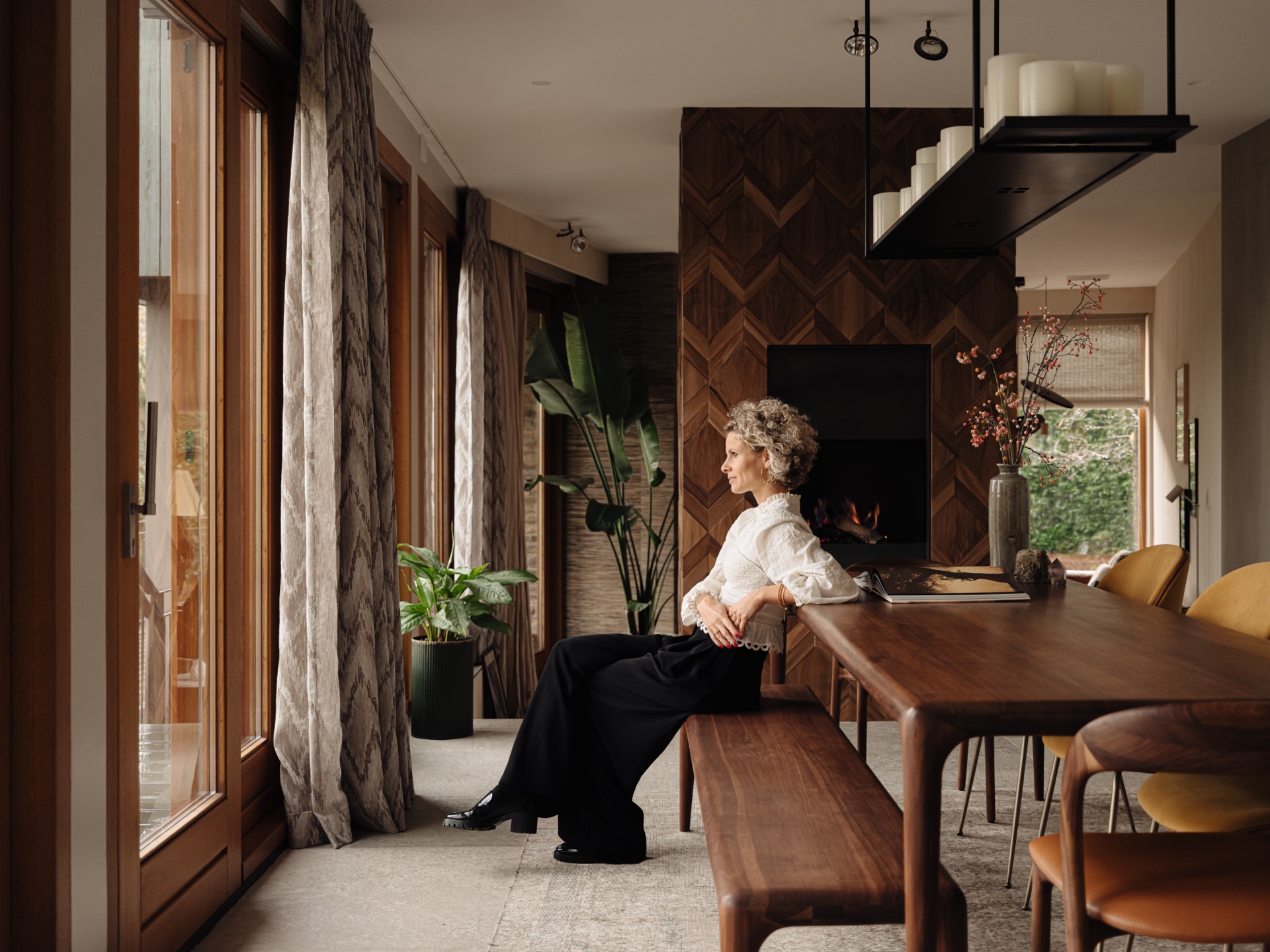
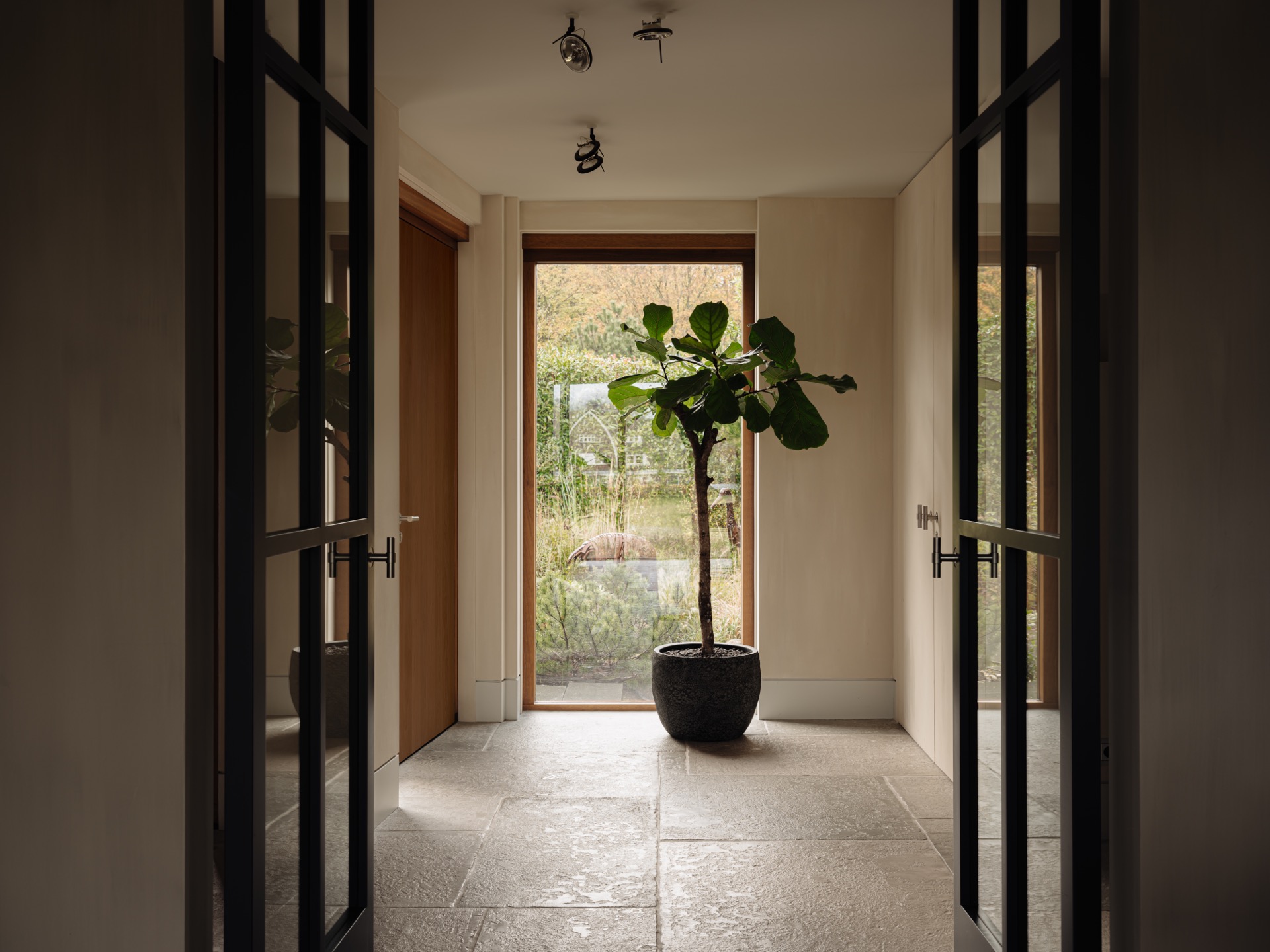
Wood window frames and curtains give the living areas their clearest link between inside and out. The wood sets a warm tone from the moment daylight lands on it, and the curtains soften the edges without hiding the view. Outside, trees become part of the interior reading of the room; inside, the line of the frame holds everything in place. That indoor outdoor connection is not stated with a gesture, but through repeated views, filtered light and materials that pick up the same earthy range.
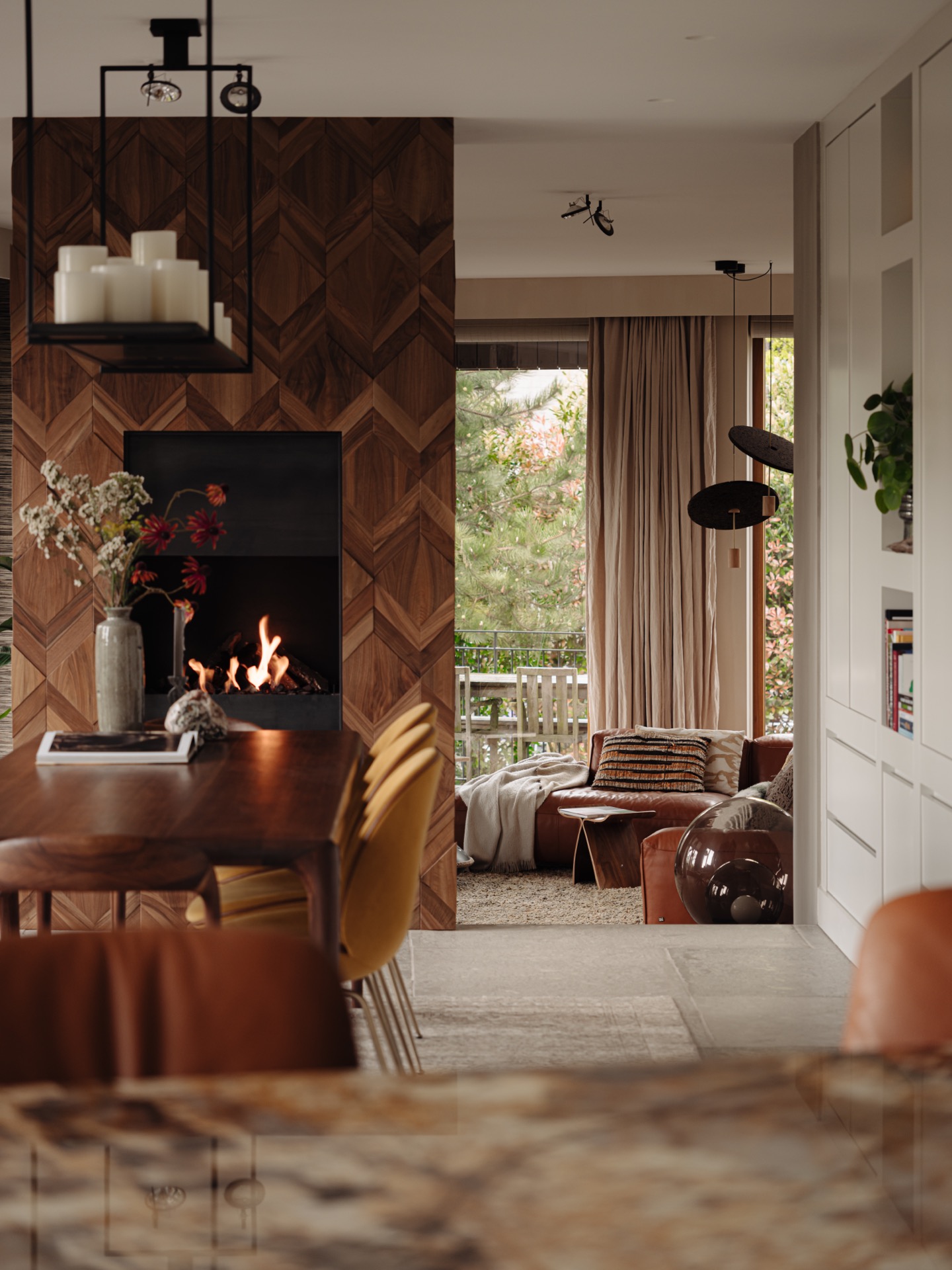
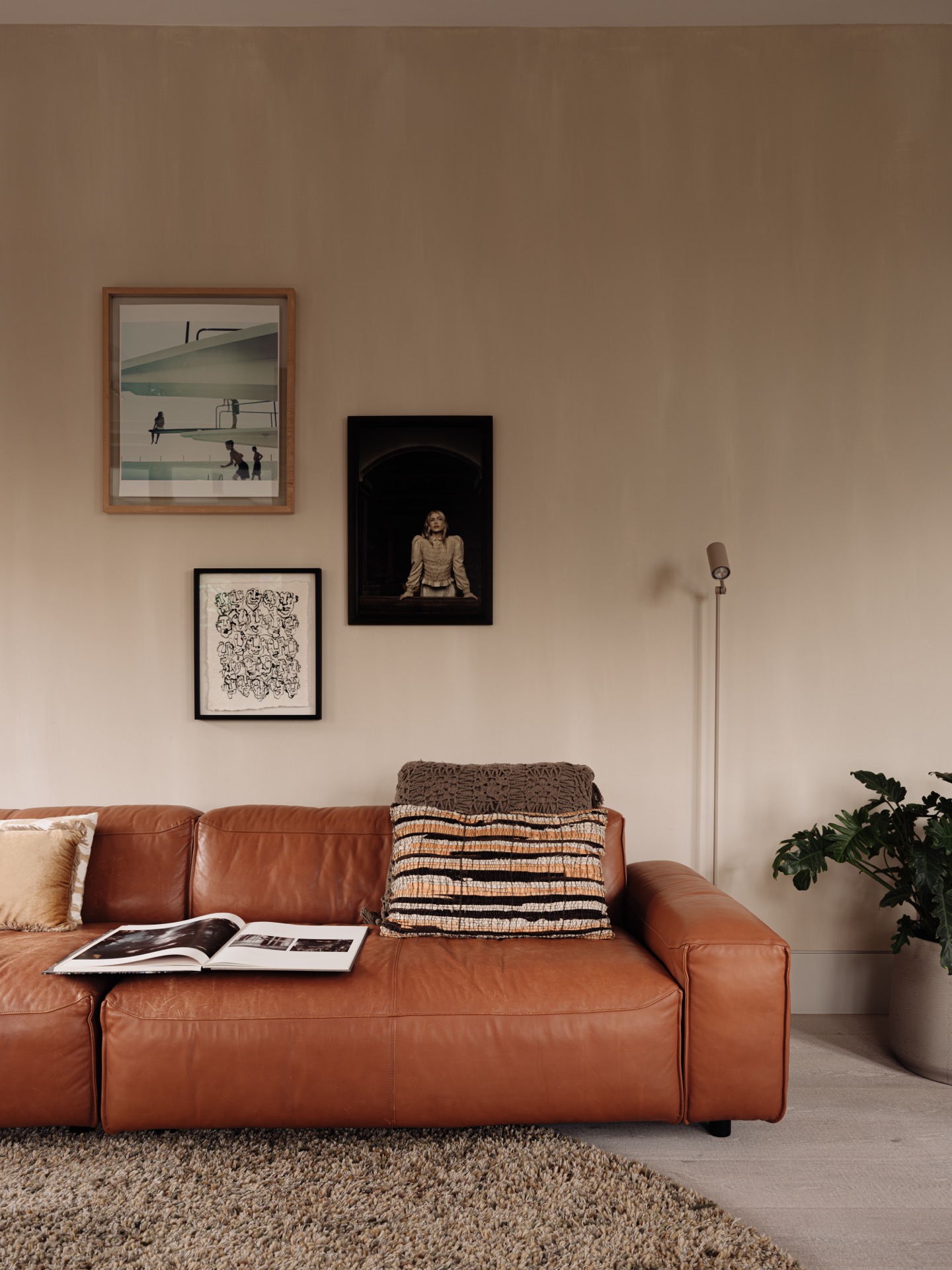
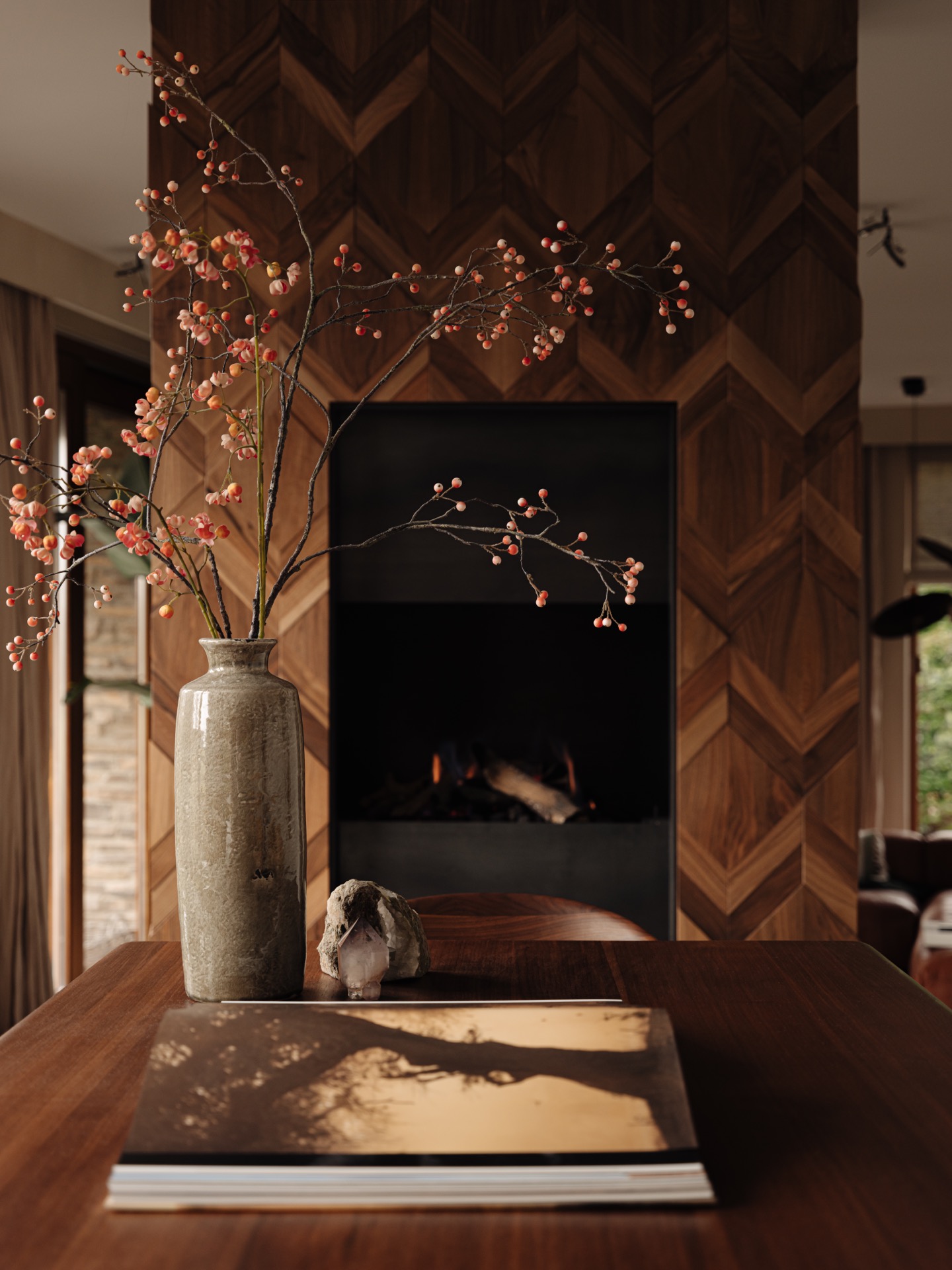
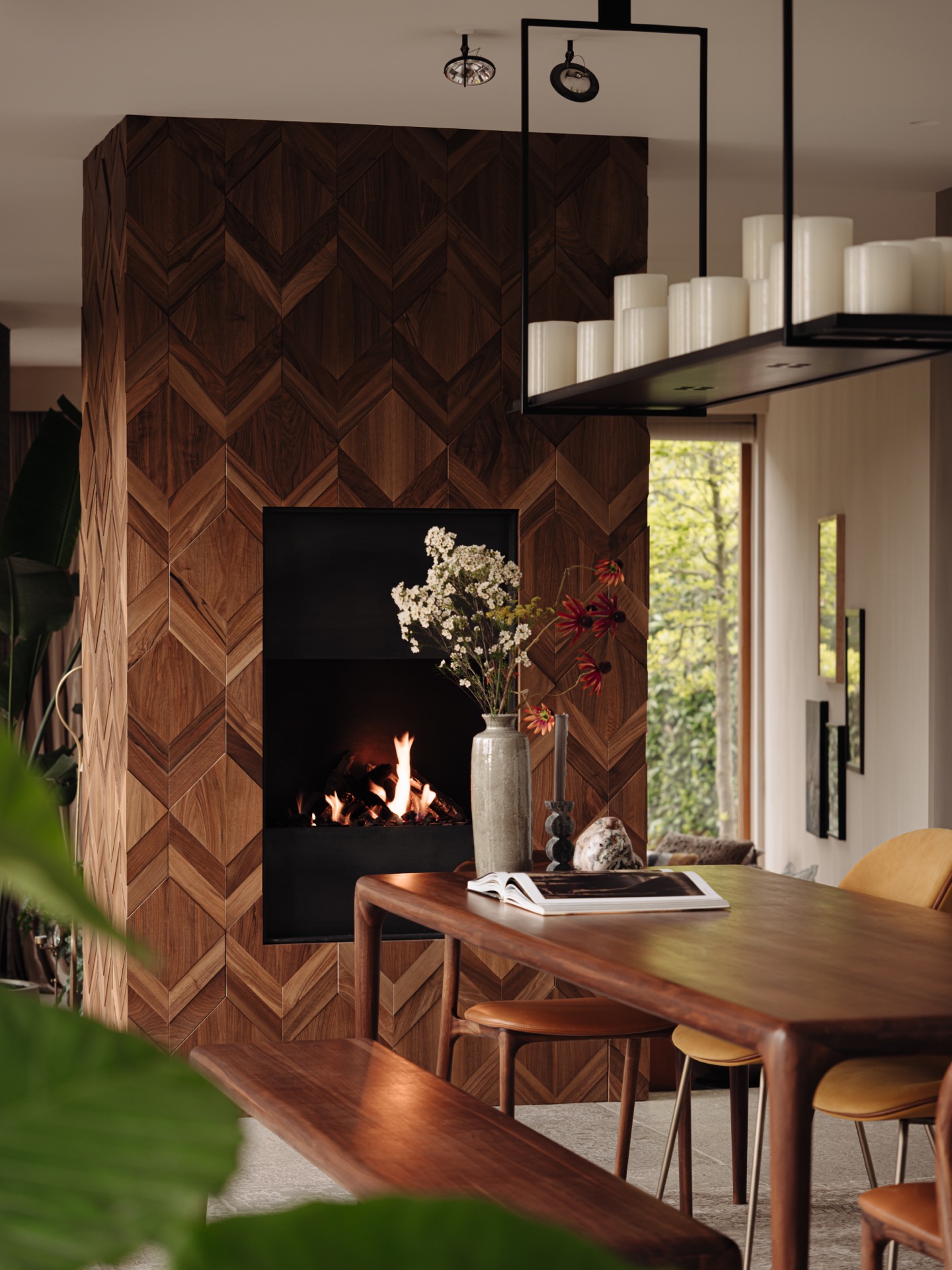
The same idea continues in the fireplace wall, where walnut tones and a structured wood pattern create a strong vertical surface. The open fire sits inside that field like a cut-out, giving the room a dark centre and a clear focus point. Around it, the furniture is kept quieter. Soft upholstery, a carpet, wall covering and curtains take the sharpness out of the architecture, while the living room gallery wall introduces a looser rhythm above the sofa. The wall is allowed to grow over time, which makes it feel lived with rather than arranged all at once.
Textiles, art and light make the seating area softer
In the seating area, the details work by contrast. A brown leather sofa faces pale walls and darker lighting fixtures. A standing lamp in aged brass, hanging lights with a slimmer profile, and framed artworks give the room more levels to look at. The gallery wall above the sofa is especially effective because it interrupts the broad plane of the wall without crowding it. Near the windows, large plants and placed objects add height, while the soft folds of the curtains keep the daylight from feeling hard.
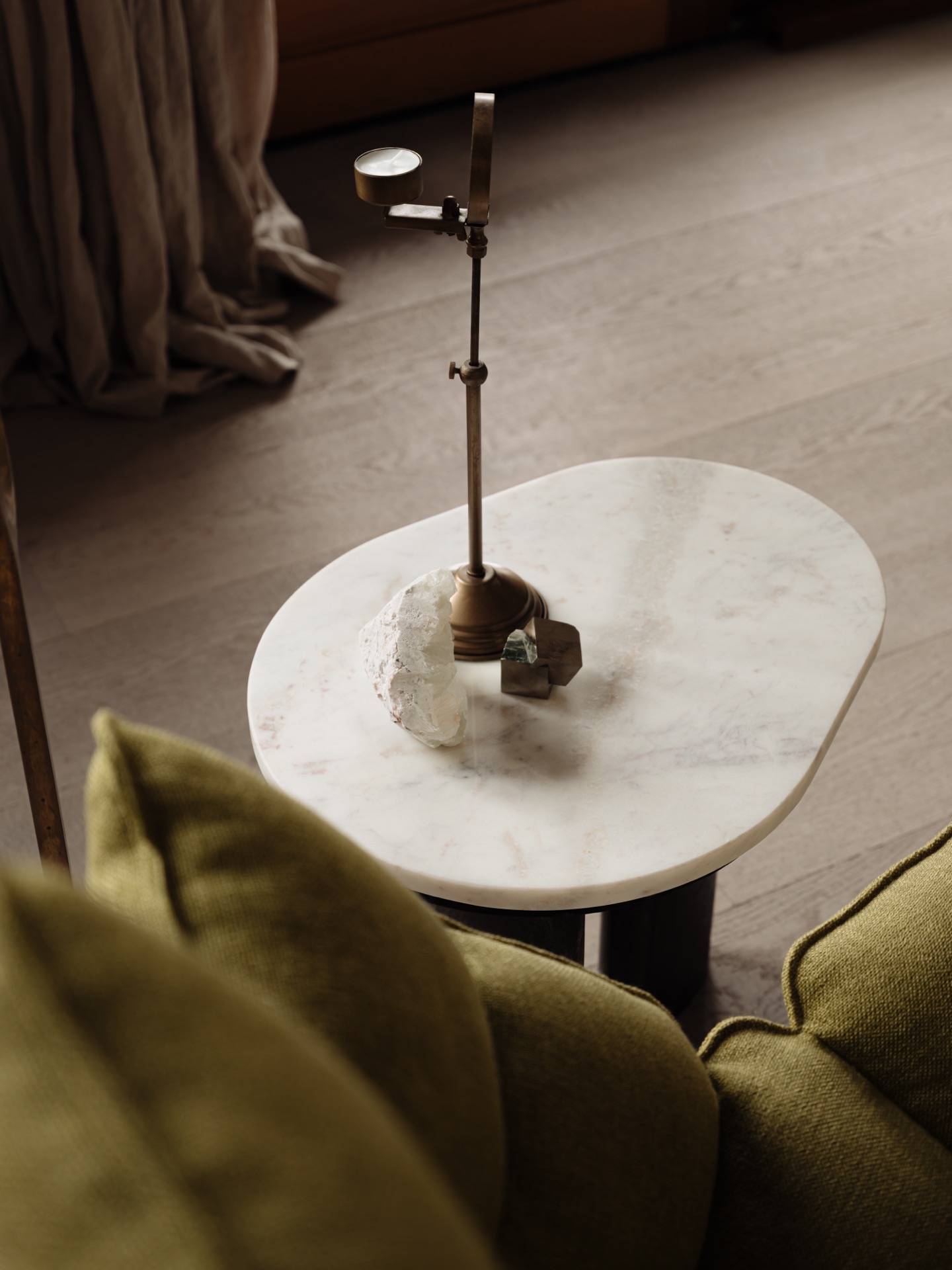
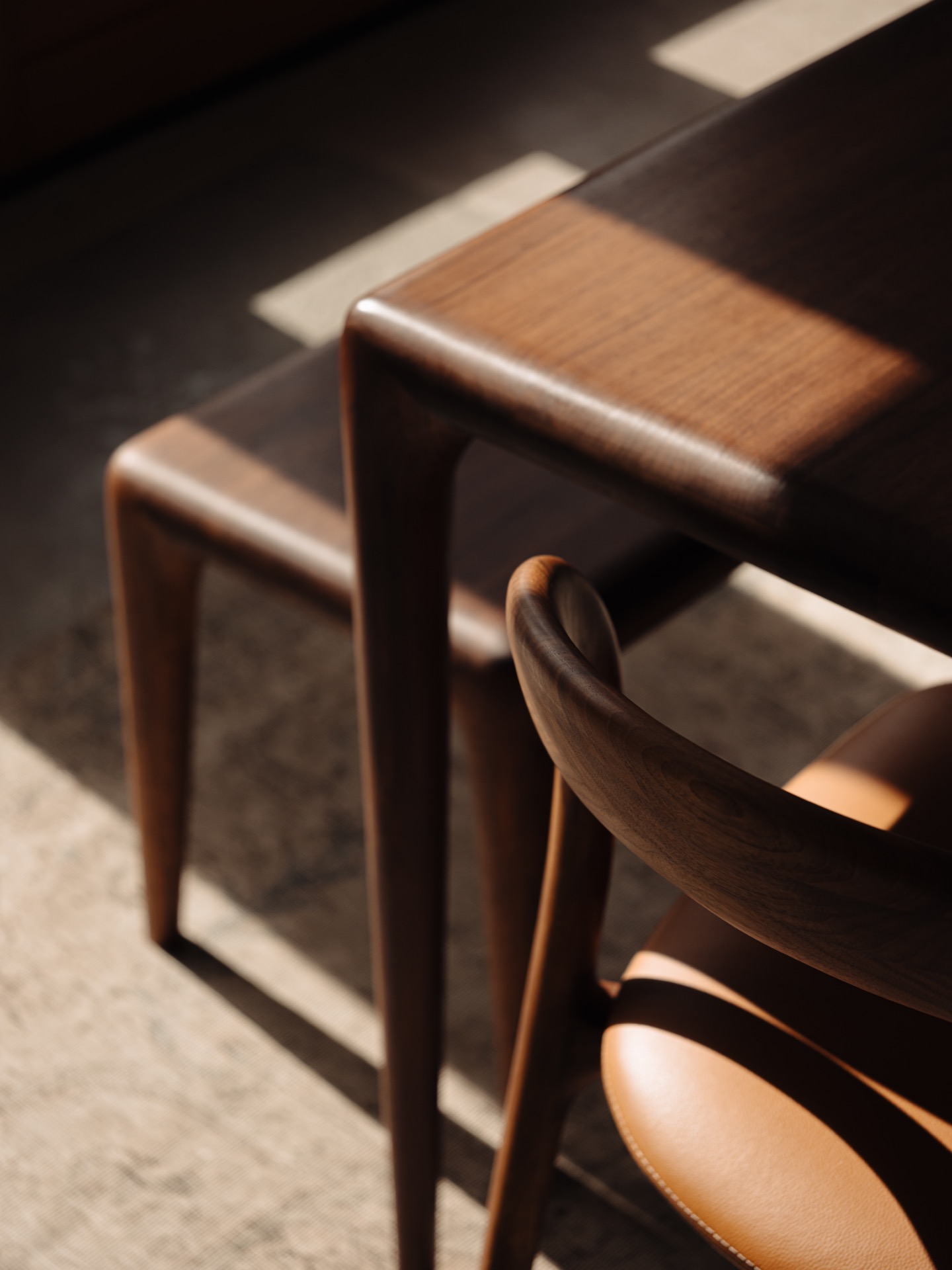
The materials are doing more than decorating. They slow the room down. A rug breaks the stone floor into a quieter zone. Fabric-backed chairs and an upholstered lounge seat bring a different touch against the firmer lines of wood and glass. Even a small side table becomes part of the composition when it is placed against the right texture and scale. That attention to proportion is what keeps the villa interior renovation readable across the living spaces.
A kitchen island shaped by stone, light and reflection
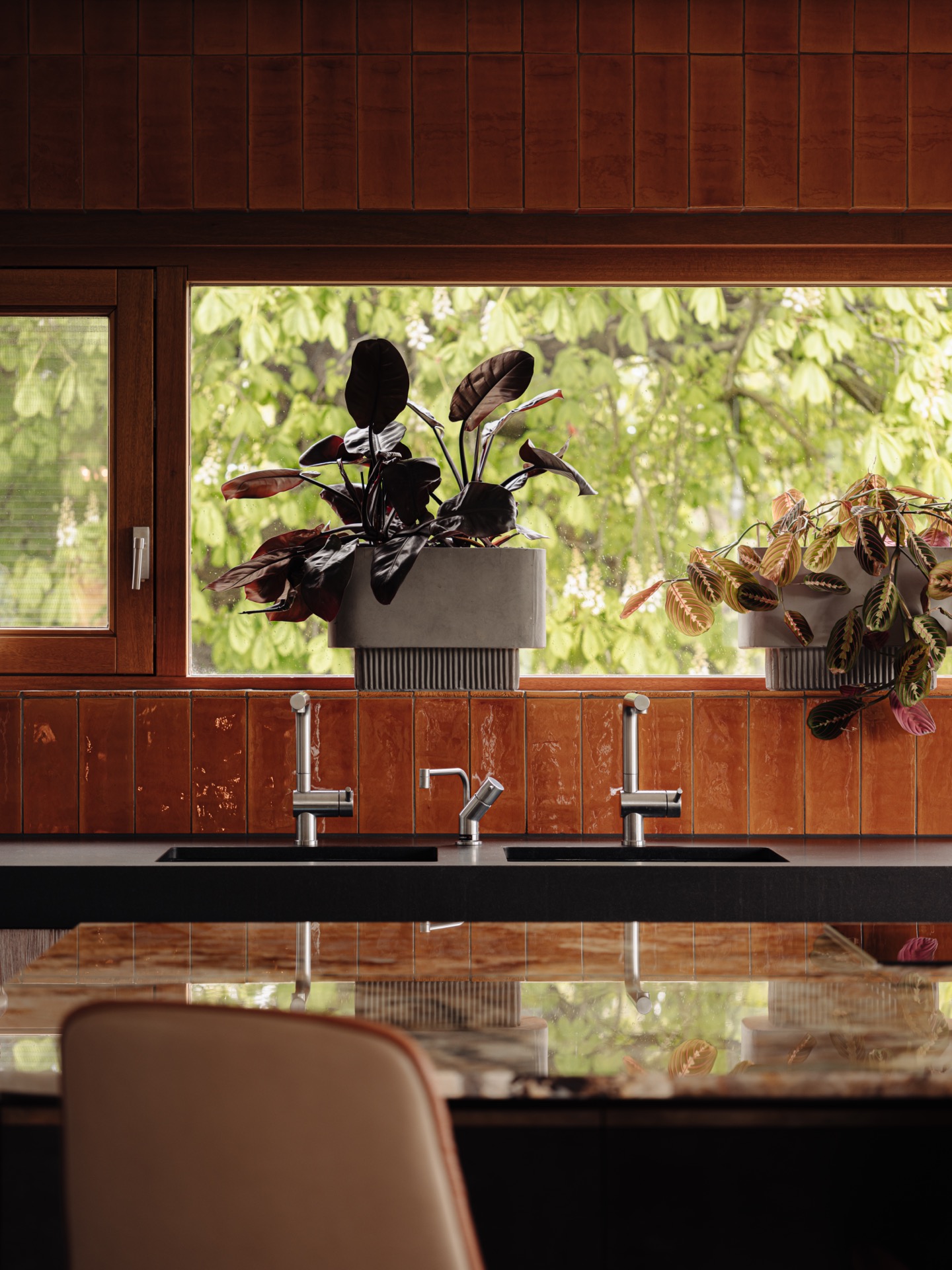
The kitchen began as a practical room with appliances in sight and a straightforward layout. There was daylight in the corner, but little reason to stay there for long. Now the seating and cooking zone draw attention to that same light. The kitchen island has become the centre of the room, and it does so without overpowering the existing kitchen around it. It is detailed more precisely than the surrounding surfaces, which gives it a slightly sharper presence against the more raw background elements.
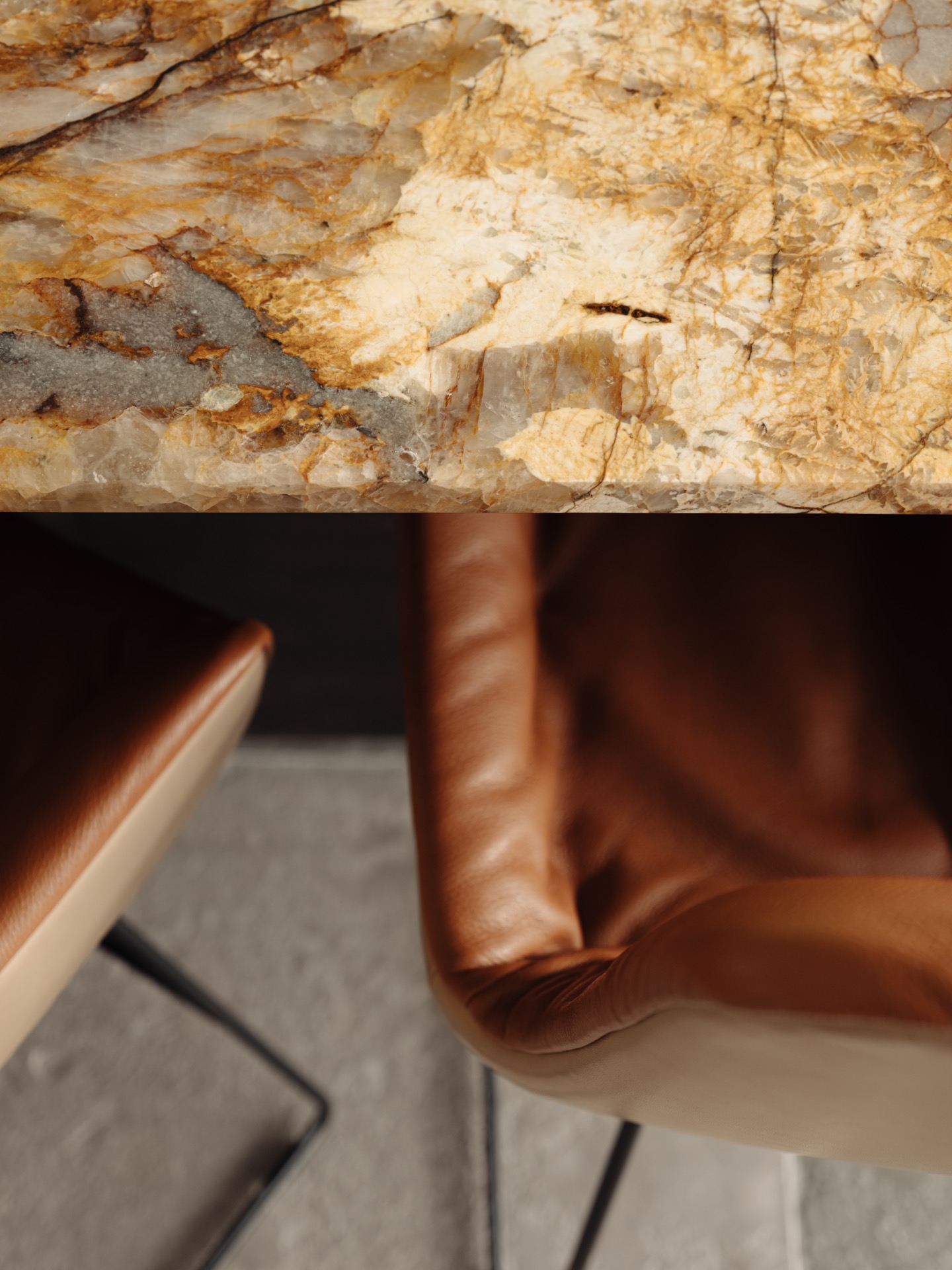
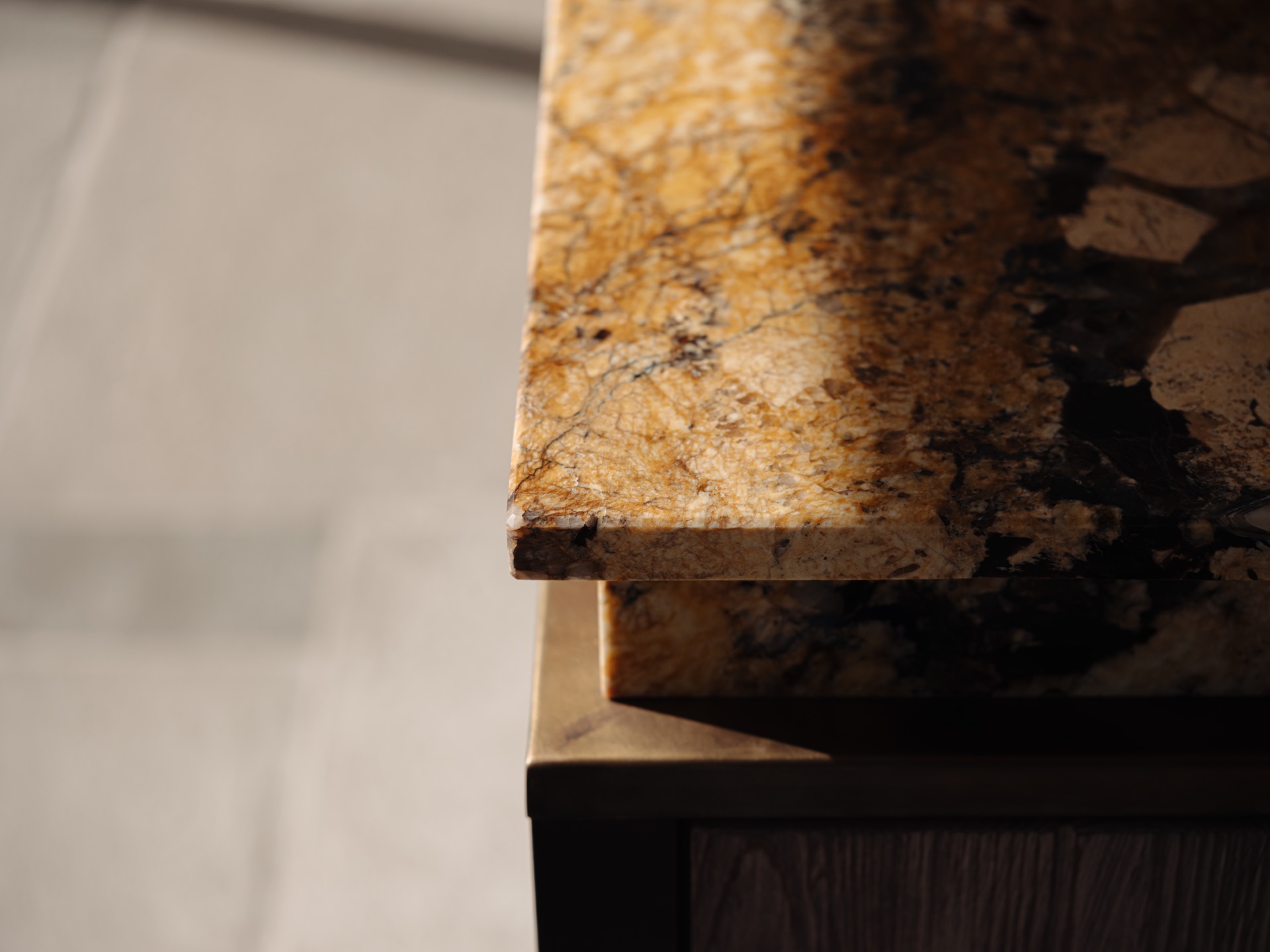
The chosen quartzite kitchen island brings together the colours seen elsewhere in the house. Its polished surface catches reflection, so the room seems to bring in tree branches and sky rather than just repeating the same finish. That quality gives the island depth without adding heaviness. Alongside it, a terracotta kitchen tile wall introduces a warmer, more tactile note. The tiles sit behind the working zone and mark the kitchen as its own scene within the house, not just an annex to the living area.
Subtle detail beside a rougher kitchen shell
What makes the kitchen compelling is the contrast in tone between the island and the rest of the room. The island is refined and closely detailed. The surrounding kitchen remains more direct, almost raw in comparison. That difference keeps the room from becoming overly polished. A stone-like worktop, visible sink area, window frames in wood and the line of the tile wall all contribute to the same palette, but each part holds its own edge. The space invites slower use, especially in the bright corner where coffee and daylight now meet.
This is also where the villa interior renovation shows its most exact material reading. Stone surfaces, timber lines and the glazed opening do not compete. They trade reflections, shadows and grain. The result is not about showing more finishes, but about letting a few strong ones carry the room. A kitchen island can easily dominate a space; here, it settles into the structure and gives the room a clear centre without cutting it off from the rest of the house.
Small moves that keep the whole house connected
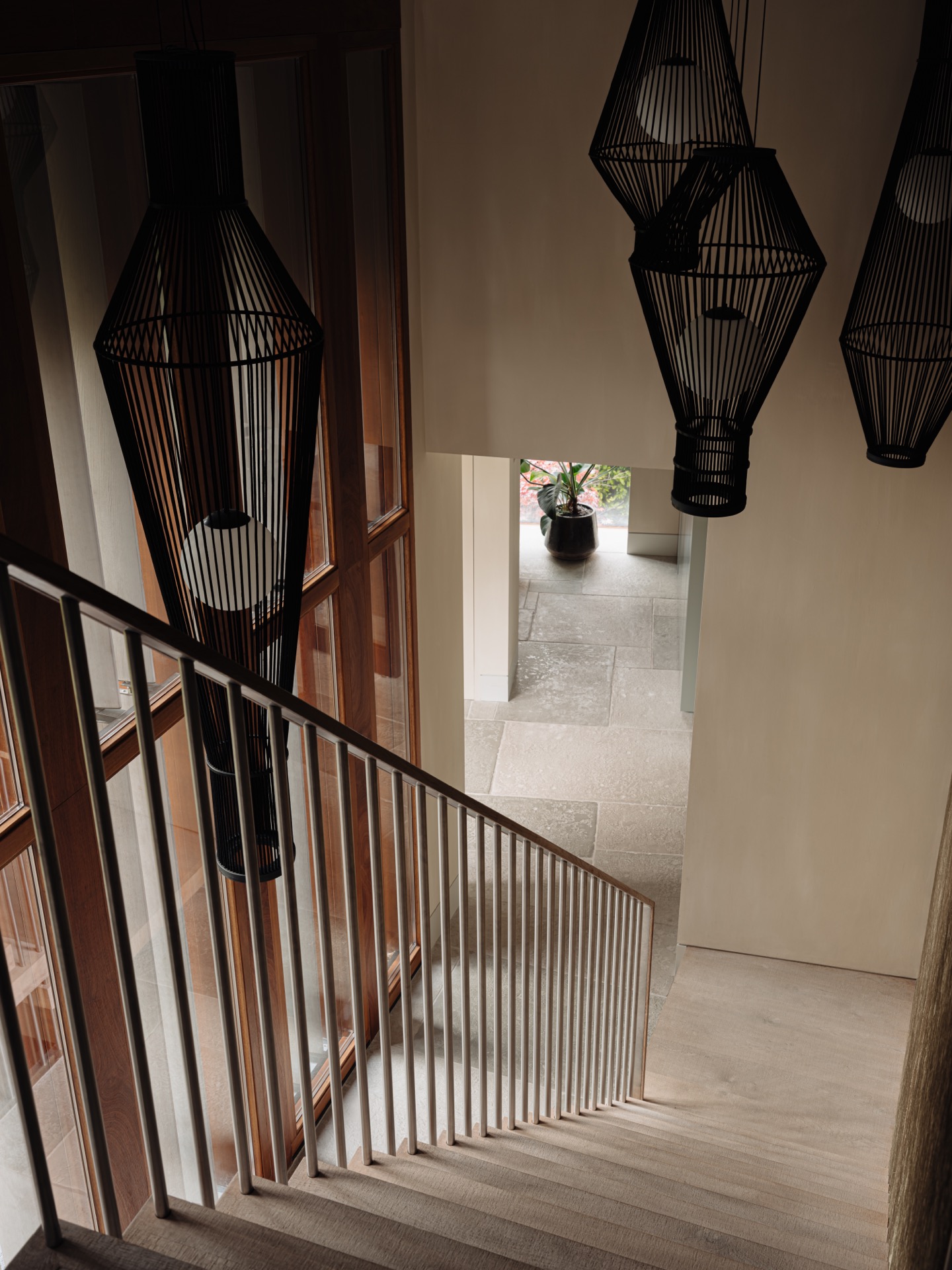
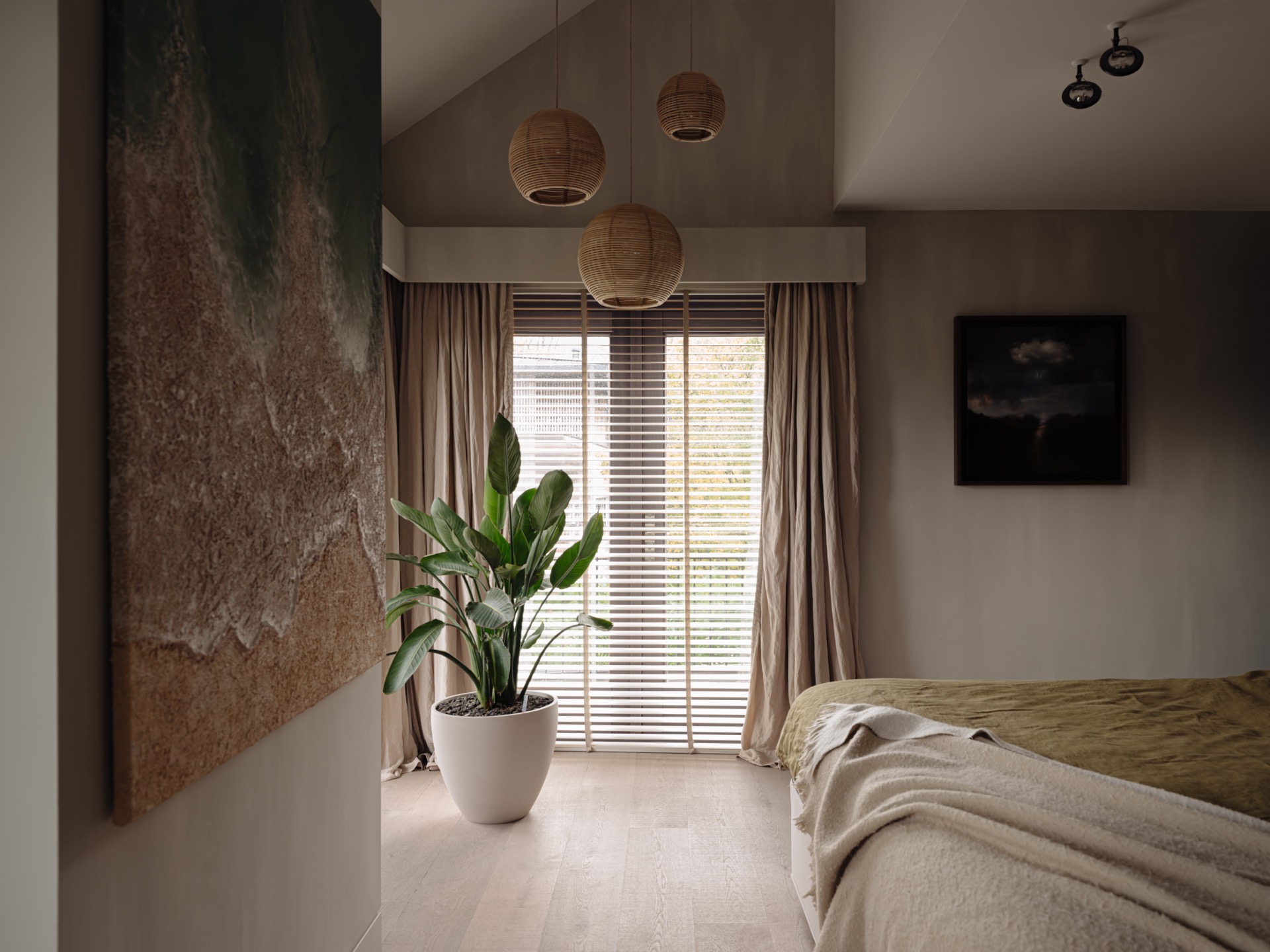
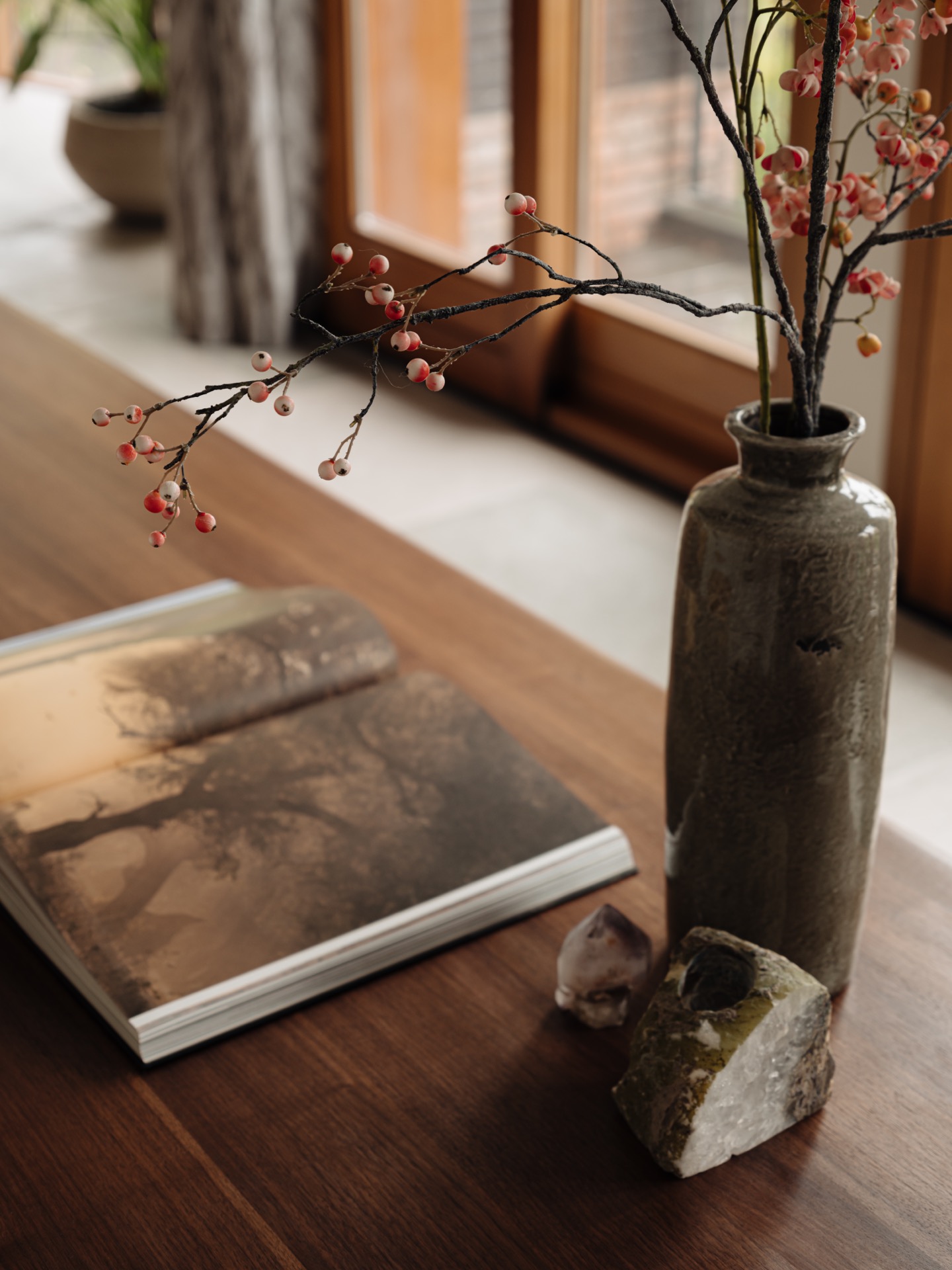
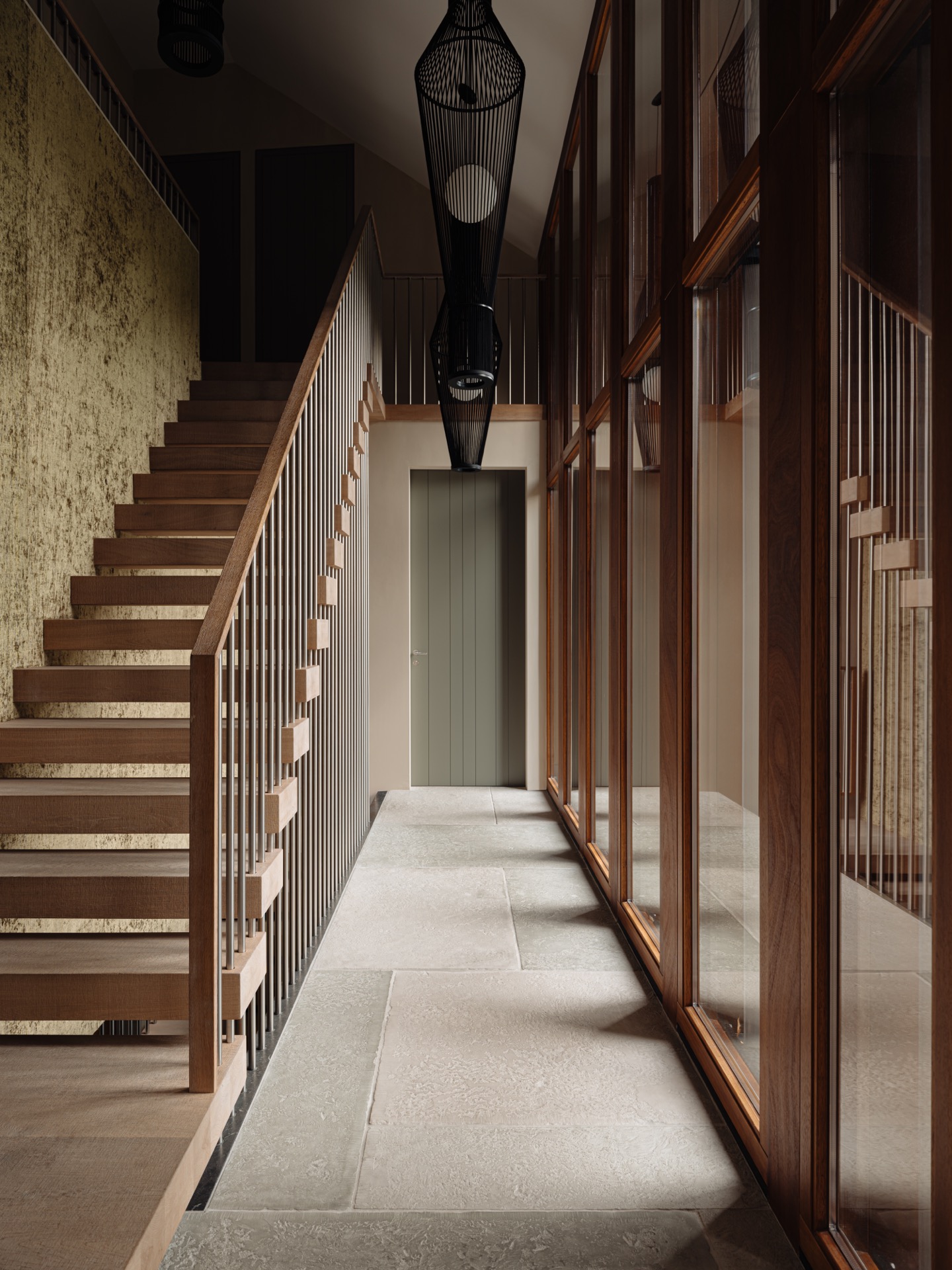
Other rooms extend the same discipline. The staircase and hall use warm wood, light walls and vertical balusters to lead the eye upward without drama. In the bedroom, painted canvas is used to hide the television in plain sight, which keeps the wall calmer and the room less interrupted. Throughout the house, the furniture and art pieces are selected with a clear sense of spacing. Nothing feels packed in. Plants and crystal objects are placed as part of the room, not as afterthoughts, and the surfaces around them are left open enough to breathe.
Seen as a whole, the project holds together because it does not chase one effect. It works through material memory, through repeated wood tones, through the steadiness of stone and the softness of curtains. This villa interior renovation turns a practical house into something more attentive to light, texture and daily use. The strongest moments are also the quietest ones: a walnut fireplace wall, a quartzite kitchen island, a line of wooden frames catching daylight, and a gallery wall that leaves room for change.
Interested in more projects? Browse more interior renovation projects, see more wood fireplace wall designs, or explore kitchen island transformations. Villa interior renovation remains connected to the layout, materials and daily use of the home.
Want to see more of Holistic Interiors? View the page of Holistic Interiors for even more great projects and company information.

.png)
NEW 2026 Jubileum Edition The Best Interior Designers Benelux
Order Now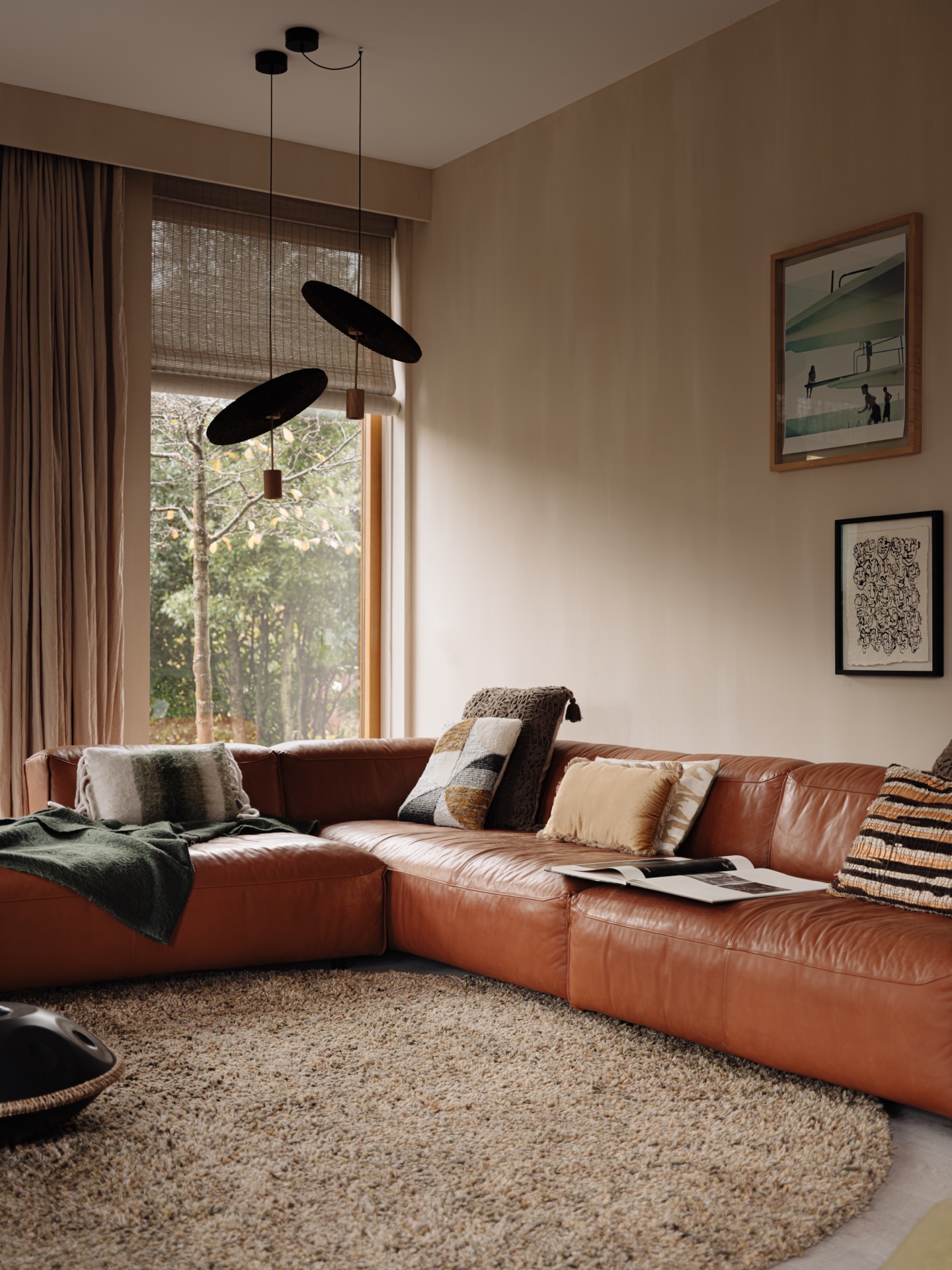
NEW 2026 Jubileum Edition The Best Interior Designers Benelux
Order Now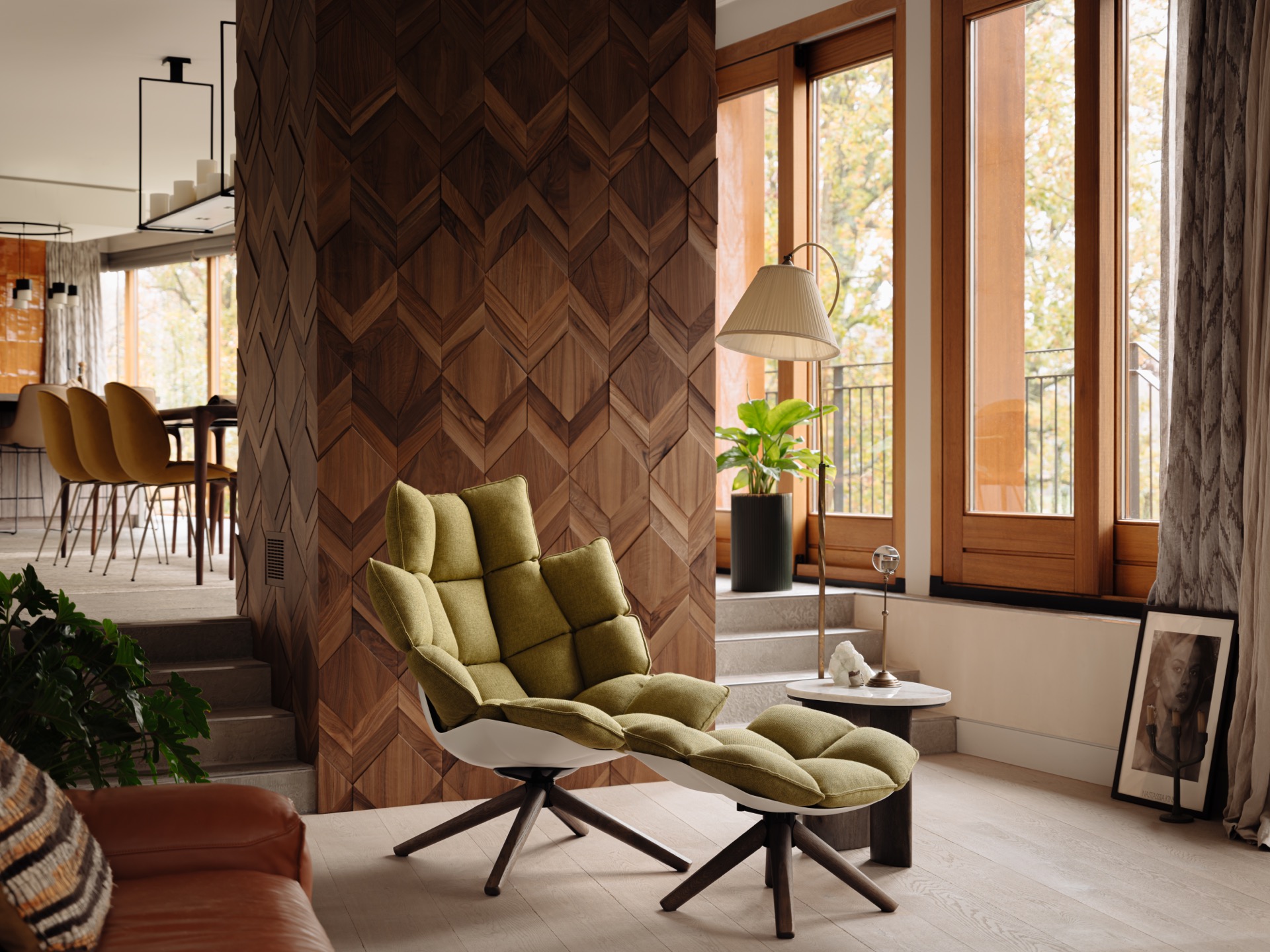
NEW 2026 Jubileum Edition The Best Interior Designers Benelux
Order Now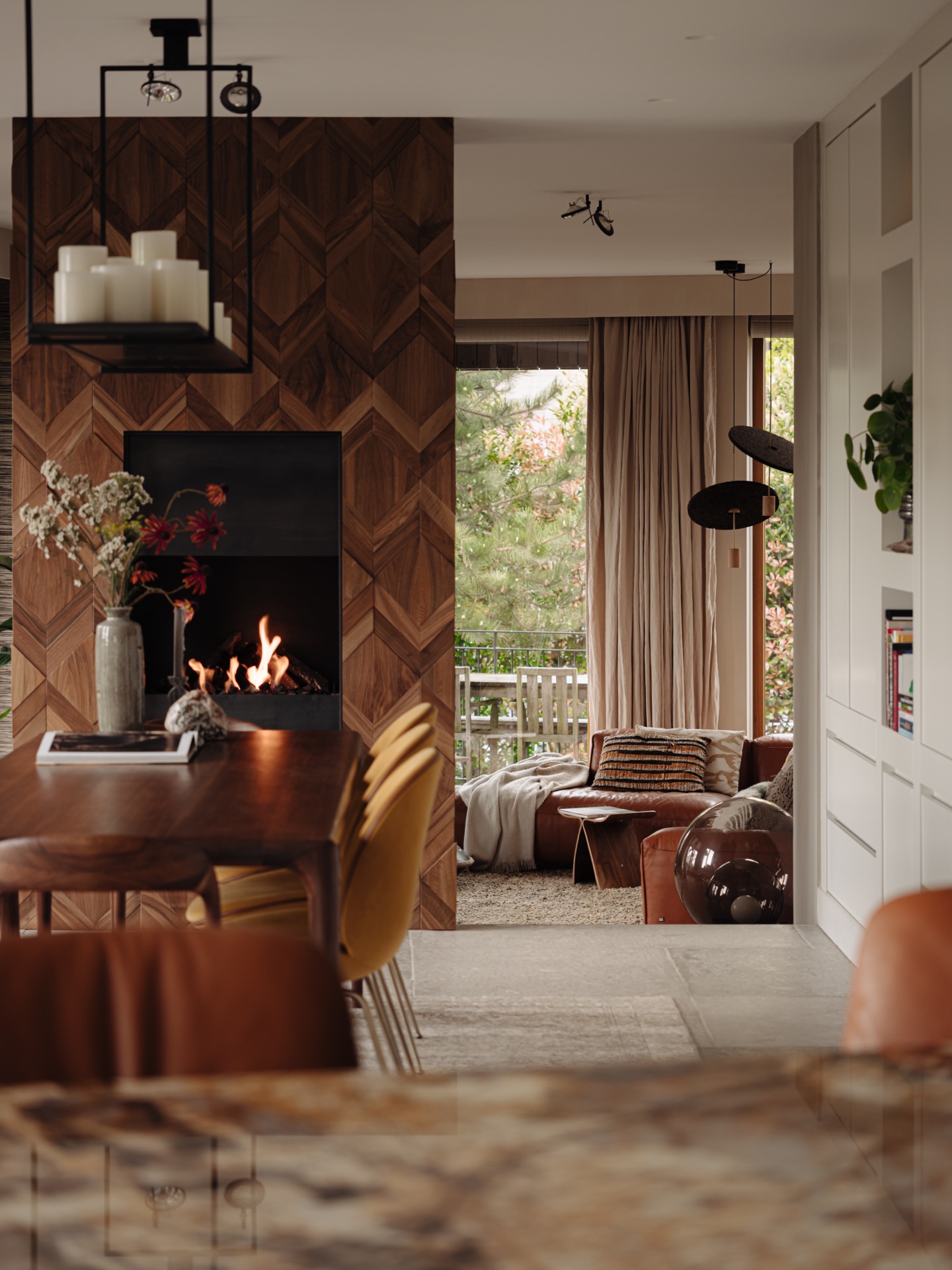
NEW 2026 Jubileum Edition The Best Interior Designers Benelux
Order Now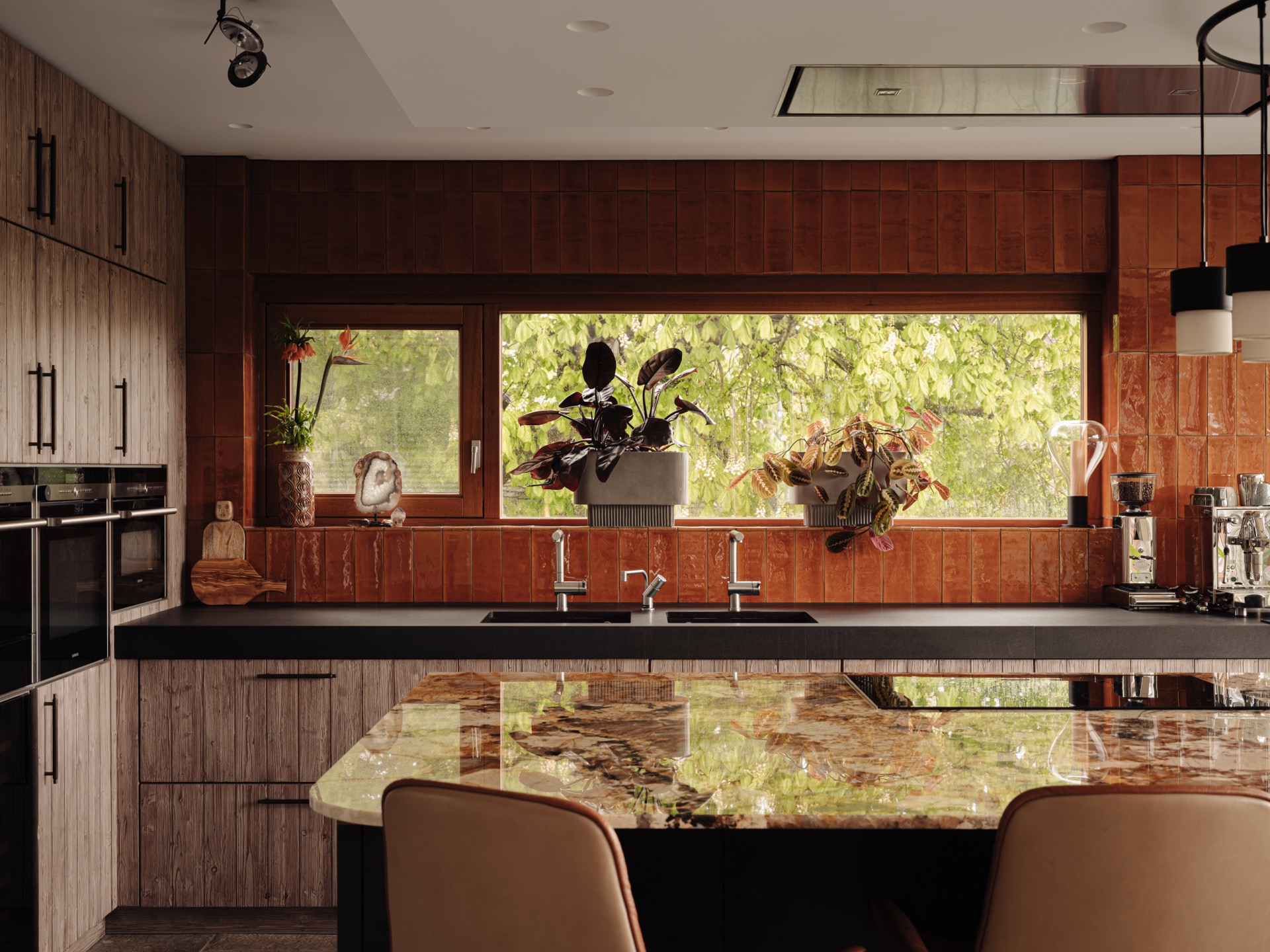
NEW 2026 Jubileum Edition The Best Interior Designers Benelux
Order Now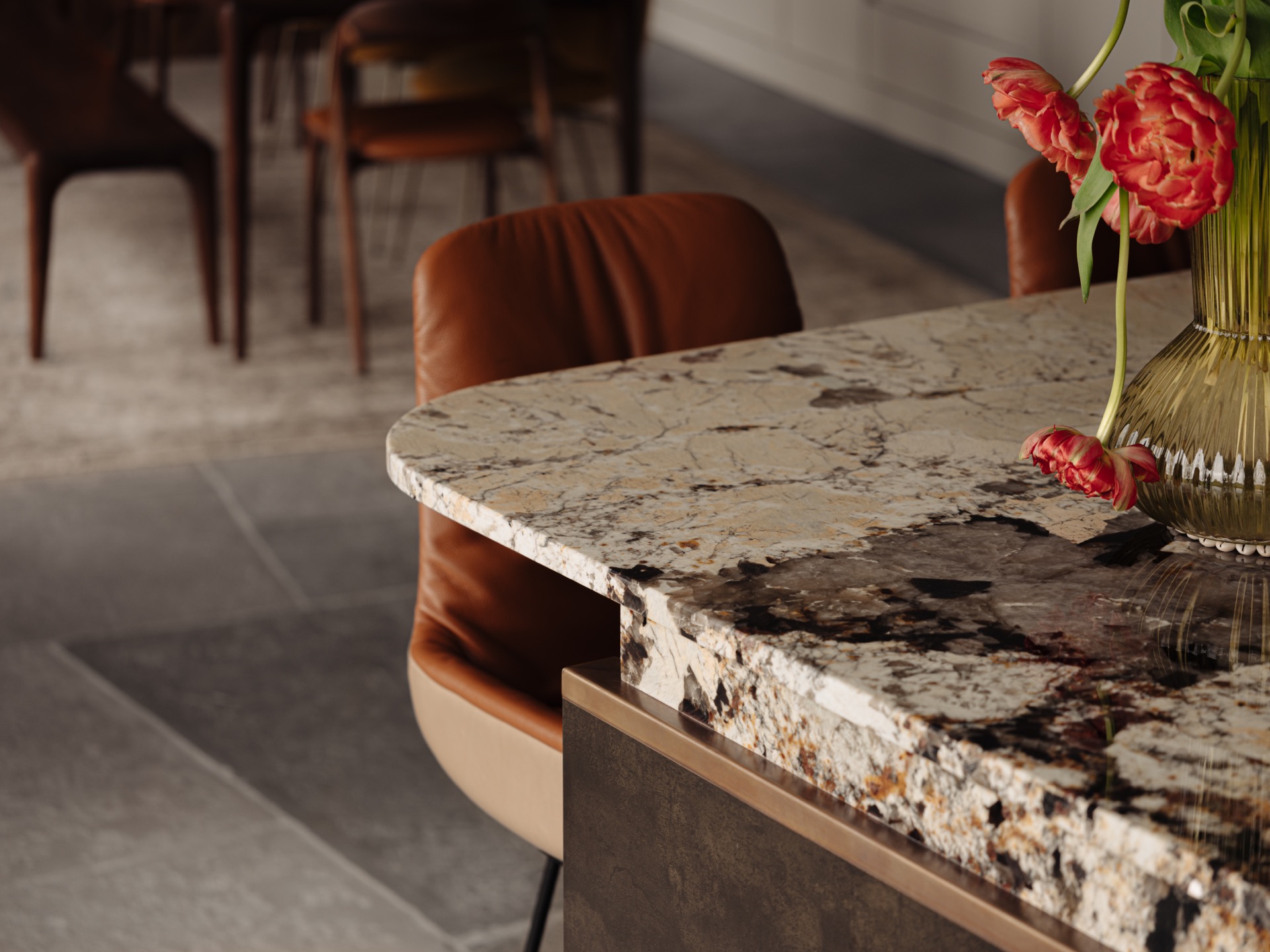
NEW 2026 Jubileum Edition The Best Interior Designers Benelux
Order Now