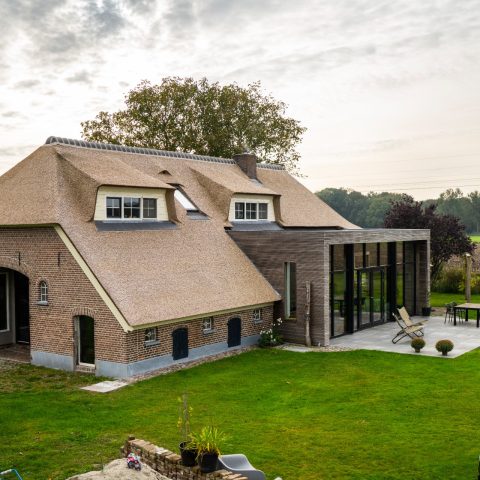







Contemporary villa met rieten gevel en grote ramen
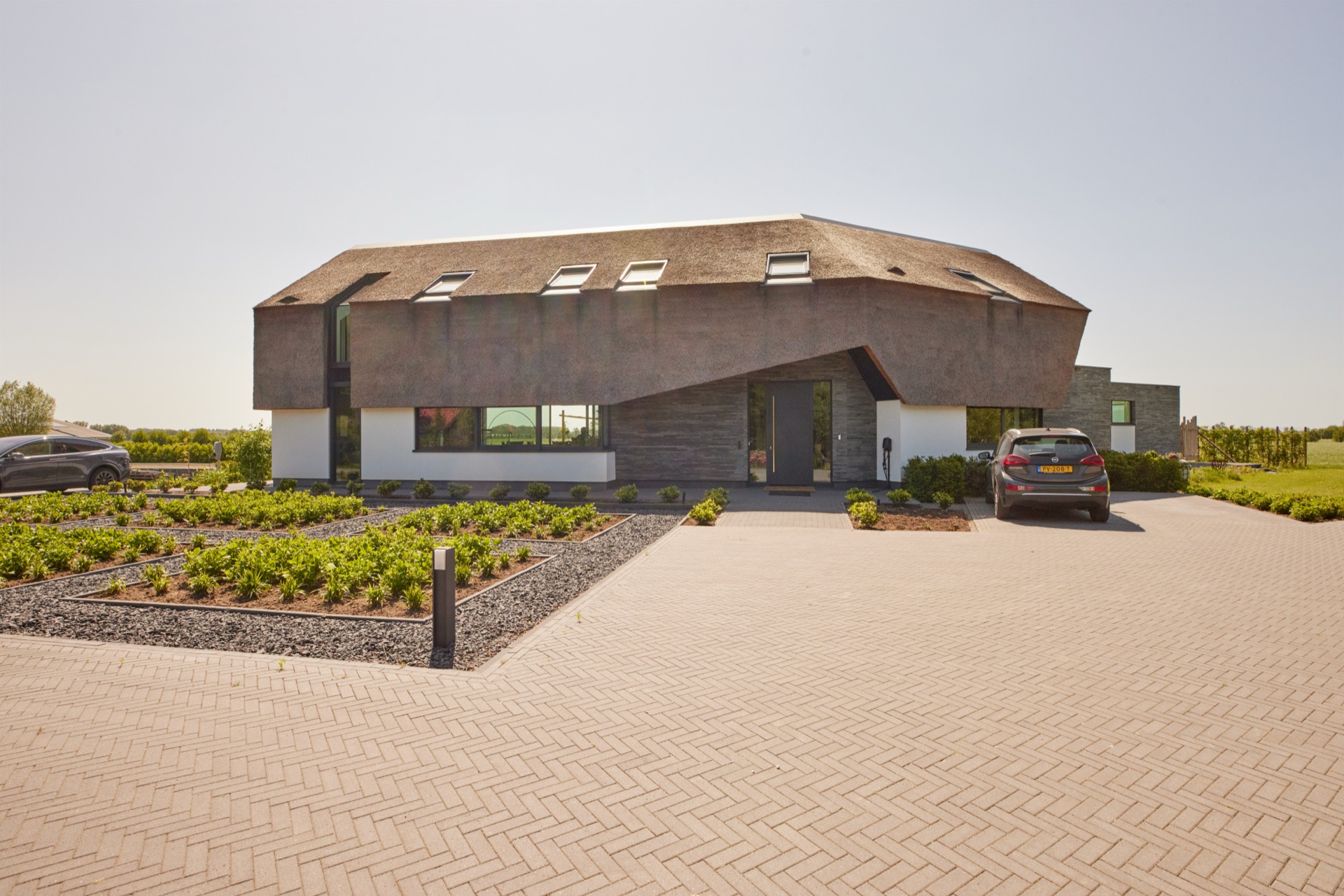
The modern house design is immediately visible in the way the project is framed. The front elevation reveals a distinctive skin where reed panels cover the facade, their linear texture disrupted by expansive vertical windows framed in dark metal. The natural fibers soften the rigid lines of the structure, contrasting the smooth glass surfaces that admit generous daylight into the interiors. This interplay between transparent and opaque elements creates a dynamic rhythm along the building’s boundary.
modern house design as the architectural starting point
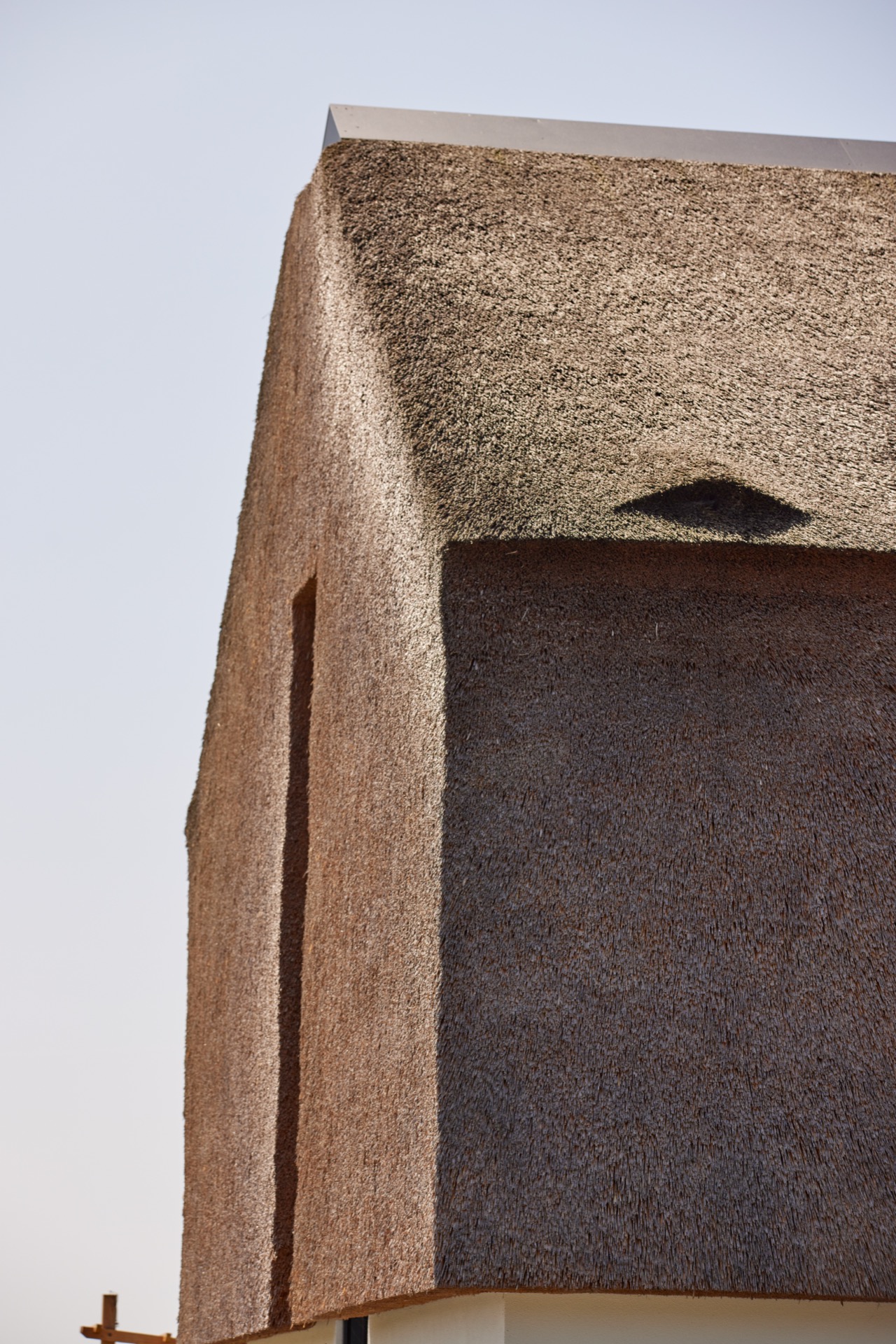
The reed facade forms a tactile layer enveloping much of the villa, its organic pattern varying in density according to the sun’s orientation. The natural material ages subtly over time, its warm ochre shades shifting throughout the day. The reed cladding rises from a base of exposed concrete, creating a grounded expression that emphasizes texture without overwhelming the design.
Integration of glass and light
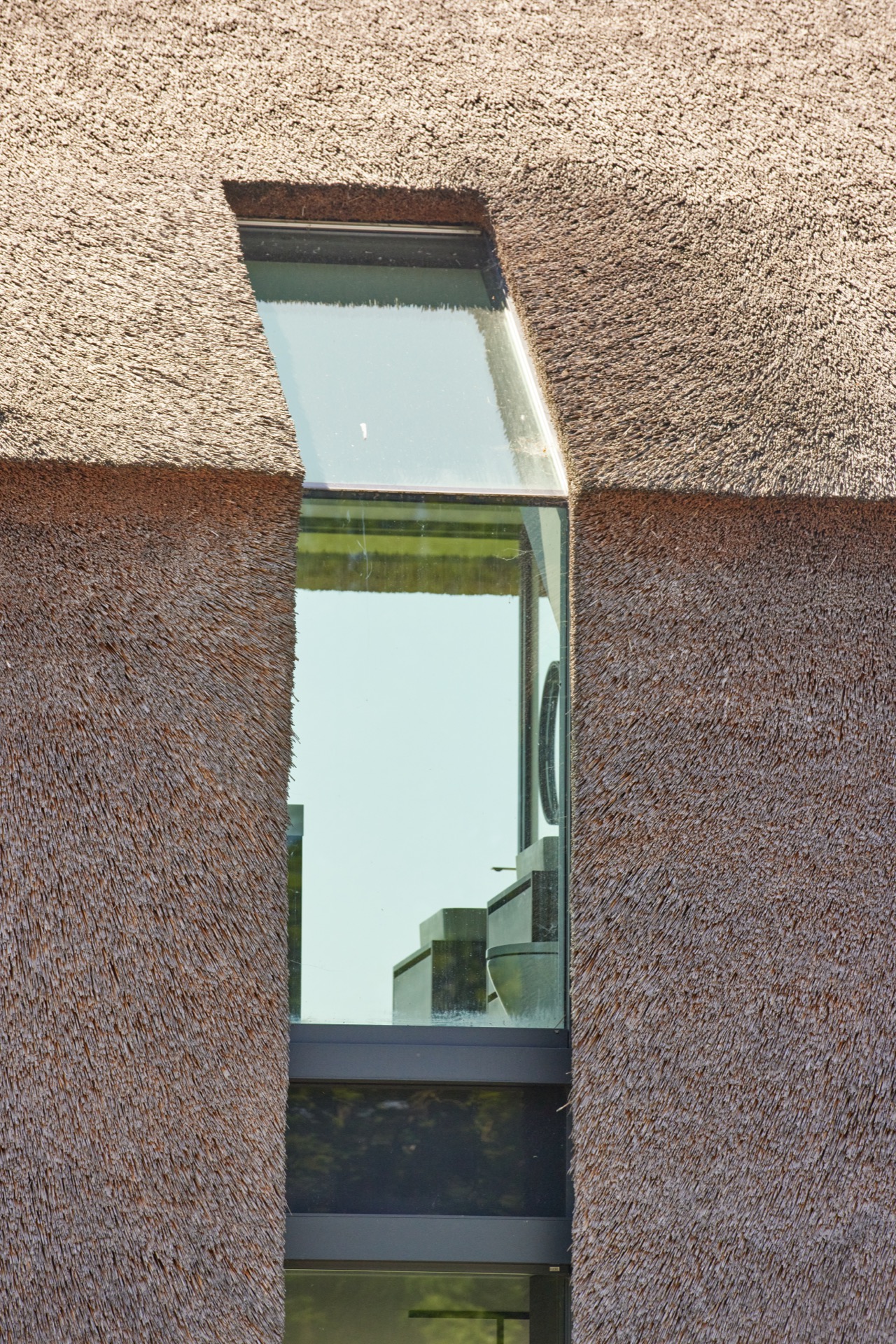
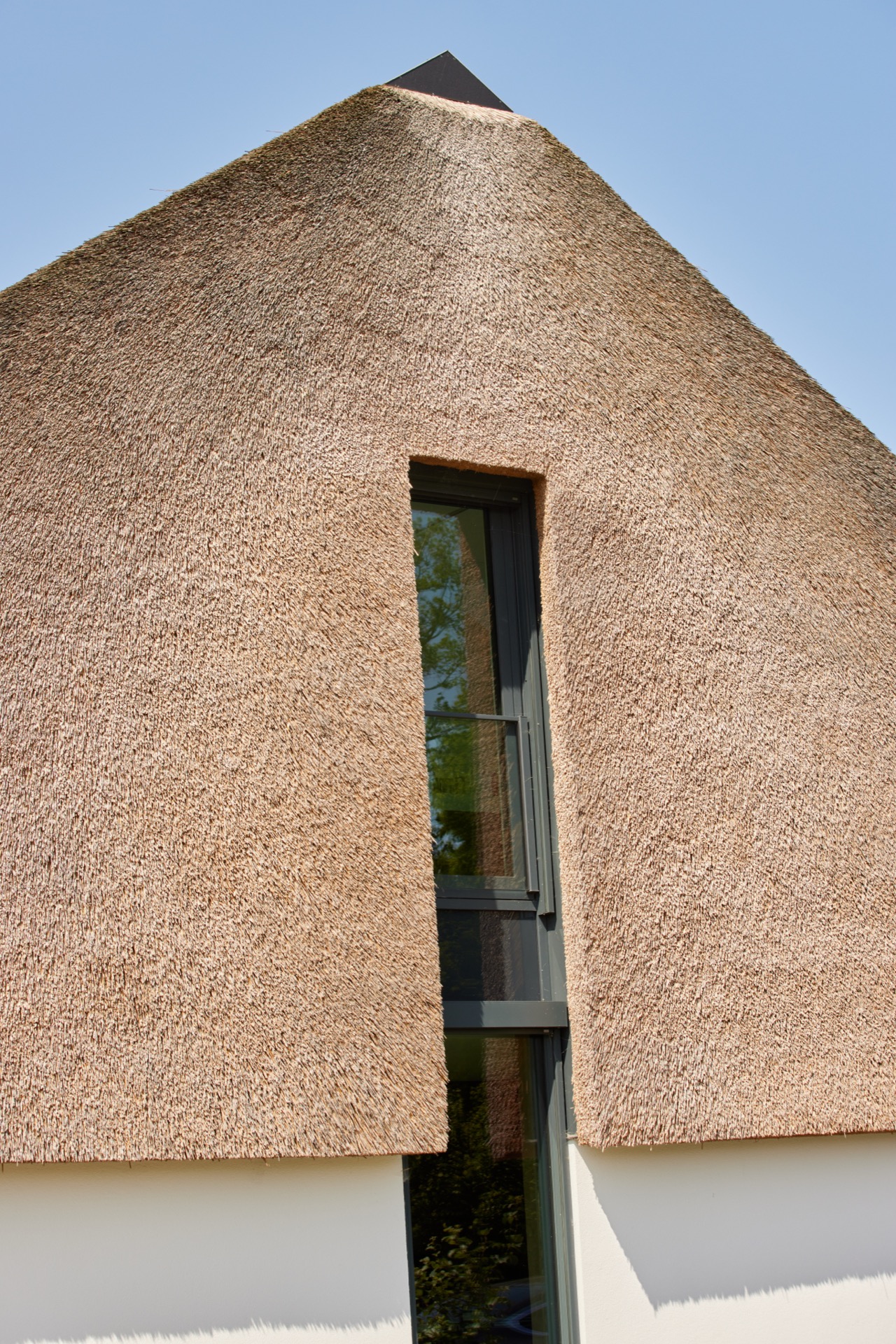
Large panes in vertical arrangements punctuate the reed sections, maximizing views toward the landscaped surroundings while drawing natural light deep into the spaces. Their black frames outline the glazing crisply against the soft reed, lending a contemporary accent to the natural palette. Reflections on the glass further animate the facade, mirroring garden foliage and sky.
Architectural details linking indoors and out
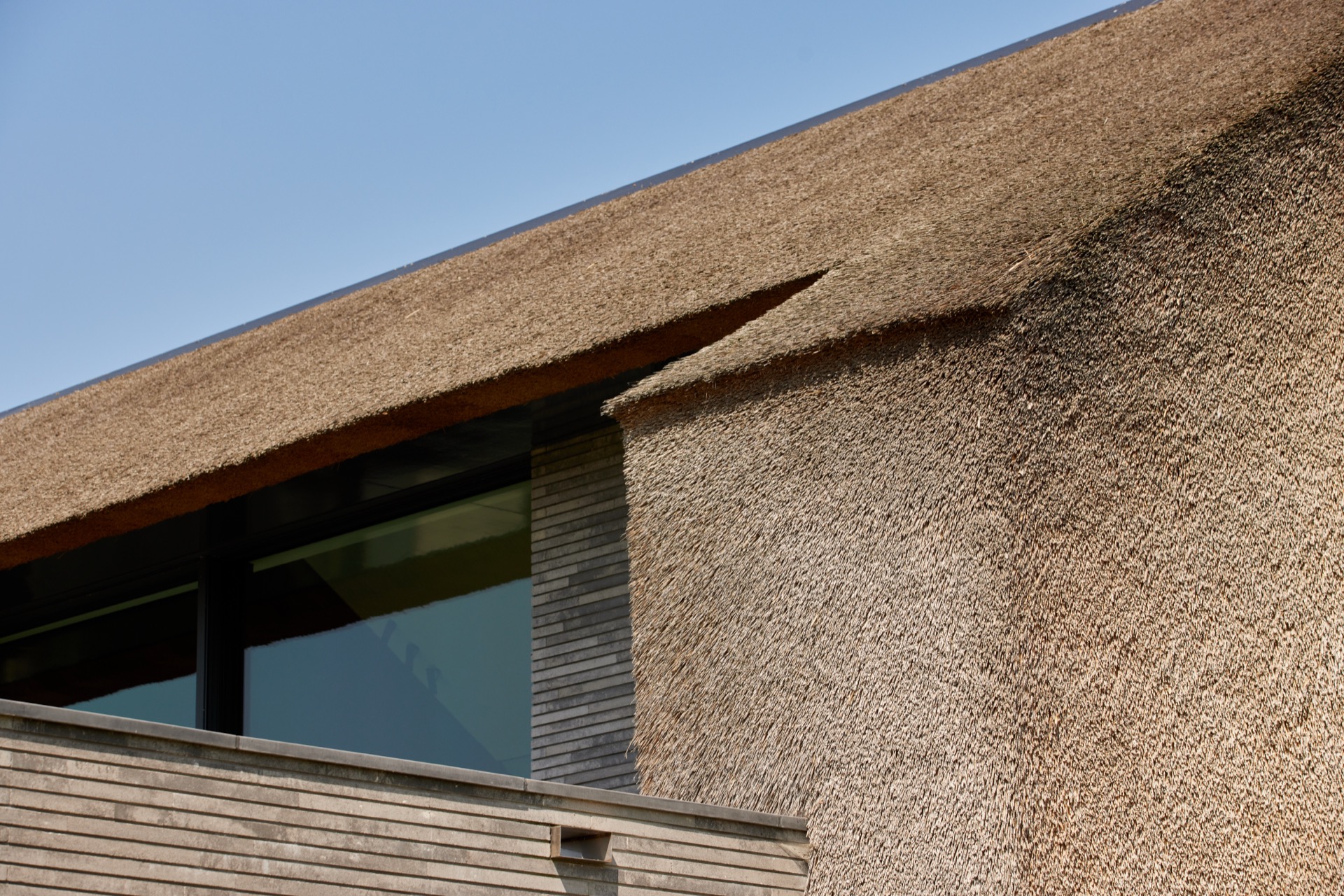
Attention to detail appears in the junctions between reed panels, window frames, and roofing materials. The steel ridge cap atop the roofline connects the natural textures below with a precise metallic element, defining the silhouette. Similarly, the wood and concrete surfaces join seamlessly with the reed, highlighting material contrasts that remain refined and tactile.
modern house design as the architectural starting point
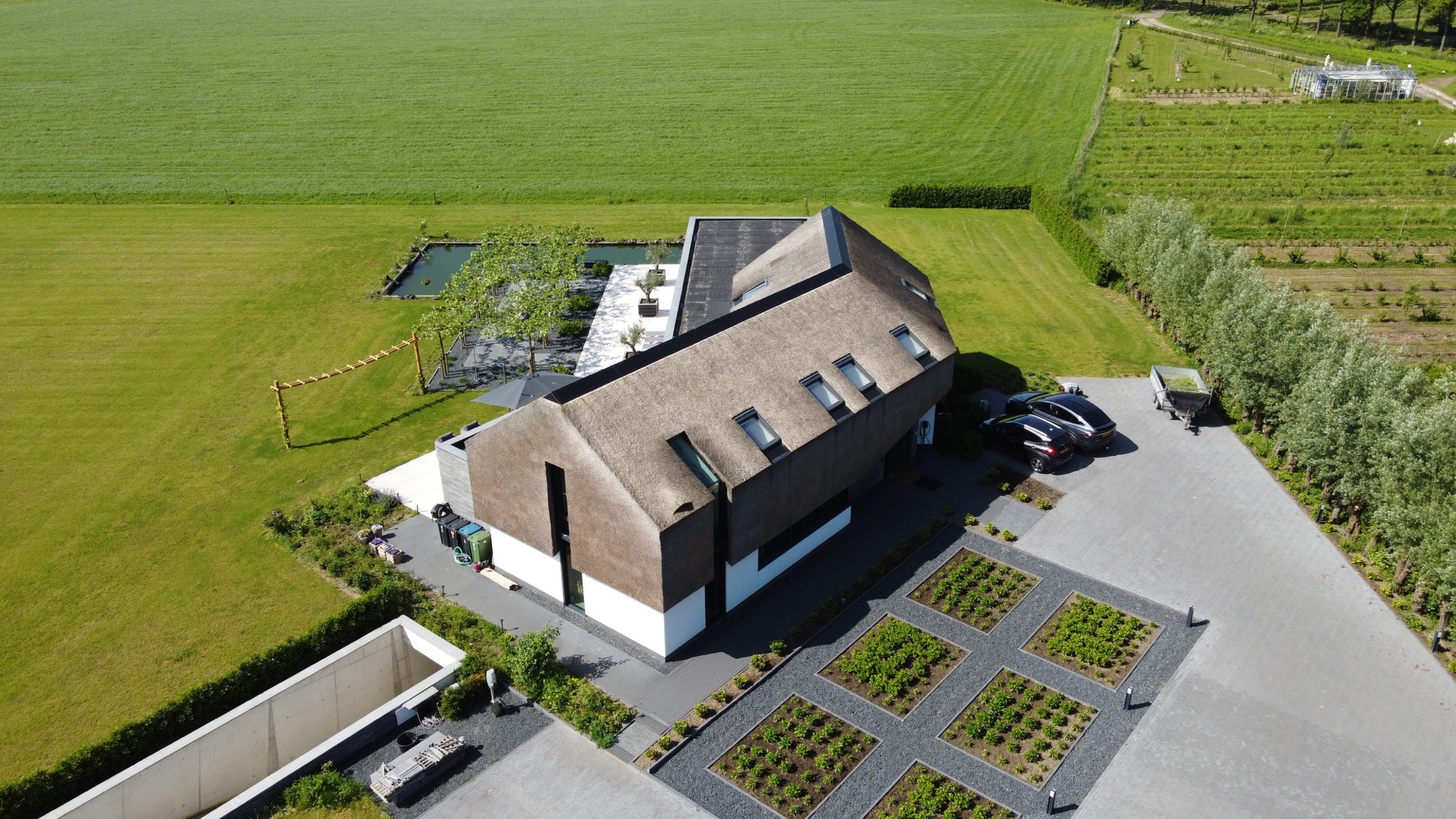
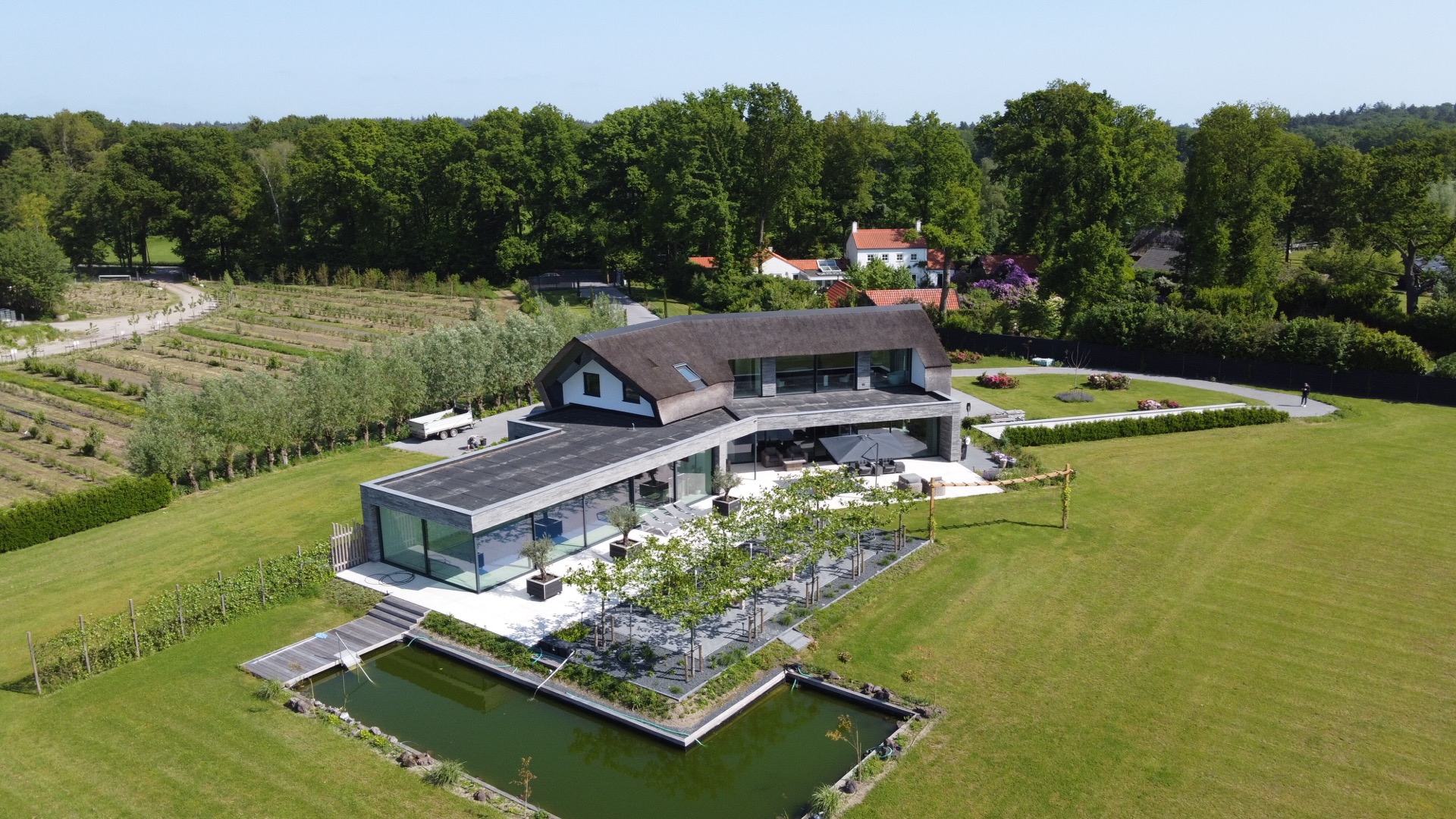
The villa opens outward to its garden through broad glass walls, which blur the boundary between interior and exterior. Shrubs and trees frame views from within and provide privacy while echoing the reed’s earth tones. A nearby pool reflects surrounding greenery, contributing to a tranquil outdoor environment closely linked to the building’s natural materials.
Roof and external materials
The roof, clad with natural elements, continues the home’s material story. Its subtle slope emphasizes the horizontality of the design, contrasting the verticality of the windows. Steel detail at the ridge provides durability and a refined finish to the organic roofing texture, balancing robustness and natural expression.
Spatial flow enhanced by materials
The choice of materials directs movement and light throughout the villa. Concrete floors inside extend visually into paved terraces outside, creating continuity. Reed-clad walls extend past openings, shading interior spaces and framing outward views. This measured orchestration of materials shapes how occupants experience both enclosure and openness. That makes the modern house design part of the architectural character rather than a loose finish.
Poised between minimalism and nature
The villa’s minimalist lines coexist with an earthy materiality that grants warmth and tactility. Geometric volumes are softened by textures that change with light and weather, creating a subtle dialogue between the built form and its natural surroundings. Every architectural decision foregrounds material authenticity and natural interaction.
modern house design as the architectural starting point
Through its large, carefully placed windows, the villa captures framed segments of the garden beyond. The garden itself features layered plantings that heighten spatial depth, visible from many vantage points inside. This landscape design complements the house’s material focus, reinforcing a connection to natural cycles and seasonal variation.
Exterior transitions and thresholds
Transitions from exterior to interior are articulated with deliberate shifts in materials and scale. The reed facade’s texture contrasts with the smoothness of glazing and solid concrete bases, while outdoor terraces serve as intermediate spaces blending shelter and exposure. These thresholds invite exploration without abrupt division.
The role of vertical windows
Vertical window elements punctuate the facade rhythmically, drawing the eye upward along rippled reed surfaces. Their proportions allow slender ribbons of daylight to animate interior surfaces, creating shifting light patterns. Positioned to frame specific landscape views, these apertures orchestrate visual moments connecting inside and outside.
Material palette grounded in nature
Colors arise from natural sources: warm beige reeds, gray concrete, rich wood grain, and dark metal frames. This restrained palette emphasizes material origins, resisting embellishment. The combined texture of reed and wood complements the hard plane of concrete, crafting a façade that resonates with the surrounding environment.
Summary of architectural approach
Embracing raw materials and large glazed areas, the villa exemplifies a modern house design that balances openness with enclosure. Its reed facade distinguishes the residence visually while enabling a tactile relationship with nature. The garden and architectural details coalesce into a thoughtful environment shaped by materiality and light.
Relevant internal references
Want to see more of De Rietdekker? View the page of De Rietdekker for even more great projects and company information.


.png)