




Wengé herringbone parquet in a modern classic interior
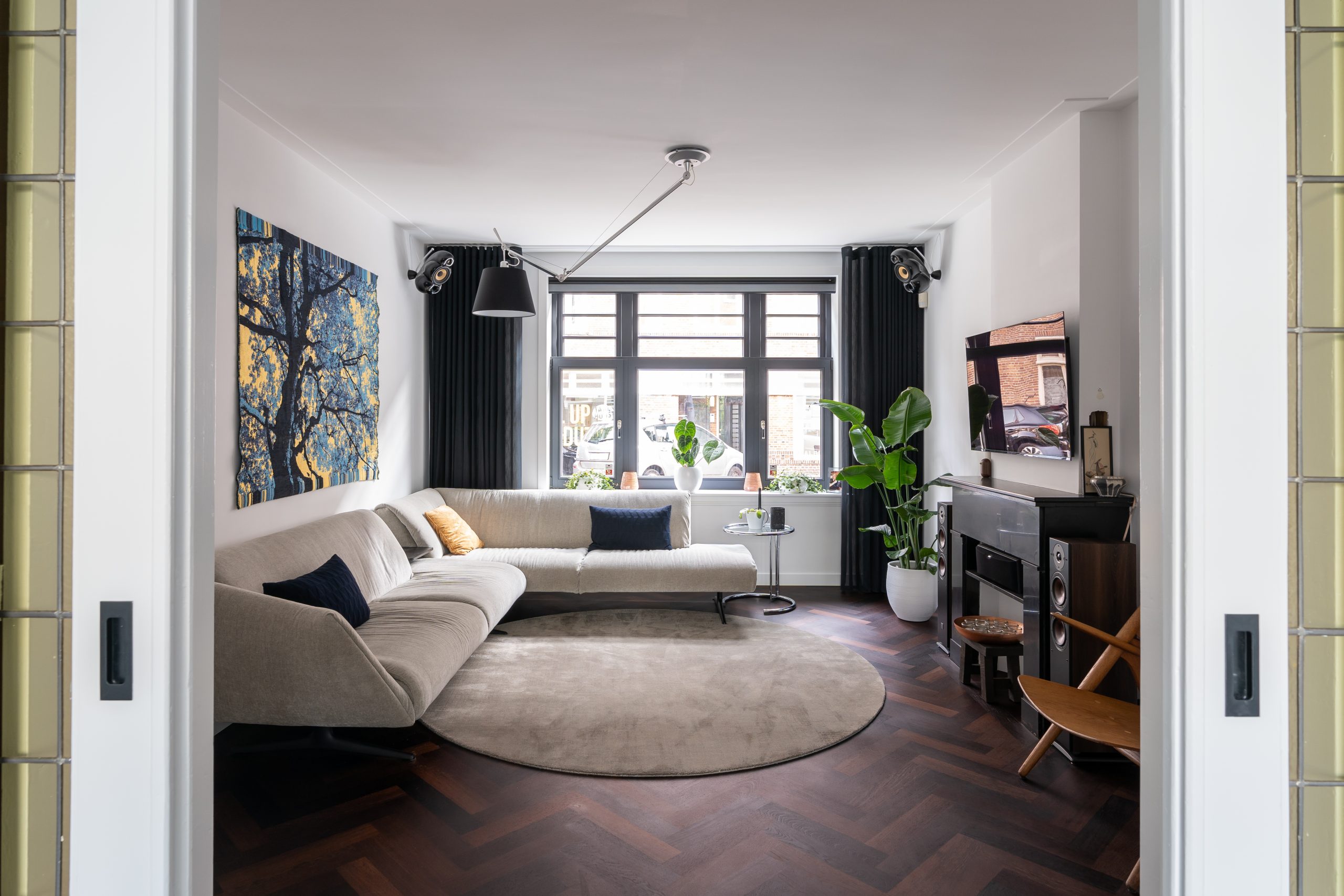
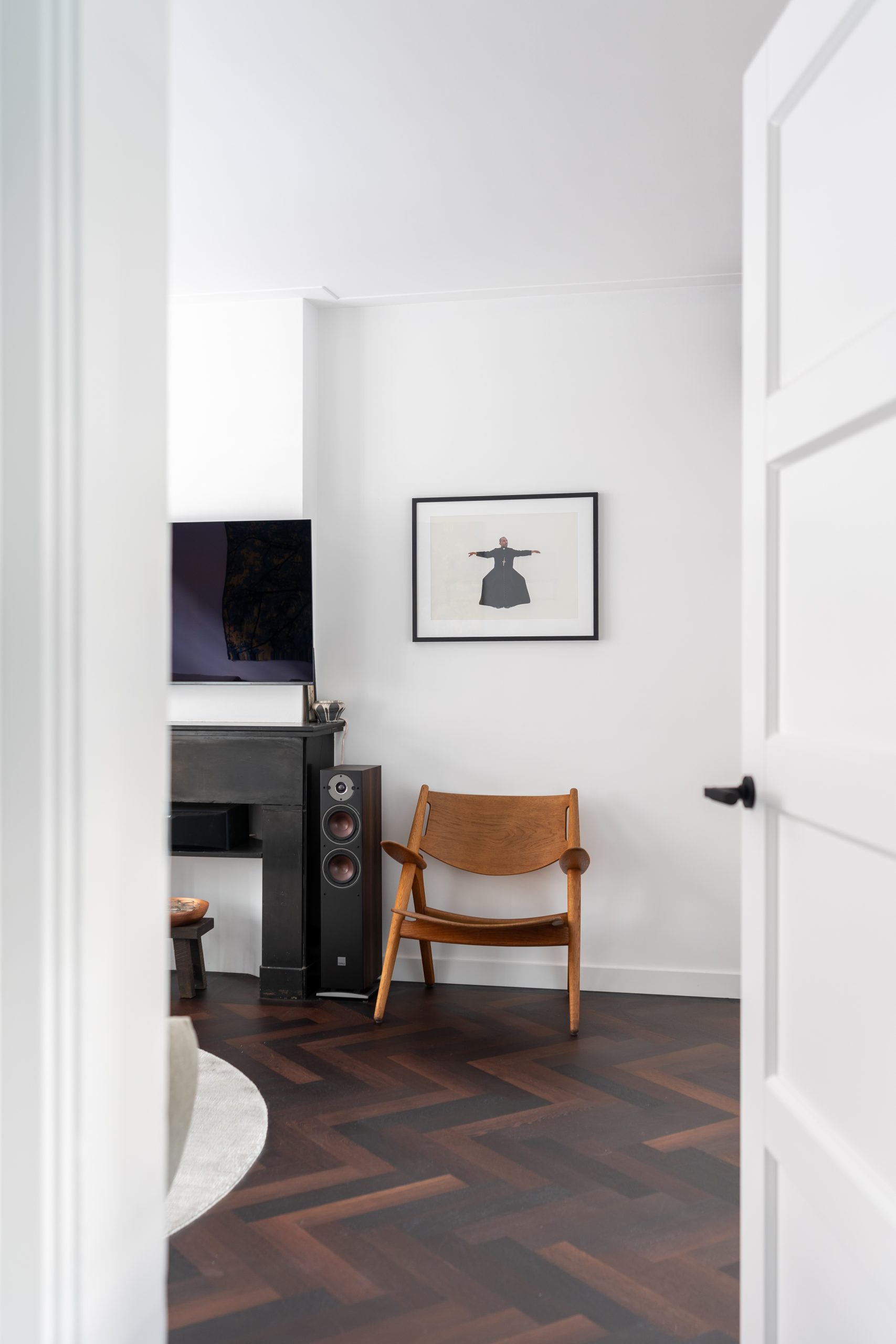
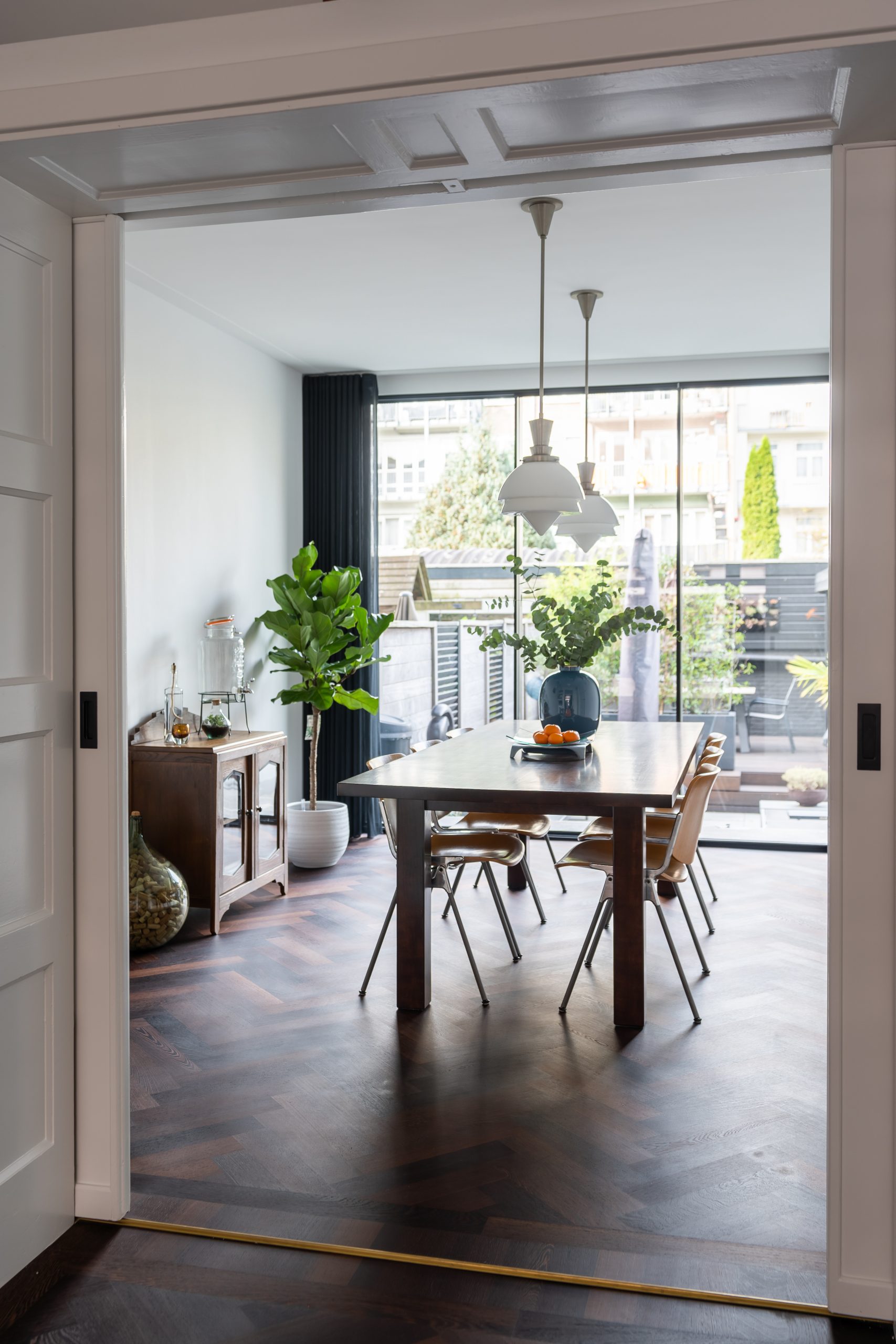
The first thing you notice is the dark grain. Wengé herringbone parquet pulls the eye across the room before the furniture does, especially where the floor meets the white walls and the tall curtains by the windows. The pattern is easy to read from a distance, yet the surface changes as you move closer: narrow joints, small shifts in tone, and the tight rhythm of the boards. In this interior, the floor does more than sit below the room. It directs it.
A darker floor that carries the room forward
Wengé is described in the project text as the darkest natural wood available, and that depth is exactly what makes this floor the visual anchor of the home. The herringbone pattern stretches through the living areas and into the hall, so the eye keeps following the same line from one zone to the next. That continuous herringbone flooring gives the plan an unusually clear flow. Instead of stopping at a doorway or turning into a different material, the floor stays present and keeps the interior connected by the same dark surface.
Large windows soften the weight of the wood. Daylight lands on the boards and reveals the warm variation inside the dark finish, while the curtains break the light into softer strips. In the living room, the floor reads almost like a woven surface: one board angles into the next, then the pattern repeats with a steadiness that suits the long sightlines in the house. It is a living room herringbone floor, but also a route, carrying the eye toward adjoining spaces.
Why the larger herringbone format matters here
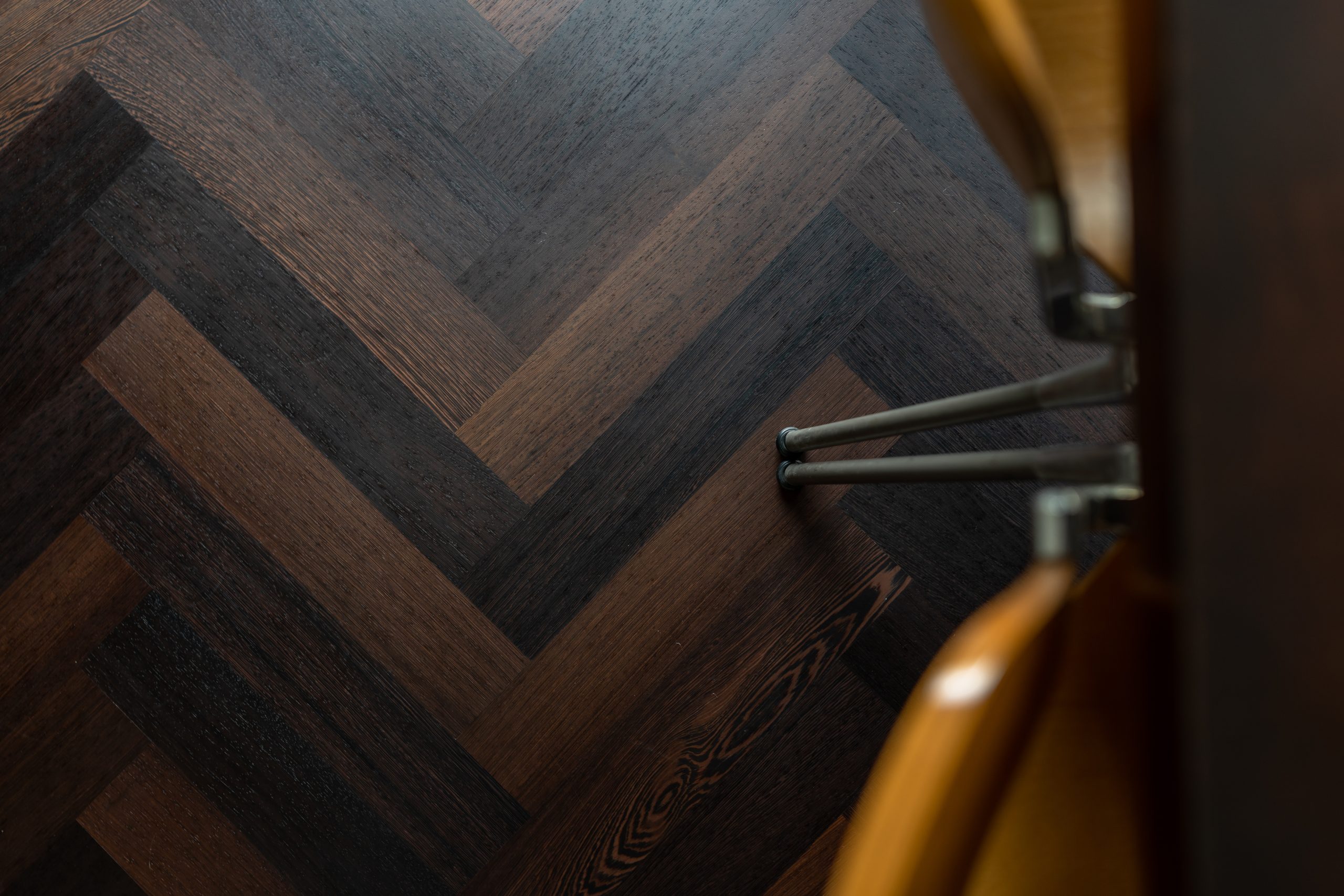
The project intentionally steps away from a classic size. The larger herringbone format changes the pace of the floor and gives the pattern a more open, contemporary read. You still see the familiar zigzag of a herringbone parquet floor, but the boards sit with a little more room between the turns, so the pattern feels less delicate and more grounded. That adjustment is subtle from afar and clear in the close-ups, where the grain and the joins become part of the composition.
This shift in scale also helps the floor hold its own beside the interior details. White paneled doors, profiled trims, and the molded framing around the ensuite openings all carry a classical language. The broader herringbone rhythm answers that without copying it. In one glance you get the dark floor, the panel work, and the straight lines of the openings, each element speaking in its own register. The result is a modern classic interior that relies on proportion rather than decoration.
Hall and doorway views keep the pattern visible
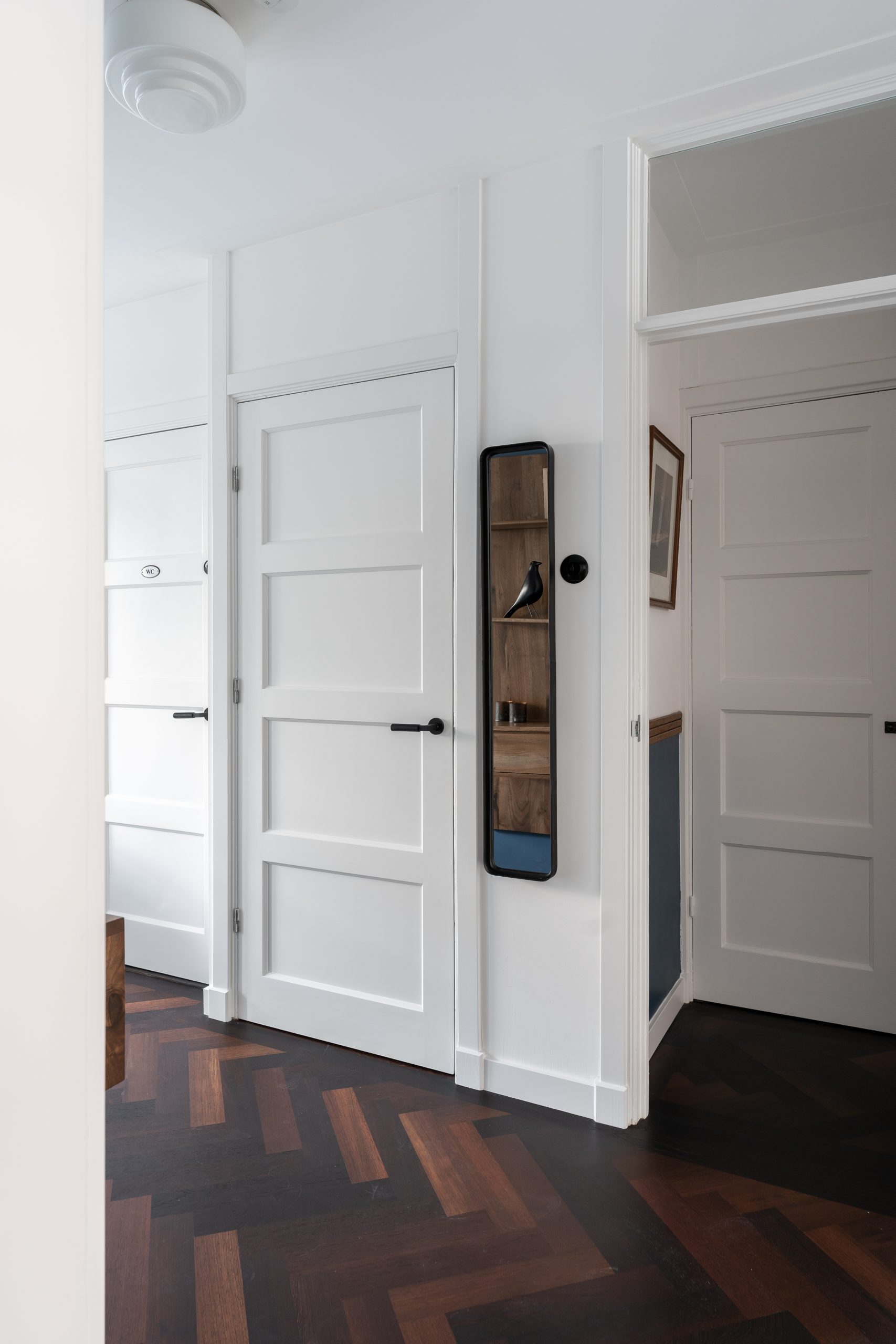
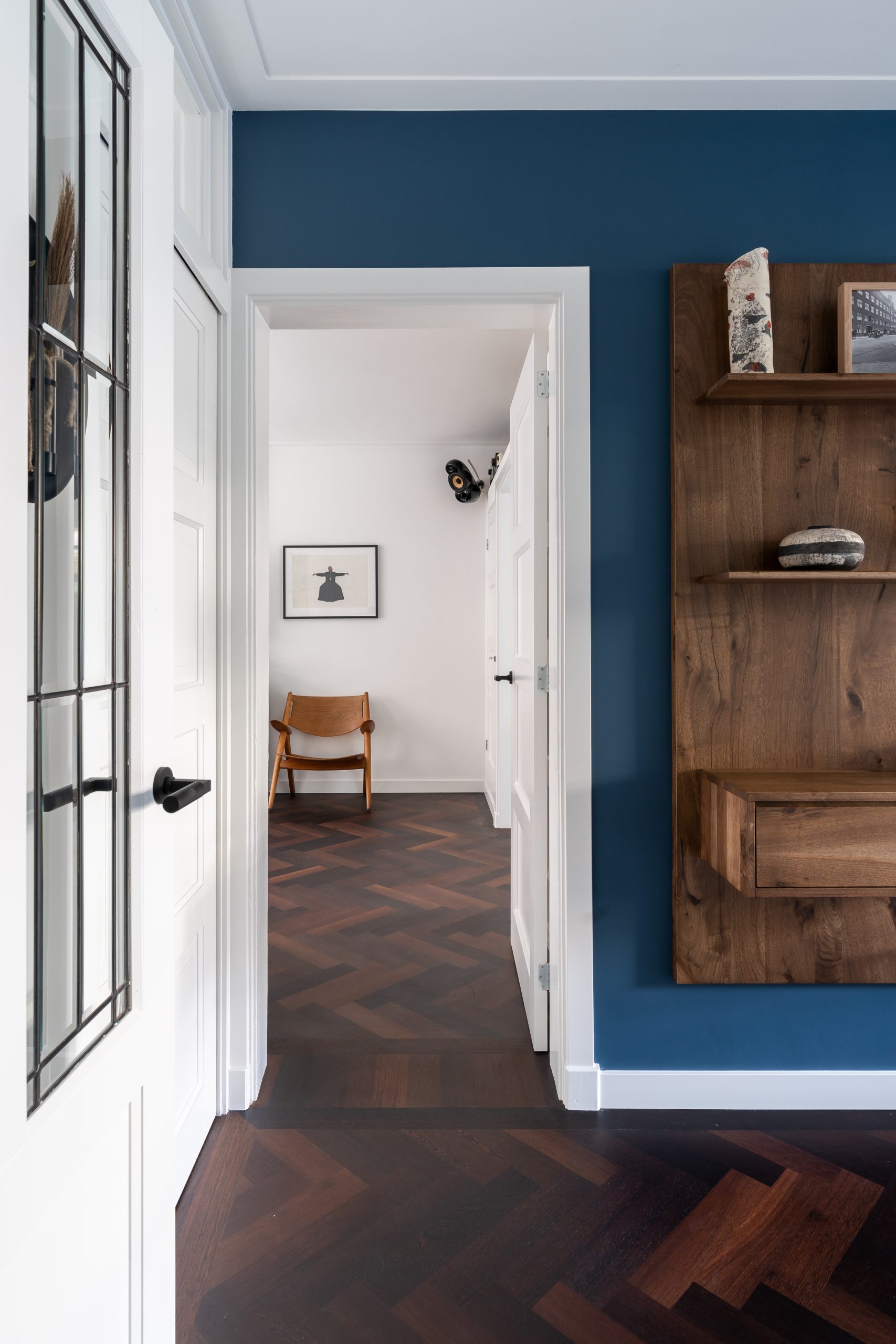
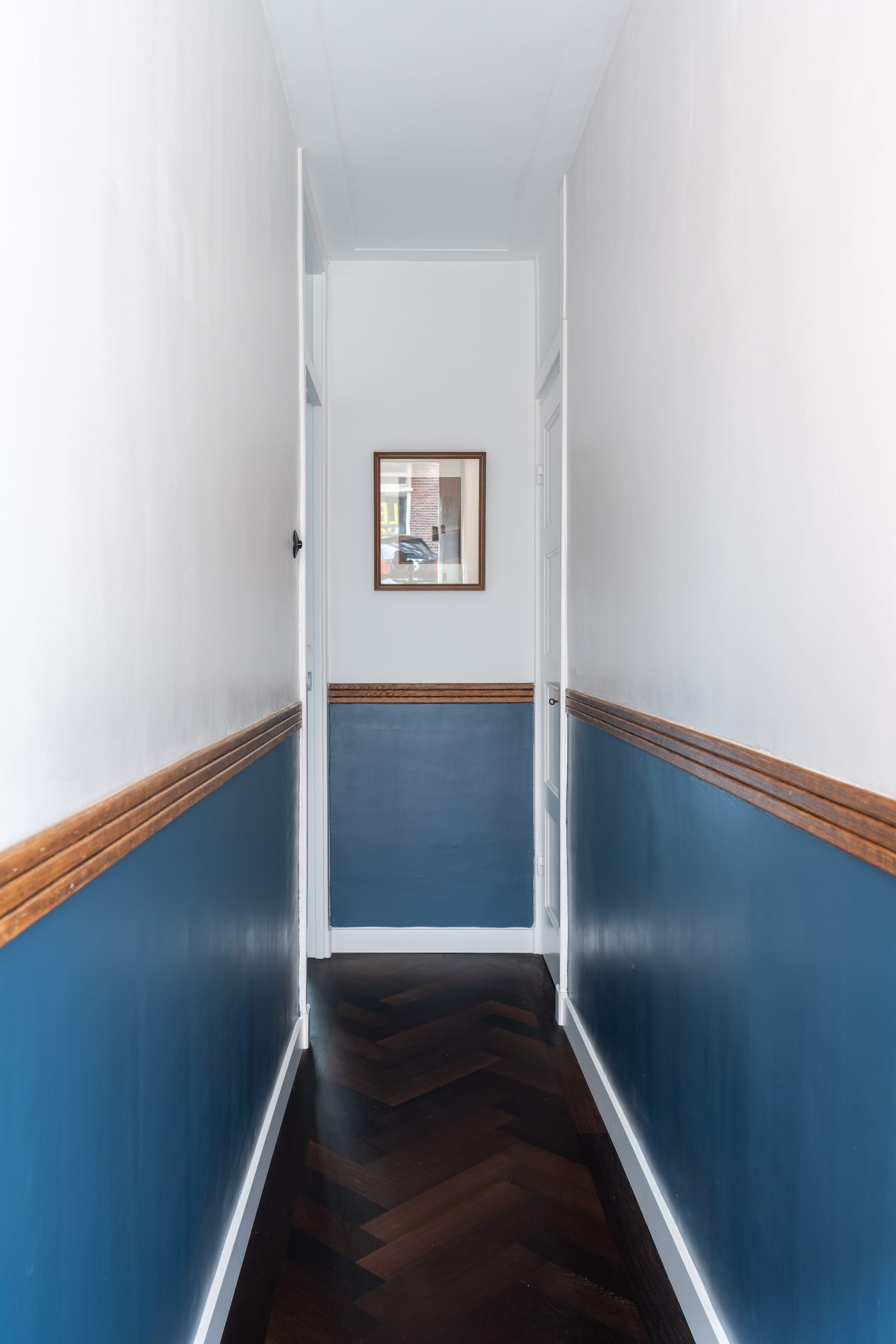
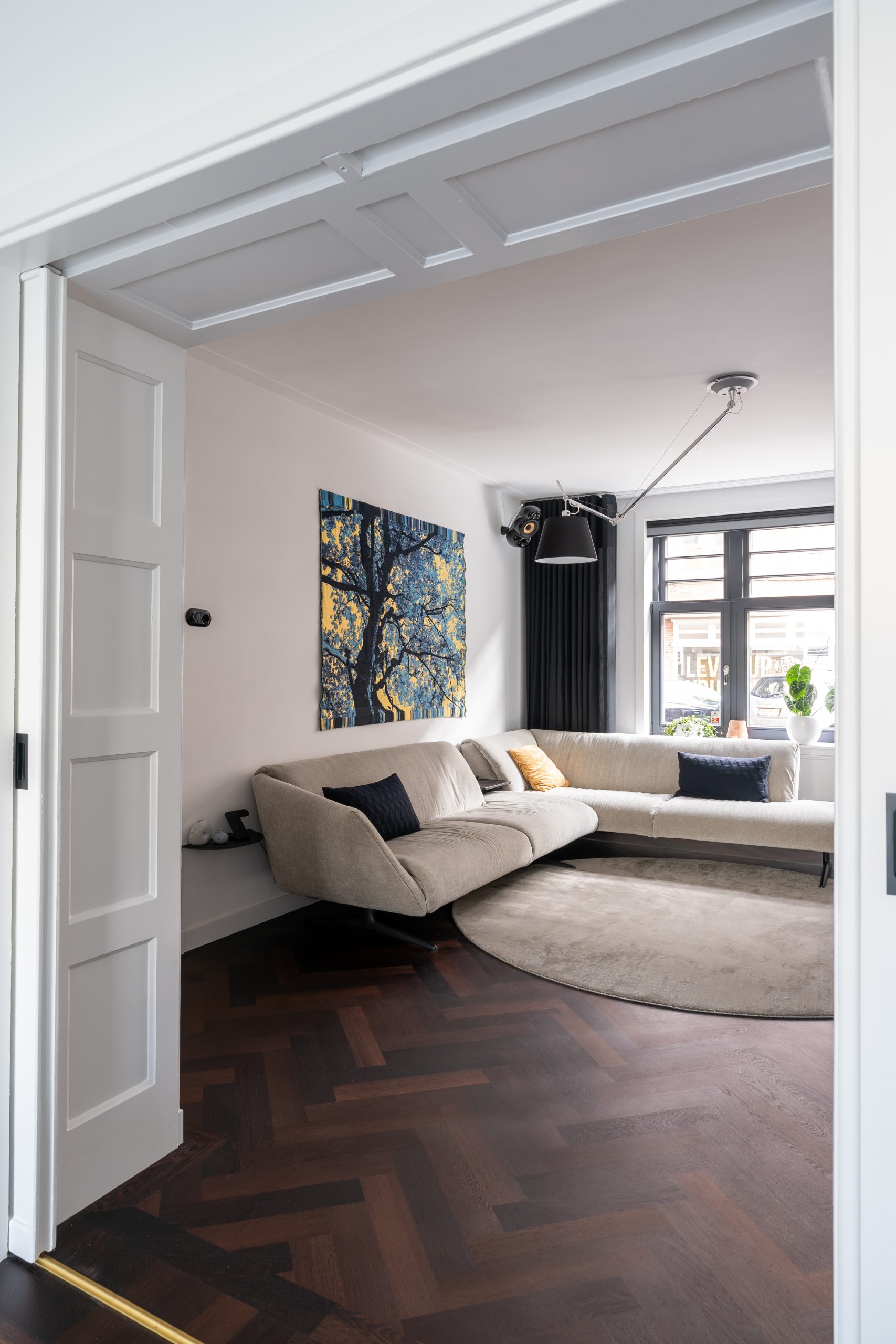
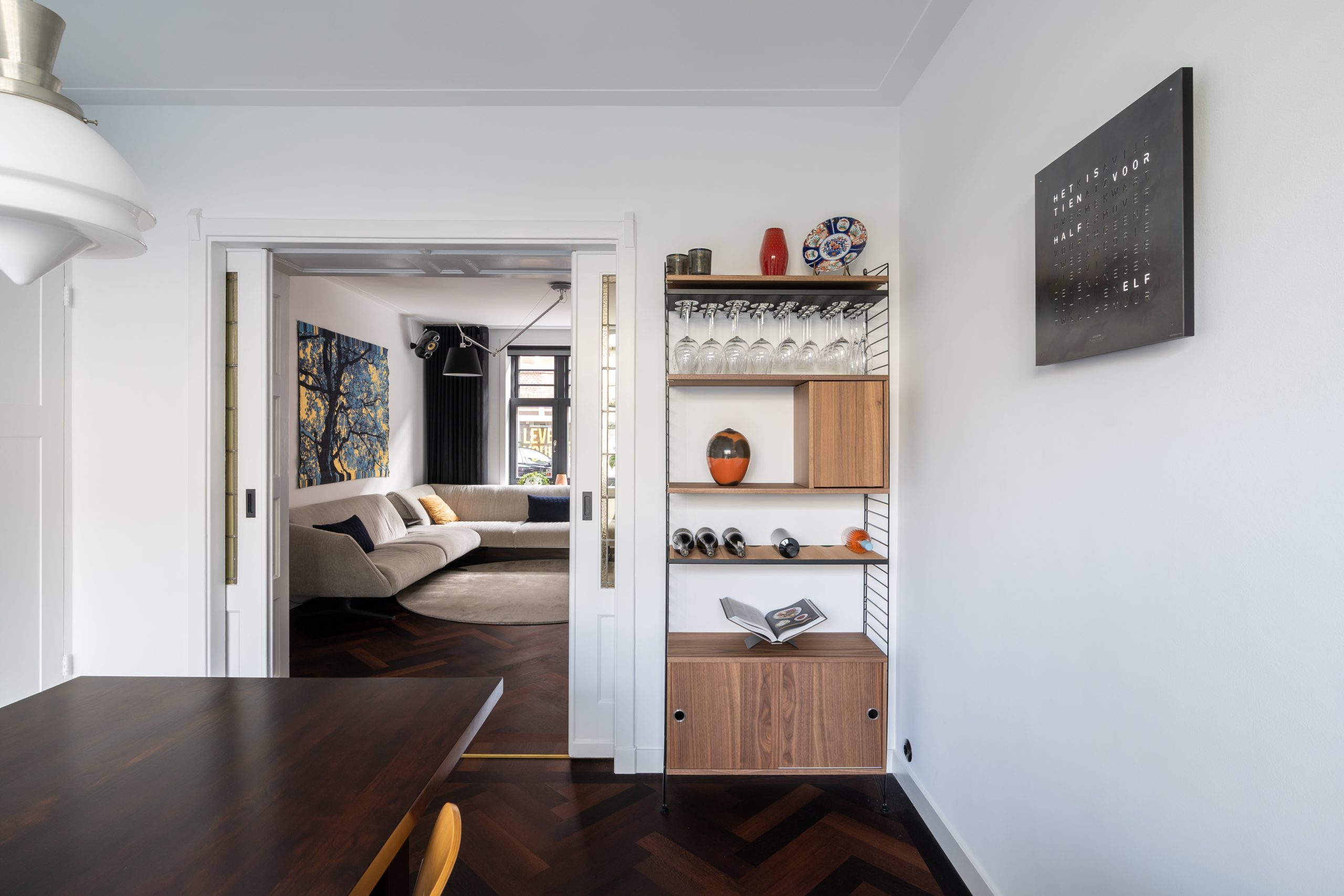
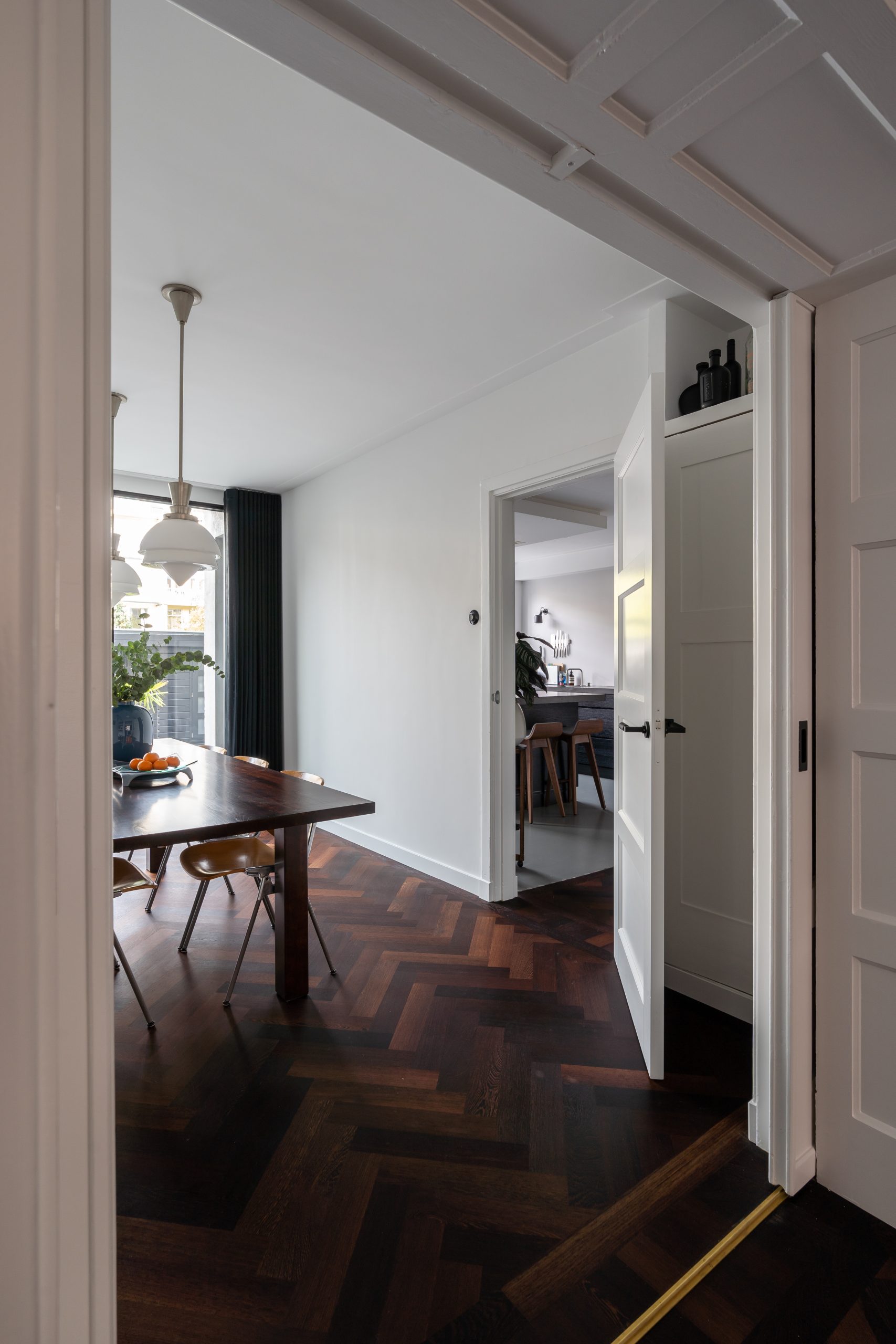
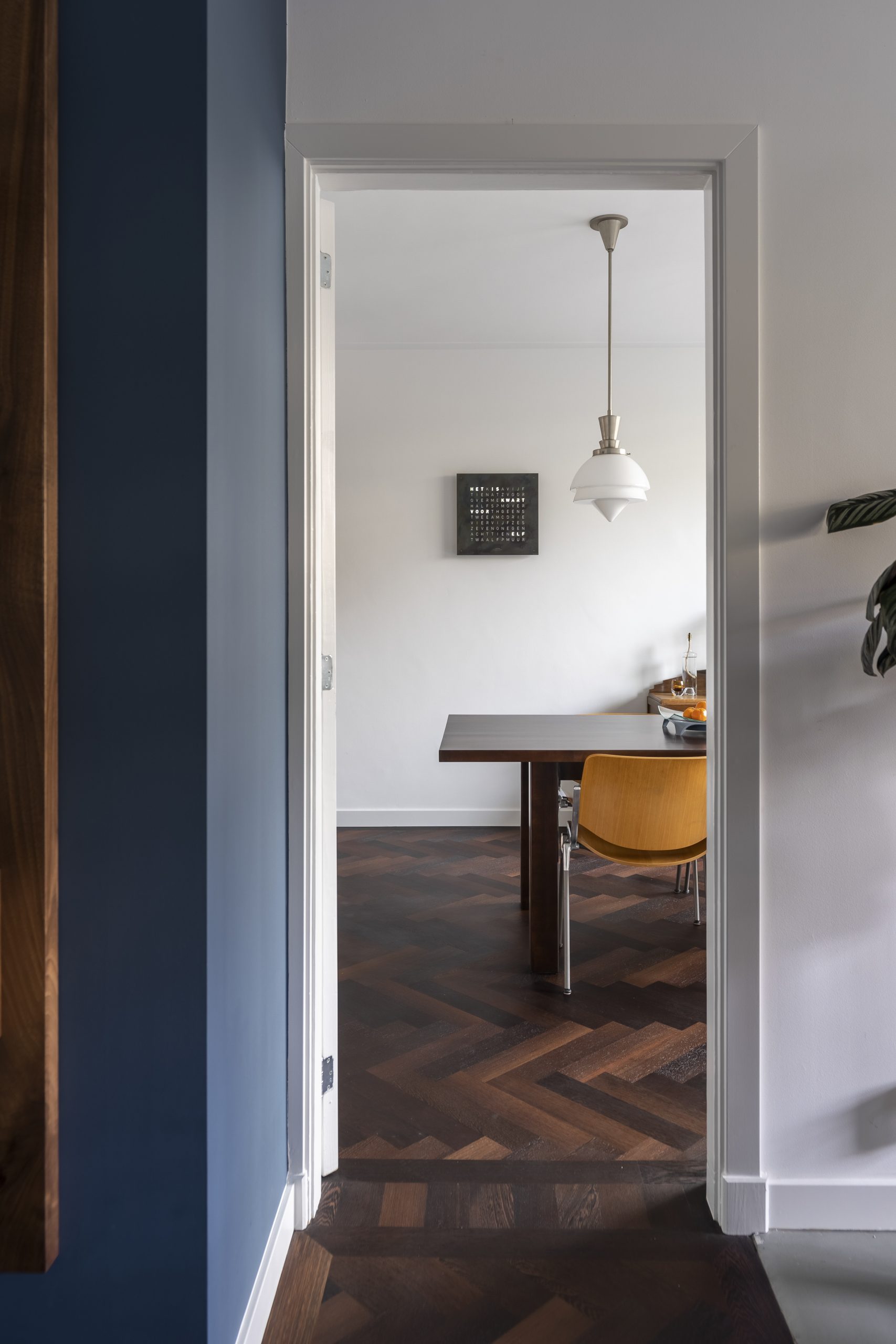
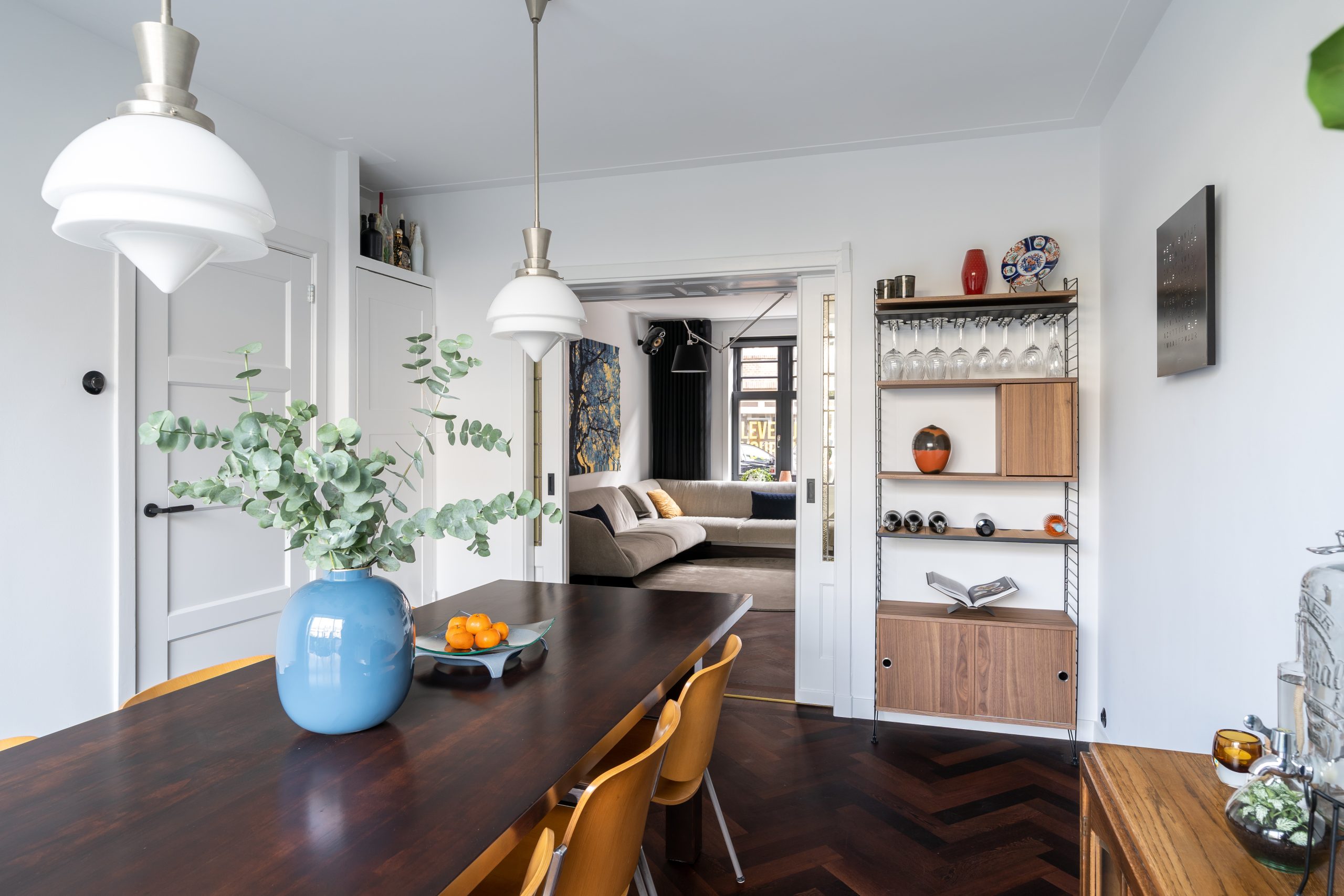
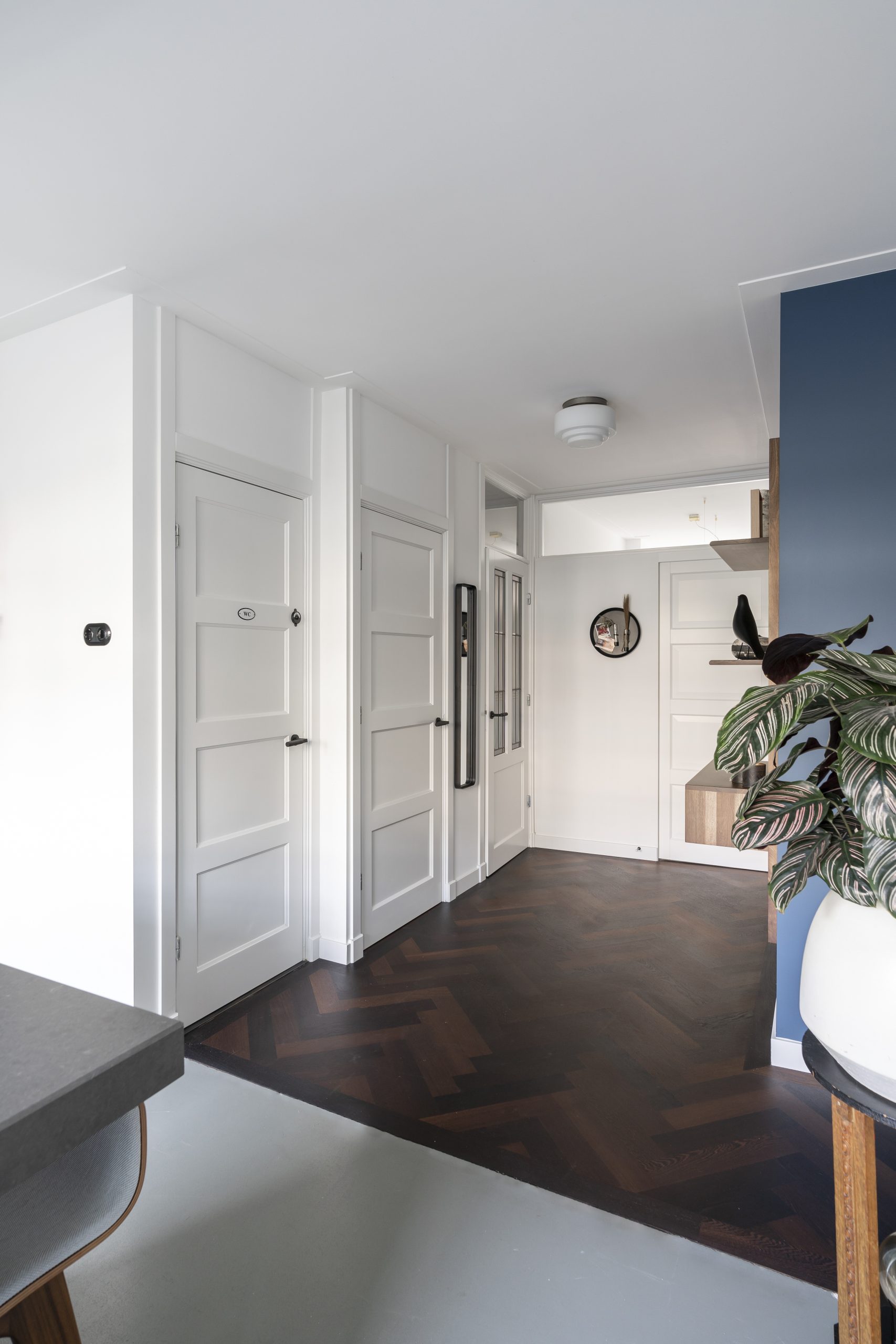
Several images show the herringbone parquet in hallway and transition zones, where the pattern can be read from a longer distance. That is where the floor becomes most legible. The boards run toward the openings, past white walls and framed doorways, and then continue beyond them. The eye is never forced to restart. In a house with multiple zones, this kind of continuity matters more than a single dramatic room shot, because it shows how the material behaves across everyday movement.
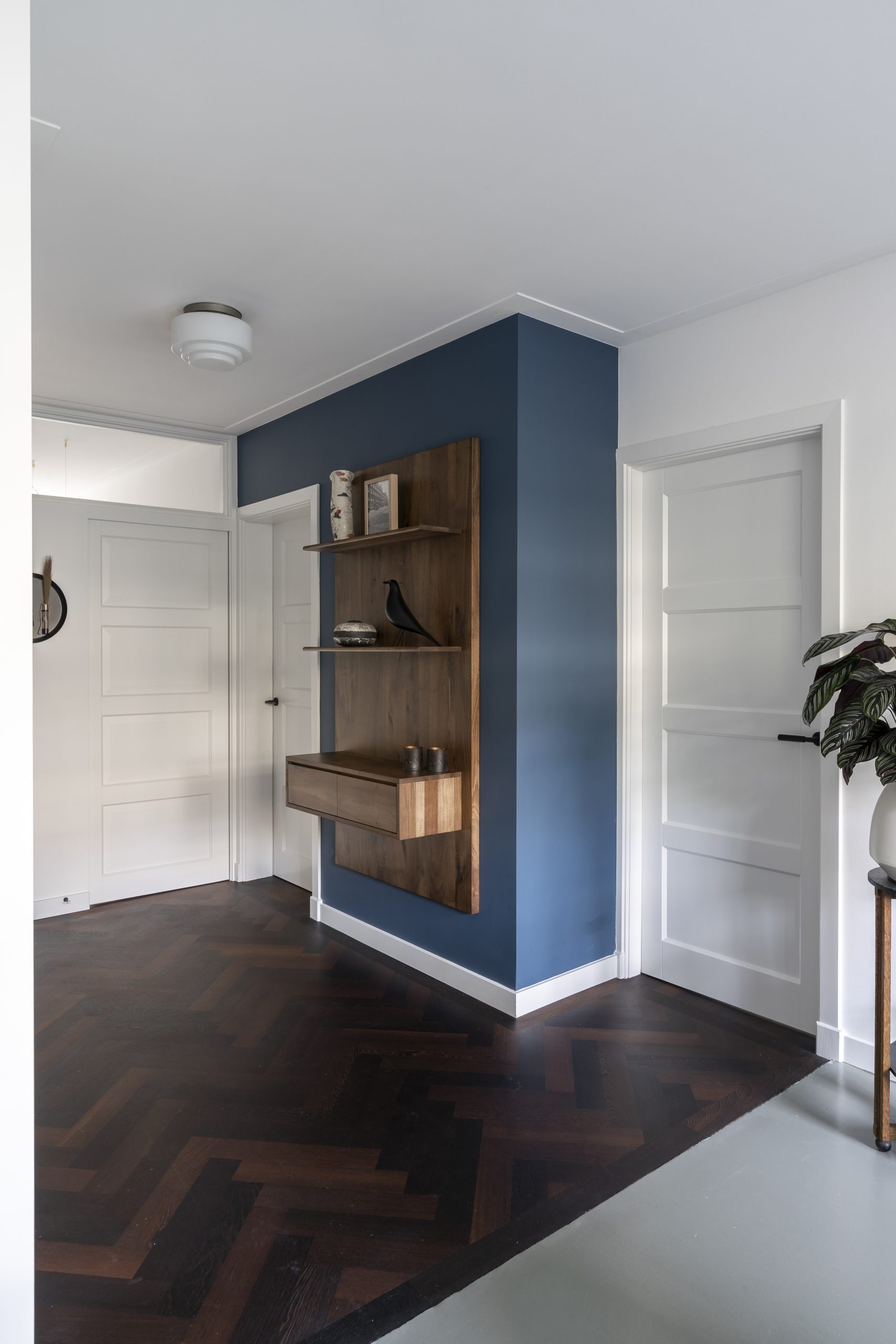
In the hall, the dark floor sits against crisp wall surfaces and paneled doors, while the ceiling lines stay simple and quiet. The contrast is direct: pale trim above, deep wood below. Nothing here depends on ornament alone. Instead, the architecture lets the parquet carry the scene. That is why the project reads so clearly in photographs; the floor does not compete with the room, it gives the room its direction.
Classical details sharpen the contrast
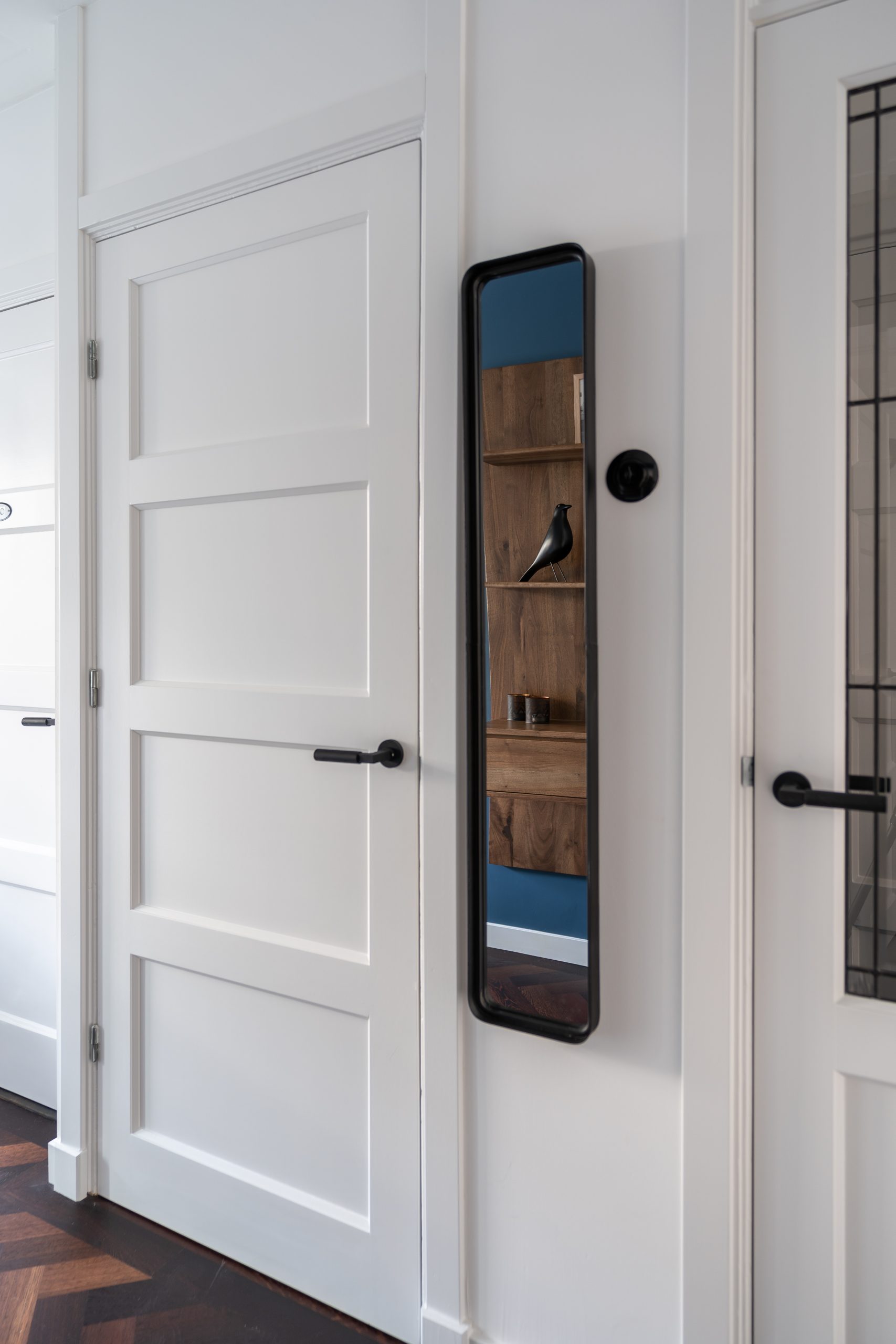
To keep the interior from leaning only on the dark wood, the project uses standing elements by the ensuite doors and the frames. These vertical lines bring a classical note into the composition and echo the paneled doors seen throughout the house. They also create a clean edge where the openings meet the walls, which makes the continuous herringbone flooring below feel even more deliberate. The transition from floor to frame is neat, but not sterile. You can still read the joinery and the depth of the profiles.
A dark blue accent wall appears in a few views, set against white molding and pale door surfaces. It is a strong background for the parquet, because it deepens the contrast without breaking the material story. The floor remains the main thread, but the wall color adds another layer of tone in the overloop and hall. Together with the white trim, it places the Wengé herringbone parquet inside a clearly composed interior, where color and line work as supporting elements rather than competing gestures.
Light, curtains and long sightlines
The large windows are not just background. They change how the floor is read. When daylight reaches the boards, the dark surface does not flatten; the grain opens up and the angled cuts of the pattern become more visible. Curtains hang beside the windows and soften the brightness, so the floor shifts between sharper contrast and a more muted sheen depending on where you stand. That movement is especially visible in the wider room views, where the floor, the window wall, and the ceiling light all sit within one long frame.
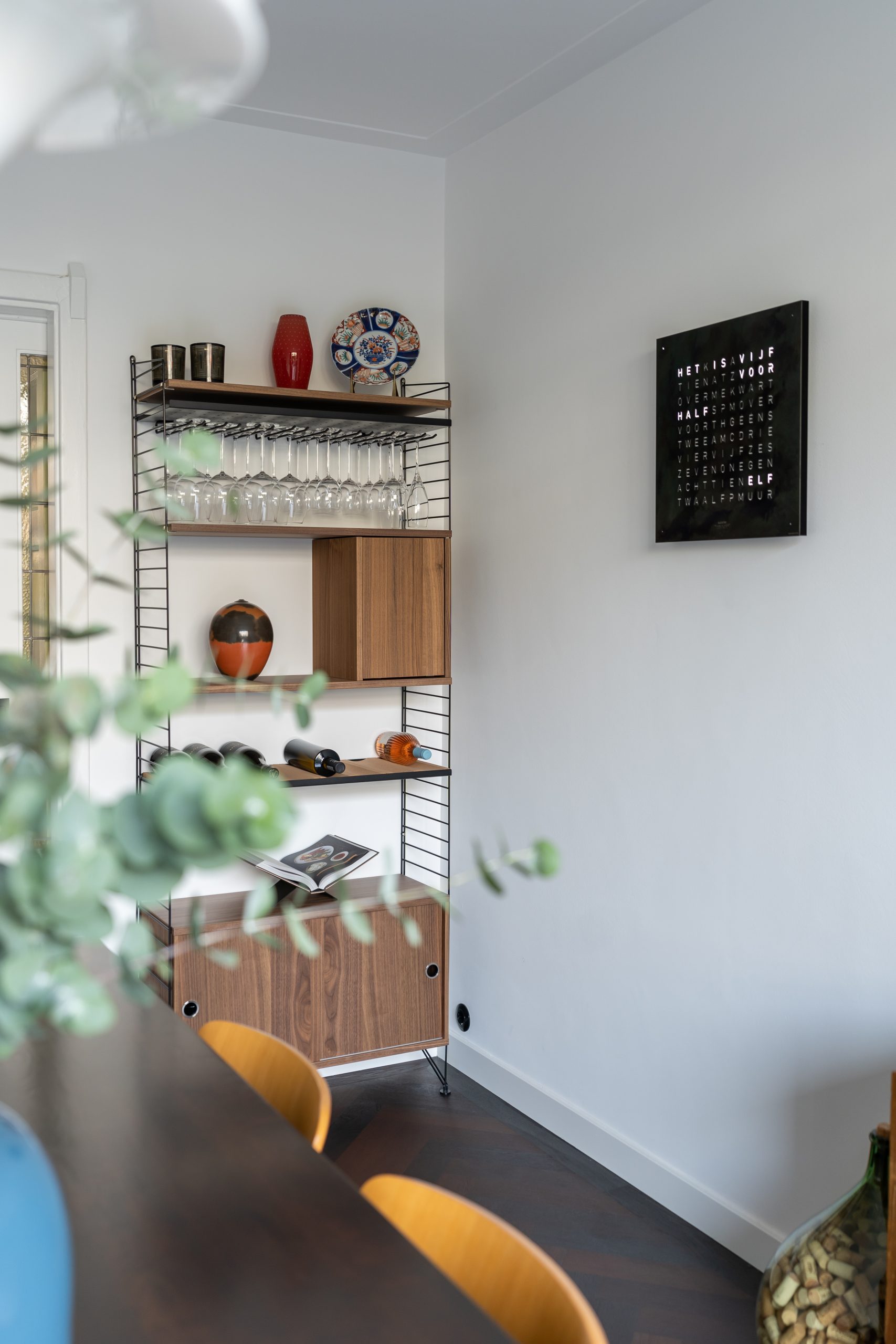
From one zone to the next, the interior keeps offering these open views. A doorway leads to another room, and the herringbone lines continue. A table setting appears near the window, and the floor remains visible under the chairs and past the edge of the room. This is where the larger herringbone format proves useful again: it stays readable even in wide compositions. The pattern is strong enough for a full room view, but detailed enough to reward a closer look.
What the close-ups reveal
The detail photographs show the wood grain clearly. You can see the slight shifts in tone within the dark boards, along with the joints where each piece changes direction. Those close-ups matter because they explain why the floor reads so differently at different distances. From across the room, it is a dark herringbone floor with a strong graphic rhythm. Up close, it becomes a material surface with visible texture and small variations that catch the light along the edges of each plank.
That close reading also confirms how well the pattern suits the surrounding architecture. White mouldings, paneled doors, and the framed openings all rely on line and proportion. The parquet does the same, only at floor level. It is one of the reasons the project feels resolved without needing extra decoration. The material is doing the work, and it does it throughout the home, from the living room herringbone floor to the hall and the connecting spaces in between.
A floor that sets the tone for the whole interior
What stays with you after the final image is not a single room but the continuity between them. The Wengé herringbone parquet runs through the interior like a dark thread, linking the hall, the living spaces, and the openings lined with classical detailing. The larger format keeps the pattern from becoming too fine, while the windows, curtains, and white trims keep the composition clear. It is a restrained project, but not a quiet one. The floor defines the tempo, and everything around it answers that rhythm.
For anyone looking at herringbone flooring projects, this interior shows how much can be done with one material and one pattern. The dark wood sets the depth, the scale adjusts the mood, and the architecture frames the result. Seen across the room or in a close detail shot, the floor remains the same idea: a continuous surface, carefully placed, with enough presence to shape the spaces around it.
Want to see more of Flooring House Amsterdam? View the page of Flooring House Amsterdam for even more great projects and company information.


NEW 2026 Jubileum Edition The Best Interior Designers Benelux
Order Now €125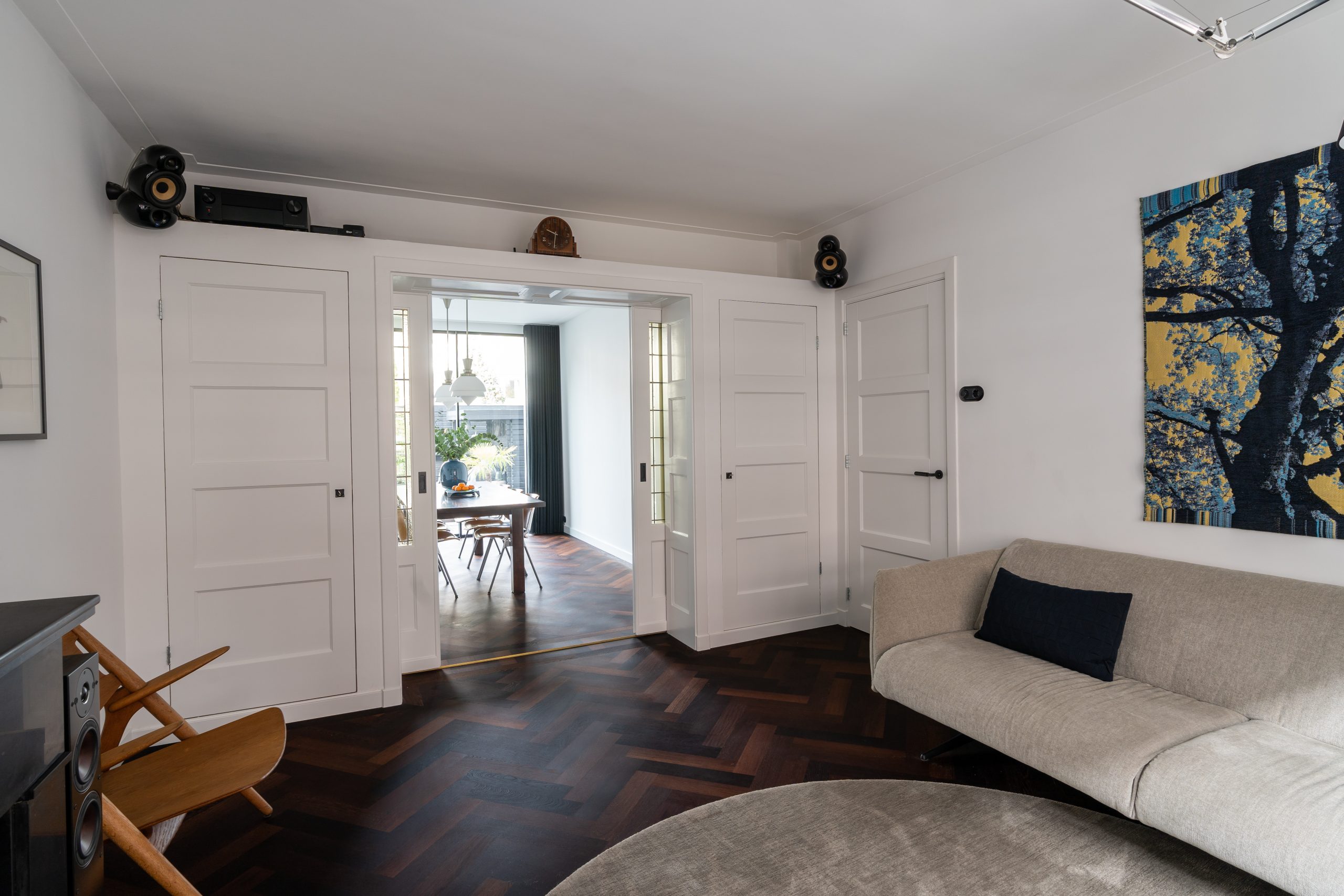
NEW 2026 Jubileum Edition The Best Interior Designers Benelux
Order Now €125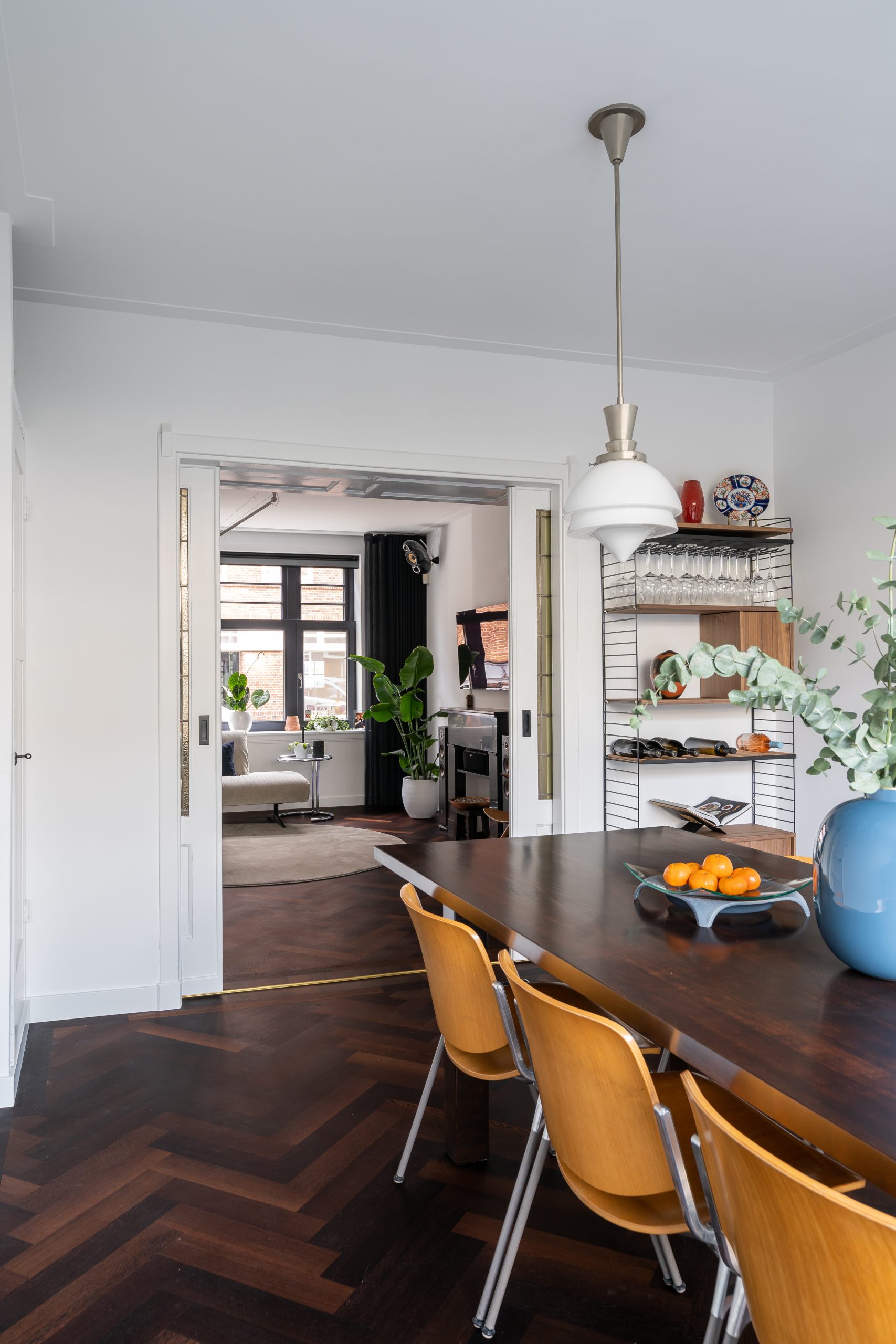
NEW 2026 Jubileum Edition The Best Interior Designers Benelux
Order Now €125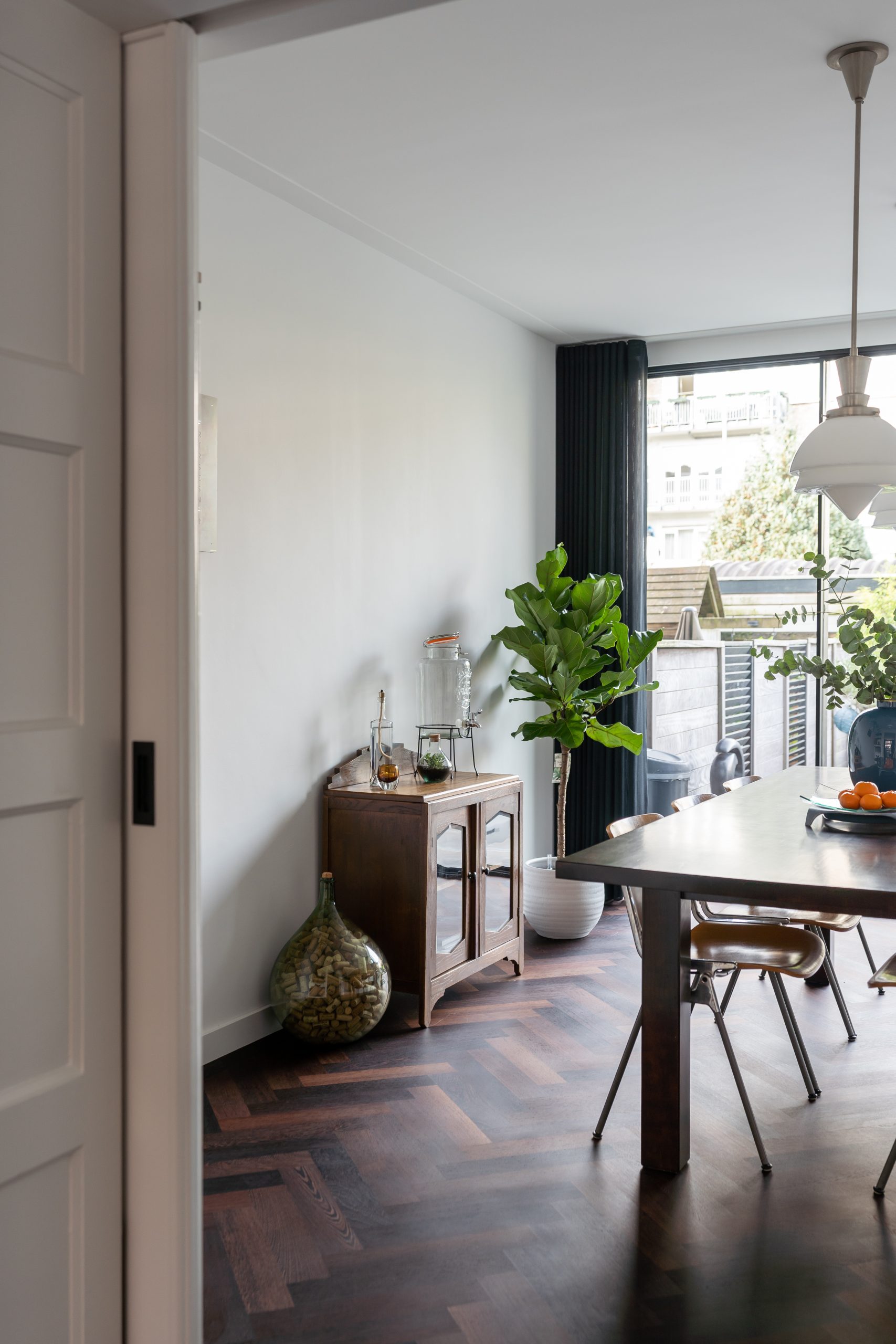
NEW 2026 Jubileum Edition The Best Interior Designers Benelux
Order Now €125