





Dual charging station with premium design
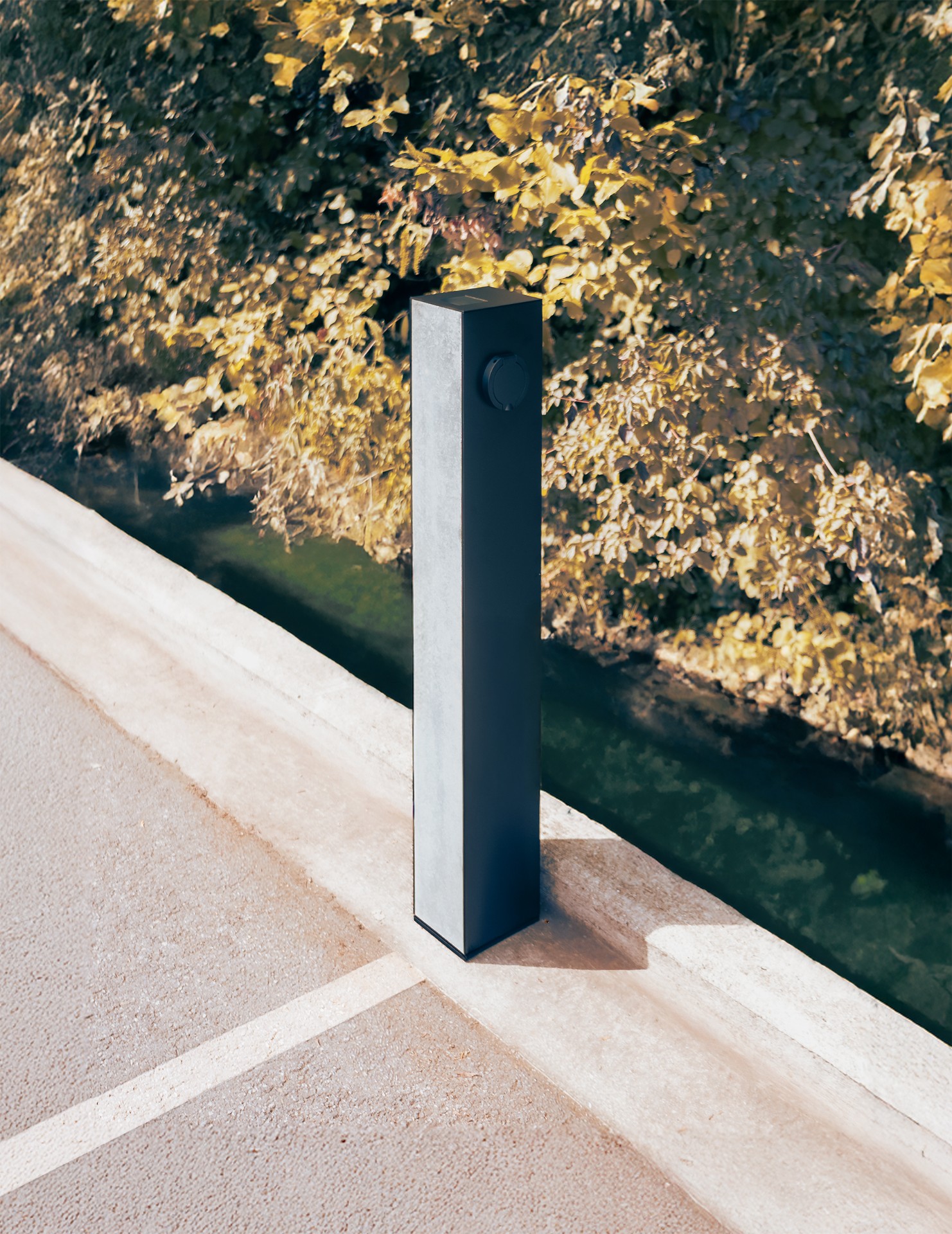
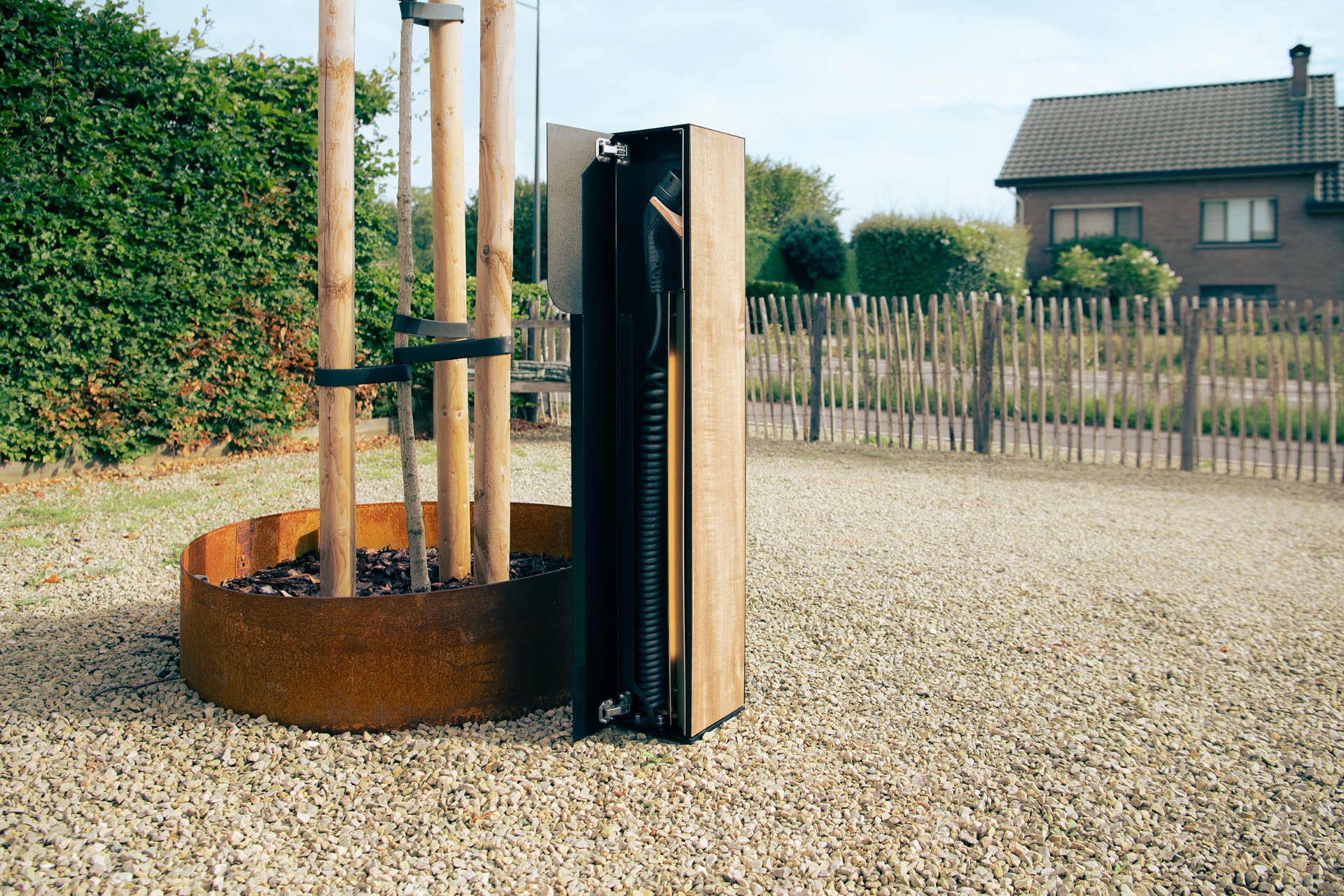
A dark post stands on gravel with a front panel that reads more like joinery than equipment. The vertical face can be finished in teak, natural stone, or marble, and the warmer details are kept low and precise: LED lines, a hint of gold, a narrow opening for the connection point. In that way, the dual charging station design sits naturally beside a house or along a garden edge without taking over the view.
Two charging points, one restrained silhouette
The range is built around two charging points, with three versions that change how the station is used: Two Plug, Two Socket, and Two Base. The Plug version carries two integrated cables, while the Socket version uses two sockets for a cleaner front. Two Base keeps the same architectural shell for business use. Across all three, the form stays compact and upright, with the electronics moved into a separate inner cabinet so the outer housing remains visually calm.
That separation is easy to read in the proportions. One tall body holds the presence of the unit, while the technical core sits away from the outer shell. The result is a premium charging station that does not need bulky panels or exposed hardware to explain itself. The station can stand by a facade, beside a paved terrace, or in a planted garden zone and still keep the same disciplined outline.
Fronts that change the mood of the installation
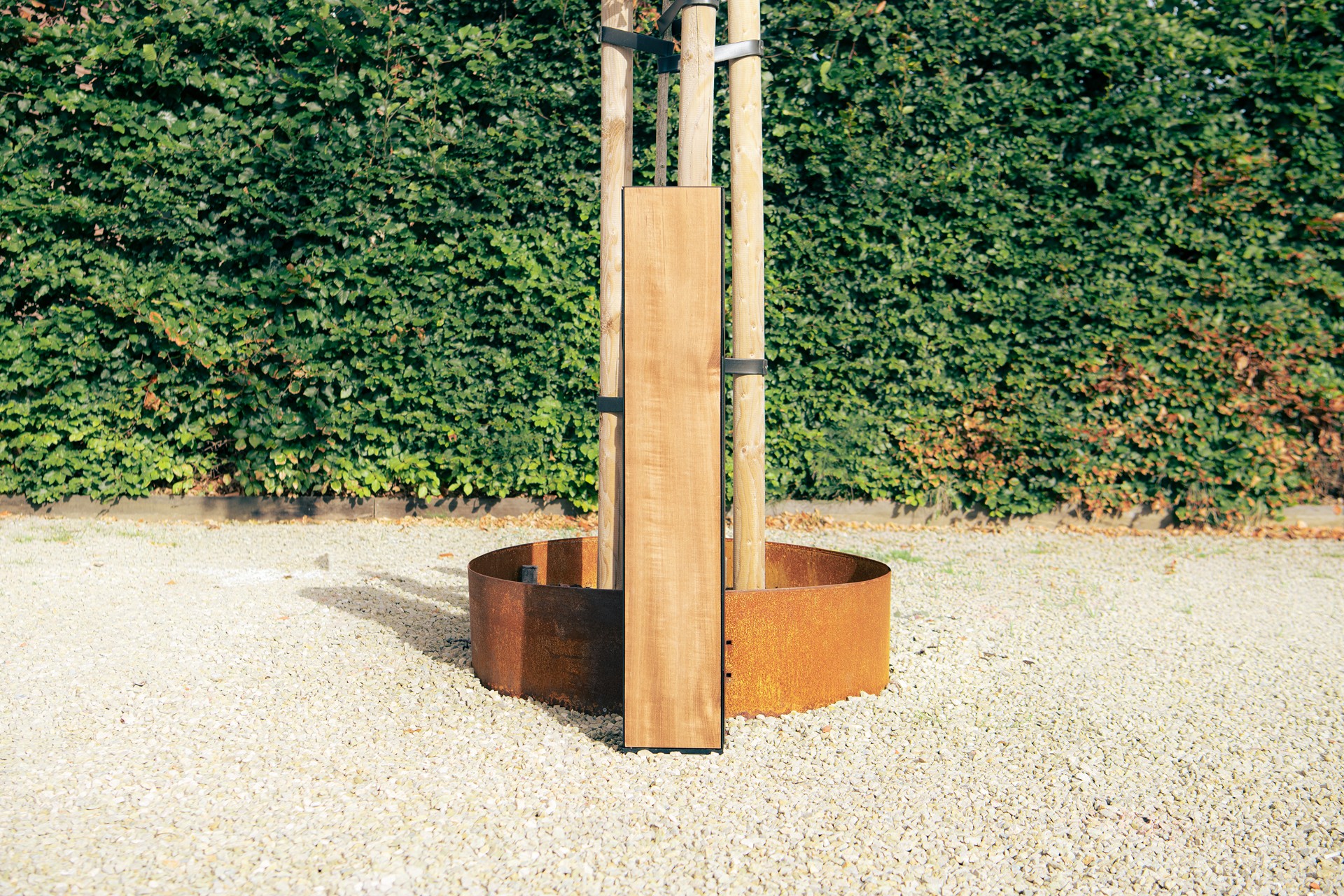
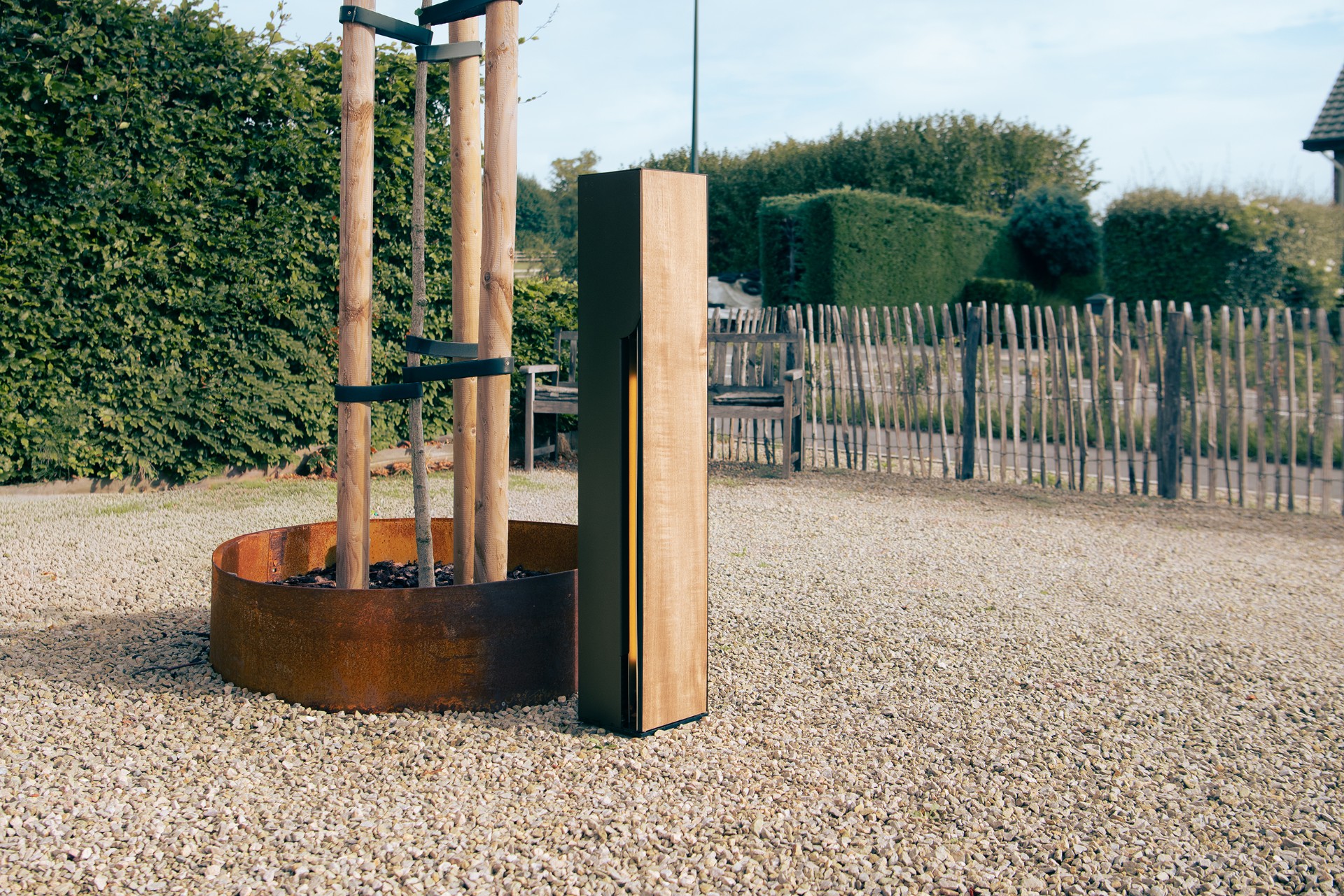
Color does a lot of the work here. Imperial Black, Cotton White, Midnight Blue, and Medusa Green each shift the unit into a different setting, from dark and understated to brighter and more graphic. The front panel can also be personalized with teak, natural stone, or marble, which turns the piece into a charging station with wood front or a stone-clad variant depending on the project. The images show how that material shift changes the reading of the whole post.
What stays consistent is the contrast between the front and the body. The outer casing is kept dark and slim, while the face can carry a more tactile texture. Warm LED accents cut a thin line across the unit, and the gold details sit close to the surface rather than being used as decoration. This is what gives the design EV charger its particular presence: the technical object is softened, but never disguised.
A detail that works from close up
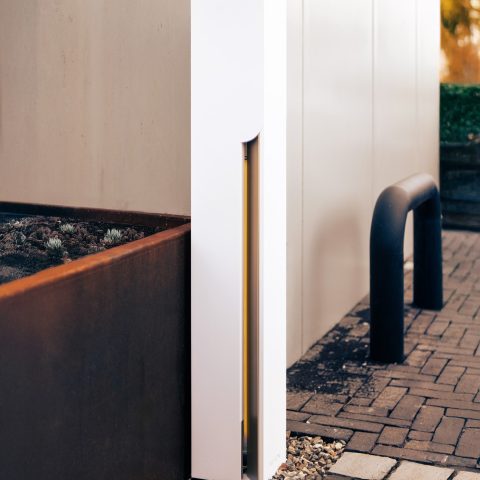
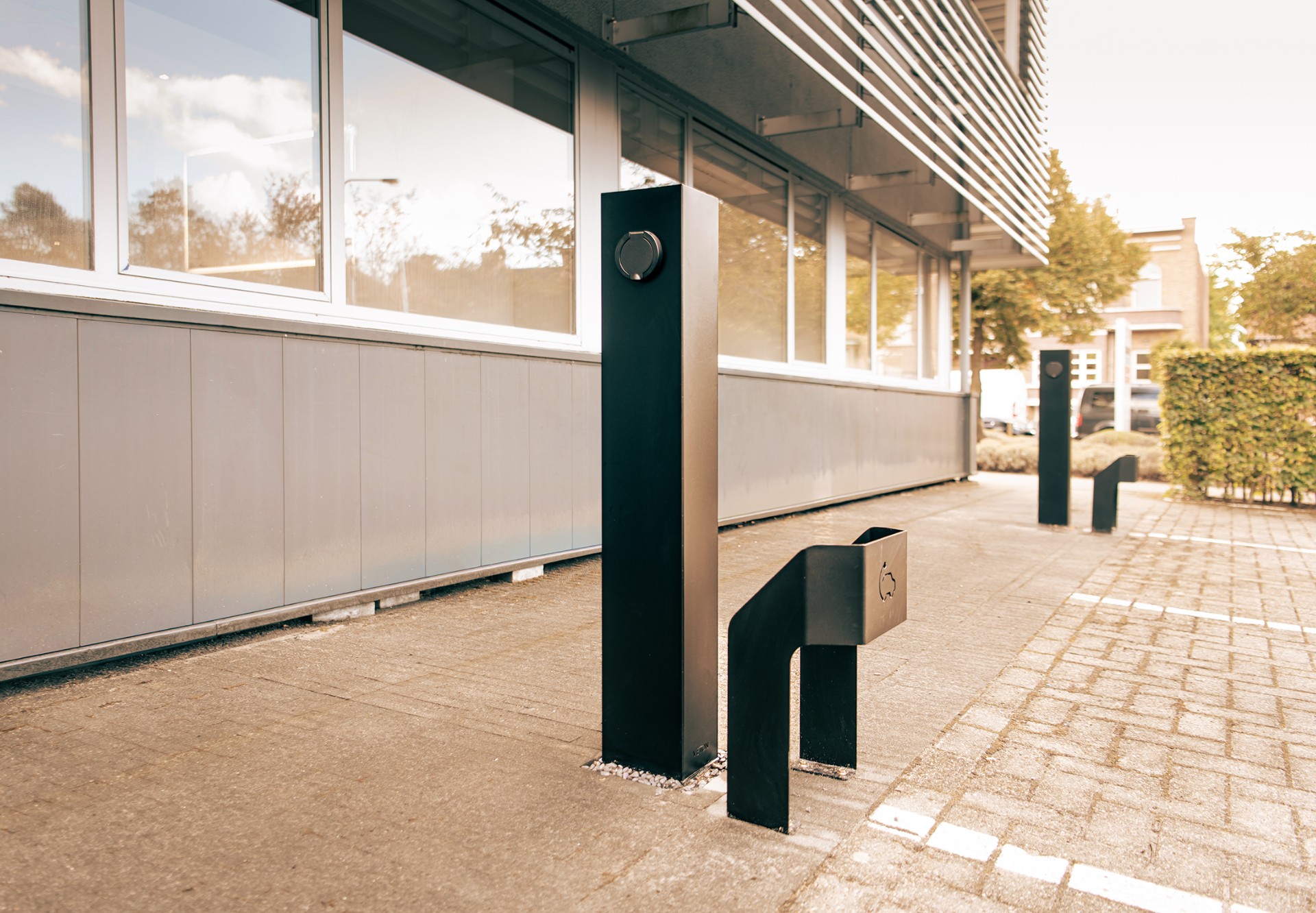
Seen from near the base, the post has the same measured logic as from a distance. The opening on the front is clearly visible in the detail images, as is the round control element. On one version, the lower part sits in a metal base that makes the installation feel grounded. On another, the wood-toned front plate takes the lead and the darker sides fall back, which is why the unit photographs well from several angles.
The visual range matters. One image places the post in gravel with dense planting behind it; another aligns it with a facade and large windows; a third shows the front in a tighter crop where the opening and ring-like hardware become the main elements. Together they present the outdoor charging post design as something that can be read both as landscape object and as built detail.
Connectivity that stays in the background
Behind the calm outer form, the station supports secured access through RFID and can connect with different charging platforms through OCPP. It is also compatible with energy management systems and home automation through Modbus, MQTT, or a REST API. Those functions are not pushed to the front visually, but they matter because they let the unit fit into larger systems without changing its appearance. The housing does not need to advertise the electronics to prove that it is capable.
Optional or future support for ISO 15118 and bidirectional charging is noted for certain executions, rather than presented as standard. That distinction is important. It keeps the page honest and keeps the focus on the physical object first. The technology remains part of the story, but it is framed as a support layer for the design-led installation rather than the reason the station exists.
Charging performance in two formats
The Plug version offers two integrated charging cables, with up to 13.5 kW per vehicle in Mode 3. The Socket version raises each point to up to 22 kW on three-phase power. Dynamic load balancing helps distribute energy use across the two points, which is useful when both vehicles are connected at once. Built-in safety includes 6 mA DC and 30 mA AC differential detection, and MID-certified meters can be used for billing charging sessions.
Those specifications sit neatly behind the exterior, which is why the unit can remain visually slender. The performance is serious, but the reading from the outside is controlled and quiet. In the context of a charging station for two EVs, that matters: the post has to handle daily use while still looking at home near a residence, an office entrance, or a garden path.
Built for a clear installation line
The measurements keep the station compact for its capacity. The Two Plug version is approximately 1152 × 209 × 186 mm, while the Two Socket version is about 1152 × 154 × 186 mm. An optional concrete plinth with integrated fixing points and cable passages makes the installation easier to organize. In the photographs, the base reads as a stable meeting point between the unit and the ground, especially where gravel, paving, or planted borders meet the upright form.
The project’s exterior language depends on that restraint. The dark enclosure, the narrow profile, and the careful front finish allow the station to sit beside a house without looking temporary. It feels planned into the setting, whether the ground is gravel, stone, or a more formal terrace. That is where the premium charging station idea becomes visible: not in excess, but in the way the parts are held together.
Why the front panel changes the whole reading
The most memorable images are the ones where the front material takes over the frame. A wood-colored panel against a dark body changes the proportion immediately, and a stone finish does something similar by catching light in a flatter, more architectural way. Because the outer structure stays simple, the customized face becomes the feature that gives each installation its character. A logo can even be engraved on the front and lit subtly by LED, which suits an architectural or commercial setting without drawing attention away from the form.
That balance between use and appearance is what defines the dual charging station design throughout the page. It is not a decorative object, but it does not behave like plain utility equipment either. The post works as part of the exterior setting, with its materials, colors, and built-in technical layers all kept readable from the outside. For projects that need two charging points and a measured visual profile, that is the central appeal.
Want to see more of Veton? View the page of Veton for even more great projects and company information.



NEW 2026 Jubileum Edition The Best Interior Designers Benelux
Order Now €125